
Cultivating a thriving greenhouse in the heart of a desert climate presents a unique set of challenges, primarily the relentless heat and intense solar radiation. While the dream of growing lush plants year-round beneath a clear sky is alluring, the reality often involves battling soaring temperatures that can quickly turn your green oasis into an oven. Choosing the best cooling system for a desert climate greenhouse isn’t just about comfort; it’s about survival for your plants. It requires a strategic approach, combining various techniques to create a stable, hospitable environment where your flora can flourish. This guide will walk you through the essential considerations and effective cooling solutions tailored specifically for the extreme conditions of a desert.
Understanding Your Desert Environment and Greenhouse Needs
Before diving into specific cooling technologies, it’s crucial to thoroughly assess your particular desert microclimate and the unique characteristics of your greenhouse. Not all deserts are created equal, and your cooling strategy must be finely tuned to your specific situation.
Key Environmental Factors to Consider:
- Humidity Levels: This is perhaps the most critical factor. Are you in an arid, low-humidity desert (e.g., Arizona, Nevada) or a desert region that experiences seasonal humidity (e.g., monsoon seasons in parts of the Southwest)? High humidity significantly impacts the effectiveness of evaporative cooling.
- Temperature Extremes: Note the average daily highs, extreme peak temperatures, and nighttime lows. Desert nights can be surprisingly cool, which can be an advantage for passive cooling.
- Solar Intensity: Desert regions experience exceptionally high levels of solar radiation, necessitating robust shading strategies.
- Water Availability and Quality: Some cooling systems are water-intensive. Consider your access to water, its cost, and its mineral content, as hard water can clog systems.
- Energy Costs: Active cooling systems consume electricity. Understand your local energy rates and consider energy-efficient options.
Greenhouse Specifics:
- Size and Construction: A small hobby greenhouse will have different cooling needs than a large commercial operation. The construction materials (glass, polycarbonate, polyethylene film) also affect heat gain and retention.
- Plant Requirements: What are you growing? Tropical plants have different temperature and humidity thresholds than succulents or temperate vegetables.
- Budget: Initial installation costs and ongoing operational expenses vary significantly between systems.
Essential Passive Cooling Strategies for Desert Greenhouses
The first line of defense against desert heat should always be passive cooling. These methods minimize heat gain and promote natural heat dissipation, reducing the load on active systems and often saving energy and water. Integrating these strategies is fundamental for any desert greenhouse cooling plan.
1. Strategic Shading
Shade cloth is non-negotiable in a desert climate. It directly blocks solar radiation before it enters the greenhouse.
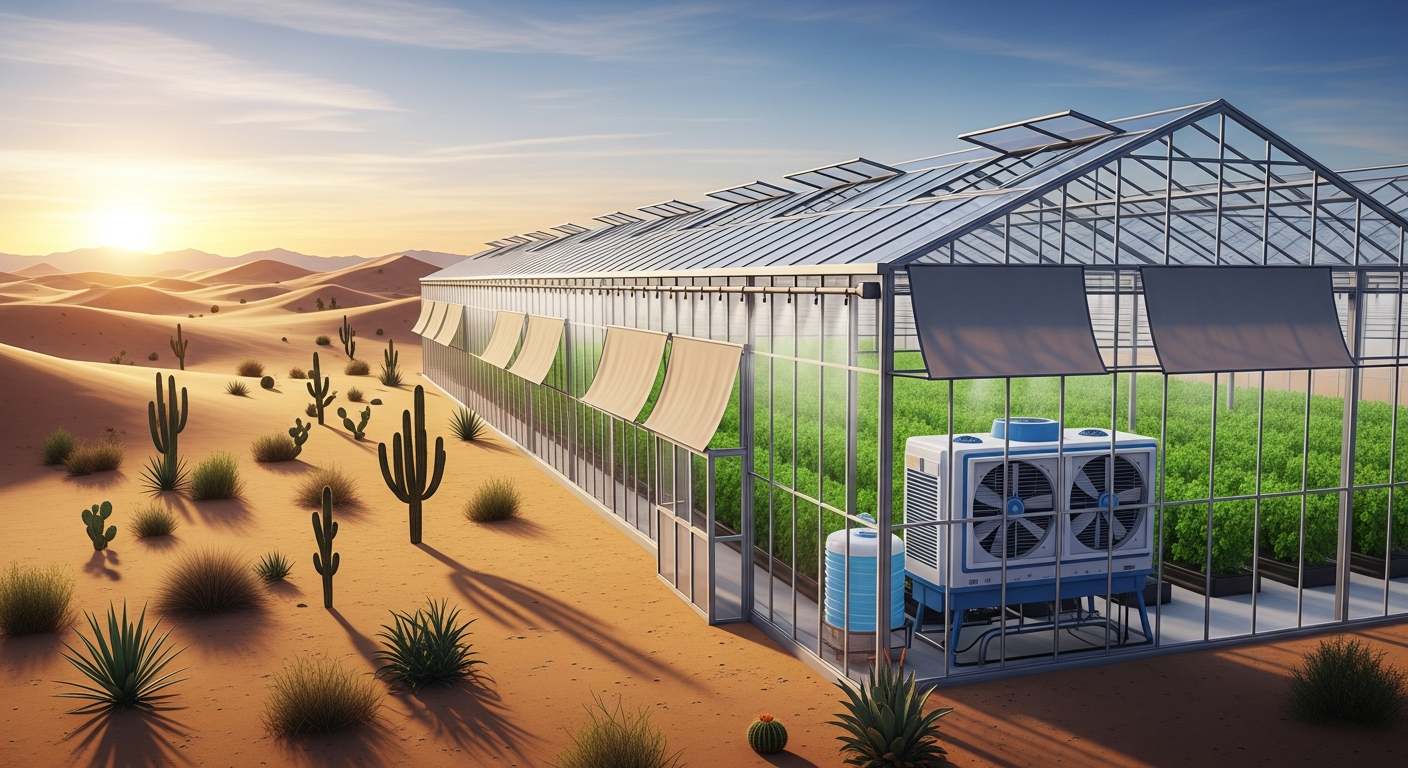
- Exterior Shade Cloth: Applying shade cloth on the exterior is most effective as it reflects heat before it even reaches the greenhouse covering. Choose a density appropriate for your plants (typically 50-70% for most desert crops). Consider automated shade systems for dynamic control.
- Shade Paint: A temporary, whitewash-style paint can be applied to glass or rigid plastic coverings in spring and allowed to wear off or be removed in fall.
- Orientation: Orienting your greenhouse with its longest side facing east-west can minimize direct sun exposure during the hottest parts of the day, reducing the amount of surface area bombarded by intense afternoon sun.
2. Maximizing Ventilation
Effective ventilation removes hot, stale air and replaces it with cooler outside air, preventing heat buildup.
- Natural Ventilation: Utilize roof vents (ridge vents) and side vents. Hot air rises and escapes through roof vents, drawing in cooler air from lower side vents. For natural ventilation to be effective, the total vent opening area should be at least 20-25% of the greenhouse floor area.
- Forced Ventilation (Exhaust Fans): For larger or less permeable greenhouses, exhaust fans are essential. These fans rapidly exchange the air inside the greenhouse, typically aiming for 1-2 air exchanges per minute during peak heat. Ensure intake vents (louvers) are adequately sized to avoid fan strain. Consider two-speed or variable-speed fans for better control.
- Circulation Fans: Inside the greenhouse, horizontal air flow (HAF) fans help move air evenly, breaking up stagnant pockets of hot, humid air around plants and improving the efficiency of other cooling systems.
3. Reflective Surfaces and Ground Cover
Using reflective materials can help deflect heat away from the greenhouse and its immediate surroundings.
- Reflective Mulches: In beds, reflective mulches can reduce soil temperature and reflect light back up to plants, potentially aiding growth.
- White Surfaces: Painting surrounding walls or structures white can reflect solar radiation rather than absorbing it.
Active Cooling Systems for Desert Greenhouses
Even with excellent passive strategies, most desert greenhouses will require active cooling to maintain optimal temperatures during the hottest months. The choice depends heavily on your humidity levels and budget.
1. Evaporative Cooling Systems (Swamp Coolers)
These are the workhorses of desert greenhouse cooling, particularly effective in genuinely arid climates. Evaporative coolers work by passing hot, dry air over water-soaked pads. As water evaporates, it absorbs heat from the air, cooling it down and simultaneously increasing humidity.
- Pad and Fan Systems: The most common setup involves a large exhaust fan on one end of the greenhouse and a wet pad system on the opposite end. Air is pulled through the wet pads, cooled, and circulated through the greenhouse before being expelled.
- Pros: Highly effective in low humidity, relatively inexpensive to operate compared to refrigeration, adds beneficial humidity for many plants in dry climates, uses less electricity than AC.
- Cons: Loses effectiveness as humidity increases (e.g., during monsoon seasons), can create excessively high humidity detrimental to some plants or promoting fungal diseases, requires a consistent water supply, pads need regular cleaning and replacement.
- High-Pressure Fogging/Misting Systems: These systems create a fine mist of water that quickly evaporates, cooling the air. They are highly efficient but can be more complex and expensive than pad-and-fan systems.
- Pros: Very efficient cooling, excellent humidity control, minimal wetting of plants if properly designed.
- Cons: Higher initial cost, requires high-quality filtered water to prevent nozzle clogging, can still lead to excessive humidity if not properly managed.
2. Vapor Compression Refrigeration (Air Conditioning)
Traditional air conditioning units are essentially the same as those used in homes and offices. They cool air by removing heat and moisture through a refrigeration cycle.
- Pros: Provides precise temperature and humidity control, effective regardless of external humidity, can actively dehumidify. Ideal for very sensitive plants or research facilities requiring exact environmental conditions.
- Cons: Extremely high energy consumption, high operational costs, very expensive to install and maintain for greenhouse applications, often not practical for large spaces due to cost. Generally considered a last resort for greenhouse temperature control in a desert, or only for very small, specialized grow chambers.
3. Ground-to-Air Heat Exchangers (Earth Tubes)
Also known as earth tubes or geothermal cooling, these systems use the stable temperature of the earth to temper incoming air.
- How it Works: Air is drawn through long pipes buried several feet underground, where the cooler soil temperature helps reduce the air’s temperature before it enters the greenhouse.
- Pros: Energy-efficient, passive assist, provides a constant tempering effect, useful for both cooling in summer and heating in winter.
- Cons: High initial installation cost due to excavation, effectiveness depends on soil temperature and pipe length/diameter, typically not a standalone primary cooling system for extreme desert heat but an excellent supplement.
Combining Strategies for Optimal Greenhouse Cooling
The most effective greenhouse cooling system for a desert climate is rarely a single solution. Instead, it’s a carefully integrated approach that layers passive and active systems.
- Start Passive: Always maximize shade, natural ventilation, and reflective surfaces first. These foundational strategies will significantly reduce your overall cooling load.
- Integrate Evaporative Cooling: For most arid desert environments, an efficient evaporative cooling system (pad-and-fan or fogging) will be the primary active cooling method.
- Add Forced Ventilation: Ensure robust exhaust fans and circulation fans work in conjunction with your evaporative cooler to distribute cooled air and prevent stagnant pockets.
- Automate for Efficiency: Invest in thermostats, humidistats, and timers to automate your cooling systems. This ensures they only operate when needed, saving energy and providing consistent conditions. Consider smart controllers that can manage multiple systems based on various sensor inputs.
- Monitor and Adjust: Regularly monitor your greenhouse’s temperature and humidity levels using accurate sensors. Be prepared to adjust shade cloth density, fan speeds, or water flow based on seasonal changes or plant needs.
Choosing the right cooling system for your desert greenhouse is an investment in the health and productivity of your plants. By carefully assessing your specific environmental conditions, understanding the strengths and weaknesses of different systems, and embracing a layered approach, you can create a resilient and thriving green space even in the most challenging desert environments. Your dedication to proper greenhouse climate control will undoubtedly yield a lush, productive oasis.