
The gentle hum of the greenhouse fan settling down for the evening, the soft glow of the last rays of sun fading, and the promise of a peaceful night for your thriving plants. As temperatures drop and light diminishes, a silent threat often begins to emerge: nighttime humidity spikes. This invisible enemy can undermine all your hard work, leading to devastating fungal diseases and hindering plant growth. While many factors influence greenhouse humidity, one of the most critical and often overlooked is the timing of your irrigation. Understanding how and when you water your plants can be the difference between a robust, healthy crop and one struggling against the pervasive damp.
The Science of Nighttime Humidity Spikes
To effectively combat nighttime humidity, it’s essential to understand its root causes. During the day, plants actively transpire, releasing water vapor into the air through their leaves. This is a natural and necessary process for nutrient uptake and cooling. As the sun sets and temperatures begin to fall, the air inside your greenhouse cools down. Cooler air has a reduced capacity to hold moisture compared to warmer air. This fundamental principle of physics is where the problem begins.
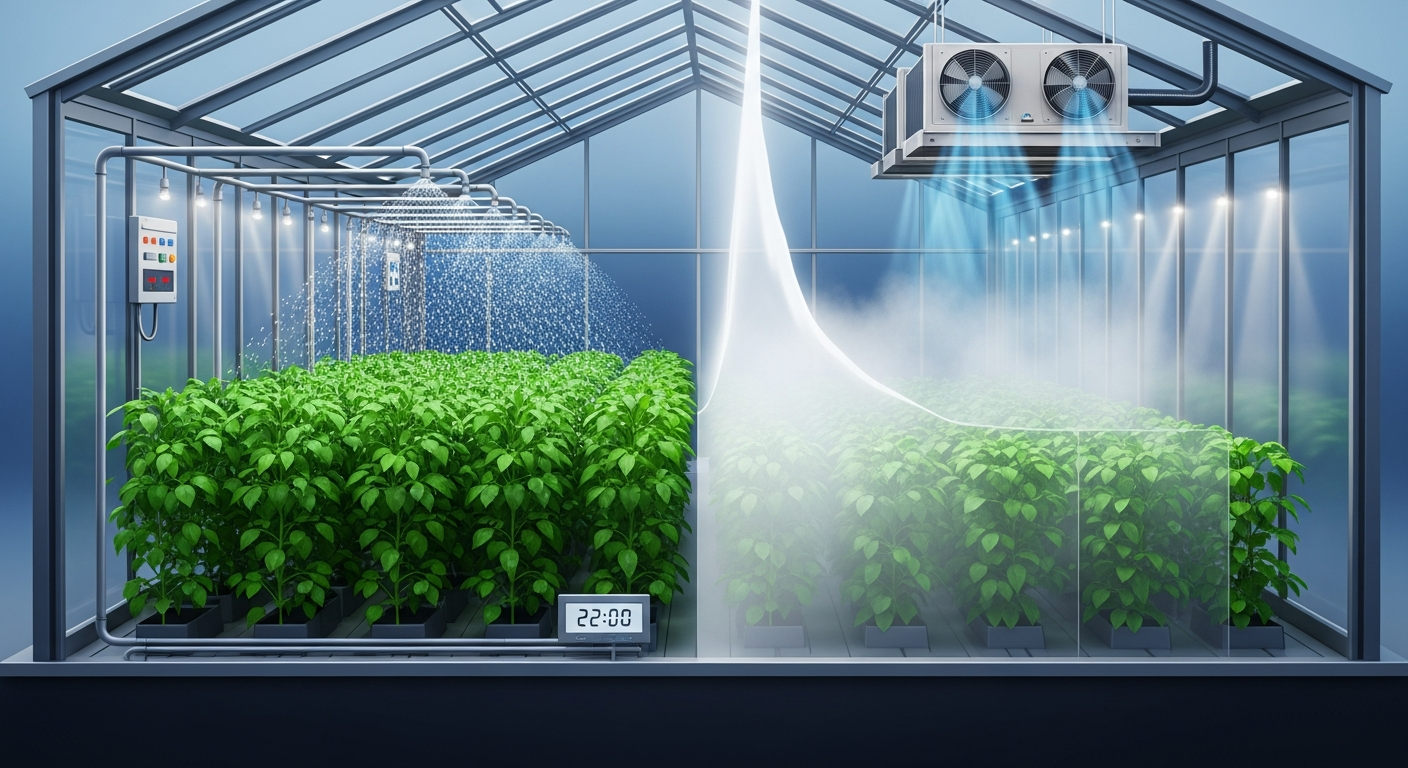
As the air cools, its relative humidity (RH) rises, even if the absolute amount of water vapor in the air remains constant. Eventually, the air temperature can drop to the dew point – the temperature at which the air becomes saturated with water vapor. At this point, any excess moisture will condense into liquid water, settling on plant leaves, greenhouse structures, and the soil surface. This condensation, along with guttation (the exudation of xylem sap from plant leaves, often seen as droplets on leaf edges in the early morning), creates a perfect breeding ground for various fungal pathogens like Botrytis (gray mold) and powdery mildew. High relative humidity also slows down plant transpiration, which can reduce nutrient uptake and overall growth efficiency, affecting the plant’s vapor pressure deficit (VPD) and potentially causing stress.
How Irrigation Timing Fuels the Problem
The water you introduce into the greenhouse environment through irrigation doesn’t simply disappear after being absorbed by plants. A significant portion evaporates from the soil surface and the wet surfaces of leaves, adding to the total moisture content of the greenhouse air. The timing of this irrigation directly dictates how much of this added moisture remains in the air as temperatures drop overnight.
Late Afternoon/Evening Irrigation: A Recipe for Disaster
Watering plants in the late afternoon or evening is arguably the biggest contributor to severe nighttime humidity spikes. Here’s why:
- Reduced Evaporation: As evening approaches, temperatures naturally fall, and solar radiation diminishes. This reduces the rate at which water can evaporate from the soil and plant surfaces. Consequently, the water you apply in the evening will sit on leaves and in the substrate for much longer.
- Increased Atmospheric Moisture: The water that does evaporate from evening irrigation adds to the greenhouse’s atmospheric moisture content just as the air’s capacity to hold it is decreasing. This rapidly drives up the relative humidity.
- Prolonged Leaf Wetness: Wet leaves going into the night are an open invitation for fungal diseases. Even if the air doesn’t reach the dew point, high humidity alone can prevent leaf surfaces from drying, creating ideal conditions for spore germination.
- Slowed Plant Activity: Plants’ metabolic activities, including transpiration, slow down significantly at night. They are less able to absorb and process the water, meaning more remains available for evaporation into the already cooling air.
Morning vs. Midday Irrigation: The Smarter Choices
In contrast to evening watering, irrigating in the morning or early afternoon offers distinct advantages for humidity management:
- Morning Irrigation: This is generally considered the optimal time. Watering a few hours after sunrise allows plants to fully utilize the water throughout the day. Crucially, the rising temperatures and increasing light levels promote rapid evaporation from the soil surface and quick drying of leaf surfaces. This ensures that by the time evening arrives, most surfaces are dry, and excess moisture has been vented or absorbed.
- Midday Irrigation: While not as ideal as morning for all crops, midday watering (especially for plants with high water demands) still allows for several hours of drying time before nightfall. The higher temperatures and light intensity at midday contribute to efficient drying. However, be mindful of potential water stress if plants run dry earlier in the day, or excessive evaporation losses if watering on very hot days with low humidity.
Optimal Irrigation Strategies to Mitigate Nighttime Humidity
Effective irrigation timing is a cornerstone of proactive greenhouse climate control. Here are actionable strategies to minimize nighttime humidity spikes:
1. Prioritize Morning Irrigation
Make morning your primary watering window. Aim to irrigate 2-4 hours after sunrise, allowing plants ample time to dry off before night. This timing also aligns with the plant’s natural photosynthetic cycle, ensuring water is available when they need it most.
2. Utilize Targeted Watering Methods
Whenever possible, opt for irrigation systems that deliver water directly to the plant’s root zone, minimizing leaf wetness.
- Drip Irrigation: Excellent for precise water delivery directly to the substrate, significantly reducing water on leaves and soil surface evaporation.
- Bottom Watering/Flood Tables: Water is absorbed from the bottom up, keeping foliage completely dry. Ensure good drainage and sanitation practices to prevent root diseases.
3. Master Substrate Management
Avoid overwatering. Learn to read your substrate – whether it’s coco coir, rockwool, or soil mix – and allow it to dry down slightly between waterings. A consistently saturated medium not only contributes to humidity but can also lead to root rot. Use soil moisture sensors or simply lift pots to gauge their weight and determine water needs.
4. Sync with Environmental Controls
While irrigation timing is crucial, it works best in conjunction with your greenhouse’s environmental controls.
- Ventilation: Ensure adequate air movement throughout the day to help dry surfaces and exchange humid air with drier outside air. Consider setting ventilation to activate briefly in the late afternoon/early evening if humidity is rising.
- Heating: A slight increase in heating during the early evening, combined with ventilation, can lower relative humidity by raising the air temperature and thus its moisture-holding capacity. This “heating and venting” strategy is very effective but uses more energy.
5. Monitor and Adapt
Every greenhouse and crop is unique. Invest in good quality humidity sensors and potentially leaf wetness sensors. Regularly check the data and observe your plants. Are leaves still wet at dusk? Do you see guttation or condensation in the morning? These are clear signs you might need to adjust your irrigation schedule or other climate settings. Adapt your watering strategy to seasonal changes; longer, cooler nights in winter demand earlier and potentially less frequent watering.
Practical Tips for Greenhouse Growers
- Start Early: Train yourself to get into the greenhouse early. Not only is it the best time to water, but it’s also a great time to observe your plants and spot any issues.
- Feel the Leaves: Before nightfall, gently touch your plants’ leaves. If they feel damp, you’ve likely watered too late or too much.
- Consider Crop-Specific Needs: Some plants are more sensitive to humidity (e.g., tomatoes, cucumbers) than others. Tailor your strategy to your most vulnerable crops.
- Automate Wisely: If using an automated irrigation system, program it for morning cycles. Integrate it with environmental controls for a sophisticated humidity management solution.
- Seasonal Adjustments: In winter or during periods of prolonged cloudy weather, reduce the volume and frequency of irrigation. Plants transpire less, and drying takes longer.
Conclusion
Nighttime humidity spikes are a silent threat in any greenhouse, paving the way for disease and impeding healthy plant development. While advanced climate control systems offer powerful solutions, the simple act of strategically timing your irrigation remains one of the most fundamental and effective lines of defense. By shifting your watering schedule to the morning, minimizing leaf wetness, and integrating smart substrate management, you can significantly reduce the risk of high nighttime humidity. This proactive approach not only fosters a healthier growing environment but also conserves energy and leads to more robust, productive plants. Master your irrigation timing, and you’ll be well on your way to cultivating a thriving, disease-resistant greenhouse.