
The hum of a greenhouse in full production is a testament to growth and innovation. Yet, beneath the vibrant foliage lies a significant challenge for large-scale operations: maintaining optimal temperatures year-round, especially in cooler climates. Traditional heating methods, often reliant on fossil fuels, come with escalating costs and a heavy carbon footprint, pushing many commercial growers to seek more sustainable and economically viable alternatives. Enter geothermal heating, a powerful, earth-friendly solution that is revolutionizing climate control for expansive greenhouse structures.
Imagine harnessing the stable, consistent temperature of the earth beneath your feet to warm your plants in winter and cool them in summer. This isn’t science fiction; it’s the proven principle behind geothermal technology. For large-scale greenhouses, where energy demands are immense, geothermal systems offer a path to dramatic energy savings, environmental stewardship, and superior climate consistency. This article delves into the basics of geothermal heating, exploring how it works, its advantages, and key considerations for implementing it in your commercial greenhouse operation.
Understanding Geothermal Heating: How Earth Powers Your Greenhouse
At its core, geothermal heating leverages the earth’s natural, constant temperature just a few feet below the surface. Unlike the fluctuating air temperatures above ground, the earth maintains a relatively stable temperature (typically 45-75°F or 7-24°C, depending on location and depth) throughout the year. A geothermal system, often referred to as a ground source heat pump (GSHP) system, works by transferring heat between the earth and your greenhouse.
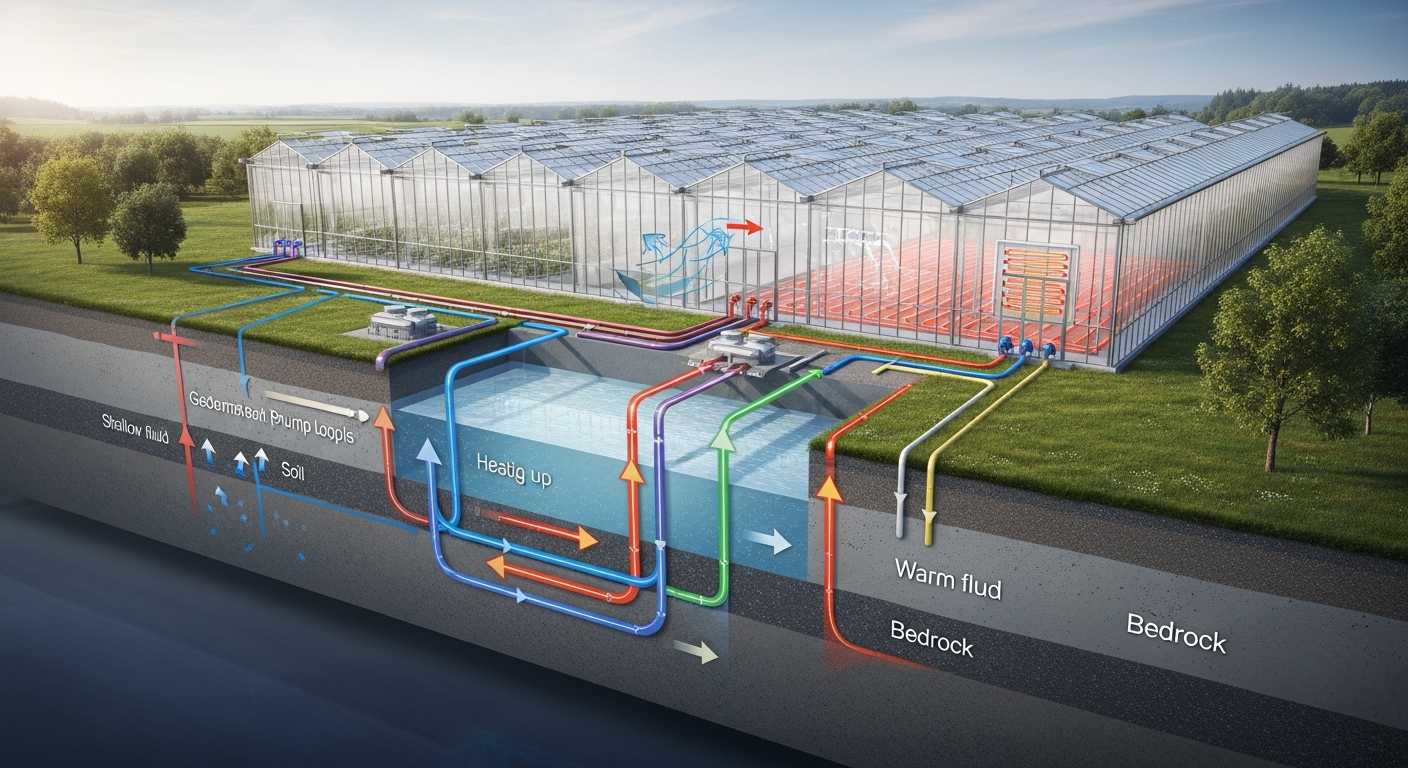
The process involves three main components:
- The Loop System (Ground Heat Exchanger): This is a network of durable, buried pipes filled with a circulating fluid (usually a mixture of water and anti-freeze). In winter, the fluid absorbs heat from the warmer earth. In summer, the fluid releases heat into the cooler earth, effectively cooling your greenhouse.
- The Geothermal Heat Pump: This unit acts as a central hub. It takes the warmed fluid from the ground loop, concentrates the heat using a refrigeration cycle (similar to how a refrigerator works, but in reverse), and then distributes that heat into your greenhouse’s air distribution system. For cooling, it extracts heat from the greenhouse air and transfers it to the fluid circulating into the ground.
- The Heat Distribution System: This could be forced air ducts, radiant floor heating, or hot water piping systems that circulate the conditioned air or water throughout your greenhouse.
For large-scale greenhouses, the sheer volume of space needing heating and cooling makes this constant, renewable energy source incredibly attractive. The efficiency of a geothermal system is measured by its Coefficient of Performance (COP), which often ranges from 3 to 5, meaning for every unit of electricity used to run the system, 3 to 5 units of heat energy are delivered. This is significantly more efficient than traditional fossil fuel furnaces.
Types of Geothermal Systems for Commercial Greenhouse Applications
The design of your geothermal system will largely depend on your site-specific conditions, including available land area, soil composition, and water access. There are primarily two types of ground loop configurations, each with its own advantages:
Closed-Loop Systems
These are the most common and widely applicable geothermal systems for large-scale greenhouses due to their reliability and minimal environmental impact. They use a continuous loop of buried pipes through which a heat-transfer fluid circulates.
-
Horizontal Loops
Ideal for greenhouses with ample land availability, horizontal loops are installed in trenches dug 4-6 feet deep. Multiple parallel pipes are laid in these trenches over a wide area. While requiring more surface area than vertical loops, they are generally less expensive to install as they don’t require deep drilling. They are often arranged in slinky coils to maximize heat exchange within a smaller trench footprint.
-
Vertical Loops
When land space is limited or the soil is rocky, vertical loops are often the preferred choice. These systems involve drilling multiple boreholes, typically 150-400 feet deep, into which U-shaped pipes are inserted. While more costly to install due to the specialized drilling equipment required, vertical loops take up very little surface area, making them suitable for urban greenhouses or sites with restricted space. They also tend to interact with more stable ground temperatures at greater depths.
Open-Loop Systems
Also known as “pump and dump” systems, open-loop configurations utilize a readily available source of groundwater, such as a well or pond, as the heat exchange medium. Water is drawn from the source, passed through the geothermal heat pump where heat is extracted or rejected, and then returned to the same aquifer or a different approved discharge point.
-
Advantages:
Often the most efficient geothermal option, as water is an excellent heat transfer medium. They can be very cost-effective if a suitable water source is abundant and easily accessible.
-
Considerations:
Require careful consideration of water quality (to prevent mineral buildup in the heat pump), local regulations for water usage and discharge, and potential environmental impacts. Not all sites are suitable for open-loop systems.
Choosing the right system involves a thorough site assessment by a qualified geothermal engineer who can evaluate soil conditions, geological formations, available land, and the specific heating and cooling demands of your large-scale greenhouse.
Key Advantages for Large-Scale Greenhouse Operations
For operators of commercial greenhouses, the transition to geothermal heating offers a suite of compelling benefits that extend beyond mere environmental goodwill.
Significant Energy Cost Reduction
This is arguably the most powerful driver for adopting geothermal in large operations. Heating a vast greenhouse can consume enormous amounts of energy. Geothermal systems operate at exceptionally high efficiencies (COPs of 3-5), meaning they move heat rather than generate it through combustion. This translates into 50-70% lower heating costs compared to traditional fossil fuel systems. Over the lifespan of the system, these savings accumulate substantially, directly impacting your bottom line and making your produce more competitive.
Environmental Sustainability and Reduced Carbon Footprint
Geothermal energy is a renewable resource, tapping into the earth’s stored solar energy and internal heat. By switching to geothermal, large-scale greenhouses can drastically reduce their reliance on fossil fuels, leading to a significant decrease in greenhouse gas emissions. This aligns with modern consumer demand for sustainably grown products and can enhance your brand’s image as an environmentally responsible grower. It’s a powerful statement of commitment to green practices.
Consistent and Stable Climate Control
One of the less obvious but critical advantages for plant health is the superior consistency of temperature that geothermal systems can provide. Traditional systems often lead to temperature swings as they cycle on and off. Geothermal systems provide a more even, gentle heat distribution, minimizing stress on plants. This stable environment can lead to healthier plants, faster growth cycles, and potentially higher yields and quality produce. The dual capability of geothermal systems to provide efficient cooling in warmer months also ensures optimal growing conditions year-round, preventing overheating and stress during peak summer temperatures.
Long Lifespan and Low Maintenance
The ground loop components of a geothermal system are buried underground, protected from harsh weather and vandalism, giving them an incredibly long lifespan – often 50+ years. The indoor heat pump units typically last 20-25 years, comparable to or exceeding conventional HVAC systems. Because there’s no combustion, fewer moving parts, and no outdoor compressor unit exposed to the elements, maintenance requirements are minimal. This translates to lower ongoing operational costs and fewer disruptions to your greenhouse operations.
Implementation Considerations and Practical Advice
While the benefits are clear, implementing a geothermal system for a large-scale greenhouse requires careful planning and a significant upfront investment. Here are key considerations:
Initial Investment and Return on Investment (ROI)
Geothermal systems have a higher upfront installation cost compared to conventional heating systems, primarily due to the drilling or trenching involved. However, the substantial reduction in operating costs means they often have a relatively quick payback period, typically 5-10 years for commercial applications. After the payback, the system delivers virtually free heating and cooling for decades. It’s crucial to perform a detailed financial analysis, considering current energy costs, projected savings, and the system’s longevity.
Comprehensive Site Assessment
Before any design work begins, a professional site assessment is paramount. This includes:
- Geological Survey: Understanding soil composition, thermal conductivity, and rock formations is vital for designing an efficient ground loop.
- Hydrological Survey: If considering an open-loop system, assessing groundwater availability, quality, and regulatory restrictions is critical.
- Load Calculation: A precise calculation of the greenhouse’s heating and cooling loads is necessary to properly size the geothermal system. This accounts for factors like insulation, glazing type, ventilation, and the specific crops being grown.
Professional Design and Installation
Due to the complexity and scale of greenhouse operations, engaging experienced geothermal engineers and certified installers is non-negotiable. An improperly designed or installed system will underperform and negate the benefits. Look for professionals with specific experience in large commercial or industrial geothermal projects, ideally with greenhouse experience.
Permitting and Local Regulations
Geothermal installations are subject to various local, state, and sometimes federal regulations, especially concerning drilling, excavation, and groundwater use/discharge for open-loop systems. Factor in time for obtaining all necessary permits and ensure your chosen installer is knowledgeable about local compliance requirements.
Integration with Existing Systems
In many cases, geothermal can complement existing heating systems, acting as the primary heat source while older boilers serve as backup during extreme cold snaps or for peak demand. This hybrid approach can optimize energy use and provide redundancy, ensuring your valuable crops are never left without heat.
Explore Incentives and Rebates
Many governments and utility companies offer financial incentives, tax credits, and rebates for adopting renewable energy technologies like geothermal. Researching these opportunities can significantly offset the initial investment cost, making geothermal an even more attractive proposition for your large-scale greenhouse.
Conclusion
Geothermal heating represents a forward-thinking, sustainable, and economically savvy solution for climate control in large-scale greenhouse structures. While the initial investment may seem substantial, the long-term energy savings, reduced environmental impact, consistent growing conditions, and minimal maintenance offer a compelling return on investment. By understanding the basics of how these systems work, the different types available, and the critical factors for successful implementation, greenhouse operators can make informed decisions that will benefit their bottom line, their plants, and the planet for decades to come. Embrace the earth’s steady warmth, and cultivate a greener future for your greenhouse operations.