
One of the most critical decisions facing any greenhouse owner, from the hobbyist to the commercial grower, is the choice of glazing material. This isn’t merely about aesthetics; it’s about the very heart of your greenhouse’s performance, directly impacting plant health, energy consumption, and ultimately, your operational costs. In a world increasingly focused on sustainability and efficiency, understanding how different surfaces retain heat is paramount. The right glazing can mean the difference between thriving plants with minimal heating bills and a constant struggle against the cold, draining both your wallet and your enthusiasm. Let’s delve into the science and practicalities of greenhouse glazing to uncover which materials offer the best thermal performance for your controlled growing environment.
Understanding Heat Retention and Its Importance for Greenhouse Climates
At its core, a greenhouse functions by trapping solar energy. Sunlight passes through the glazing, warms the interior, and then a significant portion of that heat is prevented from escaping. This phenomenon is often referred to as the greenhouse effect. However, not all glazing materials are created equal when it comes to holding onto that precious warmth, especially during colder nights or overcast days. Heat retention refers to a material’s ability to resist heat transfer. Poor heat retention means more heat loss to the outside environment, leading to a greater reliance on supplemental heating systems and higher energy bills. Conversely, superior heat retention translates to more stable internal temperatures, reduced energy consumption, and a healthier growing environment for your plants.
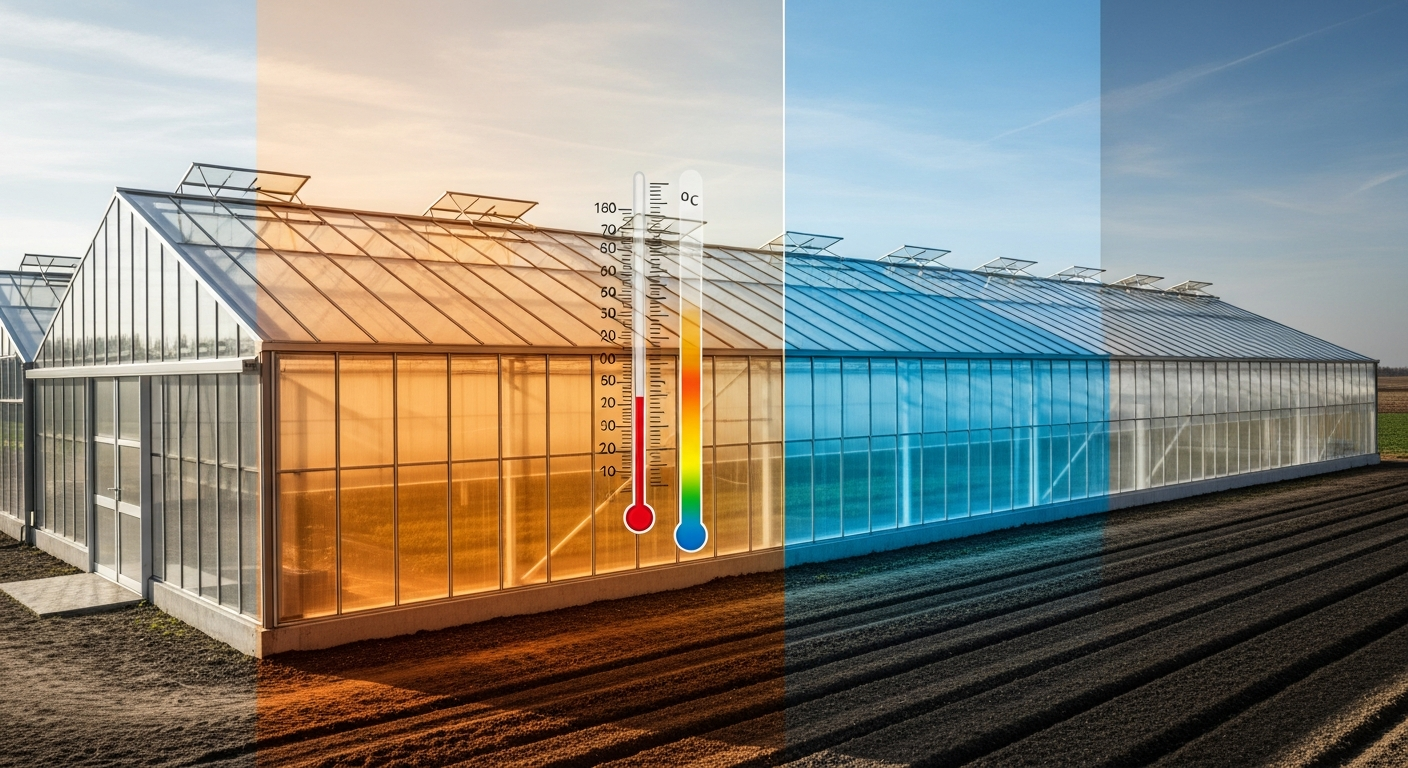
The efficiency of a glazing material is often measured by its U-factor (U-value) or R-value. The U-factor measures how well a building component conducts heat; a lower U-factor indicates better insulation and less heat loss. The R-value, on the other hand, measures thermal resistance; a higher R-value means better insulation. For greenhouse owners, optimizing for a low U-factor or high R-value is key to creating an energy-efficient growing space and maintaining precise climate control. This directly impacts your ability to grow specific plants year-round, extending seasons and diversifying your crop options, all while keeping heating costs in check.
Key Glazing Materials: Comparing Thermal Performance
The market offers a diverse range of materials, each with unique properties affecting its thermal performance, durability, and cost. Understanding these differences is crucial for making an informed decision about your greenhouse glazing.
Traditional Glass (Single and Double Pane)
Glass has long been the classic choice for greenhouses, revered for its clarity and aesthetic appeal. Single-pane glass, while offering excellent light transmission, has very poor insulating properties. Heat readily escapes through it, making it an energy-intensive option in most climates, especially during winter.
- Pros: High light transmission, longevity, scratch resistance, excellent clarity.
- Cons: Very heavy, fragile, high U-factor (poor insulation for single pane), expensive to install.
- Heat Retention: Low for single pane. A standard single pane of horticultural glass has a U-factor around 1.1 Btu/hr-ft²-°F.
Double-pane glass (or insulated glass units, IGUs) significantly improves heat retention by trapping a layer of air or an inert gas (like argon) between two panes. This air gap acts as an insulator, drastically reducing heat transfer. Tempered glass, while not directly impacting thermal performance, is a safer option due to its increased strength and how it shatters into small, less dangerous pieces.
- Pros: Much better insulation than single pane, good clarity, longevity.
- Cons: Still very heavy and expensive, can be prone to fogging if seals fail.
- Heat Retention: Moderate to Good. Double-pane glass can achieve U-factors ranging from 0.45 to 0.65, making it a viable option for colder climates if budget allows.
Polycarbonate (Twin-Wall and Multi-Wall)
Polycarbonate has emerged as a powerhouse in greenhouse glazing, particularly in its multi-wall formats. Made from a durable thermoplastic polymer, it’s virtually unbreakable and much lighter than glass.
Twin-wall polycarbonate consists of two layers separated by internal ribs, creating insulating air pockets. This structure dramatically improves its thermal performance compared to single-layer materials.
- Pros: Excellent impact resistance, lightweight, good insulation, diffuse light (reduces hot spots), UV protected.
- Cons: Can yellow over time if not UV coated, less scratch resistant than glass, clarity not as high as glass.
- Heat Retention: Good. 6mm twin-wall polycarbonate typically has a U-factor around 0.58; 8mm around 0.52.
Multi-wall polycarbonate takes insulation a step further, featuring three or more layers and additional air channels. This provides even greater thermal efficiency, making it an excellent choice for winter gardening and environments with significant heating requirements.
- Pros: Superior insulation, very strong, good light diffusion.
- Cons: Higher cost than twin-wall, can accumulate dirt/algae in channels over many years (though less common with proper installation).
- Heat Retention: Excellent. 16mm multi-wall can have a U-factor as low as 0.35, rivaling some double-pane glass units.
Polyethylene Film (Single and Double Layer)
Polyethylene film, often simply called “poly,” is the most economical glazing option, commonly used in hoop houses and commercial operations due to its low cost and ease of installation.
A single layer of polyethylene film offers minimal insulation, similar to single-pane glass. Heat loss is significant, making it less suitable for cold climates unless heating costs are not a primary concern or for seasonal use only.
- Pros: Very low cost, easy to install, lightweight.
- Cons: Poor insulation, relatively short lifespan (3-5 years typically), susceptible to tearing.
- Heat Retention: Very Low. U-factor similar to single-pane glass, around 1.2.
Double-layer polyethylene film with inflation dramatically improves heat retention. Two layers of film are separated and kept apart by a small fan that blows air between them, creating an insulating air cushion. This air gap traps heat effectively.
- Pros: Greatly improved insulation over single layer, still relatively low cost compared to rigid panels, diffuse light.
- Cons: Requires a blower fan (additional cost and power), film needs replacement every few years, can be noisy.
- Heat Retention: Moderate to Good. U-factors around 0.5 to 0.7, comparable to some double-pane glass or twin-wall polycarbonate.
Acrylic (PMMA)
Acrylic, or polymethyl methacrylate (PMMA), offers glass-like clarity but with much greater impact resistance and lighter weight. It’s often considered a premium alternative to glass.
- Pros: Excellent light transmission and clarity (superior to polycarbonate initially), good impact resistance (though less than polycarbonate), lightweight.
- Cons: More expensive than polycarbonate, less impact resistant than polycarbonate, susceptible to scratching.
- Heat Retention: Similar to glass for single pane. For multi-wall acrylic (less common than multi-wall polycarbonate), performance improves significantly, akin to multi-wall polycarbonate. A single sheet of acrylic performs similarly to a single sheet of glass.
Beyond Glazing: Enhancing Overall Greenhouse Heat Retention
While the choice of glazing material is paramount, it’s just one piece of the puzzle for optimal greenhouse climate control. Several other strategies can significantly boost your greenhouse’s ability to retain heat and reduce energy consumption.
Insulation for Walls and Foundation
Don’t forget the non-glazed portions of your greenhouse. The foundation and lower walls can be significant sources of heat loss. Insulating these areas with materials like rigid foam boards or reflective insulation can dramatically improve overall thermal performance. Burying insulation along the foundation (skirting) can also prevent heat loss into the surrounding soil.
Proper Sealing and Weatherstripping
Cracks and gaps around doors, vents, and where glazing meets the frame can allow substantial amounts of warm air to escape. Regularly inspect and maintain seals and weatherstripping. High-quality sealants and EPDM rubber gaskets are crucial for preventing drafts and heat leakage, ensuring a truly sealed environment.
Thermal Mass and Passive Heating
Incorporating thermal mass into your greenhouse design can act as a natural heat battery. Materials like water barrels (painted black for better absorption), stone, or concrete absorb solar radiation during the day and slowly release it at night, helping to stabilize temperatures and reduce heating needs. This passive heating strategy works wonders in mitigating temperature swings.
Shade Cloths and Thermal Blankets
While shade cloths are typically used to reduce heat in summer, specialized thermal blankets or insulated curtains can be deployed internally at night to create an additional insulating layer. These can be manually or automatically drawn across the crop zone, trapping heat below them and significantly reducing the volume of air that needs to be heated.
Strategic Orientation and Location
The placement of your greenhouse can also impact heat retention. Orienting your greenhouse to maximize winter sun exposure (typically east-west for maximum southern exposure) can increase passive solar gain. Sheltering it from prevailing winds with windbreaks or natural landscaping can also reduce convective heat loss.
Making the Right Choice for Your Greenhouse
Selecting the best glazing material involves balancing several factors: your climate zone, budget, the types of plants you intend to grow, and your long-term energy goals.
- For Cold Climates: Prioritize materials with the lowest U-factors. Multi-wall polycarbonate (16mm or greater), double-pane glass, or double-layer inflated poly are your best bets for minimizing heating costs.
- For Moderate Climates/Budget-Conscious Growers: Twin-wall polycarbonate (6mm-10mm) offers a good balance of cost, durability, and insulation. Double-layer inflated poly is also a strong contender.
- For Warm Climates/Seasonal Use: Single-layer poly or even single-pane glass might be acceptable if heating is rarely needed, though energy efficiency should still be a consideration.
- For Aesthetics & Longevity: Double-pane glass offers unmatched clarity and a classic look but comes at a premium.
Remember that the initial cost of a higher-performance glazing material might be greater, but the long-term savings on heating bills can quickly offset that investment, making it a more economical choice over the lifespan of your greenhouse. Always consider the total cost of ownership, including installation, maintenance, and energy consumption.
Conclusion: The Smart Glazing Choice for a Thriving Greenhouse
The decision of which glazing material to use is fundamental to the success and sustainability of your greenhouse. While traditional single-pane glass offers visual appeal, its poor heat retention makes it a costly choice in many scenarios. For superior thermal performance and significant energy savings, multi-wall polycarbonate consistently stands out as a top performer, offering excellent insulation, durability, and light diffusion. Double-pane glass and double-layer inflated polyethylene film also provide robust heat retention, each with their own cost-benefit profiles.
Ultimately, the “best” material depends on your specific needs, climate, and budget. By understanding the thermal properties of each option and integrating additional insulation strategies, you can create an energy-efficient greenhouse that keeps your plants happy and your heating bills low. Investing wisely in your glazing is an investment in your greenhouse’s future, ensuring a thriving growing environment for years to come.