
The sudden chill of a winter storm bringing down power lines is every greenhouse enthusiast’s nightmare. For those dedicated to cultivating delicate or tropical plants, a power outage during a freezing cold snap isn’t just an inconvenience; it’s a direct threat to months, even years, of hard work and significant investment. Your carefully controlled greenhouse environment, typically a haven from the elements, can quickly become a death trap when its heating systems, circulation fans, and automated controls fall silent. But fear not! While the situation is urgent, there are numerous practical steps you can take to significantly improve your plants’ chances of survival. This comprehensive guide will equip you with the knowledge and actionable strategies to provide vital emergency frost protection and save your beloved greenhouse plants during a power outage.
Understanding the Imminent Threat: Frost, Freezing, and Power Loss
When the electricity goes out, your greenhouse immediately begins to lose its most vital defense against the cold: controlled heat. Without power, automated vents stay shut, circulation fans cease, and primary heating units (electric or fuel-fired with electric ignitions/thermostats) stop functioning. This rapid loss of greenhouse climate control means temperatures inside can plummet to ambient outdoor levels surprisingly quickly, often reaching freezing points that are lethal for many common greenhouse crops.
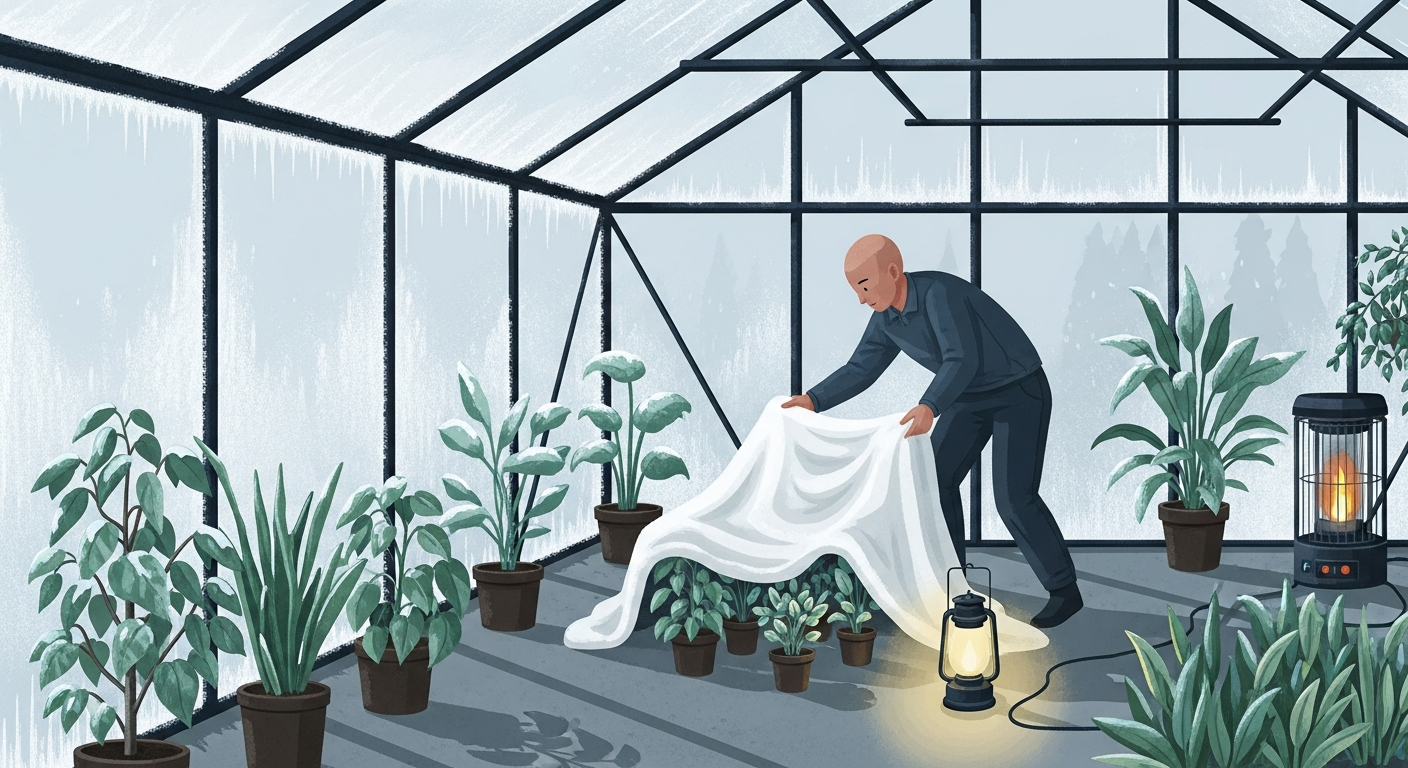
The danger isn’t just about reaching 32°F (0°C). Many plants suffer frost damage even above freezing, especially those accustomed to warm, stable environments. Tropicals, seedlings, and sensitive ornamentals can be severely damaged or killed by temperatures in the 40s (Fahrenheit) for extended periods. Understanding your plants’ individual hardiness levels is crucial for prioritizing your emergency efforts.
The Double Whammy: Cold and Stagnant Air
Beyond the temperature drop, a power outage also eliminates air circulation. Stagnant, cold air around leaves can exacerbate frost damage. Moisture can condense on leaves and then freeze, drawing heat directly from plant tissue. Therefore, emergency measures must address both heat retention and, if possible, some form of air movement.
Immediate Actions When the Power Goes Out
Time is of the essence. As soon as you realize the power is out, especially during a cold snap or winter storm, every minute counts. Your initial actions can significantly impact plant survival.
- Seal Everything Tightly: Your first priority is to prevent any more heat from escaping and cold air from entering.
- Ensure all doors and vents are completely closed and latched.
- Check for drafts around doors, windows, and panels. Use blankets, towels, or duct tape to temporarily seal any gaps.
- Consolidate Plants: Move as many sensitive plants as possible to the warmest, most central part of the greenhouse. Grouping them together helps create a microclimate, as plants release some warmth and humidity, providing a slight buffer against the cold.
- Cover and Insulate:
- Drape blankets, old duvets, tarps, or specialized thermal blankets directly over plant groupings or benches. The goal is to trap the air around the plants, providing an insulating layer. Ensure covers don’t touch leaves if possible, as direct contact can transmit cold.
- For smaller plants, invert cardboard boxes or cover them with cloches (even temporary ones made from plastic bottles).
- If you have bubble wrap (the large bubble variety is best for insulation), affix it to the inside of glass or polycarbonate panels to add an extra layer of insulation.
- Monitor Temperatures Continuously: Keep an eye on a reliable thermometer inside the greenhouse. This will guide your decisions and help you understand the severity of the situation.
Non-Electric Heating Solutions and Heat Retention Strategies
Once the initial sealing and covering are done, it’s time to consider ways to generate or retain heat without electricity. These methods often involve creating thermal mass or introducing temporary heat sources.
- Propane or Kerosene Heaters (with Extreme Caution):
- Small, unvented propane or kerosene heaters designed for indoor use can provide significant warmth. However, they consume oxygen and produce carbon monoxide.
- Crucial Safety Measures: You must have a working carbon monoxide detector in the greenhouse. Provide some minimal ventilation (cracking a vent or door occasionally) to prevent oxygen depletion and CO buildup, even if it means some heat loss. Never leave these unattended for long periods. Store fuel safely outside the greenhouse.
- Hot Water Bottles or Buckets:
- If you have access to a stove (gas or wood-burning), heat water and pour it into large, dark-colored containers (like 5-gallon buckets or old milk jugs).
- Place these containers around sensitive plants or under benches. The water will slowly radiate heat as it cools, acting as a temporary thermal mass. Wrap them in towels to extend heat release.
- Compost Heaps (Active): A well-maintained, active compost pile generates heat naturally. If you have one, bringing a small, active pile into a central area of the greenhouse can provide a surprising amount of gentle warmth. Ensure it’s not too close to delicate plants or structures.
- Candles or Oil Lamps (Very Small Scale & High Risk): While they produce some heat, candles and oil lamps pose a significant fire hazard and offer minimal overall warmth for a greenhouse. Only use these as an absolute last resort for very small, critical areas, always under direct supervision and with fire safety measures in place. They are not recommended for general emergency frost protection.
- Rock or Water Barrels (Pre-Emptive Thermal Mass): If you’re preparing for winter, placing dark-colored barrels of water or piles of rocks in your greenhouse can act as a natural heat sink during the day, releasing stored warmth at night. While not a direct heating solution during an outage, this pre-emptive measure enhances overall heat retention.
Pre-Emptive Measures: Prepare Before Disaster Strikes
The best defense against a power outage is always preparation. Implementing these strategies before the cold weather hits can be a lifesaver.
- Backup Power Solutions:
- Generator: A portable or standby generator is the gold standard for reliable backup power. Ensure it’s properly sized to run your essential greenhouse heaters, circulation fans, and any critical automated systems. Regularly test and maintain your generator, and keep a sufficient fuel supply on hand.
- Battery Backups (UPS): For smaller, critical components like circulation fans or monitoring equipment, a good quality Uninterruptible Power Supply (UPS) can provide short-term power until you can implement other measures.
- Emergency Kit Assembly: Create a dedicated “power outage emergency kit” for your greenhouse.
- Flashlights/headlamps with extra batteries
- Reliable thermometers (minimum/maximum thermometers are excellent)
- Heavy-duty blankets, tarps, bubble wrap, or row covers
- Duct tape and scissors
- Extra fuel for backup heaters (kerosene, propane)
- Carbon monoxide detector (battery-operated)
- Matches/lighters
- Gloves and warm clothing
- Insulation Upgrades:
- Double-layer polycarbonate or glass provides much better insulation than single-pane.
- Install an interior layer of bubble wrap insulation at the start of winter, especially for lean-to or unheated greenhouses.
- Consider adding foundation insulation to prevent heat loss from the ground.
- Drain Irrigation Lines: If a prolonged freeze is expected, drain any exposed irrigation lines to prevent them from bursting and causing further problems once power is restored.
- Harden Off Plants (When Possible): For plants that can tolerate it, gradually exposing them to cooler temperatures before a cold snap can increase their resilience. This isn’t feasible for all greenhouse plants, but it’s a good practice for those destined for outdoor planting.
Post-Outage Care: Rescuing and Recovering
Once power is restored and immediate danger has passed, your plants will need careful attention to recover.
- Resist the Urge to Prune Immediately: It can be tempting to remove frost-damaged leaves or stems right away, but wait. Damaged tissue can sometimes protect underlying healthy tissue from further cold stress. Wait until the danger of frost has completely passed and new growth begins before pruning.
- Gradual Warming: If your greenhouse has become very cold, don’t blast it with immediate, intense heat. Allow the temperature to rise gradually. Rapid temperature changes can shock already stressed plants.
- Monitor for Secondary Issues:
- Disease: Cold-stressed plants are more susceptible to fungal and bacterial diseases. Ensure good air circulation (once power is back) and avoid overwatering.
- Pests: Stressed plants can also attract pests. Inspect your plants regularly in the days and weeks following the outage.
- Watering Wisely: Avoid overwatering cold-stressed plants. Their metabolic rate will be lower, meaning they use less water. Only water when the soil feels dry, and ideally, use tepid water.
- Provide Gentle Support: Remove any temporary coverings carefully. Ensure plants receive adequate light and consider a very diluted feed (e.g., seaweed extract) to help them recover, but avoid heavy fertilization until they show clear signs of renewed growth.
Conclusion
A power outage during freezing weather is undeniably stressful for any greenhouse enthusiast. However, by understanding the risks, acting quickly, employing a range of non-electric heat and insulation strategies, and most importantly, preparing well in advance, you can dramatically increase your plants’ chances of survival. Your dedication to your plants will be rewarded when you see them rebound from the challenge, ready to thrive once more in your carefully managed greenhouse climate. Stay informed, stay prepared, and keep your precious plants safe!