
High humidity can be a silent enemy in any greenhouse, creating ideal conditions for fungal diseases, impacting plant transpiration, and even stressing your cherished crops. While sophisticated dehumidifiers offer a technological solution, embracing natural dehumidification techniques is a cornerstone of sustainable greenhouse management. These methods not only help maintain optimal growing conditions but also reduce energy consumption and promote a healthier, more resilient ecosystem within your greenhouse. Let’s explore how you can naturally master humidity control, fostering robust plant growth and a truly sustainable greenhouse environment.
Understanding the Impact of Greenhouse Humidity
Before diving into solutions, it’s crucial to grasp why maintaining balanced greenhouse humidity is so vital. Relative humidity (RH) directly affects the rate of transpiration, which is how plants move water and nutrients from roots to leaves. When RH is too high, transpiration slows down significantly, hindering nutrient uptake and plant growth. Conversely, very low humidity can lead to excessive water loss and stress.
However, the most pressing concern with high humidity is the proliferation of fungal and bacterial diseases. Conditions like powdery mildew, Botrytis (gray mold), and damping-off thrive in moist, stagnant air. Condensation forming on leaves also creates perfect breeding grounds for pathogens. Optimal humidity levels vary by crop and growth stage, but generally, maintaining a relative humidity between 50-70% is beneficial for most plants, providing a healthy Vapor Pressure Deficit (VPD) that supports strong growth and prevents disease.
- Disease Prevention: High humidity is a breeding ground for fungi and bacteria.
- Optimal Transpiration: Balanced humidity allows plants to “breathe” efficiently.
- Nutrient Uptake: Healthy transpiration aids in nutrient transport throughout the plant.
- Plant Stress Reduction: Prevents both excessive water loss and slowed growth.
Ventilation: Your Primary Tool for Natural Dehumidification
Ventilation is arguably the most effective and natural way to manage humidity in your greenhouse. By exchanging humid, stale air with drier, fresh air from outside, you can significantly reduce the internal moisture levels and prevent condensation.
Passive Ventilation Strategies
Passive ventilation relies on natural air movement and temperature differences, often utilizing strategic placement of vents and openings. This method is energy-efficient and highly sustainable.
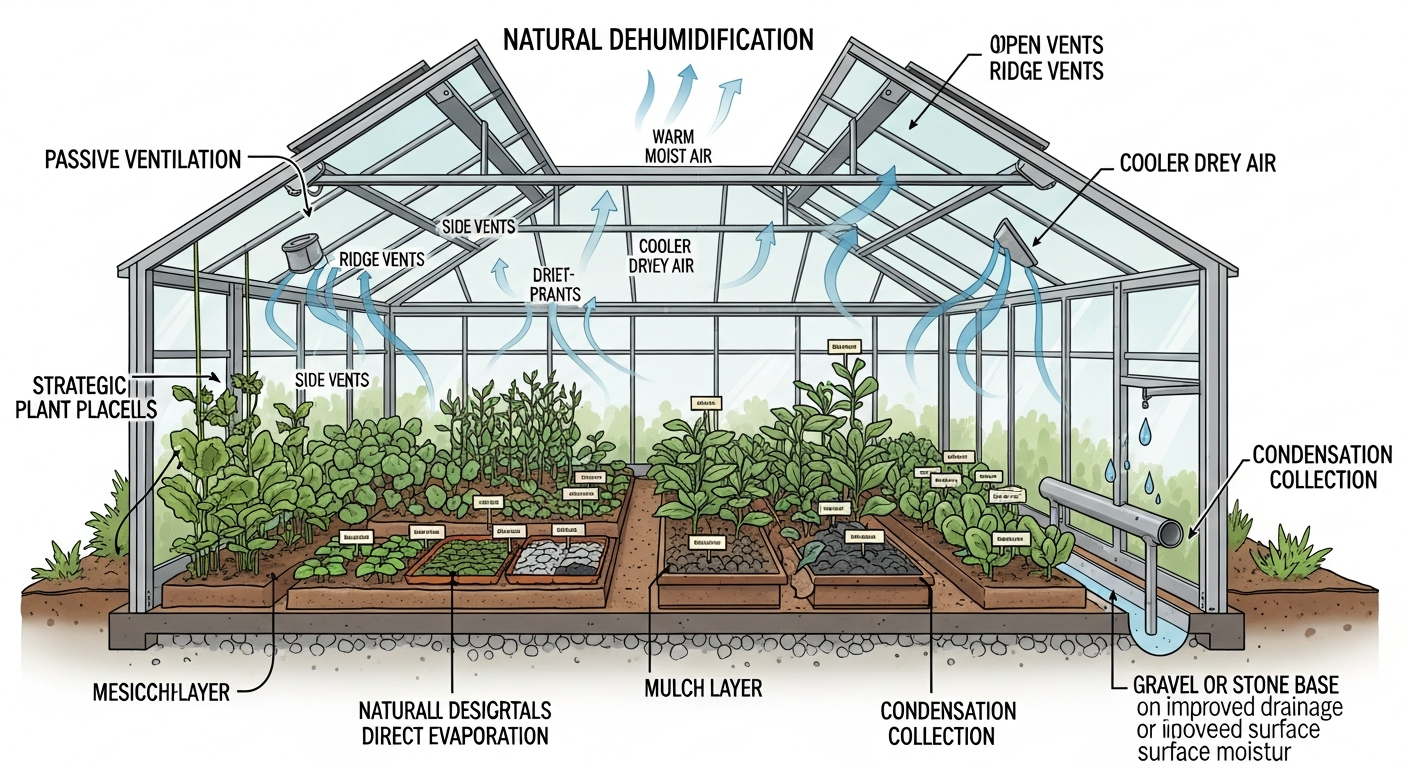
- Ridge and Side Vents: Warm, humid air naturally rises. Installing vents along the ridge of your greenhouse allows this warm, moist air to escape. Simultaneously, cooler, drier air can be drawn in through side vents or louvers located lower down. This creates a natural convection current that flushes out humidity.
- Strategic Orientation: Orienting your greenhouse to take advantage of prevailing winds can enhance natural air movement.
- Thermal Chimney Effect: Designing the greenhouse structure to maximize the thermal chimney effect, where rising warm air pulls in cooler air from below, can be very effective for natural ventilation.
Active Ventilation for Enhanced Airflow
While passive methods are excellent, sometimes a boost is needed. Active ventilation, using fans, can augment natural airflow, especially during still periods or when outdoor humidity is also high but lower than inside.
- Circulation Fans: Even if you’re not exchanging air with the outside, internal circulation fans (Horizontal Air Flow – HAF fans) are crucial. They prevent pockets of stagnant, humid air, promote even temperature distribution, and strengthen plant stems. This constant movement reduces the microclimates where diseases flourish.
- Exhaust Fans: Paired with intake vents, thermostatically or humidistatically controlled exhaust fans can rapidly expel humid air. While these use electricity, they are often more energy-efficient than dedicated dehumidifiers for bulk air exchange.
Practical Tip: Consider using “ventilation with heat” during periods of high humidity. By briefly running heaters while also venting, you can warm the air, allowing it to hold more moisture, and then vent out that moisture-laden air. This technique, though using some energy, is highly effective for reducing relative humidity without excessive cooling.
Strategic Watering Practices to Minimize Humidity
The way you water your plants has a direct and significant impact on the overall humidity within your greenhouse. Smart watering practices are a key natural dehumidification technique.
- Water in the Morning: Water your plants early in the day. This allows excess moisture to evaporate throughout the day when temperatures are rising and ventilation is typically highest, ensuring leaves are dry before nightfall. Wet foliage overnight is an open invitation for fungal diseases.
- Bottom Watering or Drip Irrigation: Instead of overhead watering, which wets leaves and saturates the air, opt for bottom watering or drip irrigation systems. These methods deliver water directly to the root zone, minimizing the amount of water introduced into the air through evaporation from leaf surfaces.
- Avoid Overwatering: Overwatered plants lead to constantly wet soil surfaces, contributing significantly to ambient humidity. Learn your plants’ specific water needs and allow the topsoil to dry slightly between waterings.
- Adequate Drainage: Ensure all pots and growing beds have excellent drainage. Standing water, even in saucers, evaporates and adds to the humidity load.
Plant Spacing, Selection, and Cultural Practices
The plants themselves, and how you arrange them, can either exacerbate or alleviate humidity issues. Thoughtful planning can make a big difference.
Optimal Plant Spacing
Crowded plants restrict airflow, creating localized pockets of high humidity around foliage. Giving plants adequate space allows air to circulate freely among them, helping to dry leaves and reduce the risk of disease. This is a simple yet often overlooked natural dehumidification strategy.
Plant Selection Considerations
While you might have specific crops in mind, being aware of certain plant characteristics can help. Some plants naturally release more moisture than others. Consider planting varieties known for their resilience in specific humidity ranges if possible. Additionally, some plants are more susceptible to humidity-driven diseases, requiring extra attention to spacing and air movement.
Pruning and Defoliation
Regular pruning to remove dead or diseased leaves, as well as strategic defoliation of lower leaves on mature plants, improves air circulation within the plant canopy. This not only reduces the amount of transpiring leaf surface adding moisture to the air but also removes potential disease entry points and hiding spots for pests.
Passive Moisture Absorption and Management
Beyond active air movement and watering adjustments, there are some passive ways to manage moisture within your greenhouse environment.
- Absorbent Ground Cover: Using a layer of gravel, sand, or a breathable ground cover instead of bare soil can help manage surface moisture. These materials can absorb some excess moisture and also facilitate better drainage.
- Thermal Mass: Materials like water barrels, concrete, or stone walls can act as thermal mass. They absorb heat during the day and release it slowly at night. While primarily for temperature regulation, the warming effect can slightly reduce relative humidity, especially during cooler periods when condensation is a concern. The heat release can also help dry out the air.
- Natural Desiccants (Limited Use): While not a primary solution for large-scale greenhouse humidity, for very small, enclosed spaces, natural desiccants like silica gel or calcium chloride can absorb moisture. However, for an entire greenhouse, their capacity is quickly overwhelmed, and they require frequent replacement or regeneration. They are more suited for specific storage areas rather than active growing zones.
Practical Tip: Monitor your greenhouse conditions regularly. Invest in a good hygrometer to track relative humidity. Observing your plants for signs of stress or disease will also give you early warnings that your humidity management needs adjustment.
Conclusion: Cultivating a Naturally Balanced Greenhouse
Mastering natural dehumidification techniques is not just about avoiding disease; it’s about creating a harmonious, energy-efficient, and truly sustainable greenhouse ecosystem. By focusing on robust ventilation, precise watering practices, thoughtful plant spacing, and smart cultural habits, you empower your plants to thrive without heavy reliance on energy-intensive equipment.
Embracing these methods contributes to lower operating costs, a reduced environmental footprint, and ultimately, healthier, more productive crops. Your greenhouse will become a testament to intelligent, nature-aligned cultivation, demonstrating that sustainable greenhouse management is both achievable and incredibly rewarding. Start implementing these strategies today and witness the transformation in your greenhouse climate!