
For any dedicated greenhouse grower, maintaining optimal temperatures is a perpetual challenge, especially when winter’s chill descends. Traditional heating methods, while effective, often come with hefty energy bills and a significant carbon footprint. But what if there was a way to harness the Earth’s stable temperature to keep your plants warm, efficiently and sustainably? Enter Ground-to-Air Heat Exchangers, or GAHT systems – an ingenious solution that’s transforming how we approach greenhouse heating.
GAHT systems offer a powerful blend of energy efficiency, cost savings, and enhanced plant health by utilizing the consistent thermal mass of the earth. If you’re looking to elevate your greenhouse climate control, reduce your reliance on fossil fuels, and create a more stable growing environment, understanding the role of GAHT systems in heating is absolutely crucial. Let’s delve into how these remarkable systems work and why they’re becoming an indispensable tool for modern greenhouse enthusiasts.
What are GAHT Systems and How Do They Work?
A Ground-to-Air Heat Exchanger (GAHT) system is, at its core, a passive or semi-passive geothermal heating and cooling system designed specifically for greenhouses. It leverages the stable temperature of the earth a few feet below the surface, which remains relatively constant year-round, typically between 50-60°F (10-15°C) in many temperate climates, regardless of the fluctuating air temperature above ground.
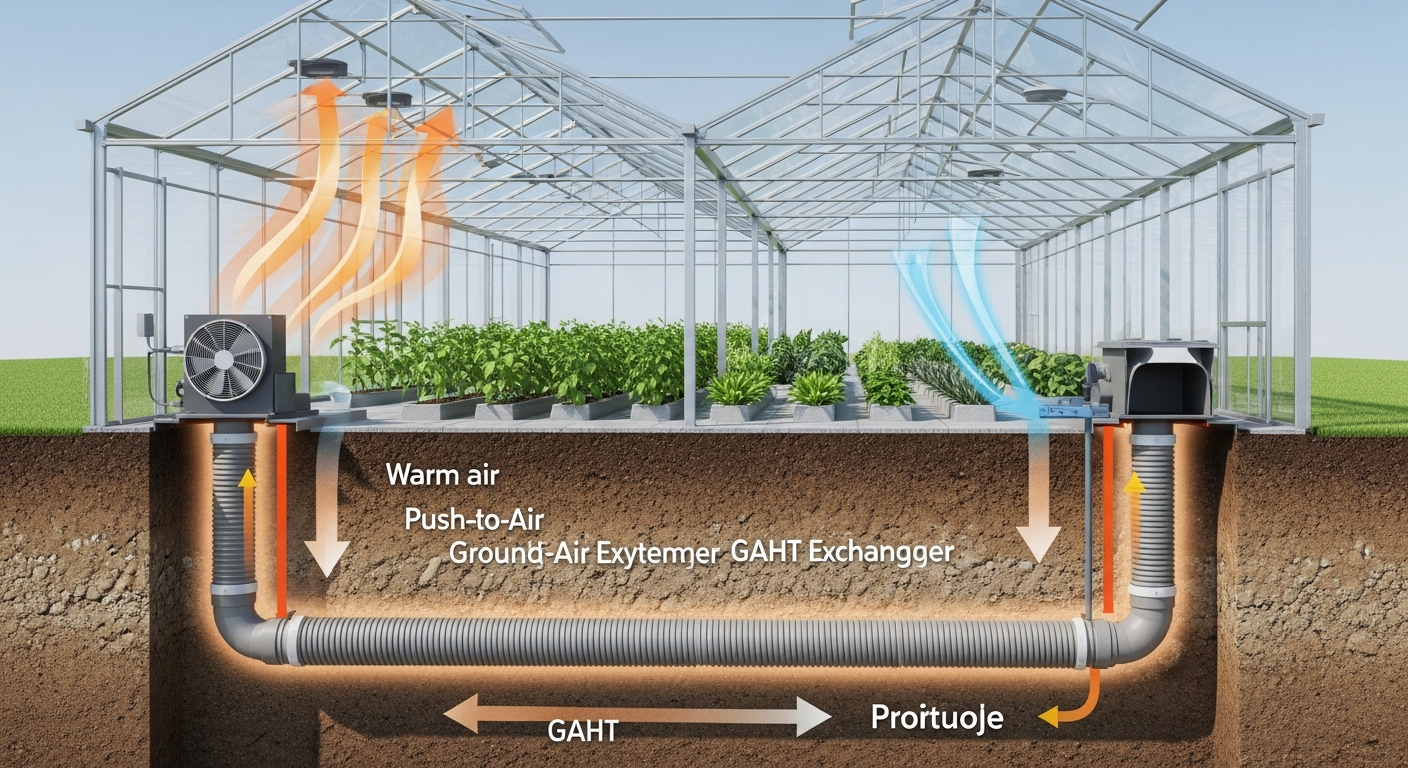
The basic components of a GAHT system include:
- Buried Ducting: A network of pipes, typically made from durable materials like PVC or HDPE, buried at a depth of 2-6 feet (0.6-1.8 meters) beneath the greenhouse floor. This depth allows the pipes to interact with the stable soil temperature.
- Fans: Low-power fans are strategically placed to draw air into and push it through the buried ducting system.
- Air Intakes/Exhausts: Vents or louvers located both inside the greenhouse (to draw warm, humid air in summer or cool, dry air in winter) and outside (to draw ambient air when needed).
The Heating Process:
When the greenhouse air temperature drops below the desired range, the GAHT system springs into action. Fans pull the colder air from within the greenhouse (or sometimes from outside, depending on the system’s design and external conditions) into the underground pipes. As this air travels through the buried ducts, it exchanges heat with the surrounding soil. Since the soil at that depth is warmer than the cold greenhouse air, the air picks up heat, warming to a temperature closer to the soil’s stable temperature.
This warmed air is then quietly and efficiently redistributed back into the greenhouse environment, providing gentle, consistent heating. This process is continuous, running whenever the temperature differential dictates, effectively using the earth as a massive thermal battery to stabilize the greenhouse climate. The result is a more uniform air and soil temperature, which is highly beneficial for plant growth and overall energy efficiency.
The Heating Advantage: Why GAHT Systems Excel for Greenhouses
The primary appeal of a GAHT system lies in its ability to provide incredibly efficient and sustainable heating, directly addressing many common greenhouse challenges:
Exceptional Energy Efficiency and Cost Savings
Unlike traditional heaters that burn fuel or use electricity to generate heat from scratch, GAHT systems simply move existing heat from the earth into your greenhouse. This process requires significantly less energy, primarily to power the fans. By leveraging the earth’s natural thermal mass, growers can drastically reduce their reliance on supplemental heating sources during cooler months, leading to substantial energy cost savings over time. This passive heating capability makes GAHT systems a cornerstone of energy-efficient greenhouse operation.
Consistent Temperature Regulation and Reduced Fluctuations
One of the most detrimental factors for plant health in a greenhouse is extreme temperature fluctuation between day and night. GAHT systems excel at mitigating these swings. During cold nights, the system draws on the stored heat in the earth to warm the greenhouse air, preventing temperatures from plummeting. This consistent temperature regulation creates a more stable and less stressful environment for plants, promoting steady growth and reducing instances of cold shock or stress-related diseases.
Beneficial Root Zone Heating
Beyond warming the ambient air, the radiant heat from the buried pipes can also subtly warm the soil around them. This creates a beneficial effect known as root zone heating. Many plants thrive when their roots are kept slightly warmer than the surrounding air. GAHT systems naturally provide this, encouraging vigorous root development, nutrient uptake, and overall plant vitality, which can lead to healthier plants and potentially higher yields.
Sustainable and Environmentally Friendly
In an era where sustainability is paramount, GAHT systems stand out as an eco-conscious choice. By minimizing the need for fossil fuel-based heating, they significantly reduce a greenhouse’s carbon footprint. They harness a renewable resource – the earth’s geothermal energy – contributing to a more sustainable greenhouse operation and demonstrating a commitment to environmentally responsible growing practices.
Beyond Heating: Additional Climate Control Benefits
While their role in heating is paramount, GAHT systems are remarkably versatile and offer several other significant climate control advantages that benefit the greenhouse environment:
Passive Cooling in Warmer Months
The beauty of the GAHT system is its bidirectional functionality. Just as it transfers heat from the earth to the greenhouse in winter, it can transfer heat from the greenhouse to the cooler earth in summer. When internal greenhouse temperatures become too high, the fans draw hot air through the buried pipes. The soil, being cooler than the hot air, absorbs this excess heat, returning cooled air to the greenhouse. This passive cooling significantly reduces the need for energy-intensive air conditioning or extensive ventilation, providing a natural way to keep plants comfortable during heat waves.
Humidity Management
GAHT systems can play a crucial role in managing humidity levels, which is vital for preventing fungal diseases and promoting healthy plant growth. During cold periods, the system helps to circulate air, preventing pockets of stale, humid air. In warmer, humid conditions, as hot, moist air passes through the cooler underground pipes, some of the moisture can condense within the pipes (and often drain away), effectively dehumidifying the air before it’s returned to the greenhouse. Conversely, in very dry conditions, the moisture in the soil can subtly contribute to air humidity, though this effect is generally less pronounced than dehumidification.
Enhanced Air Circulation and Fresh Air Exchange
The continuous operation of the GAHT fans ensures constant air movement throughout the greenhouse. This improved air circulation helps to homogenize temperatures, prevents stratification of hot or cold air, and reduces localized humidity build-up around plants. Furthermore, by drawing in air and circulating it, GAHT systems contribute to a healthier environment, reducing the risk of airborne diseases and promoting overall plant vigor.
Designing and Installing a GAHT System for Optimal Heating
Implementing a GAHT system requires careful planning, but the investment in design pays off in long-term performance. Here are key considerations for maximizing its heating potential:
1. Site Assessment and Soil Characteristics
Before digging, understand your soil. Sandy soils transfer heat differently than clay soils. Good drainage is essential to prevent waterlogging around the pipes, which can affect thermal transfer efficiency. Assess the available space and any potential underground obstacles.
2. Ducting Material, Depth, and Layout
- Material: Schedule 40 PVC or corrugated HDPE (high-density polyethylene) pipes are commonly used. They must be durable, non-toxic, and resistant to crushing under the weight of the soil.
- Depth: Burying pipes between 2-6 feet (0.6-1.8 meters) deep ensures access to stable soil temperatures. Deeper pipes offer more consistent temperatures but are harder to install.
- Layout: Common layouts include parallel runs spaced 3-5 feet (0.9-1.5 meters) apart, connected by manifold systems at each end. Ensure a slight slope for condensation drainage if humidity control is a goal.
- Total Length: The total length and diameter of your pipes need to be appropriately sized for your greenhouse volume. A common guideline is 1 linear foot of 4-inch pipe per 1-2 square feet of greenhouse floor space, though this varies significantly with climate and greenhouse insulation. Consult with specialists or detailed guides.
3. Fan Selection and Airflow
The fans are the heart of your GAHT system. Select energy-efficient fans with adequate CFM (cubic feet per minute) to move the entire volume of greenhouse air through the ducts several times per hour. Consider static pressure capabilities to ensure efficient airflow through the pipe network. Variable speed fans offer greater control and energy savings.
4. Integration with Existing Systems
A GAHT system can work wonders, but in extremely cold climates, it may not be sufficient as the sole heating source. Design your system to integrate seamlessly with supplemental heating (e.g., propane heaters, electric heaters) that can kick in during severe cold snaps or to boost temperatures quickly when needed. This creates a resilient, multi-layered climate control strategy.
5. Professional Guidance vs. DIY
While savvy DIYers can certainly tackle a GAHT system, especially for smaller greenhouses, consulting with or hiring professionals experienced in greenhouse climate control or geothermal systems can prevent costly mistakes. They can help with proper sizing, layout, and fan selection specific to your greenhouse and local climate.
Maximizing Heating Performance and Best Practices
Once your GAHT system is installed, a few best practices can ensure it delivers maximum heating performance and efficiency:
Smart Controls and Automation
Invest in a reliable thermostat and timer system. Programmable thermostats can automatically activate the GAHT fans when greenhouse temperatures drop below your desired set point. Consider systems that can log temperature data, allowing you to fine-tune run times and optimize heating cycles.
Optimal Fan Run Times
For heating, run your GAHT fans predominantly during the coldest parts of the day and night. The goal is to continuously draw cold air through the warm earth. Monitoring internal and external temperatures will help you determine the most efficient operating schedule. Some systems utilize temperature differential sensors to automatically engage fans when the soil temperature is warmer than the greenhouse air.
Greenhouse Insulation and Sealing
A GAHT system works best in a well-insulated and sealed greenhouse. Any gaps, cracks, or poorly insulated walls/roof will allow precious heat to escape, forcing your GAHT system to work harder. Prioritize good glazing, proper sealing of vents and doors, and consider adding insulation to knee walls or foundations to maximize the GAHT system’s effectiveness and reduce overall heat loss.
Regular Maintenance and Monitoring
Periodically check your fan motors for proper operation and cleanliness. Ensure that air intakes are clear of debris. Install temperature sensors both above ground (air temperature) and below ground (soil temperature at duct depth) to monitor the system’s performance and ensure efficient heat exchange. Keeping an eye on these metrics allows for proactive adjustments.
Complementary Heating Strategies
While GAHT provides excellent base load heating, be prepared to use supplemental heating during extreme cold events. Think of your GAHT system as your primary, super-efficient heater, with traditional heaters as backup. This ensures plant safety regardless of the weather, providing peace of mind and protecting your valuable crops.
Conclusion
Ground-to-Air Heat Exchangers represent a pivotal advancement in sustainable greenhouse climate control. By harnessing the stable thermal energy of the earth, GAHT systems offer an incredibly energy-efficient, cost-effective, and environmentally friendly solution for greenhouse heating. Beyond simply keeping your plants warm, they provide consistent temperature regulation, beneficial root zone heating, passive cooling in summer, and improved air circulation, contributing to a holistic and optimal growing environment.
For greenhouse enthusiasts committed to sustainability, reducing energy costs, and fostering robust plant health, integrating a GAHT system is an investment that pays dividends for years to come. Embrace the power of the earth to transform your greenhouse into a more stable, productive, and eco-friendly haven for your plants.