
Greenhouses are incredible environments for cultivating plants, offering protection and an extended growing season. However, harnessing sunlight effectively is a delicate balance. Too little light, and plants become leggy; too much, and they suffer from heat stress, scorching, and reduced yields. This is where greenhouse shading solutions become indispensable tools for any serious grower. Deciding whether to implement a fixed or a movable shading system is a pivotal choice that impacts everything from plant health to energy costs and overall operational efficiency. At Greenhouse Climates, we understand the nuances of managing your greenhouse environment, and today, we’re diving deep into the pros and cons of fixed versus movable shading to help you make an informed decision for optimal climate control.
The Critical Role of Greenhouse Shading
Before comparing specific solutions, it’s vital to understand why shading is so crucial. High levels of solar radiation can rapidly increase temperatures inside a greenhouse, often far exceeding outside ambient temperatures. This excess heat leads to:
- Heat Stress: Plants can wilt, slow growth, and even die.
- Sunburn/Scorching: Direct, intense sunlight can damage leaves and fruit.
- Reduced Photosynthesis Efficiency: While plants need light, excessive intensity can actually hinder their ability to photosynthesize effectively, especially at higher temperatures.
- Increased Water Usage: Plants transpire more rapidly under high heat and light, demanding more water.
- Energy Drain: Overheating forces ventilation systems to work harder, consuming more electricity.
Effective greenhouse shading helps mitigate these issues by reducing light intensity and heat gain, creating a more stable and favorable microclimate for your crops. It’s a cornerstone of modern greenhouse climate control.
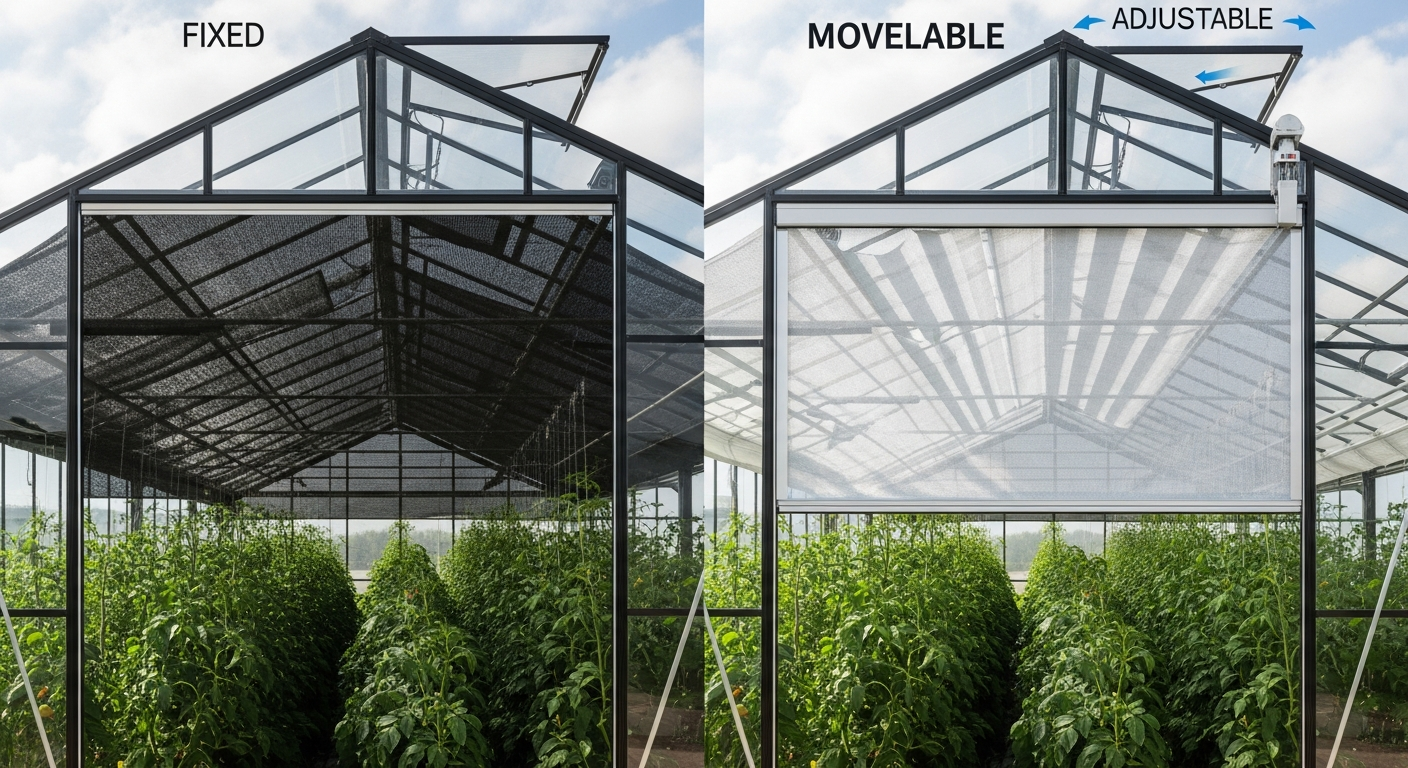
Fixed Greenhouse Shading Solutions: A Permanent Approach
Fixed shading solutions, as their name suggests, are designed to provide a consistent, non-adjustable level of shade throughout their operational period. They are often chosen for their simplicity and lower initial cost.
Types of Fixed Shading
- Shade Paint or Coatings: These are liquid solutions applied directly to the exterior of the greenhouse glazing. They typically dry to a white, translucent film that reflects sunlight.
- Pros: Generally very cost-effective, easy to apply (can be sprayed or rolled), and provide uniform shading. Can be removed at the end of the season.
- Cons: Not adjustable. Once applied, the shade level is constant, regardless of cloud cover or seasonal changes. Can reduce beneficial light during cooler or darker periods, potentially requiring supplemental lighting. Removal can be labor-intensive.
- Fixed Shade Cloth: A woven or knitted fabric, often made from high-density polyethylene, designed to block a specific percentage of sunlight (e.g., 30%, 50%, 70%). It can be installed either internally or externally.
- Pros: Durable, available in various shade percentages to match specific crop needs, and offers consistent light reduction. External applications are very effective at blocking heat before it enters.
- Cons: Like paint, it’s fixed. It blocks light even on cloudy days or during winter when maximum light is desired. External cloth can accumulate dirt and debris, reducing light transmission, and is susceptible to wind damage. Internal cloth still allows some heat to enter the greenhouse structure before being diffused.
- Tinted Glazing: While less common as a primary shading solution for highly dynamic environments, some greenhouses might incorporate tinted polycarbonate or glass panels.
- Pros: Integrated, aesthetically pleasing.
- Cons: Extremely permanent, expensive, and offers no flexibility for varying light needs.
Advantages of Fixed Shading
- Simplicity: Fewer moving parts mean less to maintain or break down.
- Lower Initial Cost: Especially for shade paint or basic fixed shade cloth installations.
- Consistent Protection: Provides reliable shading without constant monitoring or adjustment.
Disadvantages of Fixed Shading
- Lack of Flexibility: This is the most significant drawback. It cannot be adjusted for changing weather, seasons, or specific crop requirements throughout the day.
- Suboptimal Light Conditions: Fixed shading often means plants receive less light than ideal on cloudy days or during lower sun angles, potentially hindering growth.
- Potential for Energy Waste: By blocking beneficial winter sun, fixed shading can increase heating costs. Conversely, if insufficient for peak summer, cooling costs will rise.
Movable Greenhouse Shading Solutions: Dynamic Climate Control
Movable shading systems offer a more dynamic and responsive approach to greenhouse climate control. They allow growers to adjust shading levels based on real-time conditions, optimizing light and temperature for different stages of plant growth and varying external weather patterns.
Types of Movable Shading Systems
- Internal Shade Screens: These systems consist of a fabric screen (similar to shade cloth) that is installed inside the greenhouse structure. They can be manually pulled across or automatically deployed using motors and sensors.
- Roll-Up Systems: Screens roll up along the sides or roof.
- Pull-Across (Horizontal) Systems: Screens retract and extend across the roof structure, often utilizing wires and drive mechanisms.
- Pros: Protected from external weather, available in a wide range of shade percentages and materials (some also offer energy retention benefits), very effective for light diffusion. When retracted, they allow full light penetration.
- Cons: Can take up valuable head-space when retracted. Installation can be more complex and costly than fixed solutions. Still allows some heat to enter the greenhouse before being blocked.
- External Retractable Shade Systems: These systems are mounted on the exterior of the greenhouse and deploy a shade screen over the roof and/or sides.
- Pros: Highly effective at blocking solar radiation before it enters the greenhouse, significantly reducing heat gain. Allows for full light on demand.
- Cons: More exposed to wind, rain, and UV degradation, requiring more robust materials and mechanisms. Higher initial cost and more complex maintenance. Can be susceptible to damage in severe weather.
- Automated vs. Manual Systems:
- Manual: Requires physical effort to open and close the screens, suitable for smaller greenhouses or growers who prefer hands-on control.
- Automated: Utilizes motors, sensors (light, temperature, wind), and control systems to open and close screens automatically.
- Pros: Precise control, saves labor, responds instantly to changing conditions, can be integrated with full climate control systems.
- Cons: Higher upfront cost, requires electrical power, potential for mechanical or sensor failure.
Advantages of Movable Shading
- Flexibility & Precision: Growers can provide exactly the right amount of light and shade at any given moment, optimizing conditions for plant growth.
- Energy Efficiency: By allowing maximum light during cooler periods and deploying shade only when needed, movable systems can reduce both heating and cooling costs. Many internal systems also double as energy screens to retain heat at night.
- Optimal Plant Health: Reduced heat stress, prevention of scorching, and tailored light exposure lead to healthier, more vigorous plants and improved yields.
- Versatility: Suitable for multi-crop greenhouses with varying light requirements or different stages of growth.
Disadvantages of Movable Shading
- Higher Initial Cost: Mechanical systems, motors, and control units are more expensive to purchase and install.
- Increased Complexity: More components mean more potential points of failure and require a higher level of maintenance and technical understanding.
- Maintenance Requirements: Motors, sensors, and fabric integrity need regular checks to ensure reliable operation.
Choosing the Right Shading Solution for Your Greenhouse
The “best” shading solution isn’t universal; it depends entirely on your specific needs, budget, and growing environment. Here are key factors to consider:
Factors to Consider
- Crop Type and Light Requirements: Are you growing sun-loving tomatoes or shade-tolerant orchids? Do your plants’ light needs change significantly throughout their lifecycle?
- Geographic Location & Climate: How intense is your summer sun? Do you experience significant seasonal variations in light and temperature? Windy conditions might make external retractable systems riskier.
- Budget: What is your upfront investment capacity? Remember to consider long-term operating costs and potential energy savings.
- Greenhouse Size and Design: Smaller hobby greenhouses might manage well with manual fixed or simple movable solutions. Large commercial operations almost always benefit from automated movable systems.
- Level of Control Desired: Do you want hands-on control, or do you prefer a set-it-and-forget-it automated system?
- Energy Efficiency Goals: If reducing energy consumption is a top priority, a movable system that doubles as an energy curtain will be highly beneficial.
Practical Tips
- Start with Clear Objectives: Define what you want your shading system to achieve (e.g., specific temperature range, light levels, energy savings).
- Consider a Hybrid Approach: For some, a base layer of fixed shade (e.g., a lighter shade paint or a low-percentage fixed shade cloth) combined with a movable system for peak control can be an effective and economical compromise.
- Consult with Experts: Don’t hesitate to reach out to greenhouse design and climate control specialists. They can offer tailored advice based on your specific setup.
- Future-Proof Your Investment: If your budget allows, investing in a good quality movable system, especially an automated one, often pays dividends in terms of plant health, yield, and energy savings over time. It offers flexibility as your growing strategies or crop types evolve.
Conclusion
Both fixed and movable greenhouse shading solutions offer distinct advantages and disadvantages. Fixed solutions are straightforward and cost-effective for consistent, unchanging shade requirements. However, their lack of adaptability can lead to suboptimal light conditions and potential energy waste. Movable shading systems, while requiring a higher initial investment and more maintenance, provide unparalleled flexibility, precision, and efficiency in climate control, ultimately leading to healthier plants, higher yields, and significant long-term energy savings. The right choice hinges on a careful assessment of your specific growing goals, environmental conditions, and budget. By thoughtfully considering these factors, you can select the perfect shading strategy to help your greenhouse climatically thrive. For more insights into optimizing your greenhouse environment, visit us at greenhouseclimates.com.