
Greenhouses are incredible environments for cultivating plants, extending growing seasons, and protecting delicate flora. However, the very design that maximizes solar gain for warmth in cooler months can quickly turn into a significant challenge when temperatures rise. Managing heat stress is paramount for plant health and productivity, making effective greenhouse cooling an absolute necessity. But cooling comes at a cost, particularly in terms of energy consumption. Understanding the energy demands of different cooling methods is crucial for any greenhouse owner looking to optimize operational efficiency and minimize their carbon footprint.
From hobbyists to large commercial operations, the goal remains the same: create an ideal climate without breaking the bank on utility bills. This article will delve into the energy consumption profiles of various greenhouse cooling strategies, helping you make informed decisions for your specific setup.
The Critical Need for Greenhouse Cooling and Its Energy Footprint
A greenhouse, by definition, traps solar radiation, leading to a rapid increase in internal temperatures. While beneficial in winter, this “greenhouse effect” can quickly push temperatures far beyond what most plants can tolerate, leading to:
- Wilting and scorching
- Reduced photosynthesis and growth rates
- Flower and fruit drop
- Increased susceptibility to pests and diseases
- Even plant death in extreme cases
Therefore, managing this heat is not optional; it’s fundamental to successful cultivation. The energy consumed by greenhouse cooling systems represents a significant portion of a greenhouse’s overall operational costs, especially in warmer climates or during peak summer months. Factors influencing this energy consumption include the size of the greenhouse, the desired temperature differential, the local climate conditions (ambient temperature, humidity), the type of crop being grown, and the efficiency of the cooling system itself.
Passive Cooling Strategies: Low Energy, High Impact
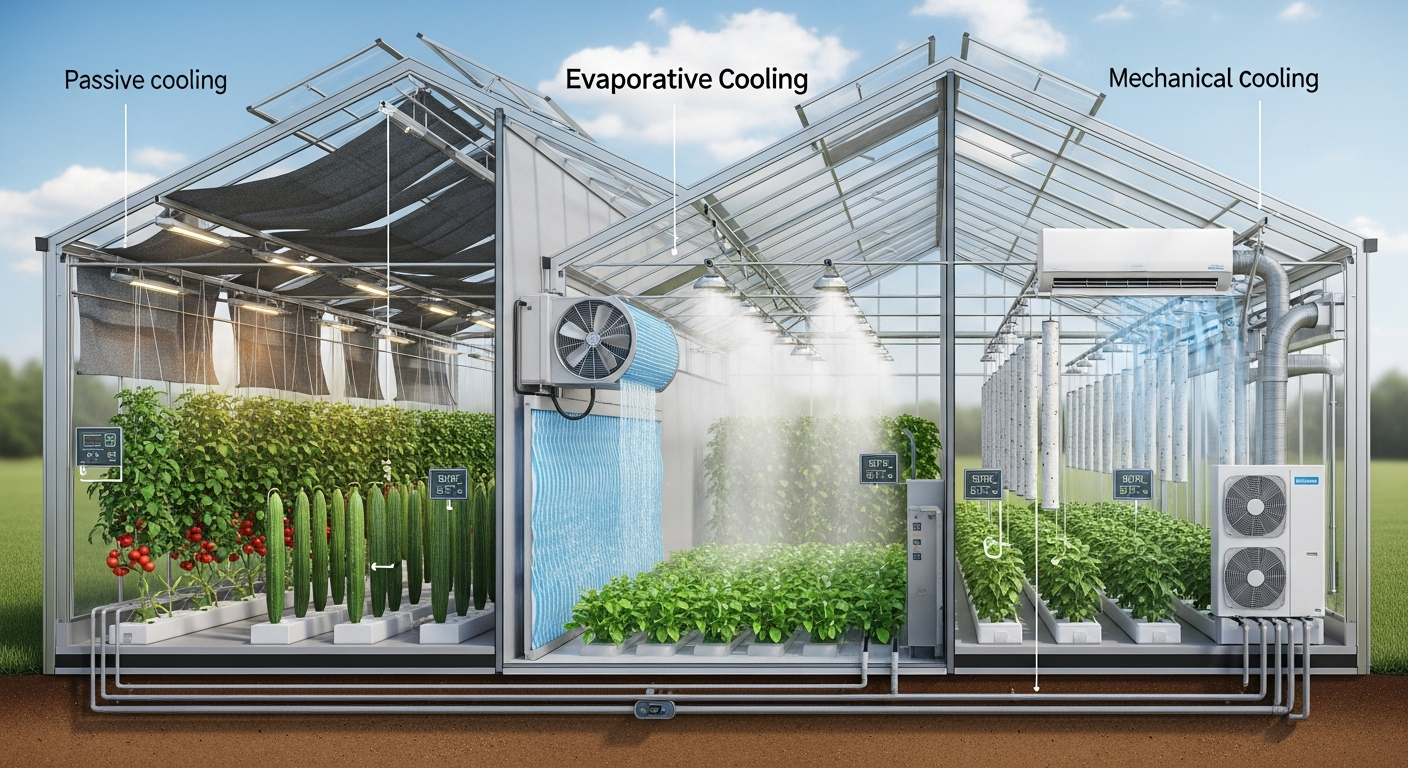
Before considering energy-intensive active systems, it’s wise to maximize passive cooling. These methods leverage natural principles and typically have minimal to zero direct energy consumption, making them the most environmentally friendly and cost-effective first line of defense against overheating.
Natural Ventilation
One of the simplest and most effective ways to cool a greenhouse is through natural ventilation. This involves opening vents, windows, or sidewalls to allow hot air to escape and cooler air to enter. Hot air rises, creating a chimney effect, while strategically placed side vents allow for cross-ventilation. Modern greenhouses often feature automated roof and side vents that open and close based on temperature sensors. While the actuators for these vents consume a small amount of electricity, the energy used for the actual cooling process (air exchange) is virtually zero.
- Energy Consumption: Very low (primarily for automated vent openers, if used).
- Pros: Highly effective, virtually free to operate, provides fresh air and CO2.
- Cons: Limited effectiveness on still, hot days; cannot precisely control temperature; introduces external humidity and pests.
Shade Cloths and Whitewash
Reducing the amount of solar radiation entering the greenhouse is a straightforward way to prevent heat buildup. Shade cloths, applied either externally or internally, block a percentage of sunlight, thereby lowering internal temperatures. Similarly, applying a whitewash or specialized reflective coating to the exterior of the glazing achieves the same effect by reflecting sunlight away. These methods require no ongoing energy input for cooling itself.
- Energy Consumption: Zero for the actual cooling. Minimal if automated shade systems are used.
- Pros: Highly effective at reducing solar gain, no operational energy cost, protects plants from direct sun.
- Cons: Reduces light levels, which may be detrimental to some crops; can be labor-intensive to deploy/remove manually.
Active Evaporative Cooling Methods: Water-Wise Energy Solutions
When passive methods aren’t sufficient, evaporative cooling systems offer an energy-efficient alternative, particularly in dry climates. These systems work on the principle of evaporative cooling: as water evaporates, it absorbs latent heat from the air, thereby lowering the air temperature. This process is significantly more energy-efficient than traditional refrigeration.
Fan and Pad Systems
A staple in many commercial greenhouses, the fan and pad system consists of exhaust fans installed on one end of the greenhouse and wetted cellulose pads on the opposite end. As the fans pull hot air out, fresh air is drawn through the saturated pads. Water evaporating from the pads cools the incoming air before it enters the growing space.
- Energy Consumption: Moderate. The primary energy draw comes from the large exhaust fans and a circulation pump to keep the pads wet. Fan sizes and numbers depend on the greenhouse volume and desired air exchange rate.
- Pros: Very effective for cooling large areas, relatively low energy consumption compared to mechanical refrigeration, also increases humidity.
- Cons: High water usage, effectiveness decreases significantly in humid climates, requires regular maintenance (pad cleaning/replacement, water quality management).
Fogging and Misting Systems
Fogging and misting systems introduce fine droplets of water directly into the greenhouse air. High-pressure pumps force water through specialized nozzles, creating a fine fog or mist that quickly evaporates, cooling the air. These systems can also be used for humidity control.
- Energy Consumption: Moderate. The main energy consumption is from the high-pressure pumps that atomize the water. Smaller systems may use lower-pressure pumps with less energy demand, but produce larger droplets which might not evaporate as efficiently.
- Pros: Can provide precise temperature and humidity control, effective for spot cooling, can be integrated with other systems.
- Cons: Can lead to leaf wetness if droplets are too large or air circulation is poor, requires high-quality water to prevent nozzle clogging, initial installation costs can be higher.
Comparing evaporative systems: While both use the principle of evaporation, fan and pad systems are generally more energy-efficient for bulk cooling of large greenhouse volumes. Fogging/misting systems offer more flexibility for zonal cooling or specific humidity requirements but might have slightly higher pump-related energy costs for the same cooling capacity if not properly designed.
Mechanical Cooling Systems: High Energy, Specific Needs
For applications requiring extremely precise temperature control, or in climates where evaporative cooling is ineffective (e.g., very high humidity environments), mechanical cooling systems like traditional air conditioning or HVAC units may be considered. These are by far the most energy-intensive options.
Traditional Air Conditioning (HVAC)
Standard compressor-based air conditioning units work by removing heat and moisture from the air and expelling it outdoors. While ubiquitous in homes and offices, their use in greenhouses is generally limited due to their exceptionally high energy consumption.
- Energy Consumption: Very high. HVAC systems use significant amounts of electricity to run compressors and fans. Cooling a large, constantly sun-drenched greenhouse with AC would incur prohibitive operational costs.
- Pros: Provides highly precise temperature and humidity control, effective in all climates regardless of ambient humidity, can be used for dehumidification.
- Cons: Extremely high electricity consumption, high operational costs, significant upfront investment.
- Use Cases: Primarily restricted to small propagation chambers, research greenhouses requiring exact environmental parameters, or specialized grow rooms for high-value crops where energy cost is secondary to environmental control.
Ground-Source Heat Pumps (GSHP)
While often discussed in the context of heating, ground-source heat pumps can also provide cooling by transferring heat from the greenhouse into the cooler earth. They are significantly more efficient than traditional air conditioners for cooling, as they don’t rely on ambient air temperatures to dissipate heat. However, they still require electricity to operate the compressor and pumps.
- Energy Consumption: High, but considerably lower than conventional AC for the same cooling capacity. The energy consumption depends on the ground loop efficiency and the specific system design.
- Pros: Highly energy-efficient compared to conventional AC, can provide both heating and cooling, long lifespan.
- Cons: Very high initial installation cost, requires significant land for the ground loops, still consumes more energy than passive or evaporative methods.
Optimizing Energy Consumption for Greenhouse Cooling
Regardless of the cooling methods you choose, several strategies can help minimize energy consumption and operational costs:
- Integrated Approach: Combine passive and active systems. Start with natural ventilation and shade, then activate evaporative cooling only when necessary.
- Smart Controls and Automation: Utilize sensors, thermostats, and programmable logic controllers (PLCs) to precisely manage cooling systems. Activating systems only when needed and cycling them efficiently prevents over-cooling and waste.
- Maintenance is Key: Regularly clean fan blades, evaporative pads, and misting nozzles. Dirty components reduce efficiency and increase energy draw. Check for leaks in water lines.
- Greenhouse Design: Proper orientation (e.g., east-west alignment to minimize summer sun exposure on long walls), adequate insulation, and reflective surfaces can all contribute to reducing the cooling load.
- Air Circulation: Ensure good internal airflow with horizontal airflow (HAF) fans. This prevents hot spots and helps distribute cooled air evenly, making your primary cooling systems more effective.
- Water Quality: For evaporative systems, using filtered or treated water can prevent mineral buildup on pads and nozzles, improving efficiency and reducing maintenance.
Conclusion
Effective greenhouse cooling is non-negotiable for plant health and productivity, but its energy consumption can be a significant operational expense. Understanding the energy profiles of different methods is the first step towards creating a more sustainable and cost-efficient growing environment. Passive strategies like natural ventilation and shade cloths offer the lowest energy consumption and should always be your primary defense against heat. Evaporative systems, such as fan and pad or fogging, provide an excellent balance of cooling effectiveness and moderate energy use, especially in drier climates. Mechanical refrigeration, while offering precise control, comes with a substantial energy penalty and is typically reserved for highly specialized applications.
By adopting an integrated approach, utilizing smart controls, prioritizing regular maintenance, and considering the specific needs of your climate and crops, you can significantly optimize your greenhouse cooling strategy. The goal is not just to cool your greenhouse, but to do so intelligently and sustainably, ensuring healthy plants and a healthy bottom line for Greenhouse Climates.