
As the days grow shorter and the temperatures plummet, greenhouse enthusiasts face a unique challenge: providing their precious plants with adequate fresh air without sacrificing critical warmth. Winter ventilation often feels counterintuitive, a direct assault on careful heat retention efforts. However, neglecting proper airflow during the colder months can lead to a host of problems, from rampant fungal diseases to stunted growth. The key lies in mastering the delicate dance between introducing essential fresh air and efficiently maintaining your greenhouse’s internal temperature. This article will delve into effective winter ventilation strategies, ensuring your plants thrive even when the world outside is frozen.
Why Winter Ventilation is Non-Negotiable (Even When It’s Cold)
Many greenhouse owners are tempted to seal their structures completely during winter, aiming to conserve every last joule of heat. While understandable, this approach overlooks several critical physiological needs of your plants and can quickly create an unhealthy environment. Proper winter ventilation isn’t just a good idea; it’s a vital component of successful greenhouse climate control.
Humidity Control and Pathogen Prevention
One of the most immediate and significant benefits of winter ventilation is humidity control. Plants release moisture through transpiration, and in a sealed environment, this water vapor quickly saturates the air. High humidity, especially when combined with cooler temperatures, leads to excessive condensation on leaves and greenhouse surfaces. This creates a perfect breeding ground for fungal diseases like Botrytis (gray mold) and powdery mildew, which can decimate your crop. Brief periods of air exchange expel humid air, significantly reducing the risk of pathogen prevention and protecting your plants.
Replenishing CO2 Levels
Plants require carbon dioxide (CO2) for photosynthesis, the process by which they convert light energy into chemical energy. In a sealed greenhouse, especially during daylight hours, plants can rapidly deplete the available CO2, limiting their growth potential. Introducing fresh air, even for short durations, helps to replenish CO2 levels, ensuring your plants have the necessary building blocks for robust growth. This is particularly crucial for active photosynthesis on brighter winter days.
Preventing Stagnant Air and Enhancing Plant Health
Stagnant air pockets can lead to localized humidity buildup, temperature stratification, and a general decline in plant health. Even without active ventilation, internal air circulation using horizontal air flow (HAF) fans is crucial. However, introducing fresh air helps to invigorate the entire growing environment, preventing the accumulation of airborne pathogens and encouraging stronger, more resilient plant growth. It’s about more than just temperature; it’s about the overall vitality of the atmosphere your plants breathe.
Understanding Passive vs. Active Winter Ventilation
When it comes to introducing fresh air into your greenhouse during winter, you generally have two main approaches: passive and active ventilation. Each has its advantages and challenges, and often a combination of both is the most effective strategy for optimal greenhouse management.
Passive Ventilation: The Gentle Approach
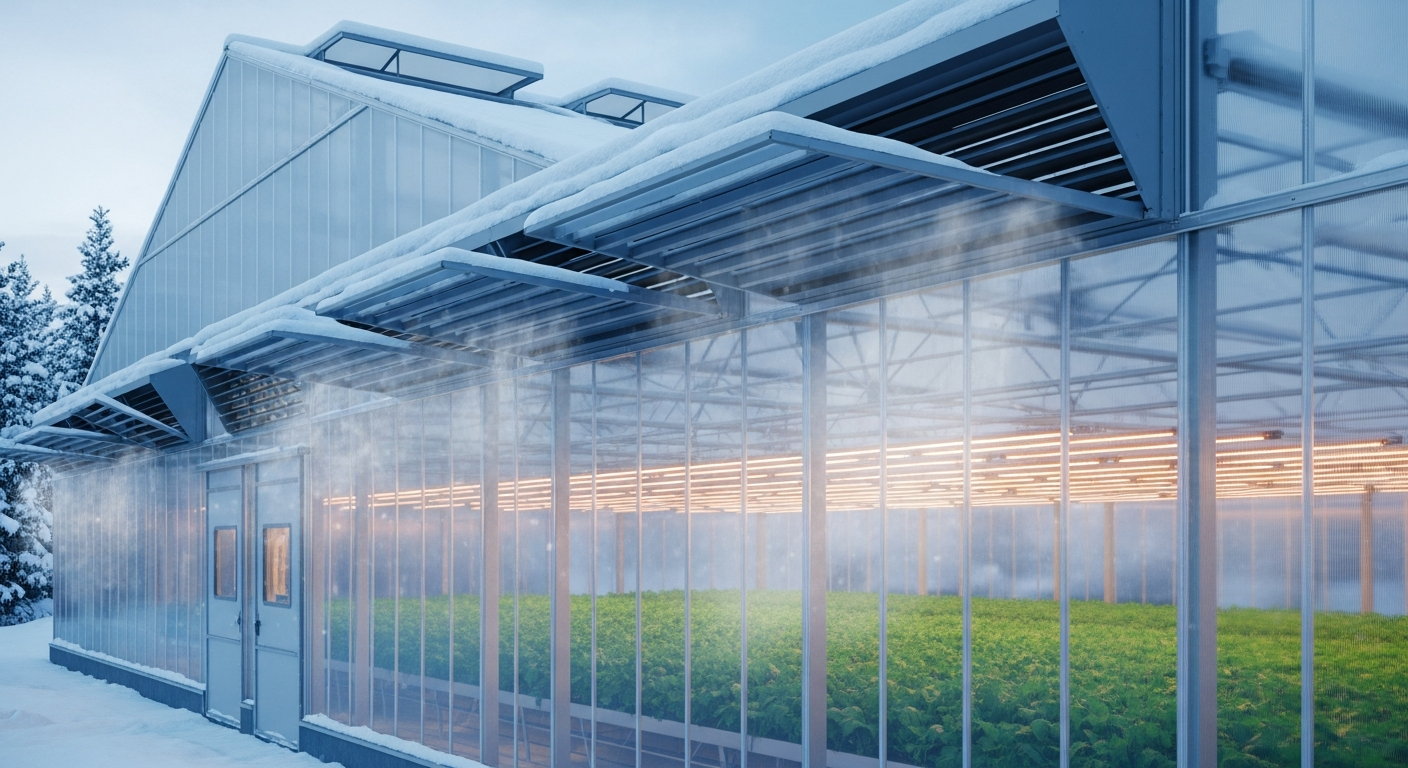
Passive ventilation relies on natural forces – primarily the principle that warm air rises and cool air sinks – to exchange air. It’s the most energy-efficient method, as it doesn’t require electricity for fans. This typically involves opening roof vents, side vents, or louvers on your greenhouse. In winter, the goal is not a complete air change but rather a gentle “burp” to release excess humidity and bring in a trickle of fresh air.
Tips for Passive Winter Ventilation:
- Timing is Crucial: Open vents during the warmest part of the day, usually midday, when outdoor temperatures are at their highest and solar gain is maximizing internal warmth.
- Minimal Openings: Instead of wide-open vents, crack them open just a few inches. Even a small opening can facilitate significant air exchange.
- Leeward Side: If your greenhouse has multiple vents, prioritize opening those on the leeward (downwind) side to minimize the ingress of harsh cold drafts directly onto plants.
- Short Durations: Keep ventilation periods brief – 15-30 minutes can often be enough to achieve the desired effect without significant heat loss.
Active Ventilation: Controlled Air Exchange
Active ventilation uses mechanical systems, primarily exhaust fans and motorized intake vents, to force air in and out of the greenhouse. This method provides much more precise control over the environment, making it ideal for larger greenhouses or those with specific climate requirements. While it consumes more energy, active ventilation allows for targeted control over humidity and temperature, making it a powerful tool for greenhouse climate control.
Tips for Active Winter Ventilation:
- Thermostatic/Humidistatic Control: Connect your exhaust fans and intake vents to a reliable thermostat and/or humidistat. This automates the process, activating ventilation only when specific temperature or humidity set points are exceeded.
- Staged Ventilation: Implement a staged approach where smaller fans or lower fan speeds activate first for minor air exchange, with larger fans engaging only if conditions persist.
- Gentle Airflow: Ensure intake vents are designed to diffuse incoming air, preventing direct blasts of cold air onto sensitive plants. Consider mixing incoming air with internal air before it reaches the crop.
- Internal Air Circulation (HAF Fans): Even with active ventilation, horizontal air flow (HAF) fans are indispensable. They don’t introduce outside air but constantly mix the air inside, equalizing temperatures and humidity throughout the greenhouse, preventing stagnant zones.
Key Strategies for Heat-Efficient Winter Ventilation
The core challenge of winter ventilation is achieving necessary air exchange while minimizing heat loss. This requires a strategic approach that prioritizes efficiency and smart decision-making. Here’s how to balance fresh air and heat retention effectively.
Timing is Everything
As mentioned, the optimal time for ventilation is during the warmest part of the day, typically late morning to early afternoon. During these hours, solar radiation is strongest, and outdoor temperatures are at their peak. Brief ventilation periods during this window allow you to exchange air with minimal impact on your supplemental heating systems. Avoid ventilating at night or during the coldest parts of the day, as this will lead to significant heat loss and stress on your heating system.
Prioritize Humidity Control
In winter, excess humidity is often a more pressing concern than high temperatures. Set your humidistat to trigger ventilation when relative humidity reaches undesirable levels for your specific crops (e.g., above 70%). Often, running your ventilation system for a short burst (5-10 minutes) to “dump” humid air, then allowing your heating system to re-engage, is more effective than continuous, low-level ventilation. This strategy utilizes the principle that warm air holds more moisture; expelling warm, humid air and then reheating drier, incoming air can effectively lower relative humidity.
Optimizing Internal Air Circulation with HAF Fans
Before even considering opening vents to the outside, ensure your internal air circulation is robust. Horizontal Air Flow (HAF) fans are absolute necessities in a winter greenhouse. They constantly mix the air, preventing localized temperature drops, equalizing humidity, and ensuring CO2 is distributed evenly. This internal movement makes your overall ventilation efforts more efficient by breaking up thermal layers and addressing microclimates, which can help keep root zone temperature consistent.
Investing in Smart Controls
A sophisticated greenhouse climate control system is your best friend in winter. Connecting your fans, vents, and heating systems to a central controller with accurate sensors (temperature, humidity) allows for automated, precise responses. You can program set points for temperature and humidity, ensuring that ventilation only occurs when genuinely needed and for the shortest effective duration. This significantly improves energy efficiency and provides superior frost protection by reacting quickly to changing conditions.
Consider Air-to-Air Heat Exchangers
For those looking for the ultimate in energy-efficient ventilation, an air-to-air heat exchanger might be an option. These systems work by transferring heat from the outgoing stale air to the incoming fresh air, significantly reducing heat loss during ventilation. While a larger initial investment, they can offer substantial long-term savings on heating costs, especially in very cold climates, while ensuring continuous fresh air supply.
Practical Tips for Implementation
- Regular Monitoring: Consistently monitor your greenhouse’s temperature and humidity levels using accurate thermometers and hygrometers. A data logger can provide valuable insights into daily fluctuations and help you fine-tune your strategy.
- Know Your Plants: Research the specific humidity and temperature requirements for the plants you are growing. Some tropical plants tolerate higher humidity than Mediterranean herbs or succulents. Tailor your ventilation strategy to your crop mix.
- Insulation First: Before focusing on ventilation, ensure your greenhouse is as well-sealed and insulated as possible. Repair any cracks, gaps, or damaged glazing. Good insulation reduces heat loss, making your ventilation efforts more efficient and less costly.
- Maintenance Matters: Regularly inspect and clean your fans, vents, and any screening. Blocked vents or dirty fan blades reduce efficiency and can lead to costly breakdowns.
- Observe and Adjust: Pay close attention to your plants. Look for signs of stress, such as condensation on leaves, fungal spots, or stunted growth. These are indicators that your ventilation strategy may need adjustment. Every greenhouse is unique, and learning its specific microclimate is an ongoing process.
Conclusion
Winter ventilation is a critical, albeit often challenging, aspect of successful greenhouse cultivation. It’s a delicate balance of providing essential fresh air and replenishing CO2 levels while diligently working towards optimal heat retention and humidity control. By understanding the “why” behind winter airflow and implementing smart strategies – whether through careful passive methods, controlled active systems, or advanced climate controls – you can mitigate the risks of disease, improve plant vigor, and significantly enhance the overall health of your greenhouse ecosystem. Embrace these strategies, and your plants will reward you with vibrant growth, even when winter’s chill holds the outside world in its frosty grip.