
The gentle warmth of a greenhouse is a haven for plant growth, but as the seasons shift and the sun’s intensity rises, that very warmth can become a dangerous scorcher. Unmanaged heat and excessive sunlight can lead to withered leaves, stressed plants, and significantly reduced yields. For generations of growers, a simple yet highly effective solution for greenhouse glass shading has stood the test of time: white wash paint. This traditional method offers a cost-effective and versatile way to manage light and temperature, ensuring your plants remain happy and healthy even during the harshest summer days. Let’s delve into the world of white wash and discover how this unassuming coating can revolutionize your greenhouse climate control.
Why White Wash? Understanding its Benefits for Greenhouse Shading
Before we pick up a brush, it’s crucial to understand the science behind why white wash is such an effective strategy for reducing greenhouse temperature. Its benefits extend beyond simple shading, offering a multi-faceted approach to creating an optimal growing environment.
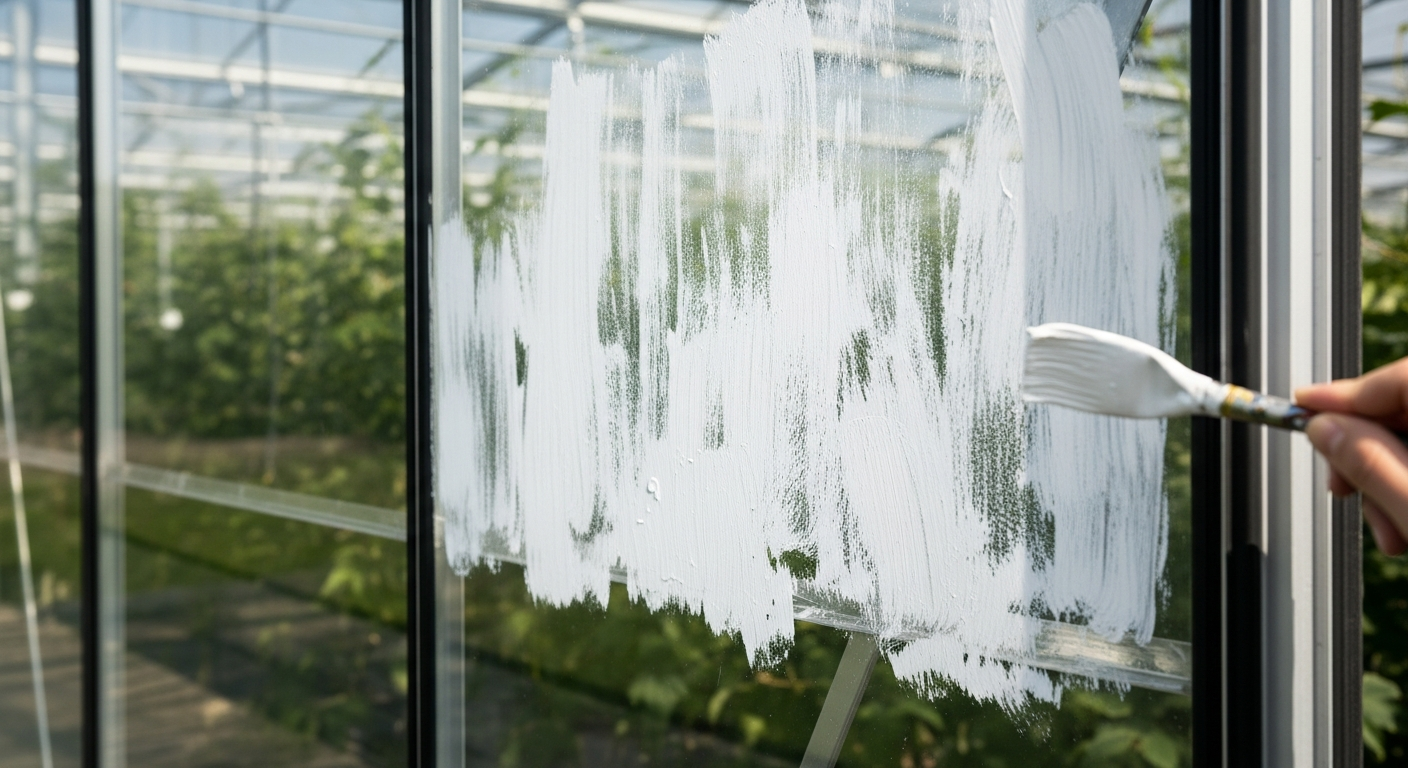
- Superior Reflectivity: Unlike dark shade cloths that absorb some heat, white wash is designed to reflect a significant portion of the sun’s radiant energy away from the greenhouse. This reflection is key to preventing the internal temperature from skyrocketing, effectively cooling your greenhouse. Studies and grower experiences often show a reduction of several degrees Celsius inside a whitewashed structure.
- Diffused Light for Healthier Growth: Direct sunlight, especially during peak hours, can create “hot spots” and lead to leaf scorching. White wash doesn’t just block light; it scatters and diffuses it. This scattered light penetrates deeper into the plant canopy, reaching lower leaves that might otherwise be shaded. The result is more uniform light distribution, encouraging robust, even growth and preventing stress or damage to your delicate plants. This is crucial for protecting plants from heat and intense UV.
- UV Protection: While some UV is beneficial, excessive exposure can be harmful to both plants and people. White wash provides a barrier that helps filter out some of the harsher UV radiation, contributing to a healthier environment within the greenhouse.
- Cost-Effectiveness: Compared to automated shading systems, expensive shade cloths, or complex ventilation solutions, white wash paint is an incredibly affordable option for DIY greenhouse shading. A small investment in paint can yield significant benefits in temperature regulation.
- Flexibility and Control: You have precise control over the level of shading. By adjusting the dilution of the paint or applying multiple thin coats, you can tailor the light reduction to the specific needs of your crops and the intensity of your local climate.
Choosing the Right White Wash Product for Your Greenhouse
While the concept of white wash is simple, selecting the right product is essential for optimal results and ease of use. Not all white paints are created equal when it comes to greenhouse applications.
Specialized Greenhouse Shading Paints
For most commercial and serious hobby growers, dedicated greenhouse shading paints are the go-to choice. These products are specifically formulated with several advantages:
- Designed for Easy Removal: A key feature is their ability to be easily removed when winter approaches and more light is desired. Many are designed to wear off gradually with rain over the season, or to be easily brushed or washed off with a hose.
- Optimal Light Transmission: They are engineered to provide ideal levels of diffused light and heat reflection without excessively darkening the interior.
- Durability: While easy to remove, they are durable enough to withstand typical weather conditions throughout the growing season.
- Non-Toxic: Formulations are typically safe for plants and the environment.
Always read the manufacturer’s instructions carefully for dilution ratios and application methods. These specialized paints often come in concentrated forms that need to be mixed with water.
Traditional Lime Wash (DIY Option)
Before specialized paints existed, growers often used a simple lime wash. This typically involves mixing hydrated lime (calcium hydroxide) with water. Some recipes add salt or milk to improve adhesion.
- Pros: Extremely inexpensive, natural, and effective.
- Cons: Can be less durable than specialized paints and more challenging to apply evenly. Removal can sometimes be more laborious, and the finish might be streakier. Care must be taken when handling hydrated lime, as it is alkaline and can cause skin irritation.
While a viable option for those on a tight budget or seeking a truly traditional approach, specialized products often offer greater convenience and performance for greenhouse cooling.
What to Avoid: Regular Interior/Exterior Paints
Do NOT use regular latex house paints or other standard interior/exterior paints on your greenhouse glass. These paints are designed for permanent adhesion and will be extremely difficult, if not impossible, to remove without damaging the glass. They can also flake over time, creating a messy appearance and potentially blocking light unevenly. Stick to products specifically formulated for greenhouse glass shading.
Application Techniques for Optimal Greenhouse Shading
Proper application is key to achieving an even, effective, and attractive finish. Here’s a step-by-step guide to applying white wash paint to your greenhouse.
- Clean Your Glass: This is perhaps the most crucial step. The glass must be spotlessly clean and free of dirt, dust, algae, and grime. A clean surface ensures proper adhesion and an even coat. Use a mild detergent and water, then rinse thoroughly and allow to dry completely.
- Gather Your Tools: You’ll need a suitable sprayer (pump sprayer or garden sprayer works well), a roller with an extension handle, or a wide brush. For mixing, a large bucket and a stirring stick are essential. Wear appropriate safety gear, including gloves and eye protection.
- Mix According to Instructions: If using a specialized concentrate, carefully follow the manufacturer’s dilution ratios. Proper dilution is critical for achieving the desired level of shading and ensuring easy removal later. For lime wash, mix lime with water to a consistency of thin milk, stirring frequently to prevent settling.
- Choose Your Method:
- Sprayer: This is often the most efficient method for large greenhouses, providing the most even coverage. Hold the sprayer at a consistent distance and move steadily to avoid drips and streaks. Work in small sections.
- Roller: A roller with a fine nap can provide good, even coverage, especially on flat panes. Use an extension handle for reaching higher areas.
- Brush: While more time-consuming for large areas, a wide brush allows for precise application and can be useful for smaller greenhouses or touch-ups.
- Apply Thin, Even Coats: The goal is diffusion, not complete opacity. It’s always better to apply one thin coat, let it dry, and then assess if more shading is needed. Applying a second thin coat is preferable to one thick coat, which can sag, streak, or be difficult to remove.
- Consider Targeted Shading: You don’t necessarily need to white wash every pane. Often, shading just the south-facing and west-facing sides is sufficient to manage heat. This allows for maximum light penetration from the north and east, especially beneficial during morning hours.
- Allow for Drying: Give each coat ample time to dry completely before applying another or exposing it to rain. This usually takes a few hours, depending on temperature and humidity.
- Safety First: If working at height, use a stable ladder and have someone spot you. Ensure adequate ventilation in the greenhouse during application.
Maintenance, Removal, and Seasonal Considerations
The beauty of white wash lies not only in its application but also in its seasonal flexibility.
Durability and Reapplication
The longevity of your white wash will depend on the product used and local weather conditions. Specialized paints often last throughout the summer season, gradually wearing down with rain. Heavy, prolonged rain might necessitate a touch-up or reapplication in particularly hot climates. Traditional lime wash might require more frequent attention.
Seasonal Removal for Maximum Winter Light
As autumn approaches and the sun’s intensity wanes, you’ll want to remove the white wash to maximize the precious natural light for your winter crops. This is where the “easy removal” feature of specialized paints shines. Most can be removed with:
- Brushing: A stiff brush, especially when dry, can effectively loosen and remove much of the paint.
- Washing: A strong jet from a garden hose can often wash off the remaining residue.
- Pressure Washer (Use with Caution!): A low-pressure setting on a pressure washer can be very effective, but be extremely careful not to damage seals or dislodge glass panes. Stand back a safe distance.
For traditional lime wash, a scrub brush with warm water and sometimes a mild acidic solution (like diluted vinegar) can help with removal, though it may require more elbow grease. Always ensure proper disposal of any runoff if using non-natural components.
The ability to easily apply and remove white wash allows for optimal greenhouse climate control year-round, ensuring your plants get exactly the light they need in every season.
Conclusion: Embrace White Wash for a Thriving Greenhouse Climate
White wash paint offers a powerful, affordable, and flexible solution for managing heat and light in your greenhouse. By reflecting intense sunlight and diffusing light, it actively contributes to a cooler, more stable environment, safeguarding your plants from scorching and stress. Whether you opt for a modern specialized shading paint or a traditional lime wash, the principles remain the same: provide effective greenhouse glass shading to ensure your plants thrive. Implementing these strategies will not only protect your precious crops but also enhance your growing experience, allowing you to enjoy a productive and healthier greenhouse all season long. Take control of your greenhouse climate and watch your plants flourish!