
Welcome to Greenhouse Climates, your ultimate resource for optimizing your growing environment! As any seasoned grower knows, maintaining the ideal climate within a greenhouse is a delicate dance between managing light, temperature, and humidity. It’s a balance that directly impacts plant health, yield, and ultimately, your energy bills. One of the most versatile and often underestimated tools in achieving this balance is the thermal screen. Far from being a single-purpose solution, modern thermal screens offer a powerful dual function: providing essential shade during scorching summer days and acting as an insulating blanket to retain warmth when temperatures plummet. Let’s delve into how these remarkable systems can revolutionize your greenhouse climate control, offering a sustainable and cost-effective approach to year-round growing.
The Dual Power of Thermal Screens: Shading and Heat Retention
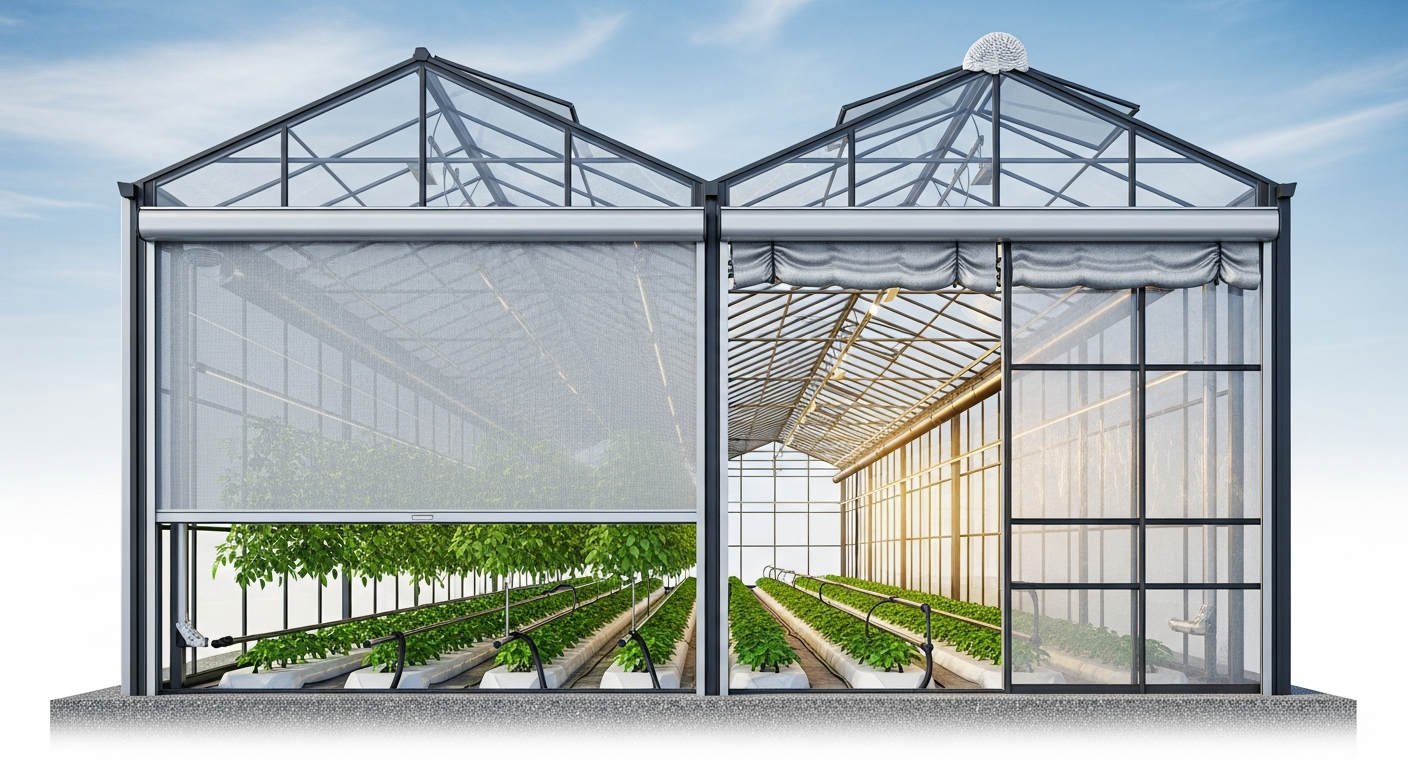
Thermal screens, sometimes referred to as energy screens or climate screens, are engineered fabrics designed to be deployed across the roof of your greenhouse. What makes them so effective is their unique construction, which combines materials like polyester, acrylic, and aluminum foil strips in various weaves. This clever design allows them to tackle two primary climate challenges simultaneously.
Mastering Solar Radiation with Shading
During periods of intense sunlight, especially in peak summer months, greenhouses can quickly overheat. Excessive solar radiation can lead to a host of problems for your plants:
- Heat Stress: High temperatures can cause plants to transpire excessively, leading to wilting, stunted growth, and reduced fruit set.
- Sunburn and Bleaching: Direct, unfiltered sunlight can burn foliage and fruit, making them unmarketable or even killing younger plants.
- Reduced Photosynthesis Efficiency: While plants need light, too much can actually hinder photosynthesis, as the plant’s protective mechanisms kick in.
- Increased Cooling Costs: Without adequate shading, growers often resort to energy-intensive ventilation and evaporative cooling systems, driving up operational expenses.
Thermal screens mitigate these issues by reflecting a portion of the solar radiation away from the plants and diffusing the light that does pass through. The reflective strips in the screen bounce harmful infrared radiation back upwards, significantly reducing the heat load inside the greenhouse. The woven structure also helps to scatter light evenly, preventing hot spots and ensuring that plants receive a more uniform and beneficial light spectrum for photosynthesis without the damaging intensity.
Conserving Warmth with Heat Retention
Conversely, when the sun sets or during cold, cloudy periods, a greenhouse can rapidly lose its accumulated heat. Glass and polycarbonate, while excellent for light transmission, are poor insulators. This heat loss is a major drain on energy resources for any grower relying on supplemental heating.
This is where the other vital function of thermal screens comes into play. When deployed at night or during cold spells, thermal screens act as an insulating barrier, effectively creating a “ceiling” that traps a layer of air between the screen and the plants. This trapped air significantly reduces convection heat loss upwards through the greenhouse roof. Furthermore, the reflective materials that help with shading during the day also work to radiate heat back downwards towards the plants. The benefits are substantial:
- Reduced Heating Costs: By minimizing heat loss, thermal screens can dramatically lower your reliance on costly heating systems, leading to significant energy savings.
- Stable Nighttime Temperatures: Plants thrive in consistent environments. Screens help maintain more stable temperatures, preventing drastic drops that can stress plants and hinder growth.
- Frost Protection: In regions prone to cold snaps, a deployed thermal screen can be the difference between a healthy crop and a frost-damaged disaster.
- Environmental Impact: Lower energy consumption translates directly into a reduced carbon footprint, aligning with sustainable growing practices.
Optimizing Your Greenhouse Climate with Shading Strategies
Implementing thermal screens for shading requires careful consideration of your specific crop needs and local climate. Not all plants require the same amount of shade, and the optimal deployment times will vary.
When and How to Deploy for Shade
The most common time to deploy screens for shading is during the hottest parts of the day, typically from late morning to late afternoon, especially during summer. However, depending on your crop, you might need to deploy them earlier or later. For instance, sensitive young seedlings or specific heat-intolerant crops like lettuce may benefit from earlier deployment, while sun-loving plants like tomatoes might only need shading during extreme heat waves.
- Monitor Light Levels: Invest in a PAR (Photosynthetically Active Radiation) meter to understand the actual light intensity reaching your plants. Different crops have different optimal PAR ranges.
- Observe Plant Behavior: Wilting, yellowing leaves (chlorosis), or bleached spots are clear indicators that your plants are experiencing too much light or heat stress.
- Consider Shade Percentage: Thermal screens come with different shade percentages, typically ranging from 30% to 70%. Choose a screen that matches the average needs of your crops. A good all-around option might be 40-50% for mixed crops.
Practical Tip: For greater flexibility, consider a screen system that allows you to vary the extent of deployment. This way, you can provide partial shade on moderately sunny days and full shade during intense heat waves, giving you precise control over your light environment.
Maximizing Energy Efficiency Through Heat Retention
Using thermal screens for heat retention is primarily about preventing radiative and convective heat loss, which are the main culprits behind temperature drops in greenhouses.
Strategic Deployment for Warmth
The key to effective heat retention is timely deployment. The screen should be closed just before sunset and remain closed until after sunrise. This strategy traps the warmth accumulated during the day and prevents it from escaping into the colder night air. During prolonged cold, cloudy periods, you might even keep the screen partially or fully closed during the day if supplemental light isn’t a critical factor, further reducing heating demands.
- Pre-emptive Closure: Close screens 30-60 minutes before sunset to capture the last bit of solar radiation and establish the insulating air layer before the coldest temperatures hit.
- Delayed Opening: Open screens 30-60 minutes after sunrise to allow temperatures to stabilize and prevent a sudden shock to plants from cold air, especially if outside temperatures are very low.
- Combined Strategy: For extremely cold nights, some growers opt for double thermal screens or combine a thermal screen with an opaque blackout screen for maximum insulation.
Practical Tip: Ensure your screens fit snugly against the greenhouse structure when closed to minimize gaps where warm air can escape. Even small gaps can significantly reduce the screen’s insulating effectiveness. Regularly inspect the edges and seals of your screen system.
Choosing and Implementing the Right Thermal Screen System
Selecting and installing the correct thermal screen system is crucial for maximizing its benefits. Several factors should influence your decision.
Key Considerations for Selection
- Greenhouse Type and Size: The structure of your greenhouse (gable, hoop, gutter-connect) will dictate the type of screen system that can be installed. Larger commercial operations often benefit from automated systems, while smaller hobby greenhouses might opt for simpler manual setups.
- Crop Requirements: As discussed, different plants have different needs for light and temperature. Research the optimal climate for your specific crops to choose a screen with the appropriate shading and insulation properties.
- Local Climate: If you’re in a region with extreme summer heat, prioritize screens with higher reflective properties and shading percentages. If cold winters are your primary concern, focus on screens with excellent insulating capabilities.
- Screen Material and Type:
- Woven Screens: Often made with transparent and reflective strips (e.g., aluminum), these are excellent dual-purpose screens, offering both shade and heat retention. The weave density affects light diffusion and insulation.
- Non-woven Screens: Generally more opaque and used for blackout purposes, but can also offer significant insulation.
- Roll-up vs. Fold-up: Most modern systems use roll-up or fold-up mechanisms, allowing the screen to be neatly stored when not in use.
- Automation vs. Manual:
- Manual Systems: Cost-effective for smaller greenhouses, but require regular physical operation.
- Automated Systems: Ideal for larger operations or for growers seeking precise climate control. These systems use motors, sensors (temperature, light, wind), and timers to deploy and retract screens automatically, optimizing performance and saving labor.
Installation and Maintenance Tips
Proper installation ensures longevity and effectiveness. Screens should run smoothly without snagging or tearing. Regular maintenance is also vital:
- Professional Installation: For complex or large-scale systems, consider professional installation to ensure correct tensioning and alignment.
- Regular Cleaning: Dust and debris can accumulate on screens, reducing their reflectivity and light transmission. Gentle cleaning with water and a soft brush or specific screen cleaner can maintain efficiency.
- Inspect for Damage: Regularly check for tears, holes, or fraying, especially after strong winds or storms. Prompt repairs can prevent small issues from becoming major problems.
- Lubricate Moving Parts: For automated systems, ensure motors and moving components are regularly checked and lubricated according to manufacturer guidelines.
Actionable Advice: While the initial investment in a high-quality thermal screen system can seem substantial, the long-term energy savings and improved crop health often lead to a rapid return on investment. Consider it an essential climate control component rather than an optional accessory.
Conclusion
Thermal screens are an indispensable tool for any grower looking to achieve optimal greenhouse climate control with an eye towards efficiency and sustainability. By skillfully harnessing their dual power for both shading and heat retention, you can mitigate the challenges of extreme temperatures, significantly reduce your energy consumption, and create a more stable, productive environment for your plants. Whether you’re a hobbyist with a small backyard greenhouse or managing a large commercial operation, integrating thermal screens into your climate management strategy is a smart move that pays dividends in healthier crops and lower operating costs. Embrace this smart technology and watch your greenhouse thrive!