
In the intricate world of greenhouse horticulture, precision is paramount. Growers constantly seek innovative ways to optimize plant growth, enhance quality, and, critically, control bloom timing to meet market demands or specific cultivation goals. For many beloved ornamental and specialty crops, this control hinges on a fascinating biological phenomenon known as photoperiodism, particularly in what we call short-day plants. While sunlight is indispensable for photosynthesis, it’s the strategic deprivation of light – often achieved through the careful application of shade cloth – that unlocks the secret to precise flowering in these light-sensitive species. This article delves into the science and practical application of using shade cloth to orchestrate the flowering cycle of short-day plants, transforming guesswork into a predictable and profitable process for greenhouse operators.
The Rhythmic Dance: Understanding Short-Day Plants and Photoperiodism
At the heart of manipulating flowering lies an understanding of photoperiodism, the physiological reaction of organisms to the length of day or night. For plants, this environmental cue signals seasonal changes and dictates critical life cycle events, most notably flowering. Short-day plants (SDPs) are a unique group whose flowering is triggered when the day length shortens, or, more accurately, when they experience a continuous, uninterrupted dark period that exceeds a critical length. It’s not simply the short day, but the sufficiently long night, that acts as the primary inductive signal.
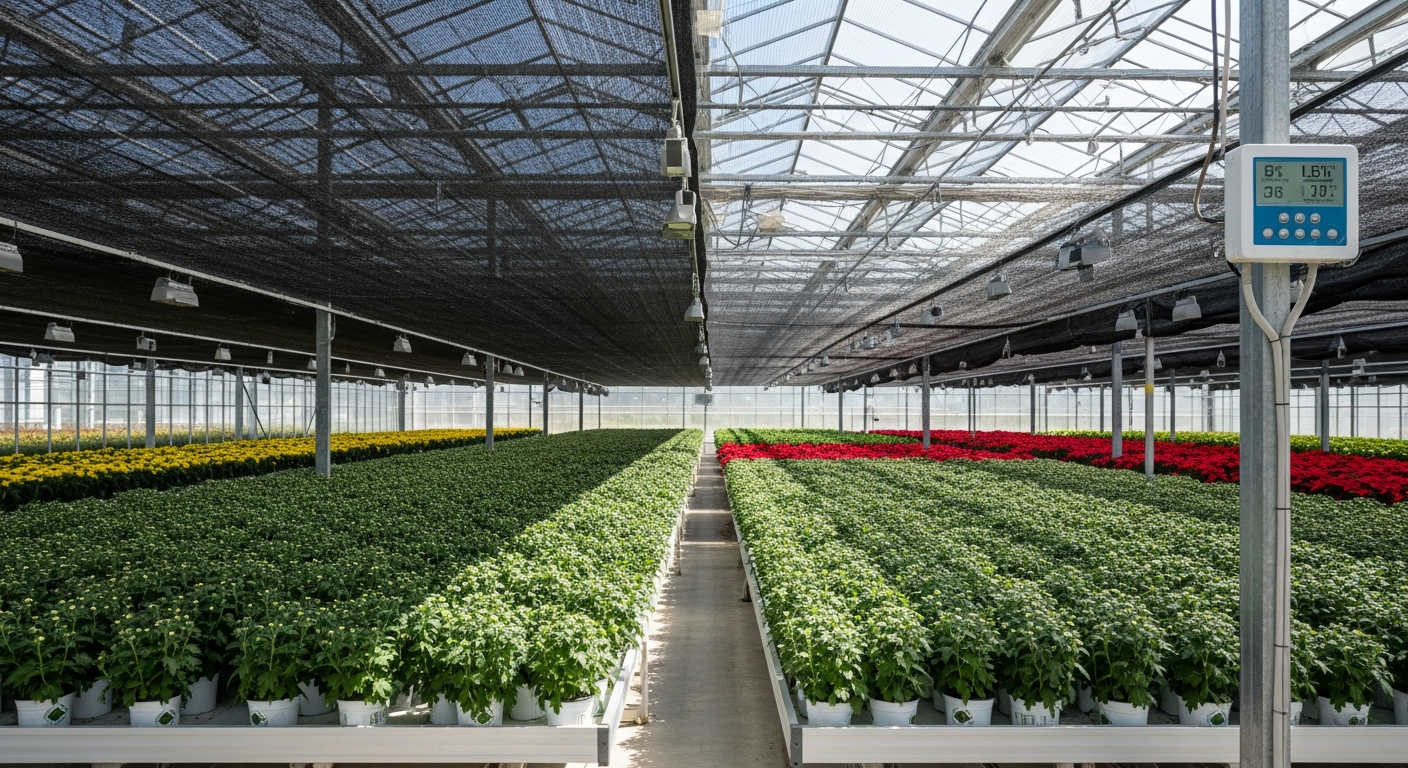
Common examples of commercially important short-day plants include:
- Chrysanthemums: A staple in floriculture, celebrated for their diverse forms and colors, often timed for autumn sales.
- Poinsettias: The iconic holiday plant, requiring specific dark periods to develop their vibrant bracts for the winter season.
- Kalanchoe: Popular flowering houseplants often forced into bloom for various holidays.
- Cannabis: Many strains are classic short-day plants, responding to reduced light hours by initiating their reproductive phase.
- Christmas Cactus (Schlumbergera): Another popular holiday bloomer, responsive to shorter days.
For growers, understanding and controlling this response is vital. It allows for precise crop scheduling, enabling plants to bloom exactly when needed – whether for a specific holiday, a consistent supply to wholesalers, or maximizing market value. Without intervention, plants would flower according to natural seasonal light cycles, potentially missing peak market opportunities or leading to inconsistent production.
The Power of Darkness: How Shade Cloth Manipulates Flowering
The magic of shade cloth in controlling short-day plant flowering isn’t about simply reducing light intensity, but about creating an artificial, extended period of darkness. While some shade cloths are designed purely for temperature reduction or UV protection, the type used for flowering control is specifically a “blackout” material designed to completely block light. This technique is often referred to as light deprivation or photoperiod manipulation.
Plants perceive light and dark through specialized photoreceptors called phytochromes. These proteins exist in two interconvertible forms: Pr (red light absorbing) and Pfr (far-red light absorbing). Sunlight converts Pr to Pfr. During darkness, Pfr slowly converts back to Pr. In short-day plants, a high concentration of Pr after a sufficiently long dark period triggers the release of florigen, the hypothetical flowering hormone, initiating the bloom process.
By enclosing short-day plants with a blackout shade cloth, growers can artificially shorten their “day” and extend their “night,” regardless of the natural outdoor light cycle. For example, during long summer days, when a short-day plant would naturally remain in vegetative growth, applying blackout shade cloth for 12-14 hours a day can trick the plant into believing it’s experiencing autumn or winter conditions, thereby inducing flowering much earlier than nature intends.
The critical factor is the *uninterrupted* nature of the dark period. Even a brief flash of light during the artificial night can reset the photoperiodic clock, effectively canceling the inductive signal and delaying or preventing flowering. This highlights the importance of choosing the right material and ensuring a completely sealed environment during the dark cycle.
Mastering Implementation: Practical Steps for Effective Flowering Control
Implementing a successful shade cloth system for flowering control requires careful planning and attention to detail. Here’s a breakdown of practical steps:
Choosing the Right Shade Cloth
- Blackout Capability: The primary criterion is complete light blockage. Look for materials advertised as “blackout” or “light deprivation” fabrics, typically offering 99-100% light block. General shading materials, even dark ones, often let through too much ambient light to be effective for photoperiod control.
- Material Durability: Consider woven polyethene or similar robust materials that can withstand repeated opening and closing, UV exposure, and environmental conditions.
- Breathability and Reflectivity: While aiming for darkness, some materials are designed to reflect heat (e.g., black on one side, white on the other) or offer some breathability, which can be crucial for managing temperatures and humidity inside the shaded area.
Installation and System Types
- Manual Systems: For smaller greenhouses or hobbyist setups, shade cloth can be manually pulled over the plants or structures. This is labor-intensive but cost-effective. Ensure the setup allows for complete enclosure without light leaks around the edges or seams.
- Automated Blackout Systems: Commercial operations often invest in automated systems. These typically involve retractable roofs or side curtains made of blackout material, operated by motors and timers.
- Benefits: Significant labor savings, precise timing, consistent application, and often better sealing against light leaks.
- Considerations: Higher initial investment, requires maintenance of mechanical components.
- Ensuring Complete Darkness: This cannot be overstated. Walk through the shaded area during bright daylight to identify any pinpricks of light or gaps. Seal all potential light leaks around vents, doors, and structural elements.
Timing and Duration
- Determine Critical Dark Period: Research the specific requirements of your crop. Most short-day plants require an uninterrupted dark period of 10-14 hours to induce flowering. For example, chrysanthemums often need 10 hours of light and 14 hours of darkness daily.
- Establish a Schedule: Based on the desired bloom date and the plant’s known flowering response time (e.g., chrysanthemums typically flower 9-10 weeks after the start of short days), backtrack to determine when to begin applying shade.
- Example: If natural daylight is 14 hours, you might pull shade cloth around 5 PM and remove it at 7 AM to achieve a 10-hour day and 14-hour night.
- Consistency is Key: Apply the shade consistently every day. Erratic application can delay flowering, lead to uneven development, or even revert plants to vegetative growth.
- Duration of Application: Continue applying the shade until flower buds are clearly visible and well-developed. For some crops, growers continue until visible color, or even full bloom, to maintain uniformity.
Beyond the Basics: Advanced Tips for Optimal Results
While the core principle is simple, several factors can influence the effectiveness of shade cloth application for flowering control:
- Ventilation and Temperature Management: Covering plants with blackout material, especially during warm weather, can lead to significant heat buildup and increased humidity. Ensure adequate ventilation (fans, vents) is integrated into your shade system to prevent heat stress, fungal diseases (like Botrytis), and stunted growth. Consider a shade cloth material with reflective properties on the exterior to reduce heat absorption.
- Humidity Control: High humidity during the dark period can be detrimental, promoting pathogen growth. Combining ventilation with dehumidification strategies can be crucial, especially in humid climates or during specific crop stages.
- Light Quality and Intensity Before Shading: Healthy, vigorously growing plants respond better to flowering induction. Ensure optimal light intensity and quality during the “day” period to support robust vegetative growth before initiating short-day treatments. Supplemental lighting might be beneficial during naturally cloudy periods.
- Pest and Disease Monitoring: Dark, potentially warmer and more humid environments can be conducive to certain pests and diseases. Implement a robust Integrated Pest Management (IPM) program and closely monitor plants for early signs of trouble.
- Crop-Specific Nuances: Always consult crop-specific guidelines. While the general principle of short-day induction applies, the critical dark period duration, the number of inductive cycles required, and the plant’s response time can vary significantly between species and even cultivars.
- Acclimatization: While not always feasible for strict photoperiod control, for some plants, a gradual transition back to full light after the inductive period can help reduce stress. However, for continuous induction, the daily dark period remains non-negotiable.
Conclusion
The strategic use of shade cloth for controlling flowering in short-day plants is a cornerstone of modern greenhouse cultivation. By understanding the intricate dance of photoperiodism and harnessing the power of darkness, growers can transform their operations from being reactive to predictive. This technique enables precise crop scheduling, improves product quality, and ultimately enhances profitability by ensuring plants bloom on cue, perfectly aligning with market demands and seasonal celebrations. While it requires attention to detail, proper installation, and diligent monitoring, mastering light deprivation with shade cloth empowers greenhouse managers to achieve unparalleled control over the life cycles of their most valuable short-day crops, ensuring a bountiful and timely harvest.