
As climate patterns shift, extreme heatwaves are becoming an increasingly frequent and intense challenge for growers worldwide. For those managing a greenhouse, these scorching periods pose a significant threat, pushing internal temperatures to critical levels that can devastate sensitive crops and hard-earned investments. While advanced climate control systems offer robust solutions, there are times when even they can struggle to cope, or when an affordable, high-impact emergency measure is needed. This is where the often-overlooked strategy of using exterior roof sprinklers comes into play, offering a powerful, accessible method for emergency cooling and providing a crucial line of defense during the harshest summer days.
Understanding the Extreme Heat Threat to Greenhouses
Greenhouses are designed to capture and retain solar energy, creating an ideal growing environment. However, this very efficiency becomes a critical vulnerability during extreme heatwaves. The transparent glazing allows solar radiation to pass through and heat the internal air, plants, and surfaces. With limited avenues for heat escape, temperatures can skyrocket, easily exceeding ambient outdoor temperatures by 10-20°F (5-10°C) or more.
This rapid temperature increase triggers a cascade of detrimental effects on plants:
- Heat Stress: Plants begin to “sweat” (transpire) excessively, losing water faster than their roots can absorb it, leading to wilting and dehydration.
- Reduced Photosynthesis: High temperatures can denature enzymes essential for photosynthesis, slowing down or even halting the plant’s ability to convert light into energy.
- Flower and Fruit Drop: Reproductive structures are often the most sensitive to heat. Pollen viability can decrease, and existing flowers or young fruits may abort, leading to significant yield losses.
- Sunscald: Direct, intense sunlight combined with high temperatures can burn foliage and fruit, causing irreversible damage.
- Stunted Growth: Chronic heat stress can lead to overall growth retardation, affecting plant vigor and quality.
The financial implications of crop loss can be substantial, making proactive and effective emergency cooling strategies not just beneficial, but absolutely essential for any greenhouse operation aiming for resilience in a changing climate.
The Science Behind Roof Sprinkler Cooling: Evaporative Power
The principle behind using roof sprinklers for cooling is pure physics: evaporative cooling. It’s the same mechanism your body uses to cool down through sweating.
Here’s how it works for your greenhouse:
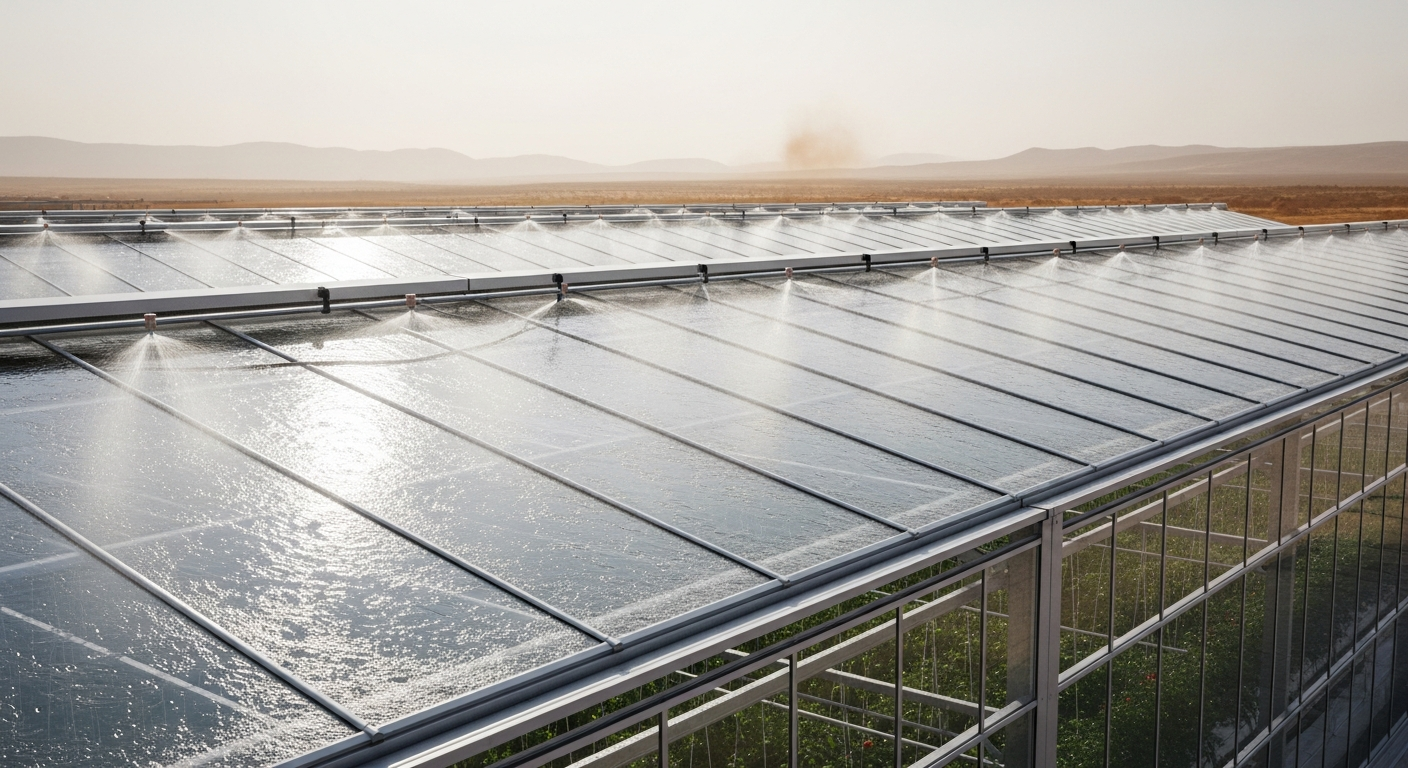
- Water Application: Sprinklers distribute a fine mist or stream of water uniformly over the exterior surface of your greenhouse roof.
- Heat Absorption: As this water sits on the hot glazing material (polycarbonate, glass, film), it absorbs heat energy from the surface.
- Evaporation: The absorbed heat provides the energy for the water molecules to change state from liquid to gas (vaporize). This process is known as the “latent heat of vaporization.”
- Surface Cooling: When the water evaporates, it carries that heat energy away from the roof surface and into the atmosphere. This effectively cools the glazing material itself.
- Reduced Heat Transfer: A cooler roof surface means significantly less radiant and conductive heat is transferred into the greenhouse interior. The effect is immediate and substantial, preventing the glazing from acting as a giant solar oven.
Unlike internal misting or fogging systems which add humidity inside the greenhouse (which can be problematic for some crops), roof sprinklers cool the exterior, maintaining desired internal humidity levels while still drastically lowering temperatures. This external cooling complements other internal systems by reducing their workload and overall energy consumption, making them a highly effective emergency cooling method during peak heat.
Designing and Installing Your Emergency Roof Sprinkler System
Implementing an effective roof sprinkler system requires careful planning and execution. Here’s a step-by-step guide to setting up your emergency cooling solution:
1. Assessment and Planning
- Greenhouse Type and Size: Determine the total roof area to be covered and the shape of your greenhouse (e.g., gutter-connected, hoop house). This will dictate the number and type of sprinkler heads needed.
- Roof Material: Ensure your roof material can safely handle continuous water exposure without degradation (most modern glazing materials are suitable).
- Water Source: Identify a reliable water source with sufficient pressure and flow rate to supply all sprinklers simultaneously. Consider municipal water, well water, or a large storage tank.
- Drainage: Plan for water runoff. Ensure it drains away from your greenhouse foundation and doesn’t create standing puddles or erosion.
2. Sprinkler Head Selection
- Coverage Pattern: Choose heads that provide uniform coverage across your roof. Options include rotary sprinklers, fixed spray nozzles, or micro-sprinklers.
- Droplet Size: Finer droplets will evaporate more quickly and efficiently, but are also more susceptible to wind drift. Larger droplets are less efficient but more wind-resistant. A balance is key.
- Flow Rate: Select heads with appropriate flow rates to ensure adequate coverage without excessive water usage.
- Durability: Opt for UV-resistant and corrosion-proof materials, as they will be exposed to the elements.
3. Plumbing and Filtration
- Main Line: Run a sturdy main water line (e.g., PVC, poly pipe) along the peak or gutters of your greenhouse.
- Lateral Lines: Install lateral lines extending from the main line to position sprinkler heads for optimal coverage.
- Valves: Include shut-off valves for easy maintenance and segment control. A pressure regulator might be necessary if your water source has high pressure.
- Filtration: Crucially, install a robust filter system (e.g., mesh or disc filter) upstream of your sprinklers. This prevents clogs in the small nozzles, which are a common issue and can severely impair system performance.
4. Automation and Controls
- Thermostat Integration: Connect your sprinkler system to a greenhouse climate control system or a simple thermostat. Program it to activate automatically when internal temperatures reach a critical threshold (e.g., 85°F or 29°C).
- Timer/Cycle Controller: Instead of continuous operation, use a timer or cycle controller to run the sprinklers intermittently (e.g., 5-10 minutes on, 15-20 minutes off). This allows for efficient cooling as evaporation occurs, conserves water, and prevents over-wetting.
- Rain Sensor: While primarily for emergency cooling during heatwaves, a rain sensor can prevent unnecessary operation during rain events.
Maximizing Efficiency and Mitigating Challenges with Roof Sprinklers
Once installed, careful management ensures your roof sprinkler system performs optimally when you need it most.
Optimizing Performance:
- Proactive Activation: Don’t wait until plants are showing signs of stress. Activate your system proactively when forecast temperatures are extreme or when the greenhouse begins to approach your critical temperature threshold.
- Intermittent Cycling is Key: Continuous wetting can waste water and lead to mineral buildup. Short, frequent cycles (e.g., 5-10 minutes on, 15-20 minutes off) are far more effective. This allows for maximal evaporative cooling during the “on” cycle and then utilizes the latent cooling as the remaining water evaporates during the “off” cycle.
- Monitor Internal Temperatures: Use reliable internal thermometers and sensors to gauge the effectiveness of your system and adjust cycles as needed.
- Combine with Other Strategies: Roof sprinklers are most powerful when integrated into a comprehensive cooling strategy. Continue to utilize shade cloths, natural ventilation (opening vents), and circulation fans for internal air movement. The roof sprinklers reduce the heat load, allowing these other systems to work more efficiently.
- Water Quality and Conservation: If possible, use collected rainwater or treated water to minimize mineral buildup. For larger operations, consider a closed-loop system with a reservoir and filtration for recirculation, although this adds complexity.
Mitigating Challenges:
- Nozzle Clogging: This is the most common issue. Regular inspection and cleaning of sprinkler heads and filters are essential. Consider back-flushing filters if your system allows.
- Mineral Buildup on Glazing: Hard water can leave mineral deposits on the roof, reducing light transmission over time. Using filters helps, but periodic cleaning of the glazing might be necessary.
- Wind Drift: Strong winds can cause water to drift away from the roof, reducing efficiency and potentially wetting surrounding areas. Consider windbreaks or adjusting sprinkler patterns.
- Water Pressure Fluctuations: Ensure consistent water pressure to all nozzles. A pressure regulator and proper pipe sizing will help maintain uniformity.
- Winterization: If you experience freezing temperatures, ensure your system can be easily drained to prevent pipes from bursting.
By understanding these nuances, you can transform a simple watering system into a sophisticated emergency cooling powerhouse, ready to protect your valuable crops.
Conclusion
Extreme heatwaves are no longer an anomaly but a recurring challenge for greenhouse operators. While advanced climate control offers premium protection, the judicious use of exterior roof sprinklers stands out as an incredibly effective, relatively simple, and often underutilized emergency cooling solution. By harnessing the power of evaporative cooling, these systems provide a critical shield against the sun’s most intense rays, preventing devastating heat stress and safeguarding plant health.
Investing in and properly managing a roof sprinkler system is a vital step towards building a more resilient greenhouse operation. It’s about proactive preparedness, ensuring that when the mercury soars, your plants – and your peace of mind – remain cool and collected. Don’t wait for the next heatwave to strike; equip your greenhouse with this essential line of defense and secure a healthier, more productive future for your crops.