
In the world of greenhouse cultivation, maintaining an optimal climate is paramount for plant health and productivity. Shade cloth is a fundamental tool for growers, providing crucial protection against intense sunlight and excessive heat. While incredibly effective on its own, many growers find themselves battling stubborn pockets of heat, stagnant air, and elevated humidity, even under the protective canopy of shade cloth. This often leads to less-than-ideal growing conditions, despite their best efforts. The solution to unlocking the full potential of your shade cloth might be simpler than you think: integrating portable fans. By strategically introducing dynamic airflow, you can dramatically improve your greenhouse’s microclimate, transforming static cooling into a powerful, efficient system that fosters healthier plants and maximizes growing efficiency. Let’s explore how these versatile tools can supercharge your shade cloth strategy.
Understanding the Limitations of Static Shade Cloth
Shade cloth serves a vital function in the greenhouse, primarily by reducing the amount of solar radiation that enters the growing space. This direct reduction in light intensity helps prevent heat stress, sunburn, and excessive transpiration in plants, especially during peak summer months or in warmer climates. By blocking a percentage of sunlight, shade cloth creates a cooler, more stable environment. However, its effectiveness has inherent limitations when used in isolation.
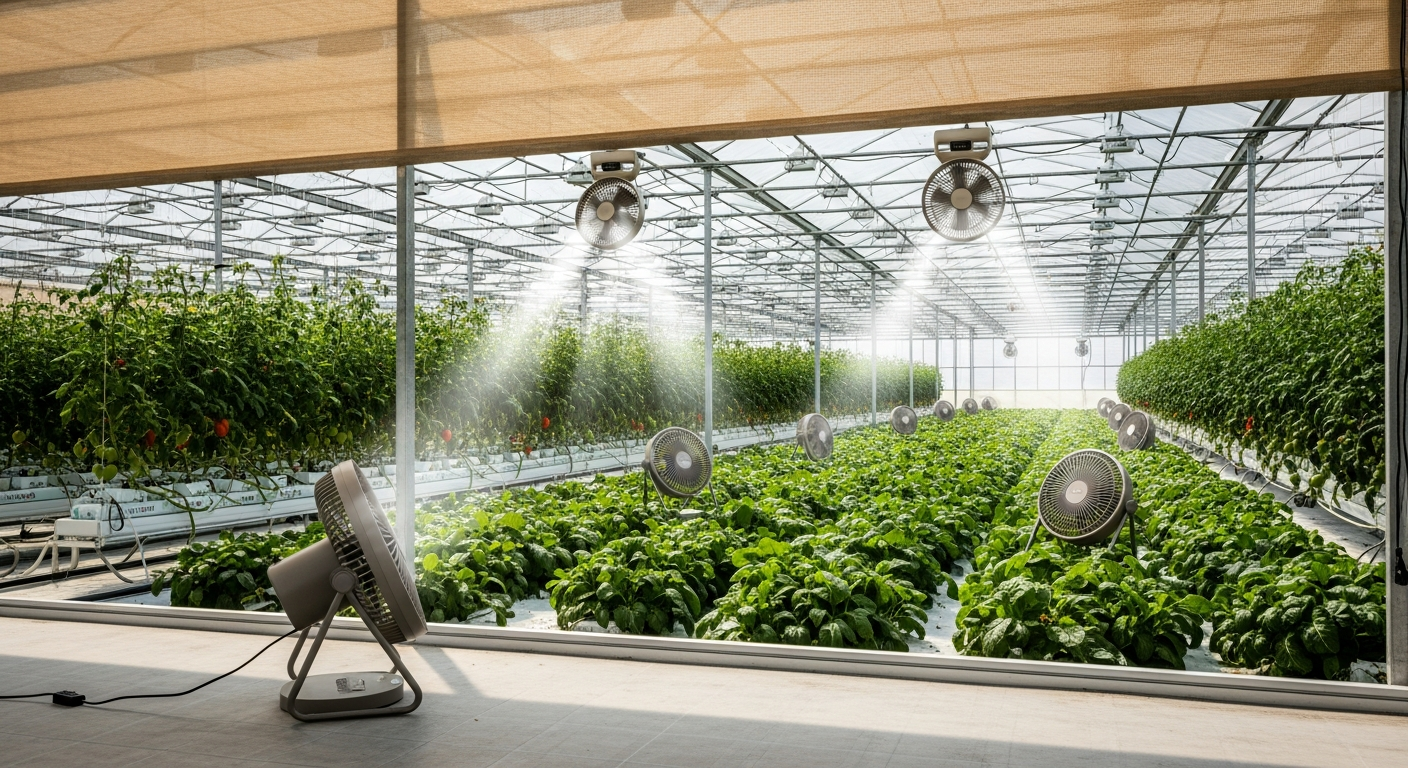
One of the primary challenges with static shade cloth is the issue of trapped heat. While the cloth blocks incoming solar energy, the air beneath it can still warm up significantly, especially if there isn’t adequate air exchange. Heat radiates from surfaces within the greenhouse (benches, pots, soil) and from the plants themselves, accumulating in the air. Without active ventilation, this warm air can become trapped, creating pockets of elevated temperatures and compromising the intended cooling effect of the shade cloth. Imagine parking your car under a tree; the tree blocks the sun, but on a hot day, the air around the car can still feel quite warm if there’s no breeze.
Furthermore, stagnant air is a breeding ground for problems. Poor air circulation leads to higher localized humidity, which can increase the risk of fungal diseases like powdery mildew, botrytis, and downy mildew. Plants transpire, releasing moisture into the air. If this humid air isn’t moved away, it creates a moist microclimate around the foliage, making it difficult for plants to effectively transpire and cool themselves. This can also hinder CO2 uptake, as a thick boundary layer of moist, CO2-depleted air clings to leaf surfaces.
Another often-overlooked limitation is the uneven distribution of cooled air. Natural convection alone might not be sufficient to circulate air uniformly throughout a greenhouse, especially in larger structures or those with dense canopies. This can result in hot spots and cool spots, leading to inconsistent plant growth and localized stress. While shade cloth is an excellent passive cooling method, it relies on external factors like wind and natural convection to disperse heat. When these are insufficient, the system benefits greatly from an active partner.
The Dynamic Duo: How Portable Fans Supercharge Shade Cloth Efficiency
Integrating portable fans with your shade cloth setup transforms a static defense into a dynamic, proactive climate control system. Here’s how fans dramatically improve the efficiency of shade cloth:
1. Enhanced Heat Dissipation
The most significant benefit is the active removal of trapped heat. Portable fans create forced air movement, breaking up pockets of warm, stagnant air that accumulate beneath the shade cloth. This continuous air exchange helps to push warmer air out through vents or natural openings and draw in cooler, fresher air. By constantly circulating the air, fans prevent heat buildup, ensuring that the temperature reduction offered by the shade cloth is more uniformly distributed and effective.
2. Improved Evaporative Cooling
Air movement across plant leaves dramatically enhances evaporative cooling. Plants cool themselves primarily through transpiration – the evaporation of water from their leaf surfaces. When air is stagnant, the air immediately surrounding the leaf becomes saturated with moisture, slowing down or even stopping further transpiration. Fans disrupt this “boundary layer” of humid air, allowing plants to transpire more efficiently. This physiological cooling effect can lead to a noticeable drop in leaf temperature and, consequently, overall ambient temperature, making the greenhouse feel significantly cooler and more comfortable for your plants.
3. Uniform Air Distribution and Temperature
Portable fans are excellent at homogenizing the greenhouse environment. They prevent the formation of hot spots and cold spots, ensuring that all plants receive consistent cooling and airflow. This uniform distribution of temperature and humidity leads to more even growth, healthier plants, and a reduction in localized stress. For growers with diverse plant species or large growing areas, this evenness is critical for consistent production.
4. Humidity Reduction and Disease Prevention
By constantly moving air, fans help to lower relative humidity around plant foliage. As moist air is moved away and drier air introduced (either from outside or from a different section of the greenhouse), the risk of fungal and bacterial diseases, which thrive in high-humidity conditions, is significantly reduced. This proactive approach to humidity control is a powerful tool in integrated pest and disease management, contributing to overall plant vigor and less reliance on chemical treatments.
5. Strengthening Plants
Beyond cooling and humidity control, consistent, gentle airflow from fans can actually strengthen plants. The slight physical stress from air movement promotes thicker stems and a more robust root system, making plants more resilient to environmental stresses and less prone to lodging (falling over) as they grow.
Choosing the Right Fans and Strategic Placement
To maximize the benefits of integrating fans with your shade cloth, careful consideration of fan type and placement is crucial.
Selecting the Right Fans:
- Circulation Fans (HAF – Horizontal Airflow Fans): These are often suspended from the greenhouse structure and designed to create a continuous, gentle airflow pattern that moves air throughout the entire space. They are excellent for uniform air distribution and preventing stagnant pockets.
- Oscillating Pedestal or Wall-Mounted Fans: Versatile and easily repositioned, these fans are great for targeting specific areas or addressing localized hot spots. Their oscillating function helps cover a broader area.
- High-Velocity Floor Fans: These powerful fans can move a significant volume of air and are useful for pushing air across benches or along aisles, especially in larger greenhouses. Be mindful of their intensity; ensure they don’t create excessive wind burn on delicate plants.
- Exhaust Fans: While not “portable” in the same sense, coupling circulation fans with an efficient exhaust fan system can create a dynamic push-pull ventilation, actively drawing hot air out and pulling cooler air in, greatly enhancing overall climate control.
Strategic Placement Tips:
- Under the Shade Cloth: For direct cooling, place fans so they move air directly beneath the shade cloth, ensuring that the air warmed by solar radiation is quickly dispersed.
- To Break Up Air Pockets: Identify areas where air tends to stagnate (corners, dense plant canopies) and position fans to direct airflow into these zones.
- For Uniform Circulation: For HAF fans, follow manufacturer guidelines, typically positioning them to create a gentle, continuous loop of air that travels down one side of the greenhouse and back along the other.
- Targeted Cooling: Use oscillating or pedestal fans to create airflow directly over plant canopies, especially those most susceptible to heat stress.
- Consider Airflow Paths: Think about how air enters and exits your greenhouse. Position fans to complement your natural ventilation, either by helping to pull in cooler air or push out warmer air. Avoid placing fans where they directly blow out of an opening unless that’s your explicit goal for exhaust.
- Height Matters: Position fans at canopy level or slightly above to effectively move air through the plant zone.
Always consider the Cubic Feet per Minute (CFM) rating of fans relative to your greenhouse volume. For optimal circulation, aim for fans that can exchange the entire air volume of your greenhouse within 1-2 minutes. Using multiple smaller fans is often more effective for uniform airflow than one large, powerful fan.
Integrating Fans for Optimal Greenhouse Microclimate
To truly leverage the synergy between shade cloth and portable fans, consider these practical integration tips:
- Monitor and Adjust: The first step is always monitoring. Use temperature and humidity sensors (both ambient and ideally, leaf temperature) to understand your greenhouse’s microclimates. This data will inform where your hot spots and stagnant zones are, guiding your fan placement. Adjust fan speed and direction based on real-time data and plant response.
- Automate for Consistency: Integrate your fans with environmental controllers. A simple thermostat can turn fans on when temperatures reach a certain threshold, ensuring continuous, automated cooling. More advanced controllers can link fan operation to humidity levels, CO2 enrichment, or even light intensity, creating a truly responsive climate control system.
- Consider Energy Efficiency: Look for energy-efficient fans, especially if you plan to run them for extended periods. While fans consume electricity, the benefits of improved plant health and potentially higher yields often outweigh the operational costs. Proper sizing and placement also prevent wasteful energy use.
- Regular Maintenance: Keep your fans clean. Dust and debris can accumulate on blades and motors, reducing efficiency and lifespan. Regular cleaning ensures they operate at peak performance. Check for secure mounting and proper function periodically.
- Balance with Ventilation: Portable fans are most effective when used in conjunction with your greenhouse’s primary ventilation system (side vents, roof vents, exhaust fans). They help move air *within* the greenhouse, while the primary system moves air *into and out of* it. Ensure both are working in harmony.
- Observe Your Plants: Ultimately, your plants are the best indicators. Look for signs of stress (wilting, scorch, slowed growth) or thriving (vigorous growth, healthy color). Adjust your fan strategy based on what your plants tell you.
Conclusion
While shade cloth is an indispensable tool for greenhouse climate control, its potential can be significantly amplified by the strategic use of portable fans. By actively circulating air, dissipating trapped heat, enhancing evaporative cooling, and reducing humidity, fans transform a static cooling solution into a dynamic and highly efficient system. This synergy leads to more stable temperatures, healthier plants, reduced disease pressure, and ultimately, a more productive and resilient greenhouse environment. Investing in the right fans and understanding their optimal placement is a simple yet powerful step towards mastering your greenhouse’s microclimate and ensuring your plants thrive, even under the most challenging conditions.