
In the world of greenhouse cultivation, maintaining an optimal internal climate is paramount for plant health and energy efficiency. While sophisticated heating and cooling systems play a crucial role, understanding and mitigating external factors can significantly reduce their workload and your operational costs. One of the most insidious culprits of energy waste is convective heat loss, particularly when cold winds batter your greenhouse structure. Fortunately, nature offers an elegant, sustainable, and often beautiful solution: natural windbreaks.
Understanding Convective Heat Loss in Greenhouses
Convective heat loss occurs when warm air inside your greenhouse transfers its heat to cooler air outside, primarily driven by air movement. Think of it as the wind literally snatching away your hard-earned warmth. This process is intensified by several factors:
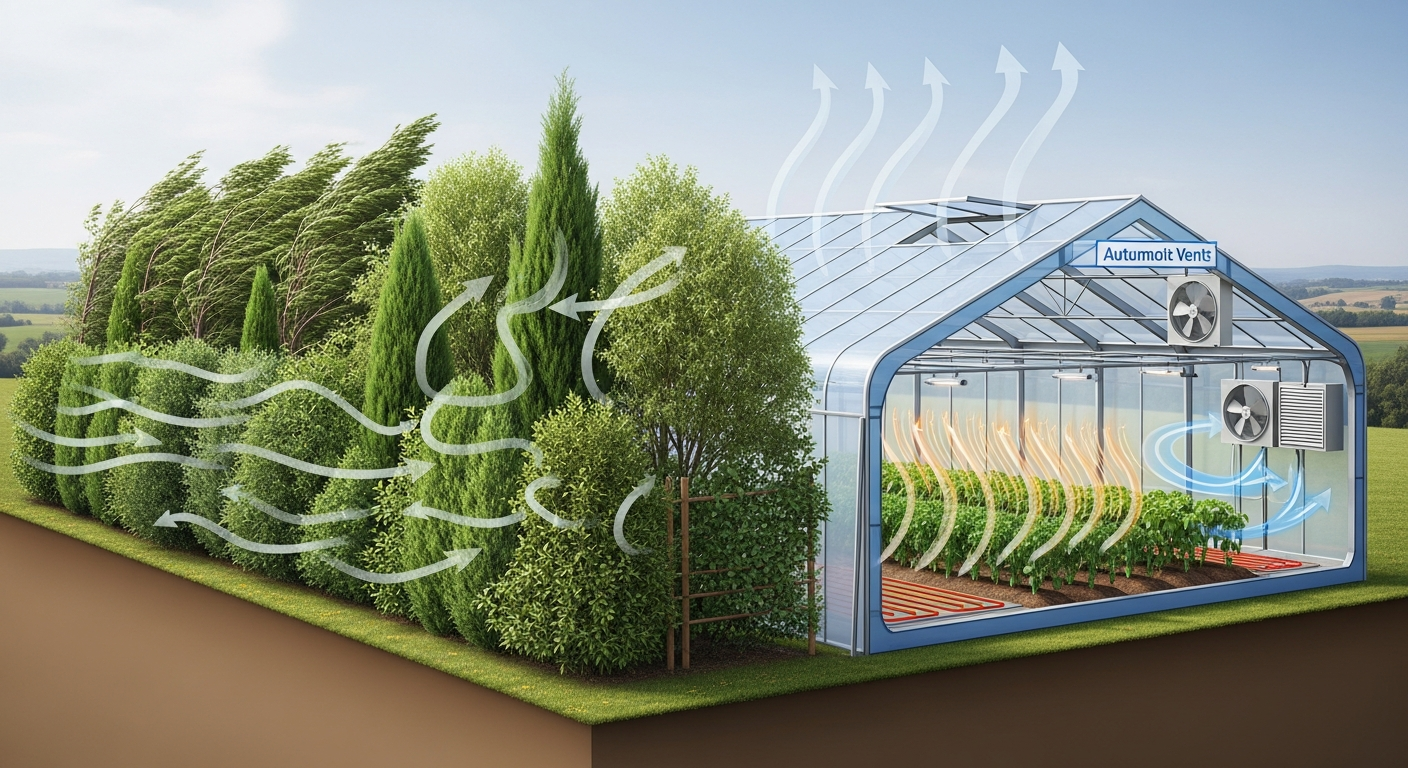
- Air Infiltration: Wind pressure can force cold air through tiny gaps, cracks, and poorly sealed vents or doors in your greenhouse structure, replacing the warm air inside. This constant exchange means your heating system works overtime to compensate.
- Surface Heat Transfer: Even with a perfectly sealed greenhouse, heat radiates through the glazing materials. When wind blows across the exterior surface, it rapidly carries away this transferred heat, effectively cooling the structure more quickly than if the air were still. This is the “wind chill” effect applied to your greenhouse.
- Boundary Layer Disruption: A still layer of air, known as the boundary layer, naturally forms on the surface of your greenhouse glazing, providing a slight insulating effect. Wind disrupts and strips away this crucial layer, exposing the surface to colder, faster-moving air and accelerating heat loss.
The cumulative effect of convective heat loss is a significant drain on your energy budget, leading to higher fuel consumption, increased wear and tear on heating equipment, and potentially inconsistent growing conditions that stress your plants. Reducing this heat loss is a fundamental step towards creating a more sustainable and cost-effective greenhouse operation.
The Power of Natural Windbreaks
Natural windbreaks, often in the form of strategically planted trees, shrubs, or even tall grasses, are a time-honored method of environmental control. For greenhouses, they offer a remarkably effective and eco-friendly way to combat convective heat loss by fundamentally altering the microclimate around your structure. Here’s how they work their magic:
- Wind Speed Reduction: The primary function of a windbreak is to slow down wind speed. As wind encounters the dense foliage of trees or shrubs, it’s forced to go up and over, or to filter through, significantly reducing its velocity on the leeward side (the side protected from the wind). This diminished wind speed directly translates to less air infiltration and reduced heat transfer from the greenhouse surface.
- Creating a Buffer Zone: By slowing the wind, a windbreak creates a calmer, more stable air “buffer zone” around your greenhouse. This allows the boundary layer of still air on your glazing to remain intact, enhancing its insulating properties and reducing the wind chill effect.
- Elevated Ambient Temperatures: Studies have shown that areas protected by windbreaks can experience slightly higher ambient air temperatures, especially on sunny winter days, as the reduced wind prevents rapid heat dissipation.
- Beyond Heat Loss: The benefits extend beyond just reducing heating costs. Windbreaks can also:
- Reduce Structural Stress: High winds can put immense strain on greenhouse frames and glazing. A windbreak acts as a physical shield, prolonging the life of your structure.
- Minimize Snow Drifting: Strategically placed windbreaks can prevent snow from piling up against your greenhouse, which can block light and create moisture issues.
- Noise Reduction: Dense plantings can absorb and deflect sound, creating a quieter working environment.
- Aesthetics and Biodiversity: They add natural beauty to your property and provide habitat for beneficial insects and birds.
Embracing natural windbreaks is not just about saving money; it’s about integrating your greenhouse operation with the natural landscape, fostering a more resilient and environmentally conscious growing system.
Designing and Implementing Your Greenhouse Windbreak
Effective windbreak design is more than just planting a row of trees; it requires careful consideration of plant species, placement, and local climate. Here’s how to create an optimal windbreak for your greenhouse:
Choosing the Right Plants
The success of your windbreak hinges on selecting species that are well-suited to your climate and effectively block wind. Look for:
- Evergreen Conifers: These are often the backbone of an effective windbreak because they retain their foliage year-round, providing continuous protection. Examples include Leyland Cypress, various pines (e.g., Eastern White Pine, Austrian Pine), spruces, and cedars. They offer dense, year-round screening.
- Dense Shrubs: For lower-level protection or as an understory in multi-row windbreaks, dense shrubs like privet, junipers, or viburnums can be excellent. They help fill gaps and provide ground-level wind reduction.
- Deciduous Trees (Strategic Use): While evergreens are key for winter protection, deciduous trees can complement them. Planted on the south side (in the Northern Hemisphere) at a sufficient distance, they can provide shade in summer while allowing sunlight through their bare branches in winter. However, for primary wind protection, evergreens are superior.
- Native Species: Whenever possible, choose plants native to your region. They are naturally adapted to your climate, require less water and maintenance once established, and support local ecosystems.
- Growth Rate and Mature Size: Consider how quickly the plants will grow and their ultimate height and spread to ensure they meet your windbreak goals without overcrowding or shading your greenhouse excessively.
Tip: Research drought-tolerant and disease-resistant varieties suitable for your USDA Hardiness Zone.
Optimal Placement and Orientation
The placement of your windbreak is critical to its effectiveness:
- Prevailing Wind Direction: Identify the direction from which the strongest, coldest winds typically come. In many regions, this is from the west or north during winter. Your windbreak should be perpendicular to this prevailing wind.
- Distance from Greenhouse: A common guideline is to plant the windbreak 2 to 5 times its mature height away from the greenhouse. Planting too close can create turbulence or unwanted shade; too far reduces its protective effect. For example, if your trees will grow 30 feet tall, plant them 60 to 150 feet away.
- Length and Density: The windbreak should extend beyond the length of your greenhouse on both sides by at least 10-20 feet to prevent wind from simply flowing around the ends. Multiple rows of staggered plants generally provide better wind reduction than a single, thin row. A dense windbreak can reduce wind speed by up to 80% on the leeward side.
- Orientation for Sunlight: Be mindful of potential shading. On the northern side of your greenhouse (in the Northern Hemisphere), tall evergreens typically won’t cast problematic winter shadows. However, on the east or west, or especially the south, careful species selection and spacing are needed to avoid blocking precious winter sunlight.
Considerations for Different Climates
- Snow Drifting: In snowy regions, a multi-row windbreak can help manage snow. The innermost row should be deciduous or shorter evergreens to catch snow further away from the greenhouse, preventing accumulation right against the structure.
- Summer Airflow: While winter wind protection is key, consider summer ventilation. A very dense, continuous windbreak on all sides might restrict beneficial summer breezes, leading to overheating. A design that prioritizes winter wind direction but allows for some airflow from other directions can be optimal.
Maintenance and Long-Term Benefits
Once planted, your natural windbreak isn’t a “set it and forget it” solution, at least not initially. Proper care in the early years will ensure its long-term success and maximize its benefits:
- Initial Care: During the first 1-3 years, consistent watering is crucial, especially during dry spells, to help the plants establish a strong root system. Mulching around the base of the trees and shrubs will help retain soil moisture, suppress weeds, and regulate soil temperature.
- Pruning: Minimal pruning is usually best for windbreak trees, as density is key. However, remove any dead, diseased, or damaged branches to maintain plant health. For shrubs, occasional shaping might be beneficial to encourage dense growth at lower levels.
- Pest and Disease Monitoring: Regularly inspect your plants for signs of pests or diseases. Early detection and intervention can prevent widespread issues that could compromise the effectiveness of your windbreak.
- Protection from Wildlife: In areas with deer or other browsing animals, young trees might need protection (e.g., tree tubes or fencing) until they are tall enough to withstand browsing pressure.
The initial investment of time and resources in planting and caring for a natural windbreak will pay dividends for years to come. You’ll likely see:
- Significant Energy Savings: Reduced convective heat loss means less demand on your heating systems, directly lowering your fuel consumption and utility bills.
- Improved Plant Health: A more stable greenhouse environment with fewer drafts and more consistent temperatures reduces plant stress, leading to healthier growth and potentially higher yields.
- Enhanced Sustainability: By relying on natural processes, you reduce your carbon footprint and integrate your greenhouse more harmoniously with the local environment.
- Increased Property Value and Aesthetics: A well-planned and mature windbreak adds beauty, privacy, and ecological value to your property.
Conclusion
Natural windbreaks offer an intelligent, sustainable, and highly effective strategy for reducing convective heat loss in greenhouses. By strategically planting the right species in the correct locations, you can create a powerful buffer against harsh winds, stabilizing your internal climate, significantly cutting down on energy costs, and fostering a healthier growing environment for your plants. Beyond the immediate financial savings, integrating living windbreaks into your greenhouse design contributes to a more resilient, environmentally friendly, and aesthetically pleasing operation. It’s a testament to how simple, natural solutions can have a profound impact on advanced cultivation practices, making your greenhouse a truly sustainable sanctuary for growth.