
For greenhouse growers in arid or semi-arid regions, the battle against intense summer heat can be a constant struggle. While traditional ventilation and shading can help, they often aren’t enough to keep temperatures within optimal ranges for sensitive plants. This is where high-pressure fogging systems emerge as a game-changer, offering a highly effective, efficient, and sophisticated method for reducing greenhouse temperatures in challenging dry climates. By harnessing the power of evaporative cooling, fogging systems transform scorching environments into thriving havens for your botanical treasures.
The Science of Cooling: How Fogging Works in Dry Climates
The magic behind fogging systems lies in a fundamental principle of physics:
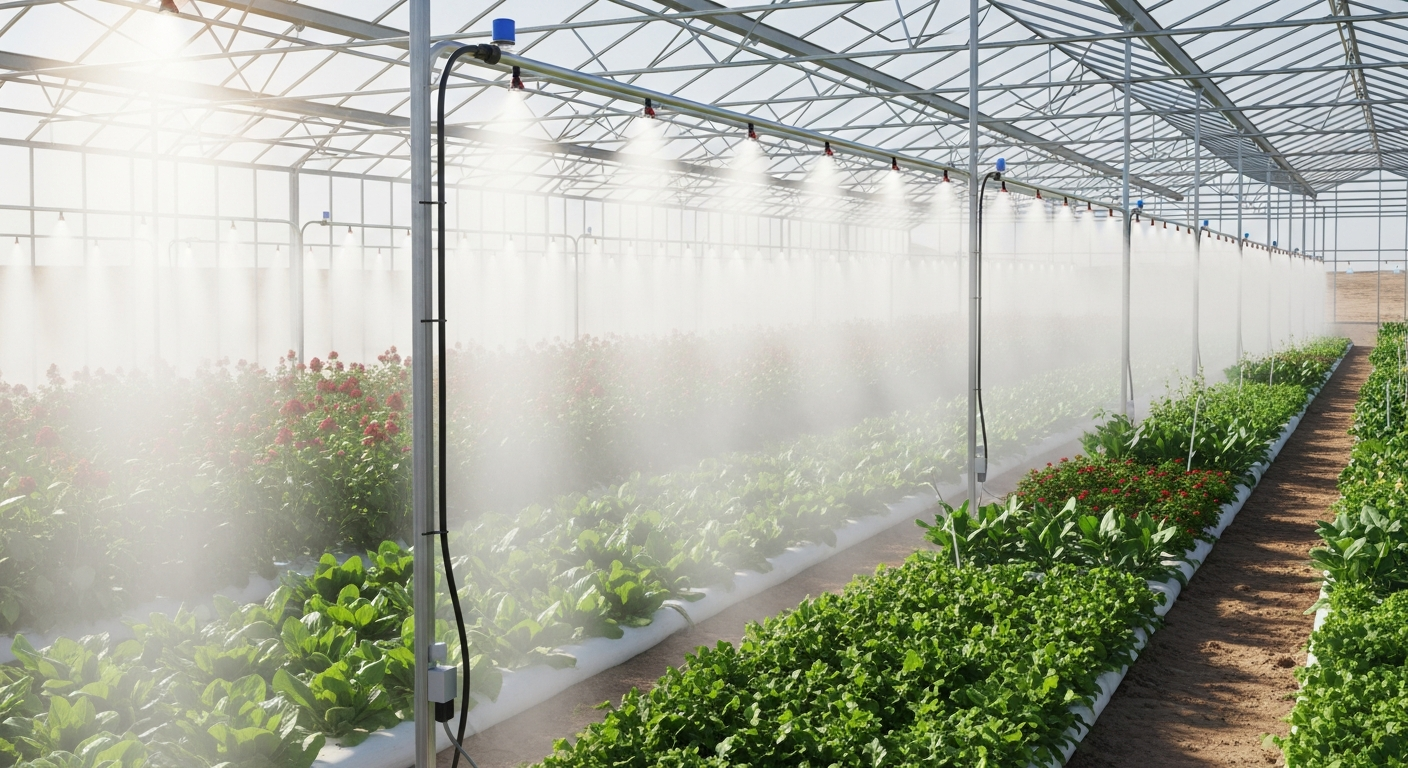
In dry climates, the air naturally has a low relative humidity, meaning it can hold a substantial amount of additional moisture. This low humidity creates an ideal environment for rapid evaporation. When a fogging system releases incredibly fine water droplets – often measured in microns – into the greenhouse air, these tiny droplets quickly evaporate. As they evaporate, they pull heat from the air, effectively lowering the ambient temperature. The drier the air, the more readily this evaporation occurs, making fogging particularly potent in environments where traditional evaporative coolers (like swamp coolers) might struggle to provide uniform cooling or where their bulky design is impractical for certain greenhouse layouts.
Unlike simple misting systems, which produce larger droplets that tend to wet plant surfaces or drip,
Key Components of an Effective Greenhouse Fogging System
A well-designed fogging system is more than just a set of nozzles. It’s an integrated solution built with specific components to ensure optimal performance and longevity, especially when tackling the demands of dry climates.
- High-Pressure Pump: This is the heart of the system. To create the ultrafine droplets necessary for efficient evaporative cooling, a pump capable of generating pressures typically ranging from 800 to 1,200 PSI (pounds per square inch) is essential. These industrial-grade pumps ensure consistent droplet size and distribution.
- Fog Nozzles: Precision-engineered nozzles are crucial. They feature tiny orifices (often made of stainless steel, ceramic, or ruby) designed to atomize water into micron-sized droplets. The number and placement of nozzles are critical for even cooling throughout the greenhouse.
- Water Filtration System: Given the minuscule size of nozzle orifices, clean water is non-negotiable. Multi-stage filtration systems (including sediment filters, carbon filters, and often reverse osmosis or deionization) are vital to prevent clogging and extend nozzle life.
Poor water quality is the leading cause of fogging system failure and maintenance issues. - Control Systems: Modern fogging systems are highly automated. Thermostats, humidistats, and timers work in conjunction to activate the system only when needed, maintaining precise temperature and humidity targets. Advanced controllers can integrate with other climate control equipment like fans and vents.
- High-Pressure Tubing and Fittings: Durable, high-pressure-rated tubing (often nylon or stainless steel) and fittings are required to safely contain the extreme water pressure.
Designing and Implementing Your Fogging System for Dry Environments
Successfully integrating a fogging system into your greenhouse, particularly in a dry climate, requires careful planning and consideration of several factors beyond just purchasing the components.
Strategic Placement of Fog Lines and Nozzles
For uniform cooling, fog lines are typically installed overhead, running the length of the growing areas. Nozzles should be spaced to ensure overlapping coverage and even distribution of fog. In larger greenhouses, multiple zones may be required, allowing for independent control based on specific plant needs or sun exposure. Consider areas prone to heat pockets and ensure adequate nozzle density there.
The Critical Role of Ventilation
This cannot be stressed enough:
Water Source and Quality
Before installation, have your water source tested. High levels of hardness (calcium, magnesium) or other dissolved solids will rapidly clog nozzles and leave mineral deposits on plants and surfaces, known as “white dust.” Investing in a robust filtration system, possibly including
Automation and Monitoring
Modern control systems allow you to set precise temperature and humidity parameters. The system will then automatically cycle on and off to maintain these conditions. Integrating temperature and humidity sensors (thermostats and humidistats) is crucial for efficient operation. This prevents over-misting, which can lead to excessively high humidity and potential fungal issues, even in dry climates.
Optimizing Performance and Maintenance for Longevity
To ensure your fogging system continues to provide reliable temperature reduction and extends its lifespan, regular maintenance and smart operational practices are key.
- Regular Cleaning: Periodically clean or replace nozzle filters. If you notice a reduction in fog or inconsistent spray patterns, it’s often a sign of clogged nozzles. Most high-quality nozzles can be cleaned by soaking them in a descaling solution or distilled white vinegar.
- Water Quality Check: Even with filtration, it’s good practice to monitor your water quality occasionally. Filter cartridges should be replaced according to the manufacturer’s recommendations or more frequently if your water source is particularly poor.
- System Inspections: Regularly check for leaks in tubing and fittings. High-pressure systems require secure connections to prevent water waste and potential damage.
- Monitor Greenhouse Conditions: Pay attention to your plants and environmental sensors. If leaves are consistently wet or humidity levels are too high, adjust your system’s cycle times or consider increasing ventilation. The goal is rapid evaporation, not constant wetness.
- Seasonal Adjustments: As seasons change, so do your cooling needs. Adjust your temperature and humidity set points as outdoor conditions fluctuate. In cooler or wetter periods, you’ll naturally need less fogging.
- Integration with Other Systems: Ensure your fogging system works harmoniously with other climate control tools like shade cloths, fan-and-pad systems, or active ventilation. A holistic approach will yield the best results.
Conclusion: Thriving Plants in Any Climate
For greenhouse operators in dry climates, managing heat stress is paramount to plant health and productivity. High-pressure fogging systems offer an incredibly effective and efficient solution, leveraging the principles of evaporative cooling to transform harsh environments into optimal growing conditions. By understanding the science, investing in quality components, implementing a thoughtful design, and committing to regular maintenance, you can harness the power of fogging to achieve superior temperature control. The result? Healthier plants, increased yields, and a more resilient greenhouse operation, regardless of the scorching dry air outside.