
Managing the internal climate of a greenhouse is a perpetual dance between harnessing the sun’s power and mitigating its intensity. While sunlight is crucial for plant growth, excessive heat can quickly turn your nurturing environment into a wilting oven, especially during peak summer months. Traditional shading methods like shade cloth or whitewash are effective, but they often require manual adjustment, can block too much light in cooler periods, and lack aesthetic appeal. What if there was a natural, self-adjusting solution that not only provides seasonal shade but also enhances your property’s beauty and ecological value? Enter the humble, yet incredibly powerful, deciduous tree.
Utilizing deciduous trees for seasonal greenhouse shading is a time-honored, sustainable strategy that harnesses nature’s own rhythm to create an optimal growing environment. As an expert content writer for Greenhouse Climates, we’re here to explore how these remarkable plants can become your greenhouse’s best friend, offering passive cooling in summer and welcoming warmth in winter, all while contributing to a healthier planet.
The Genius of Deciduous Shading: A Natural Climate Control System
The concept behind using deciduous trees for greenhouse shading is elegantly simple, yet profoundly effective. Deciduous trees are characterized by their annual cycle of leafing out in spring, providing a dense canopy through summer, and then shedding their leaves in autumn. This natural cycle perfectly aligns with the seasonal demands of a greenhouse.
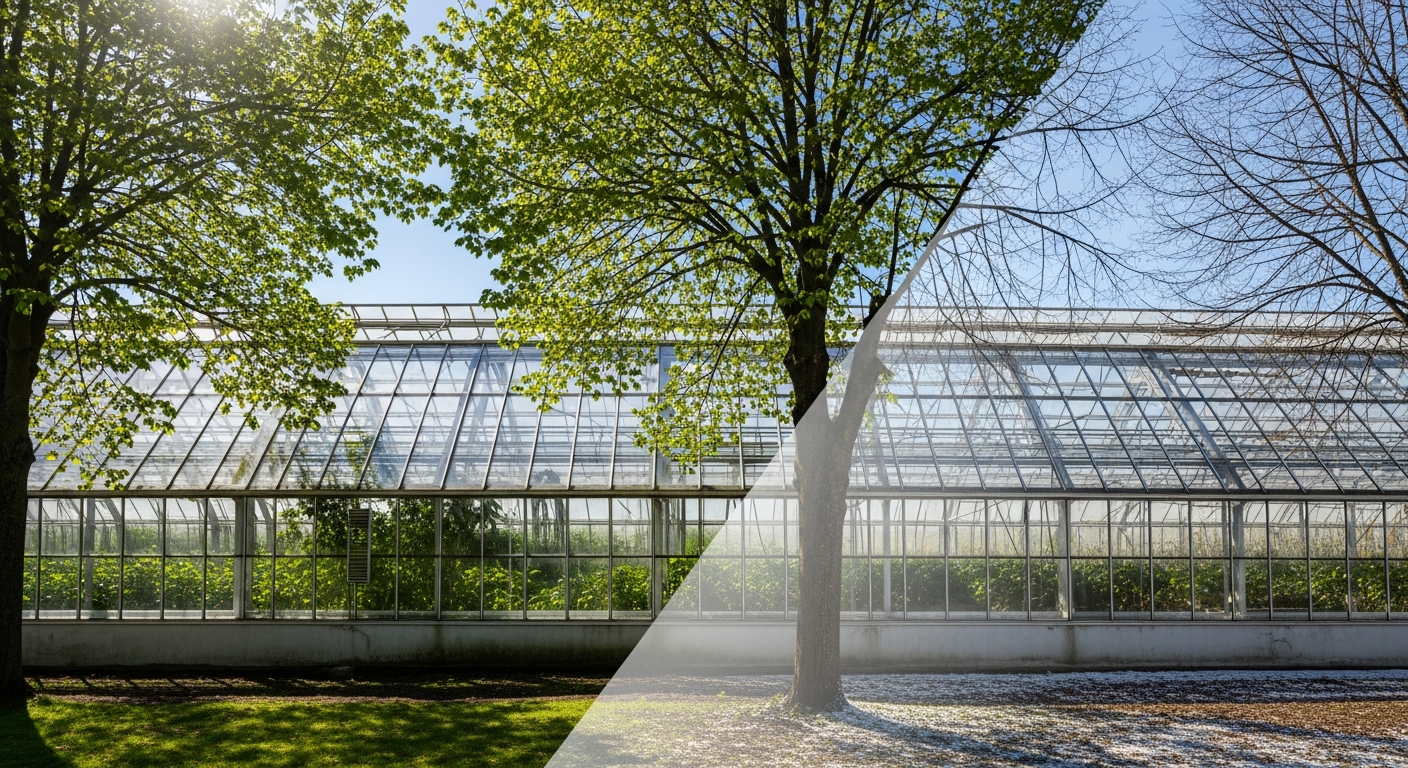
During the scorching summer months, when your greenhouse is most susceptible to overheating from intense solar radiation, the fully leafed-out canopy of strategically placed deciduous trees acts as a natural shade umbrella. This passive cooling system significantly reduces the amount of direct sunlight hitting your greenhouse structure, thereby lowering internal temperatures, decreasing the need for active cooling systems like fans and evaporative coolers, and ultimately saving you money on energy bills. The filtered light also helps prevent sunburn on sensitive plants and reduces water evaporation from pots and soil.
Conversely, as autumn arrives and the days shorten, these trees shed their leaves, allowing the bare branches to permit maximum sunlight penetration into the greenhouse throughout the cooler winter months. This is crucial for maintaining warmer temperatures and ensuring your plants receive ample light for photosynthesis when solar gain is most beneficial. It’s a win-win scenario: shade when you need it most, and sun when you crave it.
Beyond the direct temperature regulation, the presence of trees contributes to a cooler microclimate around your greenhouse through evapotranspiration, where trees release water vapor into the air, further cooling the surrounding environment.
Selecting Your Arboreal Allies: Choosing the Right Deciduous Trees for Your Greenhouse
Not all deciduous trees are created equal when it comes to effective greenhouse shading. Careful tree selection is paramount to ensure long-term success and avoid potential problems. Here are key factors to consider:
- Mature Size and Growth Rate: Choose trees that will grow to an appropriate height and spread to cast adequate shade on your greenhouse without overwhelming it. Consider their eventual width and how far their canopy will extend. Fast-growing trees offer quicker results but might require more frequent pruning.
- Shade Density: Some trees have a very dense canopy (e.g., many maples, oaks), providing deep shade, while others offer more filtered light (e.g., honey locusts, some birches). Consider your plants’ specific light requirements.
- Root System: This is critical. Opt for trees with non-invasive or deep-rooting systems. Aggressive surface roots can damage your greenhouse foundation, plumbing, or even crack concrete. Avoid species known for problematic root growth near structures.
- Disease and Pest Resistance: Healthy trees are strong trees. Select varieties that are naturally resistant to common local diseases and pests to minimize maintenance and ensure consistent shading.
- Leaf Drop and Litter: All deciduous trees drop leaves, but some are tidier than others. Consider the volume of leaf litter and how easily it can be managed around your greenhouse.
- Aesthetics and Local Suitability: Choose trees that complement your landscape and are well-suited to your local climate and soil conditions. Native species are often an excellent choice as they are adapted to the environment and support local wildlife.
Recommended Deciduous Trees for Greenhouse Shading:
- Maples (Acer spp.): Many maple varieties offer dense summer shade and vibrant fall color. Sugar Maples (Acer saccharum) and Red Maples (Acer rubrum) are popular, but be mindful of their mature size and potential root spread.
- Oaks (Quercus spp.): While slower growing, oaks are long-lived, sturdy trees that provide excellent shade. Pin Oaks (Quercus palustris) and Red Oaks (Quercus rubra) are good choices, but require patience.
- Linden/Basswood (Tilia spp.): These trees have attractive foliage, produce fragrant flowers, and offer dense shade. Their root systems are generally less aggressive than some other large shade trees.
- Honey Locust (Gleditsia triacanthos): Known for its fine-textured leaves, the Honey Locust provides a dappled, filtered shade rather than heavy darkness, which can be ideal for plants that prefer bright, indirect light.
- Serviceberry (Amelanchier spp.): For smaller greenhouses or areas needing less expansive shade, Serviceberry offers seasonal interest with spring flowers, edible berries, and attractive fall foliage, along with moderate shade.
Strategic Placement: Maximizing Seasonal Shade and Winter Sun
Once you’ve chosen your arboreal partners, their strategic planting is the next crucial step. The goal is to maximize shade during the summer and allow for full sun penetration in winter. This primarily depends on your greenhouse’s orientation and the sun’s path throughout the year.
- Southern Exposure: The most critical side for shade is often the south-facing wall of your greenhouse, which receives the most intense, direct sunlight throughout the day in summer. Planting deciduous trees to the south will provide the most significant cooling benefit.
- Western Exposure: The western side also receives harsh afternoon sun, which can significantly heat a greenhouse late in the day. Trees on the west can help mitigate this intense heat.
- Eastern Exposure: Morning sun is generally less intense and beneficial for warming the greenhouse. Planting tall trees directly to the east might block desirable morning light, though smaller understory trees could provide some windbreak without excessive shading.
- Northern Exposure: This side receives very little direct sun in temperate climates and is often where prevailing winter winds come from. Deciduous trees here offer less shading benefit but can act as a windbreak, which still contributes to greenhouse temperature stability.
Proximity and Distance Considerations:
Determining the right distance to plant your trees from the greenhouse is vital. Plant them too close, and you risk:
- Root damage to the foundation or floor.
- Falling branches causing structural damage, especially during storms.
- Excessive debris (leaves, pollen, sap) on the greenhouse roof and vents.
- Blocking too much winter light if the canopy extends directly over the roof even when bare.
As a general rule, plant a tree at a distance where its mature canopy will extend over the greenhouse but its trunk and main root system are safely away. A good starting point is to plant trees at a distance equal to at least half of their expected mature height, or even their full mature height for very large species. For example, a tree expected to grow 40 feet tall should ideally be planted at least 20-40 feet away from the greenhouse wall. Observe the sun’s path at different times of the year and simulate shade patterns if possible before planting.
Beyond the Shade: Multifaceted Benefits of Integrating Trees with Your Greenhouse
The advantages of incorporating deciduous trees into your greenhouse landscape extend far beyond simple shading and seasonal cooling. They contribute to a more robust, sustainable, and aesthetically pleasing environment:
- Energy Efficiency and Cost Savings: By reducing the reliance on active cooling systems in summer and providing passive solar gain in winter, you’ll see a noticeable decrease in your greenhouse’s energy consumption. This translates directly into lower utility bills and a smaller carbon footprint.
- Enhanced Biodiversity: Trees provide habitat, food, and shelter for local wildlife, including beneficial insects, pollinators, and birds. These creatures can help with pest control in your garden and contribute to a healthier overall ecosystem around your greenhouse.
- Improved Aesthetics and Property Value: Well-placed trees add beauty, character, and curb appeal to your property. They can soften the lines of a greenhouse, integrate it more harmoniously with the landscape, and even increase property value.
- Wind Protection: Even bare deciduous branches can offer a degree of wind protection, helping to reduce heat loss from the greenhouse due to cold winter winds. During summer, they can slow down strong gusts, protecting delicate plants and structures.
- Soil Health and Water Retention: The leaf litter from deciduous trees, when left to decompose, enriches the soil, improves its structure, and helps retain moisture in the surrounding garden beds.
- Reduced Noise and Air Pollution: Trees act as natural filters, absorbing air pollutants and helping to dampen noise, creating a more peaceful environment around your growing space.
Nurturing Your Natural Shading System: Maintenance and Long-Term Care
Like any living element of your landscape, your deciduous shading trees will require some maintenance to ensure their health, effectiveness, and safety for your greenhouse.
- Pruning for Health and Shape: Regular pruning is essential. In winter, when the tree is dormant, you can prune to remove dead, diseased, or crossing branches. You can also strategically prune to shape the canopy, directing growth to maximize summer shade while ensuring adequate light penetration in winter. Avoid over-pruning, which can stress the tree.
- Watering and Nutrition: Ensure your young trees receive adequate water, especially during dry spells, to establish strong root systems. As they mature, they will become more self-sufficient, but occasional deep watering during extended droughts can be beneficial. Consider soil tests to determine if supplemental nutrients are needed.
- Monitoring for Pests and Diseases: Regularly inspect your trees for any signs of pest infestations or disease. Early detection can prevent serious problems and ensure your tree remains healthy and robust.
- Protecting Your Greenhouse: While trees are a natural solution, it’s prudent to consider the potential for falling branches, especially for trees with weaker wood or those prone to storm damage. Regular inspection and removal of large, overhanging deadwood is crucial. If you have aggressive root species, consider installing a root barrier during planting to protect your greenhouse foundation.
- Long-Term Planning: Trees are a long-term investment. Consider the eventual size and lifespan of your chosen species and how they will integrate with your greenhouse and overall landscape over decades.
Conclusion: Embrace Nature’s Smart Design
Integrating deciduous trees into your greenhouse design is more than just a smart shading solution; it’s an embrace of sustainable greenhouse management and ecological harmony. By working with nature’s cycles, you can achieve superior greenhouse temperature control, significantly reduce your energy costs, and create a more beautiful, biodiverse, and resilient growing environment. While it requires thoughtful planning and an initial investment of time, the long-term benefits of passive cooling, winter warmth, and an enhanced microclimate are immeasurable. So, consider planting a tree – or several – around your greenhouse. Your plants, your wallet, and the planet will thank you.