
For anyone passionate about cultivating plants, whether on a commercial scale or as a beloved hobby, a greenhouse represents a controlled environment designed to optimize growth. Yet, maintaining the ideal internal conditions – warm in winter, cool in summer – is a constant challenge that directly impacts energy consumption and, ultimately, plant health. At the heart of this challenge lies a crucial metric: the U-value. Understanding U-values is fundamental to making informed decisions about greenhouse construction, material selection, and energy efficiency. It’s the key to unlocking significant savings on heating costs and ensuring your botanical haven thrives year-round.
What is a U-Value and Why Does It Matter for Greenhouses?
At its core, a U-value is a measure of a material’s or structure’s ability to transmit heat. More technically, it quantifies the rate of heat transfer through a material or composite structure per unit area, per unit temperature difference. In simpler terms, it tells you how well a building component, like a greenhouse wall or roof, resists heat passing through it.
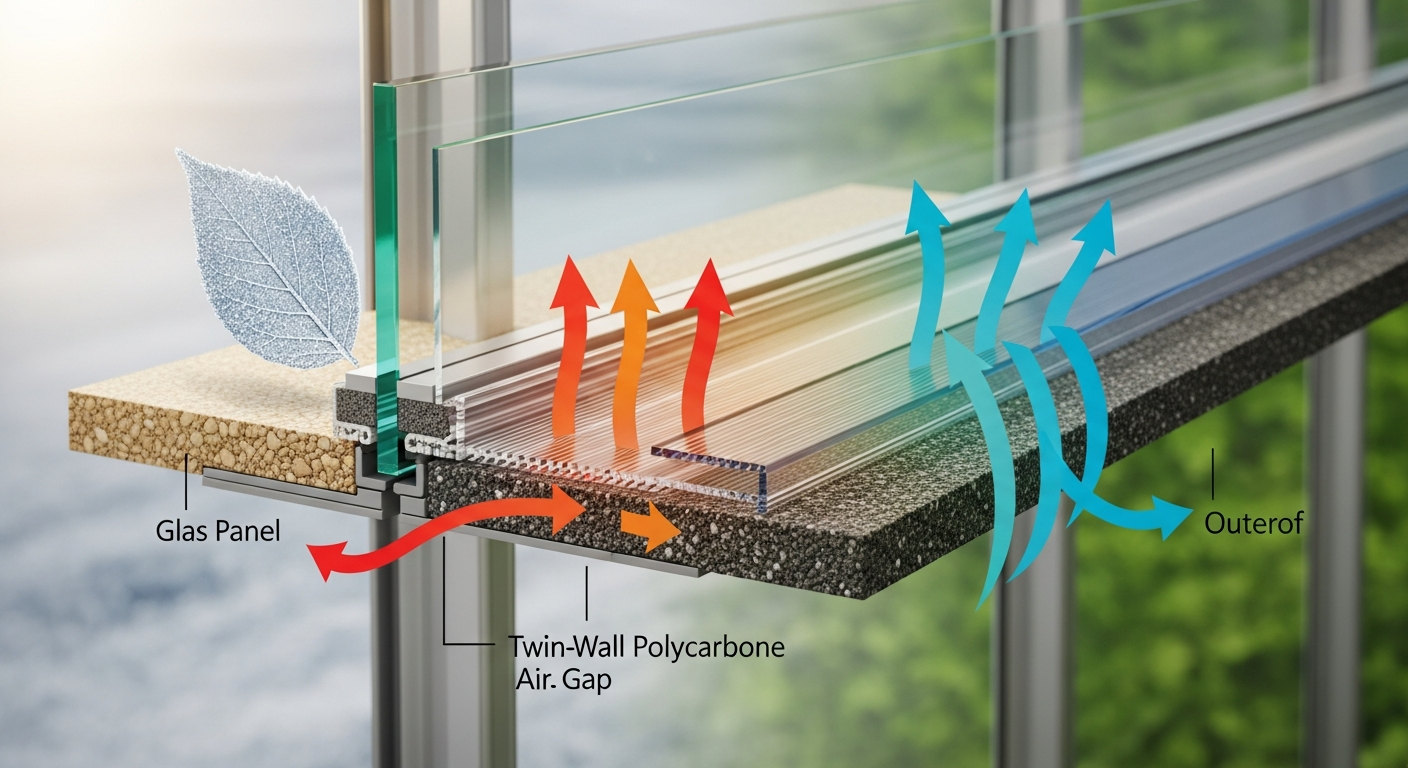
The unit for U-value is typically Watts per square meter Kelvin (W/m²K) or sometimes British Thermal Units per hour per square foot per degree Fahrenheit (BTU/hr·ft²·°F). The most important takeaway regarding U-values is this: the lower the U-value, the better the material or structure is at insulating. A low U-value indicates less heat escaping from your greenhouse in winter or less heat entering in summer, leading to a more stable internal temperature.
The Significance of U-Values for Greenhouse Owners:
- Energy Efficiency: A greenhouse with lower U-value glazing and framing will lose less heat, directly translating into lower heating costs during colder months. This is perhaps the most compelling reason for commercial growers to prioritize U-value.
- Temperature Stability: Reduced heat transfer helps maintain a more consistent internal temperature, creating a less stressful environment for plants. Drastic temperature fluctuations can hinder growth, cause shock, and even lead to crop failure.
- Reduced Condensation: Surfaces with better insulation (lower U-value) stay warmer on the interior side, reducing the likelihood of condensation forming. Excessive condensation can promote fungal diseases and drip onto plants.
- Sustainable Operations: By minimizing energy consumption, greenhouse operations become more environmentally friendly, aligning with broader sustainability goals.
- Cost Savings: While materials with lower U-values might have a higher upfront cost, the long-term savings on energy bills often make them a sound investment.
The Science Behind Greenhouse Heat Transfer
Heat loss in a greenhouse occurs through several mechanisms, and the U-value primarily addresses one crucial aspect: conduction and convection through the building envelope. To fully appreciate U-values, it’s helpful to understand the basic ways heat moves:
- Conduction: This is the transfer of heat through direct contact within a material. For example, heat from inside your greenhouse passes directly through the glass pane to the colder outside air. Materials that are good insulators have low thermal conductivity and thus low U-values.
- Convection: This is heat transfer through the movement of fluids (liquids or gases). In a greenhouse, warm air inside can rise and transfer heat to colder surfaces, or cold air can seep in through gaps, replacing warmer air. The U-value accounts for convective heat transfer across air gaps within multi-layered glazing and the surface resistance of air films.
- Radiation: This is heat transfer through electromagnetic waves, not requiring a medium. Plants, heaters, and the ground emit infrared radiation, and some of this can pass directly through transparent glazing materials. While important, the U-value primarily focuses on conductive and convective losses through the material itself, though some specialized glazing materials also incorporate low-emissivity coatings to reduce radiant heat transfer.
The U-value integrates the effects of conduction through the solid material and convection across any air spaces (like in double-pane glass) and the boundary layers of air at the interior and exterior surfaces. It’s essentially a holistic measure of a surface’s thermal transmittance.
You might also encounter the term R-value, particularly in discussions about general building insulation. R-value is the inverse of U-value (R = 1/U). While U-value measures heat transmittance, R-value measures thermal resistance. Therefore, a higher R-value indicates better insulation, which is the opposite of U-value. Both metrics essentially convey the same information about a material’s thermal performance.
Key Factors Influencing Greenhouse Surface U-Values
The U-value of your greenhouse envelope isn’t a single, fixed number; it’s a composite result of various components. Understanding these factors allows for strategic choices during design, construction, and renovation.
Glazing Materials: The Forefront of Heat Transfer
The type of material used for the walls and roof of your greenhouse has the most significant impact on its overall U-value.
- Single-Pane Glass: Traditionally used, single-pane glass typically has a high U-value (e.g., around 5.7 W/m²K or 1.0 BTU/hr·ft²·°F). It offers excellent light transmission but very poor insulation, leading to significant heat loss.
- Double-Pane (Insulated) Glass: Two panes of glass separated by a sealed air or inert gas (argon, krypton) gap. This trapped gas reduces heat transfer, significantly lowering the U-value compared to single-pane glass (e.g., 2.8-3.3 W/m²K or 0.5-0.6 BTU/hr·ft²·°F). Low-emissivity (Low-E) coatings can further improve thermal performance by reflecting radiant heat.
- Polycarbonate: A popular choice for its durability, light weight, and insulation properties.
- Twin-Wall Polycarbonate: Features two layers with an air gap, providing good insulation (U-value typically 2.8-3.9 W/m²K or 0.5-0.7 BTU/hr·ft²·°F, depending on thickness).
- Triple-Wall, Quad-Wall, or Multi-Wall Polycarbonate: These advanced options incorporate more layers and air gaps, further reducing U-values (e.g., triple-wall can be as low as 1.7 W/m²K or 0.3 BTU/hr·ft²·°F). They offer superior insulation but might slightly reduce light transmission.
- Polyethylene Film: Often used for hoop houses, single-layer poly film has a high U-value similar to single-pane glass. However, double-layer inflated poly film creates an insulating air space, significantly improving its U-value (e.g., around 3.9-4.5 W/m²K or 0.7-0.8 BTU/hr·ft²·°F).
- Acrylic: Similar to polycarbonate in appearance, acrylic sheets also offer good insulation properties, especially in multi-wall configurations.
Frame Materials and Thermal Bridging
While glazing gets a lot of attention, the greenhouse frame also plays a critical role. Materials like aluminum are strong and durable but are excellent conductors of heat. This means heat can easily escape through the aluminum frame, even if the glazing itself is well-insulated. This phenomenon is known as thermal bridging.
- Aluminum: High thermal conductivity. To mitigate thermal bridging, look for aluminum frames with “thermal breaks” – an insulating material inserted into the frame profile to interrupt the heat path.
- Wood: A natural insulator with a lower thermal conductivity than aluminum, but requires more maintenance and can be prone to rot.
- PVC/Vinyl: Offers good insulation properties and is maintenance-free, often with multi-chamber designs that further enhance thermal performance.
Construction Quality and Sealants
Even with excellent materials, poor construction can undermine thermal performance. Gaps, cracks, and poorly sealed joints allow air to leak in and out (infiltration and exfiltration), dramatically increasing heat loss irrespective of the material’s U-value. Proper sealing around all glazing panels, vents, doors, and foundation is paramount to achieving the theoretical U-value of your chosen materials.
Practical Applications: Improving Your Greenhouse’s Thermal Performance
Understanding U-values empowers you to make strategic decisions that will enhance your greenhouse’s energy efficiency and create a more stable environment for your plants. Here are some actionable tips:
1. Choose Glazing Materials Wisely
Consider your climate, budget, and target crops. In mild climates, twin-wall polycarbonate or good quality double-pane glass might suffice. For colder regions or year-round growing, multi-wall polycarbonate or insulated glass with Low-E coatings will offer the best U-values and long-term savings. Don’t just look at the initial cost; calculate the payback period based on energy savings.
2. Address Thermal Bridging in Your Frame
If you’re building a new greenhouse, invest in frames with thermal breaks, especially if opting for aluminum. For existing structures, while harder to retrofit, consider insulating exposed frame components on the interior where possible without obstructing light.
3. Prioritize Airtightness
- Seal Gaps: Use high-quality, UV-resistant sealants around all glazing panels, where the frame meets the foundation, and around doors and vents.
- Weatherstripping: Install weatherstripping on all operable windows and doors to prevent air infiltration.
- Foundation Insulation: Insulating the greenhouse foundation (e.g., with rigid foam insulation below ground level) significantly reduces heat loss from the soil and prevents cold air from seeping in at the base.
4. Utilize Supplemental Insulation and Thermal Screens
While U-values primarily refer to the structural envelope, other insulation methods can drastically improve overall thermal performance:
- North Wall Insulation: In many climates, insulating the north wall (which receives minimal beneficial sunlight) with opaque, high R-value materials can reduce heat loss without compromising light for plants.
- Movable Thermal Screens (Curtains): These can be deployed at night or on cloudy days to create an additional insulating layer, significantly lowering the effective U-value of the roof and walls. They also help retain heat at plant level.
5. Consider Greenhouse Orientation and Design
While not directly affecting a material’s U-value, strategic orientation can optimize passive solar gain and minimize exposure to prevailing cold winds, reducing the demand on your heating system.
6. Regular Maintenance is Key
Periodically inspect your greenhouse for any signs of wear and tear. Replace damaged glazing, re-seal cracked caulk, and ensure all vents and doors close tightly. A small crack today can become a major heat leak tomorrow.
Conclusion
The U-value is far more than just an obscure technical term; it’s a critical metric for anyone serious about efficient and productive greenhouse management. By understanding how U-values measure heat transfer, the factors that influence them, and how to interpret these numbers, you can make smarter decisions about material selection and construction. Investing in materials and design that prioritize lower U-values might represent a higher initial outlay, but the long-term benefits of reduced energy costs, enhanced plant health, and a more stable growing environment will undoubtedly pay dividends. Embrace the science of U-values, and watch your greenhouse flourish with optimal thermal performance and efficiency.