
For any greenhouse enthusiast, whether a seasoned commercial grower or a passionate home hobbyist, creating the perfect growing environment is paramount. This delicate balance often hinges on controlling light intensity and temperature, especially during the scorching summer months or in naturally sun-drenched regions. Enter shade cloth – an indispensable tool in the greenhouse arsenal. But with various percentages available, how do you choose the right one? The decision often boils down to understanding the critical differences between common options like 30% and 50% shade cloth. Selecting the incorrect shade level can impact everything from plant health and growth rates to overall yield and energy efficiency within your greenhouse.
The Essential Role of Shade Cloth in Greenhouses
Shade cloth isn’t just about blocking sunlight; it’s a sophisticated environmental control tool designed to optimize growing conditions. Its primary function is to intercept a portion of the sun’s radiant energy before it enters the greenhouse, thereby reducing both light intensity and internal temperatures. Without adequate shading, plants can suffer from a range of issues, and the greenhouse environment can become untenable for many sensitive species.
Protecting Plants from Overexposure
Just like humans, plants can get sunburned. Excessive direct sunlight, particularly during peak hours, can lead to leaf scorch, wilting, and stunted growth. This phenomenon, known as photo-oxidation or sun stress, damages chlorophyll, impairing the plant’s ability to photosynthesize efficiently. Shade cloth filters this intense light, ensuring that plants receive sufficient light for robust growth without the damaging effects of overexposure. This protection is crucial for maintaining vibrant foliage and healthy development.
Managing Greenhouse Temperatures
Beyond light protection, shade cloth plays a vital role in thermal management. Greenhouses, by their very design, are excellent at trapping solar energy, leading to significant heat buildup – the “greenhouse effect.” While beneficial in cooler months, this can quickly turn detrimental in warmer periods, creating a sauna-like environment that stresses plants and even risks their survival. By reducing the amount of solar radiation entering the structure, shade cloth can significantly lower internal air temperatures, reducing the need for costly active cooling systems like evaporative coolers or extensive ventilation. This passive cooling method helps maintain a more stable and favorable growing climate.
Decoding Shade Percentages: What Do They Mean?
When you see “30% shade cloth” or “50% shade cloth,” these percentages directly correlate to the amount of sunlight they block. Understanding this simple concept is key to making an informed decision for your greenhouse’s specific needs.
How Shade Cloth Works
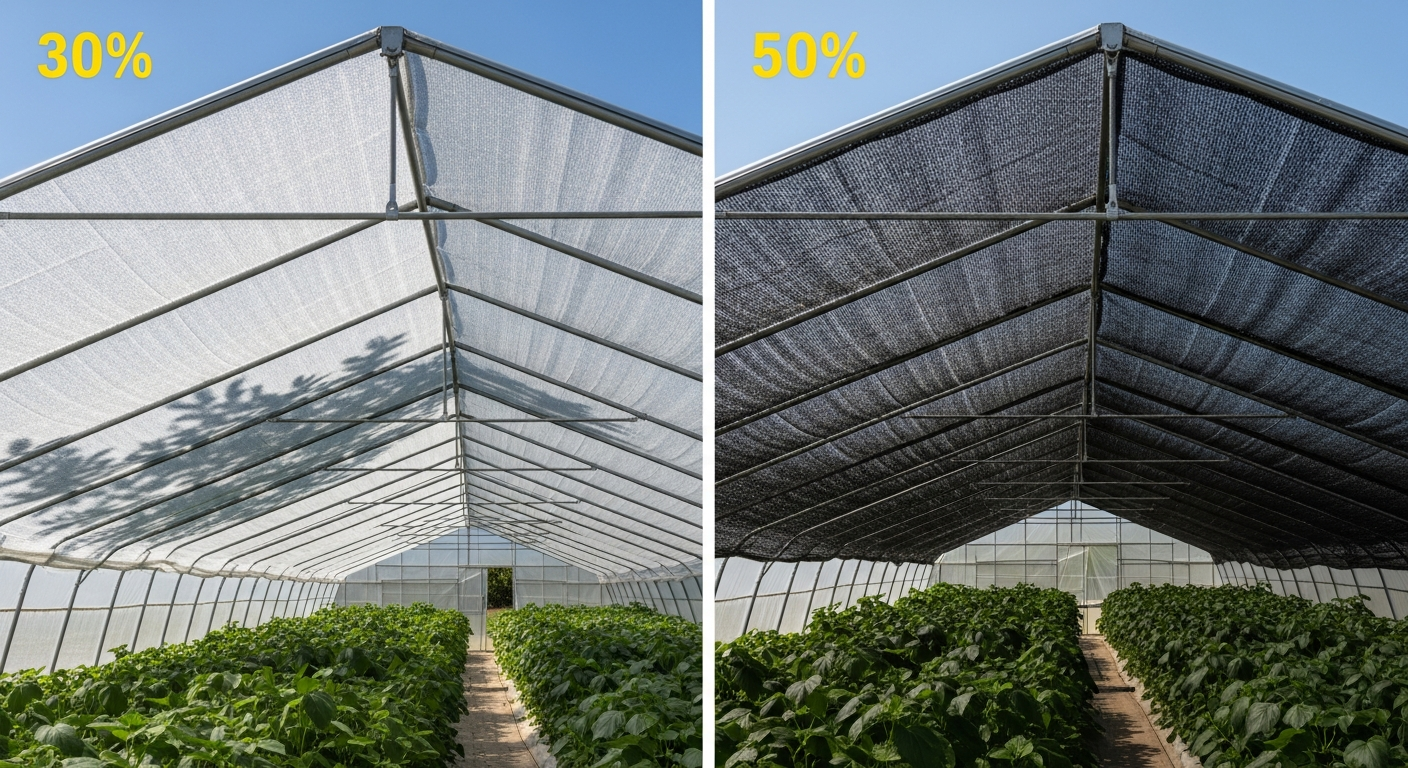
Shade cloth is typically made from knitted polyethylene, designed to be durable, UV-stabilized, and long-lasting. The weave density and color determine its shading capability. Darker colors like black or dark green generally offer more shading and heat absorption than lighter colors, though the primary factor is the weave itself. A 30% shade cloth blocks approximately 30% of incoming sunlight, allowing 70% to pass through. Conversely, a 50% shade cloth blocks around 50% of the sunlight, transmitting the remaining 50%.
The Importance of Light Transmission
While blocking sunlight is the goal, the flip side is light transmission. The percentage of light transmitted is what your plants actually receive. For example, a 30% shade cloth provides 70% light transmission, while a 50% shade cloth offers 50% light transmission. This distinction is critical because different plants have varying light requirements for optimal photosynthesis, flowering, and fruiting. Too much shade can be just as detrimental as too little, leading to leggy growth, poor flowering, and reduced yields.
30% Shade Cloth: Gentle Protection for Moderate Needs
The 30% shade cloth is often considered a versatile, general-purpose choice, offering a gentle reduction in light intensity and temperature without significantly impeding photosynthesis for many plant varieties. It strikes a good balance for many common greenhouse applications.
Ideal Use Cases for 30% Shade Cloth:
- Cool-Season Crops in Warmer Climates: Plants like lettuce, spinach, kale, and other leafy greens that prefer cooler temperatures can thrive under 30% shade in regions with strong summer sun. It prevents bolting (going to seed prematurely) and leaf burn.
- General Summer Protection: For many common vegetables (e.g., peppers, cucumbers, many tomatoes), flowers, and herbs, 30% shade offers sufficient protection during the hottest parts of the day or throughout the summer without compromising their light needs. It helps extend their productive season.
- Enhancing Comfort: If your primary goal is to make the greenhouse more comfortable for yourself to work in without drastically altering light for sun-loving plants, 30% shade can offer a noticeable temperature drop.
- Hardening Off Plants: When moving seedlings from indoors or a propagation area to a brighter greenhouse or outdoors, a temporary layer of 30% shade can aid in the hardening-off process, gradually acclimating them to higher light levels.
Benefits of 30% Shade Cloth:
- Good Light Penetration: Allows ample light for robust photosynthesis in most plants.
- Reduced Heat Stress: Provides a noticeable reduction in greenhouse temperatures, preventing overheating.
- Minimizes Legginess: Less likely to cause plants to stretch for light compared to heavier shade percentages.
- Versatility: Suitable for a wide range of crops and general greenhouse use.
50% Shade Cloth: Robust Shield for Intense Conditions
When the sun is relentless, or your plants are particularly sensitive, 50% shade cloth steps in to provide a more substantial shield. It significantly reduces light intensity and delivers a more pronounced temperature drop, making it suitable for specific plants and extreme environmental conditions.
Ideal Use Cases for 50% Shade Cloth:
- Very Sun-Sensitive Plants: Certain orchids, ferns, African violets, and tropical foliage plants often require significantly reduced light to prevent leaf scorch and maintain their delicate structure.
- Propagation and Seedlings: Young seedlings and rooted cuttings are highly vulnerable to intense sunlight. 50% shade provides a protective canopy, encouraging gentle growth without stress.
- Extreme Climates: In desert environments or regions with exceptionally harsh, high-UV sunlight, a 50% shade cloth can be essential for nearly all crops during peak summer, including some that might typically tolerate more sun in milder climates.
- Preventing Overheating in Unventilated Spaces: For smaller greenhouses or cold frames with limited ventilation options, 50% shade can be a critical passive cooling mechanism to keep temperatures within acceptable ranges.
- Protecting Delicate Flowers and Fruit: Some delicate flowers or soft-skinned fruits can benefit from stronger shade to prevent sun scald or fading.
Benefits of 50% Shade Cloth:
- Significant Heat Reduction: Offers a more substantial drop in internal greenhouse temperatures, crucial for very hot climates.
- Strong UV Protection: Provides robust protection against damaging ultraviolet radiation.
- Prevents Scorch: Effectively prevents leaf burn and sun damage on even the most delicate plants.
- Ideal for Propagation: Creates a nurturing, lower-light environment for young, vulnerable plants.
Choosing the Right Shade Cloth: Key Considerations
The decision between 30% and 50% shade cloth is not one-size-fits-all. It requires a thoughtful assessment of several factors unique to your greenhouse and growing goals.
Your Climate and Local Sun Intensity
Consider your geographical location. Are you in a northern climate with moderate summers or a southern desert region with intense, prolonged sun? Areas with high altitude or clear skies often experience stronger UV radiation.
- Moderate Sun/Cooler Summers: 30% shade might suffice or even be too much for some plants.
- Hot & Sunny Climates (e.g., Mediterranean, desert): 50% shade might be necessary for most plants during summer, with 30% suitable for shoulder seasons or very sun-tolerant crops.
Understanding your specific microclimate is the first step.
Specific Plant Needs (Light Requirements)
Research the optimal light levels for the specific plants you intend to grow. This is perhaps the most crucial factor.
- High-Light Plants (e.g., tomatoes, peppers, melons): Often thrive with 30% shade in hot climates, as they need significant light for fruiting. Too much shade (like 50%) can reduce yields and lead to leggy growth.
- Medium-Light Plants (e.g., leafy greens, herbs, many ornamentals): 30% shade is generally ideal, protecting them from burn while ensuring good growth.
- Low-Light/Shade-Loving Plants (e.g., ferns, orchids, African violets, delicate tropicals): 50% shade, or even higher, is often necessary to prevent damage and mimic their natural understory environment.
Mixing plants with vastly different light requirements in the same greenhouse can be challenging and might require creative zoning or movable shade solutions.
Stage of Plant Growth (Seedlings vs. Mature Plants)
Young plants and seedlings are far more susceptible to sun damage than established, mature plants.
- Seedlings and Cuttings: Often benefit from the higher protection of 50% shade initially.
- Mature Plants: May tolerate 30% shade or even full sun, depending on the species and climate.
Consider using a higher percentage shade cloth for a specific propagation area, or even a temporary layer of 50% over a 30% shade cloth when starting seeds.
Desired Greenhouse Temperature
What is your target temperature range for your greenhouse? The higher the shade percentage, the greater the temperature reduction. If you’re struggling to keep your greenhouse cool even with good ventilation, opting for 50% shade cloth might be the answer. Conversely, if you want only a slight temperature dip to avoid stressing plants, 30% is likely sufficient.
Practical Tip: Observe Your Plants! The best indicator of whether you’ve chosen the right shade cloth is your plants themselves. Look for signs of stress:
- Too Much Sun (Not enough shade): Yellowing leaves, bleached patches, crispy edges, wilting during peak sun hours despite adequate watering, stunted growth.
- Too Much Shade (Too much shade cloth): Pale green or yellow foliage, spindly or leggy growth, lack of flowering or fruiting, elongated stems as plants ‘stretch’ for light.
Adjust your shade cloth or plant placement based on these vital clues.
Conclusion
Choosing between 30% and 50% shade cloth is a crucial decision for maintaining an optimal greenhouse climate and ensuring the health and productivity of your plants. While 30% shade cloth offers a gentle reduction in light and heat, suitable for a wide range of common crops and general summer protection, 50% shade cloth provides a more robust shield, essential for very sun-sensitive plants, extreme climates, or delicate propagation efforts. By carefully considering your local climate, the specific light requirements of your plants, their growth stage, and your desired internal greenhouse temperature, you can make an informed choice that will lead to a thriving and productive greenhouse environment. Remember, the goal is to provide just enough protection without depriving your plants of the light they need to flourish.