
Building a greenhouse is an exciting endeavor, whether you’re a hobbyist looking to extend your growing season or a commercial grower aiming for year-round production. However, a greenhouse is more than just a structure; it’s a finely tuned environment where every material choice impacts its performance. One of the most critical aspects of greenhouse design, often overlooked by beginners, is its thermal efficiency. Understanding how well your greenhouse materials insulate and retain heat can mean the difference between thriving plants and exorbitant energy bills. This is where R-values and U-values come into play – two fundamental metrics that every greenhouse builder should master to create an energy-efficient and optimal growing space.
Demystifying R-Values: The Measure of Thermal Resistance
The R-value is a crucial metric that quantifies a material’s resistance to heat flow. Think of it as a barrier – the higher the R-value, the greater the material’s insulating power, and the more effectively it slows down the transfer of heat. In practical terms for a greenhouse, a high R-value means less heat escaping during cold periods and less heat penetrating during hot periods, ultimately contributing to a more stable internal temperature.
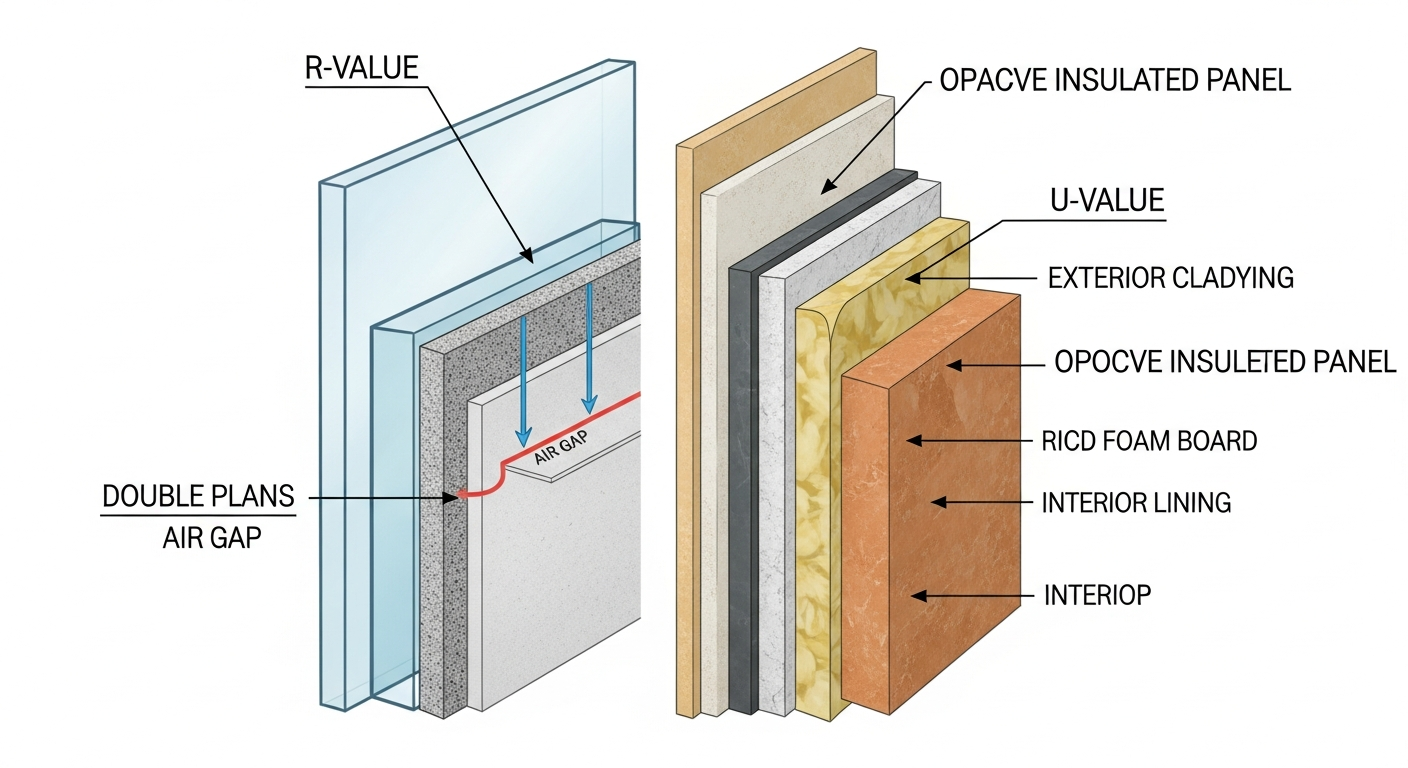
R-values are typically expressed as R-X, where X is a numerical value. This value represents the material’s thermal resistance per unit of thickness, often per inch for solid materials, or for an assembly like a double-pane window. When evaluating materials for your greenhouse, remember this simple rule: a higher R-value indicates superior insulation. This means less energy will be required to heat your greenhouse in winter or cool it in summer, leading to significant savings on your utility bills and a more consistent environment for your plants.
While often discussed in the context of residential insulation (walls, roofs, floors), R-values are equally vital for greenhouses. For instance, insulating your greenhouse foundation with materials like rigid foam boards will prevent ground heat loss, an often-overlooked factor. Similarly, choosing glazing materials with better R-values directly impacts the overall thermal envelope of your structure. It’s about creating a holistic barrier against temperature fluctuations, making every component of your greenhouse contribute to its energy efficiency.
Decoding U-Values: The Rate of Heat Transfer
While R-value measures resistance to heat flow, the U-value (also known as the U-factor or overall heat transfer coefficient) measures the rate at which heat is transferred through a material or an assembly. In essence, it tells you how much heat is lost or gained per square foot, per degree of temperature difference, per hour. Unlike R-values, the rule for U-values is reversed: a lower U-value indicates better insulating performance.
The U-value is often expressed in BTU per hour per square foot per degree Fahrenheit (BTU/hr·ft²·°F) or Watts per square meter per degree Celsius (W/m²·°C). A low U-value means that very little heat is escaping through the material, making it an efficient insulator. This metric is particularly significant for greenhouse glazing materials, as these surfaces make up the majority of a greenhouse’s envelope and are primary points of heat exchange with the exterior environment.
The relationship between R-value and U-value is inversely proportional and straightforward: R = 1/U (or U = 1/R). If a material has an R-value of 2.0, its U-value is 0.5. If its U-value is 0.25, its R-value is 4.0. Understanding this reciprocal relationship allows you to compare materials effectively, regardless of which metric is provided by the manufacturer. For greenhouse designers and builders, focusing on minimizing the U-value of glazing is paramount for reducing heating and cooling demands.
Comparing Greenhouse Glazing Materials: R-Values and U-Values in Practice
The choice of glazing material profoundly impacts your greenhouse’s thermal performance. Different materials offer varying degrees of insulation, affecting both light transmission and energy efficiency. Let’s explore some common options and their typical thermal properties:
Single-Layer Glazing
- Single-Pane Glass: Offers excellent light transmission but very poor insulation. Typical R-value is around R-0.9 to R-1.0, translating to a high U-value of 1.0 to 1.1. This means significant heat loss, making it suitable only for warm climates or greenhouses with very high heating budgets.
- Single-Layer Polyethylene Film: Inexpensive and easy to install, but also a poor insulator. Its R-value is similar to single-pane glass, around R-0.8 to R-1.0 (U-value 1.0 to 1.2). While it allows for high light transmission, its low thermal resistance can lead to substantial heating costs.
Multi-Layer Glazing Options
- Double-Layer Polyethylene Film (inflated): A popular choice for commercial growers. By inflating two layers of film with a small air gap, a trapped air cushion is created. This significantly improves thermal performance, pushing the R-value up to R-1.5 to R-1.8 (U-value 0.5 to 0.7). It’s a cost-effective way to reduce heat loss compared to single-layer film.
- Double-Pane Glass: Similar to residential windows, this involves two panes of glass separated by an air or inert gas (argon) filled gap. This creates a much better insulating barrier than single-pane glass. Depending on the gap and any special coatings, R-values can range from R-1.5 to R-2.5 (U-value 0.4 to 0.7). While more expensive, it offers improved insulation and durability compared to single-pane.
- Multi-Wall Polycarbonate Sheets: This is a favorite for many energy-conscious builders due to its excellent insulating properties and impact resistance. The sheets have internal channels that create multiple air pockets, acting as thermal breaks.
- 4mm Twin-Wall Polycarbonate: R-value typically around R-1.4 to R-1.6 (U-value 0.6 to 0.7).
- 8mm Twin-Wall Polycarbonate: R-value typically around R-1.8 to R-2.0 (U-value 0.5 to 0.6).
- 16mm Triple-Wall or Five-Wall Polycarbonate: Offers superior insulation with R-values ranging from R-2.5 to R-3.5 or even higher (U-value 0.28 to 0.4). This material provides excellent thermal performance while still allowing good light diffusion, making it ideal for colder climates.
- Fiberglass Reinforced Plastic (FRP): Available in flat or corrugated sheets. While generally durable, its thermal performance varies. Single-layer FRP has similar R-values to single-pane glass, but double-layer systems can improve insulation. It typically diffuses light well but can yellow and lose light transmission over time.
Practical Advice for Glazing Selection:
- Consider Your Climate: If you live in a cold region, investing in high R-value/low U-value materials like multi-wall polycarbonate or double-pane glass is crucial to minimize heating costs. In milder climates, less insulated options might suffice.
- Crop Requirements: Some plants require specific temperature ranges. Understand your crop’s needs to choose materials that help maintain that environment efficiently.
- Budget vs. Long-Term Savings: While high-performance glazing might have a higher upfront cost, the long-term energy savings can quickly offset the initial investment. Calculate your potential heating/cooling costs with different materials.
- Light Transmission: Remember that while insulation is key, light transmission is equally vital for plant growth. Some multi-wall polycarbonates, while excellent insulators, may reduce overall light transmission compared to clear glass. Balance thermal performance with your specific light requirements.
Beyond Glazing: Comprehensive Greenhouse Thermal Management
While glazing is the most obvious component impacting R-values and U-values, a truly energy-efficient greenhouse considers every aspect of its construction. Optimizing your greenhouse’s thermal performance goes beyond just the walls and roof.
Foundation and Perimeter Insulation
Heat loss through the ground can be substantial. Insulating your greenhouse foundation and perimeter with rigid foam boards (e.g., XPS or EPS) can significantly improve the overall R-value of your structure. Buried skirt insulation can prevent cold air from seeping under the walls and reduce heat transfer with the colder ground.
Thermal Breaks in Framing
Metal frames (aluminum or steel) are excellent conductors of heat. Without a thermal break – a non-conductive material separating the inner and outer parts of the frame – heat can easily escape (or enter) through the frame itself, creating a thermal bridge. Opt for greenhouse frames designed with integrated thermal breaks to minimize this conductive heat loss, especially important with high-performance glazing.
Sealing and Air Infiltration
Even the best insulating materials will fail to perform optimally if your greenhouse has drafts and air leaks. Gaps around doors, vents, and panel seams can allow significant heat to escape. Proper sealing with weatherstripping, sealants, and meticulous construction are critical to maintain the integrity of your greenhouse’s thermal envelope and maximize the effectiveness of your chosen R-value materials.
Controlled Ventilation and Shading
While essential for temperature regulation and air circulation, ventilation systems must be designed to minimize uncontrolled heat loss. Automated vents that close tightly can prevent heat escape when not needed. Similarly, internal thermal blankets or shade cloths can be deployed at night to further reduce radiant heat loss, effectively increasing the R-value of the greenhouse roof during cooler periods.
Optimizing Greenhouse Orientation
Strategic placement of your greenhouse can also contribute to passive thermal management. Orienting a greenhouse with its longest side facing south (in the Northern Hemisphere) maximizes solar gain during winter, helping to reduce heating demands. This thoughtful design minimizes reliance on artificial heating and cooling systems, enhancing the natural efficiency of your chosen materials.
Conclusion: Building a Smarter, More Efficient Greenhouse
Understanding R-values and U-values is not just technical jargon; it’s fundamental knowledge for anyone serious about building an energy-efficient and productive greenhouse. These metrics empower you to make informed decisions about your building materials, moving beyond aesthetics to focus on performance.
By prioritizing high R-value and low U-value materials, particularly for glazing, and by paying attention to foundational insulation, thermal breaks, and airtight construction, you can significantly reduce your greenhouse’s heating and cooling demands. This translates into lower operational costs, a more stable and consistent environment for your plants, and ultimately, a more successful growing experience. Invest time in researching and selecting materials based on these critical thermal performance indicators, and you’ll be well on your way to building a greenhouse that thrives for years to come.