
Imagine a perfectly installed facade, a sleek set of interior wall panels, or a robust roofing system. Now imagine it buckling, cracking, or developing unsightly gaps seemingly out of nowhere. The invisible culprit behind many such failures isn’t shoddy workmanship but a fundamental scientific principle: thermal expansion and contraction. As temperatures fluctuate throughout the day and across seasons, building materials, especially rigid panels, are constantly expanding and shrinking. Ignoring these powerful, natural forces during installation can lead to significant damage, compromised structural integrity, and costly repairs. This comprehensive guide will delve into the science of thermal movement and, more importantly, equip you with the knowledge and practical strategies for the proper installation of rigid panels, ensuring their longevity, performance, and aesthetic appeal.
Understanding the Science of Thermal Movement
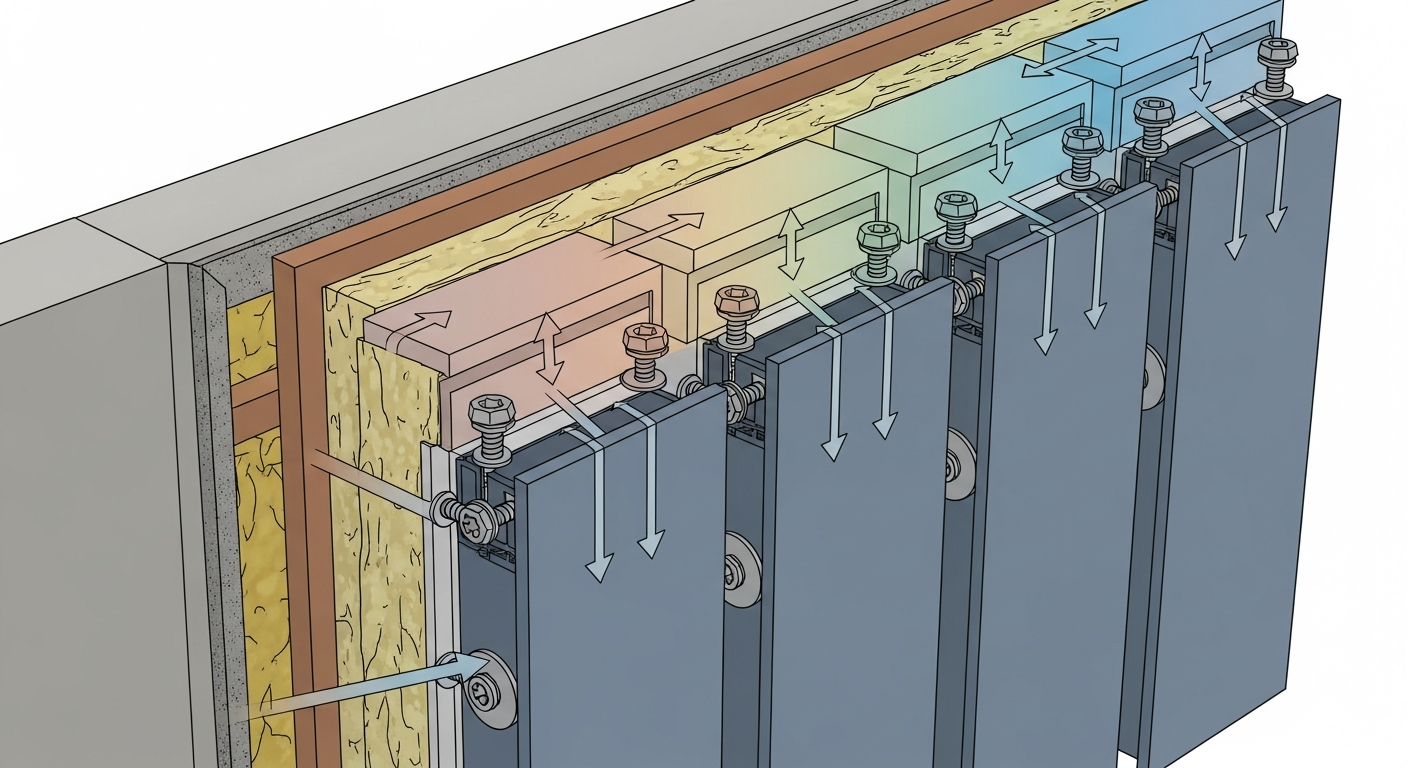
At its core, thermal expansion and contraction is a predictable response of materials to changes in temperature. When a material heats up, its molecules gain kinetic energy and vibrate more vigorously, pushing each other further apart. This increased molecular spacing results in an overall increase in the material’s volume – it expands. Conversely, when a material cools down, its molecules lose energy, vibrate less, and move closer together, causing the material to shrink or contract.
The Coefficient of Thermal Expansion (CTE)
Not all materials expand and contract at the same rate. This rate is quantified by a material’s Coefficient of Thermal Expansion (CTE). Materials with a high CTE, like many plastics and some metals, will experience significant dimensional changes even with modest temperature swings. Materials with a lower CTE, such as glass or concrete, are more dimensionally stable. Understanding the CTE of your chosen rigid panel material is paramount, as it directly dictates the amount of movement you must accommodate.
- High CTE Materials: Often include PVC, polycarbonate, aluminum, and certain types of fiber cement. These require generous allowances for movement.
- Lower CTE Materials: Examples include some composite panels, ceramic panels, and certain engineered wood products. While more stable, they still require consideration.
These constant shifts, often imperceptible to the naked eye, exert immense forces on adjacent materials, fasteners, and the panels themselves. If these forces are restricted – if the material has nowhere to expand or contract – it will inevitably lead to stress, warping, buckling, or ultimately, failure.
The Critical Impact of Thermal Movement on Rigid Panels
When rigid panels are installed without adequate consideration for thermal expansion and contraction, the consequences can range from minor aesthetic blemishes to severe structural problems. These issues not only detract from the building’s appearance but can also compromise its weatherproofing and long-term durability.
Common Problems Arising from Neglecting Thermal Movement:
- Buckling and Warping: As panels expand on a hot day, if they are tightly constrained, they will bow outwards or warp. This is particularly common in long, continuous panel runs or in materials with high CTE.
- Cracking and Fracturing: When panels are restricted from contracting in cold weather, tensile stress can build up, leading to cracks, especially around fasteners, edges, or pre-drilled holes. Brittle materials are particularly susceptible.
- Fastener Failure: The movement of panels can exert shear force on screws or nails, causing them to loosen, pull out, or shear off entirely. This compromises the panel’s attachment and can lead to detachment.
- Joint and Sealant Failure: Gaps between panels that are too small will squeeze sealants out during expansion, while gaps that are too large will overstretch sealants during contraction, leading to tears and loss of weather integrity.
- Water Intrusion: Compromised joints, cracks, and failed sealants create pathways for moisture, leading to rot, mold, and damage to underlying structures and insulation.
- Aesthetic Degradation: Uneven surfaces, irregular gaps, and visible cracks severely diminish the visual appeal of any panel installation, impacting property value and curb appeal.
- Structural Strain: In severe cases, the cumulative forces from expanding and contracting panels can transmit stress to the building’s frame, potentially affecting structural elements.
Whether you’re installing exterior facade panels, interior decorative panels, or industrial cladding, understanding and mitigating these risks is crucial for ensuring a robust, lasting, and visually appealing finish.
Essential Installation Strategies to Mitigate Thermal Stress
Successfully installing rigid panels requires proactive planning and precise execution to account for inevitable thermal movement. By implementing specific techniques, you can ensure panels perform as intended, resisting the stresses of temperature fluctuations.
1. Incorporate Expansion Joints
Expansion joints are deliberately created gaps or breaks in a continuous run of panels designed to absorb dimensional changes. They are perhaps the most critical component in managing thermal movement.
- Purpose: To allow panels to expand into the gap without buckling and contract away from the gap without tearing fasteners or sealants.
- Sizing: The size of the expansion joint depends on the panel material’s CTE, the panel’s length, and the expected temperature range of the environment. Manufacturers typically provide guidelines, but a general rule is to calculate the maximum potential expansion/contraction and ensure the joint can accommodate it.
- Placement: Install expansion joints at regular intervals, at corners, and wherever different panel types or building sections meet.
- Materials: Fill expansion joints with flexible, weather-resistant sealants or compressible backer rods and sealants designed for dynamic movement.
2. Utilize Proper Fastening Techniques
The method of securing panels is vital to allow for movement while maintaining structural integrity.
- Slotted or Oversized Holes: For face-fastened panels, drill slotted or oversized holes in the panel where fasteners will be placed. This allows the panel to slide relative to the fastener as it expands and contracts. The fastener should be centered in the slot during installation.
- “Floating” Fasteners: Use fasteners that are designed to hold the panel securely but allow it to move. For screws, avoid over-tightening; leave them slightly proud to prevent “clamping” the panel tightly to the substrate.
- Concealed Fastening Systems: Many modern rigid panel systems use concealed clips or rail systems that are specifically engineered to permit panel movement while hiding the fasteners, providing a clean aesthetic.
- Perimeter vs. Field Fastening: Understand if the manufacturer specifies a “fixed point” (where movement is restricted) and “floating points” (where movement is allowed) for each panel.
3. Account for Gap Spacing During Installation
The temperature at the time of installation significantly impacts the required gap spacing between panels.
- Calculate Optimal Gaps: If installing on a cold day, panels will be contracted, so gaps should be intentionally wider than their final intended size to allow for future expansion. Conversely, on a hot day, panels will be expanded, so gaps can be set closer to their minimum.
- Manufacturer Guidelines: Always refer to the panel manufacturer’s specifications for recommended gap dimensions, as these are tailored to the material’s specific CTE and typical environmental conditions.
- Consistent Spacing: Use spacers or gauges to ensure uniform gap widths across the entire installation. Inconsistent gaps not only look bad but can also lead to uneven stress distribution.
4. Acclimatize Panels Before Installation
Allowing panels to acclimate to the ambient job site temperature before installation is a simple yet effective step to minimize post-installation movement.
- Unpack and Store: Unpack panels and store them flat in the installation environment for at least 24-48 hours prior to cutting and fastening. This helps them reach a stable temperature and moisture content.
- Avoid Direct Sunlight: During acclimatization, keep panels out of direct sunlight or extreme temperatures that could cause premature expansion or contraction.
5. Consider Material Selection and Design
While often predetermined, material choice can influence the extent of thermal movement. Designers and installers should be aware of this.
- Lower CTE Materials: Where possible and practical, select materials with a naturally lower coefficient of thermal expansion for greater dimensional stability.
- Panel Size: Larger panels will exhibit greater overall movement than smaller ones. Consider breaking up very large areas into smaller, manageable sections with more frequent expansion joints.
- Color Choice: Darker colored panels absorb more solar radiation, leading to higher surface temperatures and thus greater expansion compared to lighter colored panels of the same material.
6. Prepare a Stable Substrate
A stable, level, and appropriately prepared substrate is fundamental. Any movement or instability in the substrate can exacerbate issues related to panel movement, leading to uneven stresses and premature failure.
Advanced Considerations and Best Practices
Beyond the core strategies, several other factors contribute to a robust, long-lasting rigid panel installation that effectively manages thermal movement.
Differential Movement Between Dissimilar Materials
Buildings are rarely made of a single material. When rigid panels are installed adjacent to or over different materials (e.g., a metal panel next to a concrete wall), their differing CTEs mean they will expand and contract at different rates. This “differential movement” must be specifically addressed through dedicated expansion joints and compatible flashing details to prevent undue stress on either component and maintain weatherproofing.
Sealant and Gasket Selection
The choice of sealants and gaskets is not trivial. They must be able to withstand the anticipated movement without losing adhesion or tearing. Look for products specifically rated for high movement, with excellent elasticity and UV resistance. Often, manufacturers will recommend specific sealants that are compatible with their panel systems.
Working with Manufacturer Specifications
Perhaps the most critical best practice is to always adhere strictly to the rigid panel manufacturer’s installation guidelines. These specifications are developed through extensive testing and provide precise instructions on:
- Recommended fastener types and spacing.
- Minimum and maximum gap sizes for various temperature ranges.
- Proper expansion joint details.
- Acclimatization procedures.
- Approved sealants and accessories.
Deviating from these guidelines can not only void warranties but almost guarantee performance issues down the line.
Consider Environmental Factors
Beyond just temperature, other environmental factors can influence panel behavior:
- Moisture: Some materials, like wood-based composites, also expand and contract with changes in humidity. While thermal movement is primary for rigid panels, it’s worth noting.
- Wind Loads: While not directly related to thermal movement, proper fastening that accommodates movement also needs to ensure the panels can resist wind uplift and pressure.
- Solar Exposure: Panels on south-facing walls or roofs will experience greater temperature swings than those on north-facing elevations or interior applications, necessitating more generous allowances for movement.
Conclusion
The forces of thermal expansion and contraction are an undeniable reality in construction, particularly when working with rigid panels. Understanding how materials react to temperature changes is not merely academic; it is foundational to ensuring the durability, aesthetics, and structural integrity of any panel installation. By meticulously planning for movement through proper expansion joints, intelligent fastening techniques, accurate gap spacing, and careful material consideration, you can prevent a cascade of costly problems.
Embracing these best practices during the installation of rigid panels is an investment in longevity, reducing maintenance, preserving aesthetic appeal, and safeguarding the performance of the entire building envelope. Always consult manufacturer guidelines, educate yourself on the specific properties of the materials you’re working with, and approach every installation with respect for the powerful, yet predictable, dance of thermal movement. Your diligence will pay dividends in a resilient and beautiful finish that stands the test of time and temperature.