
The dream of year-round cultivation in a greenhouse often collides with the harsh reality of soaring heating bills, especially in colder climates. Maintaining optimal temperatures for your precious plants can be an energy-intensive endeavor. However, modern horticulture offers powerful solutions to mitigate this challenge, and at the forefront of these innovations are thermal blankets and curtains. These ingenious heat retention barriers are far more than simple covers; they are a sophisticated application of scientific principles designed to dramatically improve your greenhouse’s energy efficiency and foster a more stable growing environment. Understanding the science behind these systems is key to unlocking their full potential and transforming your greenhouse into a truly energy-smart space.
Understanding Heat Transfer: The Role of Thermal Barriers
To appreciate how thermal blankets and curtains work, we first need to understand the fundamental ways heat moves. Heat transfer occurs through three primary mechanisms: conduction, convection, and radiation. A truly effective thermal barrier addresses all three.
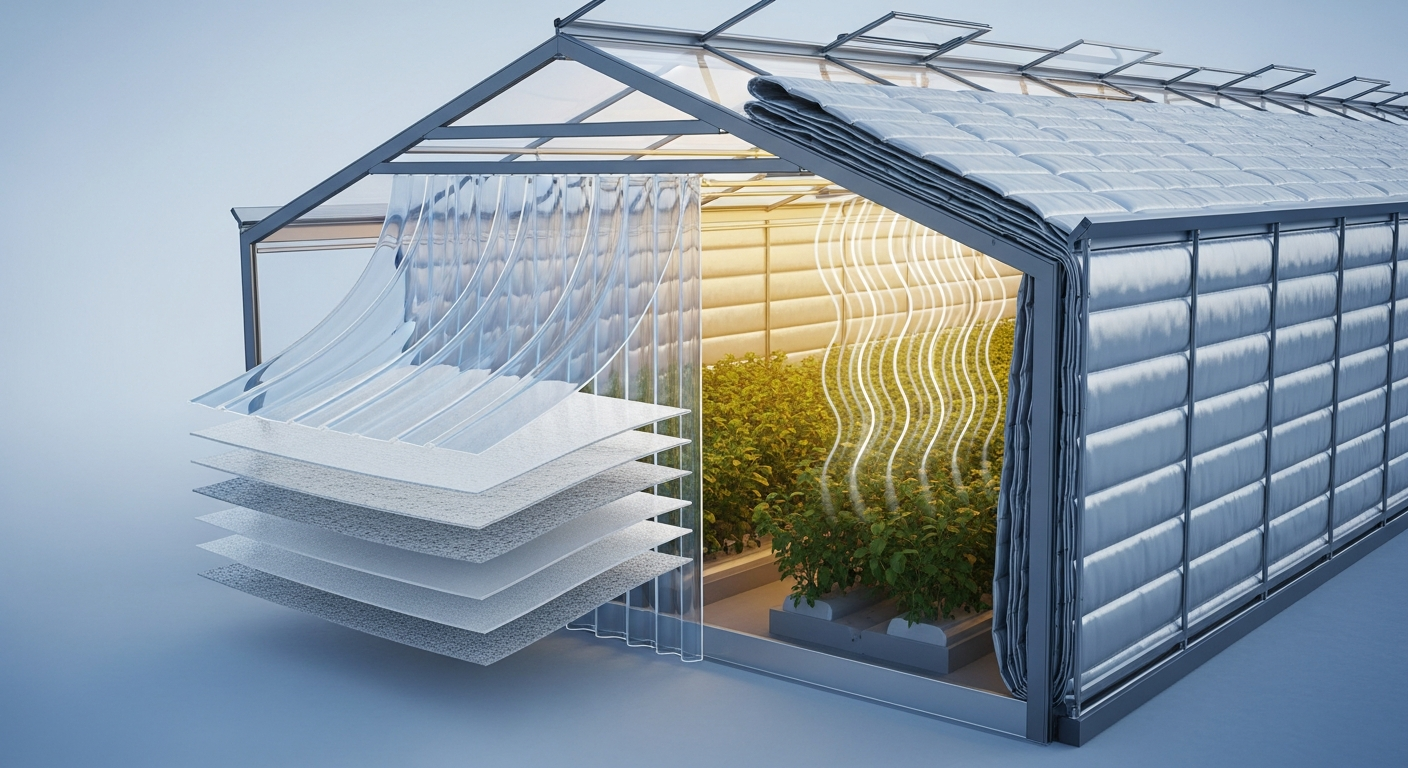
- Conduction: This is the transfer of heat through direct contact. In a greenhouse, heat conducts through the glazing materials (glass, polycarbonate, film) and structural components. Thermal blankets combat conduction by introducing materials with low thermal conductivity, essentially slowing down heat movement through solid objects.
- Convection: This involves heat transfer through the movement of fluids (liquids or gases). Warm air inside your greenhouse rises and escapes through gaps or through the glazing itself, while colder air infiltrates. Thermal curtains create an insulating layer that traps still air, significantly reducing convective heat loss.
- Radiation: Heat can also travel as electromagnetic waves, even through a vacuum. The warm surfaces inside your greenhouse (plants, benches, soil) radiate heat outwards, especially at night when the outdoor temperature is much lower. Many thermal blankets feature reflective surfaces, such often metallized polyester or aluminum, which bounce radiant heat back into the growing space, much like a thermos bottle.
Materials Matter: A Look at Thermal Barrier Construction
The effectiveness of a thermal blanket or curtain is largely determined by its construction and the materials used. Most advanced systems are multi-layered, engineered to maximize insulation properties:
- Woven Polyolefin or Polyester: These durable synthetic fabrics form the structural backbone of many thermal screens. They are chosen for their strength, light weight, and resistance to environmental factors like UV radiation and humidity.
- Metallized Coatings: A critical component for addressing radiant heat loss. Thin layers of aluminum or other reflective materials are bonded to the fabric. These highly reflective surfaces can reflect 70-90% of infrared radiation back into the greenhouse, dramatically reducing heat escape.
- Multiple Layers and Air Pockets: Just like a down jacket, multiple layers with trapped air in between provide superior insulation. The trapped air is a poor conductor of heat, thus inhibiting both conductive and convective heat transfer. Some blankets feature open weaves that allow a small amount of moisture vapor to pass through, reducing condensation, while others have very tight weaves for maximum heat retention.
Choosing Your Shield: Varieties of Thermal Blankets and Curtains
The world of greenhouse thermal barriers offers a range of options, each suited to different needs and scales of operation. Understanding the types available will help you select the best solution for your specific greenhouse and climate control strategy.
Fixed vs. Retractable Systems
- Fixed Thermal Barriers: These are typically installed permanently in a specific section of the greenhouse or over particular crops. While offering consistent insulation, they lack the flexibility to adjust to changing light or temperature conditions. They might be suitable for small, dedicated propagation areas or for hobby greenhouses where manual deployment is feasible.
- Retractable Thermal Screens/Curtains: This is the most common and versatile option, especially for commercial greenhouses. These systems consist of panels that can be rolled up or folded away during the day to allow maximum light penetration, and then deployed at night or on cold, cloudy days.
Retractable systems can be operated manually for smaller setups, but larger greenhouses typically benefit from automation. Automated systems use motors, gearboxes, and sophisticated climate computers that open and close the curtains based on preset temperature, humidity, and light intensity thresholds, ensuring optimal energy savings and plant conditions without constant human intervention.
Shade/Energy Screens vs. True Thermal Blankets
It’s important to distinguish between different types of greenhouse screens, as some offer dual functionality while others are specialized:
- Shade Screens: Primarily designed to reduce solar radiation and prevent overheating during hot periods. They often have an open weave to allow air circulation. While they offer some minimal heat retention, it’s not their main purpose.
- Energy Screens (or Dual-Purpose Screens): Many modern thermal blankets are also called energy screens because they can serve both purposes. During the summer, their reflective surfaces can bounce away excess solar radiation, reducing the need for cooling. In winter, they trap heat, reducing heating costs. These are often the most cost-effective solution for year-round climate management.
- True Thermal Blankets: These are designed with maximum heat retention as their primary goal. They typically have a tighter weave, multiple layers, and highly reflective surfaces to achieve the highest R-values (a measure of thermal resistance). They might block more light when deployed, so their use needs to be carefully managed.
When selecting a system, look for specifications like “energy saving percentage,” “shade percentage,” and R-value or U-value (a measure of heat transfer) to compare performance accurately. Your choice will depend on your climate, the type of crops you grow, and your specific energy saving goals.
Beyond Heat: The Multifaceted Advantages
While the primary benefit of thermal blankets and curtains is heat retention, their impact extends far beyond simply reducing your heating bill. These systems contribute to a healthier, more productive, and more sustainable greenhouse environment.
Energy Savings and Cost Reduction
This is arguably the most compelling advantage for any greenhouse operator. By creating an insulating barrier, thermal blankets can reduce heat loss by 20% to over 50%, depending on the type of screen, the tightness of its installation, and the outdoor climate. Over time, these significant energy savings lead to a substantial return on investment (ROI), making them an economically sound upgrade for both commercial growers and serious hobbyists. The reduced demand on heating systems also means less wear and tear and potentially lower maintenance costs.
Optimized Plant Growth and Health
Consistent temperatures are crucial for healthy plant development. Thermal blankets help stabilize the greenhouse environment, minimizing extreme temperature fluctuations between day and night. This stability reduces plant stress, leading to:
- Improved Growth Rates: Plants can allocate more energy to growth rather than constantly adjusting to temperature swings.
- Reduced Cold Shock: Sensitive plants are protected from sudden drops in temperature, which can stunt growth or cause damage.
- Better Disease Prevention: By maintaining a warmer surface temperature of the glazing, thermal screens can significantly reduce condensation drip onto plants. Condensation creates moist conditions that are ideal for the development and spread of fungal diseases.
- More Efficient CO2 Utilization: A stable, warmer night temperature means plants can continue some metabolic processes more efficiently, including the use of supplemental CO2, if provided.
Installation and Maintenance Tips
Proper installation is paramount to maximizing the efficiency of your thermal barriers. Gaps, sagging, or improper sealing can significantly diminish their insulating properties.
- Tight Installation: Ensure the curtains are stretched taut and close securely against the greenhouse structure on all sides when deployed. Even small gaps can allow significant heat leakage.
- Avoid Sagging: Sagging screens can collect condensation, potentially drip onto plants, and reduce their insulating air pockets. Regular checks and adjustments are recommended.
- Cleaning: Over time, dust and debris can accumulate on the screens, reducing their reflectivity and overall efficiency. Follow manufacturer guidelines for cleaning, typically gentle washing with mild soap and water.
- Regular Inspection: Check for tears, stretched fabric, or issues with the retraction mechanism. Timely repairs will extend the life of your system and maintain its effectiveness.
- Automation Calibration: If using an automated system, ensure sensors are clean and properly calibrated, and that the opening/closing schedules align with your plant’s needs and current weather patterns.
Smart Strategies for Peak Performance
Integrating thermal blankets and curtains into a comprehensive greenhouse climate control strategy is where their true power is unleashed. It’s not just about installing them, but about managing them intelligently.
Integrating with Climate Control Systems
For optimal performance, thermal blankets should be part of an integrated climate control system. Modern greenhouse controllers can orchestrate the deployment of screens in conjunction with other environmental factors:
- Temperature Sensors: Screens can automatically deploy when internal temperatures drop below a set point or when external temperatures signal impending cold.
- Light Sensors: Screens can retract as daylight arrives to maximize light for photosynthesis and deploy at dusk.
- Humidity Sensors: Certain screen types can be opened slightly or deployed in stages to help manage humidity levels and reduce condensation, even while retaining some heat.
- Ventilation Coordination: The climate computer can prevent simultaneous operation of screens and ventilation fans, optimizing energy use.
This level of automation ensures that your greenhouse maintains an ideal environment with minimal energy waste, adapting dynamically to changing weather conditions throughout the day and night.
Considerations for Different Climates and Crops
The best thermal barrier solution isn’t one-size-fits-all:
- Cold Climates: Greenhouses in very cold regions will benefit most from screens with the highest R-values, often multi-layered and with maximum reflective properties, to minimize heat loss during long, cold nights.
- Moderate Climates: Dual-purpose energy screens that provide both shade in summer and heat retention in winter offer excellent versatility and value.
- High Humidity Crops: For crops sensitive to high humidity and condensation (e.g., some ornamentals or cannabis), consider screens that are designed to allow a degree of moisture vapor passage, or ensure your climate control system can effectively manage humidity when screens are deployed.
- Light-Sensitive Crops: If your crops require every ray of available light, ensure your screens retract fully and cleanly during daylight hours. Conversely, for crops that benefit from a shorter photoperiod, light-deprivation screens (which can also double as thermal barriers) may be considered.
For large-scale commercial operations, consulting with greenhouse design and climate control specialists can ensure that your thermal barrier system is perfectly matched to your crops, climate, and operational goals, often leading to professional installation and customized solutions.
Conclusion
Thermal blankets and curtains are indispensable tools in the quest for efficient and productive greenhouse cultivation. By intelligently addressing the fundamental principles of heat transfer – conduction, convection, and radiation – these systems provide a powerful barrier against heat loss, significantly reducing energy consumption and operational costs. Beyond the undeniable financial benefits, they contribute to a more stable, stress-free environment for your plants, promoting healthier growth and higher yields. Whether you operate a hobby greenhouse or a sprawling commercial facility, integrating well-chosen and properly managed thermal barriers into your climate control strategy is a smart investment in the future of your growing operation and a crucial step towards more sustainable horticulture.