
The air we breathe, an invisible lifeline, is often taken for granted. Yet, within its seemingly innocuous composition can lurk a cocktail of unseen threats – silent pollutants that profoundly impact our health, environment, and even industrial processes. From the subtle fragrance of new furniture to the ripeness of a fruit, many everyday phenomena are linked to gases that, in elevated concentrations, can become detrimental. Understanding and controlling these airborne adversaries is paramount, and at the heart of this endeavor lies the sophisticated science of air quality monitoring, specifically focusing on the detection of harmful Volatile Organic Compounds (VOCs) and ethylene. This article delves into the intricate mechanisms and critical importance of pinpointing these specific gaseous compounds, revealing the science that empowers us to safeguard our breathable world.
The Invisible Threat: Understanding VOCs and Ethylene
Before we can effectively monitor and mitigate air quality issues, it’s essential to understand the nature of the pollutants we’re targeting. Volatile Organic Compounds and ethylene represent two distinct, yet equally significant, categories of airborne chemicals that demand careful attention.
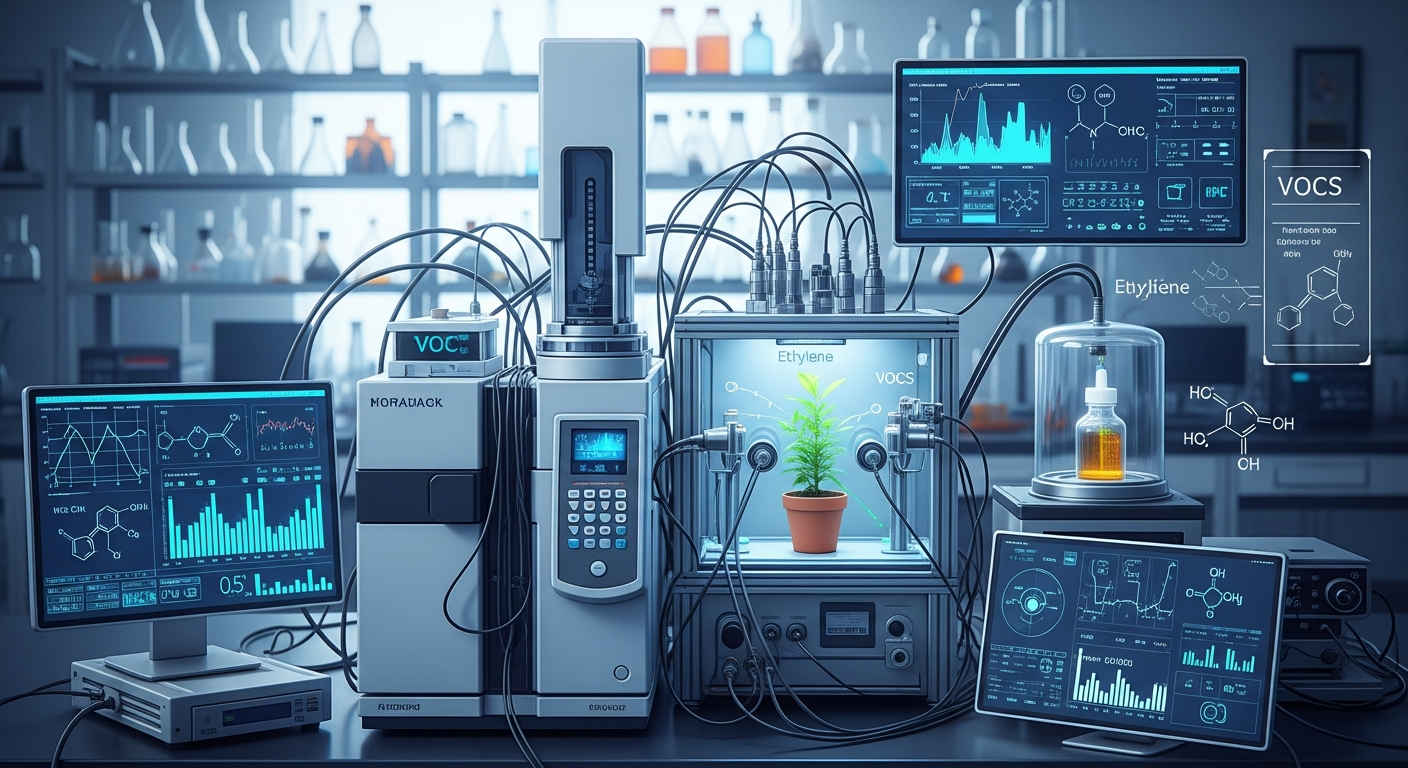
What are Volatile Organic Compounds (VOCs)?
Volatile Organic Compounds (VOCs) are a broad class of carbon-containing chemicals that readily evaporate at room temperature, releasing gases into the air. They are “organic” because they contain carbon and “volatile” because they easily turn into vapors or gases. While some VOCs occur naturally (e.g., terpenes from plants), the vast majority of concern stem from anthropogenic sources. Common examples include benzene, formaldehyde, toluene, xylene, and a wide array of solvents and fuel components.
The primary concern with VOCs lies in their potential to cause a range of adverse health effects, both acute and chronic. Short-term exposure can lead to headaches, nausea, dizziness, eye and respiratory tract irritation, and exacerbation of asthma. Long-term or high-level exposure has been linked to liver and kidney damage, central nervous system disorders, and even certain types of cancer. Furthermore, many VOCs are precursors to ground-level ozone, a major component of smog, contributing to broader environmental pollution.
The Pervasive Nature of VOCs
VOCs are ubiquitous in our daily lives, often without us realizing it. They are emitted from a staggering array of sources, both indoors and outdoors. Indoor air quality is frequently compromised by VOCs released from:
- Building materials (paints, varnishes, adhesives, sealants)
- Furnishings (carpets, upholstery, composite wood products)
- Cleaning products and disinfectants
- Personal care products (aerosols, perfumes, cosmetics)
- Office equipment (printers, copiers, correction fluids)
- Hobbies (glues, solvents, craft supplies)
- Combustion sources (tobacco smoke, unvented gas stoves)
Outdoors, VOCs primarily originate from industrial emissions, vehicle exhaust, and petroleum refining, contributing significantly to urban air pollution and smog formation. This pervasive presence underscores the critical need for advanced VOC detection and continuous air quality monitoring.
Ethylene: A Hidden Player in Health and Industry
Ethylene (C2H4), while also an organic compound, is often discussed separately due to its distinct properties and roles. It is the simplest alkene and a crucial plant hormone. Naturally produced by fruits, flowers, and vegetables, ethylene plays a pivotal role in the ripening process, senescence (aging), and germination. This makes ethylene monitoring particularly vital in agriculture and food logistics.
However, ethylene is also generated from anthropogenic sources, including incomplete combustion from vehicles, industrial processes, and some heating systems. While direct human health impacts of ethylene are generally considered low at typical ambient concentrations (it’s an anesthetic at very high levels), its indirect effects through its role as a precursor to ground-level ozone and its profound impact on agriculture make its detection crucial.
In agriculture, even minute concentrations of ethylene can prematurely ripen produce, leading to significant post-harvest losses, especially for climacteric fruits like bananas, avocados, and tomatoes. Conversely, controlled ethylene exposure can be used to accelerate ripening when desired. Therefore, precise ethylene gas detection is a cornerstone of efficient food storage and transportation, enabling better quality control and reduced waste.
The Core of Detection: Technologies Behind Air Quality Monitoring
The ability to accurately detect and quantify invisible gases like VOCs and ethylene is a triumph of modern engineering and analytical chemistry. A range of sophisticated sensor technologies has been developed, each with its own principles of operation, strengths, and limitations for environmental monitoring and specific applications.
Sensor Technologies for VOCs
Detecting the diverse array of VOCs requires versatile and sensitive technologies. Here are some of the most prominent:
- Photoionization Detectors (PIDs): PIDs are widely used for detecting a broad spectrum of VOCs at very low concentrations (parts per billion, ppb). They work by exposing the air sample to ultraviolet (UV) light. VOC molecules absorb the UV light and become ionized, releasing electrons. These charged particles create a current proportional to the concentration of VOCs. PIDs are highly sensitive, respond quickly, and are non-destructive, making them ideal for leak detection, industrial hygiene, and environmental assessment. However, they are typically broad-spectrum, meaning they detect many VOCs simultaneously without identifying specific ones, and their sensitivity can vary depending on the VOC’s ionization potential.
- Metal Oxide Semiconductor (MOS) Sensors: MOS sensors are another common choice for VOC detection, especially in lower-cost, consumer-grade indoor air quality monitors. These sensors consist of a heated metal oxide sensing element (e.g., tin dioxide, SnO2). When VOCs come into contact with the heated surface, they react, changing the electrical resistance of the metal oxide. This change in resistance is then measured and correlated to the VOC concentration. MOS sensors are affordable, compact, and durable. However, they can suffer from lower selectivity, meaning they might react to various gases (including humidity) and require calibration. They are excellent for indicating the presence of VOCs but less precise for specific identification.
- Electrochemical Sensors: While primarily known for detecting specific gases like CO, NO2, and O3, specialized electrochemical sensors can be developed for certain VOCs. These sensors work by allowing the target gas to diffuse through a membrane to an electrode, where it undergoes an electrochemical reaction (oxidation or reduction). This reaction generates a current proportional to the gas concentration. They offer good selectivity for specific gases when properly designed but might have a more limited range for many complex VOCs.
- Infrared (IR) Spectroscopy (e.g., FTIR – Fourier Transform Infrared): For highly specific and quantitative analysis of individual VOCs, IR spectroscopy is a powerful laboratory-grade technique. Molecules absorb IR light at specific wavelengths unique to their chemical structure. By analyzing the absorption pattern, specific VOCs can be identified and quantified. While highly accurate and selective, FTIR systems are typically larger, more expensive, and less suitable for continuous, real-time field monitoring compared to PIDs or MOS sensors.
Specific Approaches for Ethylene Detection
Given ethylene’s specific role, particularly in agriculture, dedicated and highly sensitive ethylene sensors are crucial:
- Tunable Diode Laser Absorption Spectroscopy (TDLAS): TDLAS is a cutting-edge technique that offers exceptional selectivity and sensitivity for ethylene detection. It works by tuning a laser to a specific wavelength of light that is uniquely absorbed by ethylene molecules. The reduction in laser light intensity after passing through the air sample is directly proportional to the ethylene concentration. TDLAS systems can detect ethylene in parts per billion (ppb) or even parts per trillion (ppt) levels, making them invaluable for precise agricultural control and scientific research. Their high cost has historically limited widespread use, but prices are decreasing.
- Electrochemical Sensors (tuned for ethylene): Specialized electrochemical sensors can be engineered to react specifically with ethylene. Similar to their VOC counterparts, these sensors measure the current generated by an electrochemical reaction involving ethylene. They offer a good balance of cost, size, and specificity for many industrial and agricultural applications, providing reliable ethylene gas detection.
- Metal Oxide Semiconductor (MOS) Sensors (with modifications): While general MOS sensors are broad-spectrum, specific catalytic materials or coatings can be applied to enhance their sensitivity or selectivity towards ethylene. However, achieving high specificity for ethylene with MOS sensors alone can still be challenging due to potential cross-sensitivities with other gases.
Data Collection and Analysis
Regardless of the sensor technology employed, the ultimate goal is to collect meaningful data. Modern air quality monitoring systems often integrate multiple sensor types, along with temperature, humidity, and pressure sensors, to provide a comprehensive environmental profile. Data is typically logged, often wirelessly transmitted to cloud platforms, and analyzed using sophisticated algorithms. This allows for:
- Real-time monitoring: Instant alerts for elevated pollutant levels.
- Trend analysis: Identifying patterns, sources, and fluctuations over time.
- Geospatial mapping: Understanding pollutant distribution across an area.
- Predictive modeling: Forecasting potential air quality issues.
Effective air quality data interpretation is as crucial as the sensing itself, transforming raw sensor readings into actionable insights.
Applications and Importance: Where Air Quality Monitoring Matters Most
The scientific advancements in detecting VOCs and ethylene have profound implications across numerous sectors, making environmental monitoring an indispensable tool for health, safety, and economic efficiency.
Indoor Air Quality Monitoring
With people spending up to 90% of their time indoors, indoor air quality (IAQ) has become a significant public health concern. Poor IAQ, often driven by elevated VOC levels, can lead to “sick building syndrome” and long-term health problems. Continuous IAQ monitoring in homes, offices, schools, and healthcare facilities allows for:
- Early detection of pollutant sources (e.g., off-gassing from new materials, cleaning chemicals).
- Optimization of ventilation systems to improve air circulation and dilution.
- Identification of potential mold growth (some VOCs are associated with microbial growth).
- Providing occupants with peace of mind and data-driven recommendations for healthier living and working spaces.
Industrial and Workplace Safety
In many industries, workers are exposed to high concentrations of VOCs, which can be toxic, flammable, or explosive. Industrial air quality monitoring is critical for:
- Worker protection: Ensuring compliance with occupational safety regulations and preventing acute or chronic exposure to harmful chemicals in manufacturing plants, laboratories, painting operations, and chemical facilities.
- Leak detection: Rapidly identifying leaks of VOCs from storage tanks, pipelines, or process equipment, preventing environmental contamination and potential hazards.
- Process control: Monitoring specific VOCs as indicators of process efficiency or by-products that need to be managed.
Portable and fixed gas detectors are essential tools in these environments, providing immediate alerts to safeguard personnel and assets.
Environmental and Outdoor Monitoring
On a larger scale, outdoor air quality monitoring helps assess the overall health of our environment and adherence to regulatory standards. Networks of monitoring stations equipped with VOC sensors contribute to:
- Smog prediction and management: Tracking VOCs as precursors to ground-level ozone.
- Urban planning: Informing decisions on industrial zoning and traffic management to reduce pollution hotspots.
- Climate change research: Understanding the atmospheric chemistry of various pollutants.
- Public health advisories: Providing real-time information to the public about air quality levels, especially for vulnerable populations during high-pollution events.
Agricultural and Food Preservation
Ethylene monitoring is revolutionary in agriculture, significantly impacting the supply chain from farm to fork. Applications include:
- Controlled atmosphere storage: Maintaining optimal ethylene levels in cold storage rooms for fruits and vegetables to extend shelf life or induce ripening as needed.
- Ripening chambers: Precisely controlling ethylene exposure to uniformly ripen climacteric fruits before market.
- Transportation logistics: Monitoring ethylene levels in shipping containers to prevent premature spoilage during transit.
- Greenhouse management: Detecting unintended ethylene accumulation from heating systems or plant stress, which can negatively impact crop development.
This targeted ethylene monitoring minimizes food waste, ensures product quality, and maximizes economic returns for growers and distributors.
Practical Steps for Better Air Quality and Effective Monitoring
Equipping ourselves with the knowledge and tools for air quality monitoring is only the first step. Translating this understanding into actionable strategies for improving air quality is where real impact is made.
Choosing the Right Monitoring System
Selecting an appropriate air quality monitor or system depends heavily on your specific needs and budget:
- For Home Use: Consider consumer-grade IAQ monitors that detect total VOCs (tVOCs) using MOS sensors. Look for models that integrate with smart home systems, offer clear data displays, and provide alerts. Prioritize reputable brands with good reviews.
- For Industrial/Professional Use: Invest in professional-grade instruments like PIDs for broad VOC detection or specialized electrochemical/TDLAS sensors for specific gases like ethylene. Features like data logging, robust construction, and calibration certifications are crucial. Consider fixed systems for continuous monitoring and portable devices for spot checks and leak detection.
- Consider Specific Pollutants: If you have specific concerns (e.g., formaldehyde from new furniture, ethylene in a fruit storage area), ensure your chosen monitor is sensitive and selective to those particular compounds.
Interpreting Your Data
Raw numbers from a sensor are meaningless without context. Understand what the readings signify:
- Reference Standards: Compare your readings to established guidelines (e.g., EPA, WHO, OSHA, ASHRAE standards for VOCs; industry best practices for ethylene in agriculture).
- Trends vs. Spikes: Understand if you have a consistent elevated level (indicating a chronic source) or transient spikes (indicating intermittent events like cleaning or cooking).
- Correlate with Activities: Note down activities that might impact air quality (e.g., painting, using aerosols, bringing in new furniture, ripening fruit) and observe how they affect sensor readings.
- Cross-Sensitivities: Be aware that some sensors (especially MOS) can react to multiple gases. If a tVOC reading is high, it might not be a single harmful VOC but a combination. Further investigation might be needed for precise identification.
Mitigation Strategies for VOCs and Ethylene
Once you’ve identified sources and high concentrations, take action:
- Ventilation is Key: For indoor VOCs, regular and thorough ventilation is the most effective strategy. Open windows and doors, use exhaust fans, and ensure HVAC systems are well-maintained.
- Source Removal/Reduction: Choose low-VOC paints, glues, and building materials. Opt for natural cleaning products. Avoid air fresheners that merely mask odors with more VOCs. For ethylene, ensure proper ventilation in storage areas to prevent accumulation.
- Air Purification: High-efficiency particulate air (HEPA) filters are great for particles, but for gases like VOCs, you need activated carbon filters or other specialized chemical filters. Some advanced systems use photocatalytic oxidation (PCO) to break down VOCs.
- Proper Storage: Store chemicals and fuels in sealed containers outdoors or in well-ventilated areas.
- Ethylene Management: In agricultural settings, implement strict control over ethylene-producing fruits/vegetables, use ethylene scrubbers, and employ precise ventilation strategies based on sensor data.
Regular Maintenance and Calibration
Like any scientific instrument, air quality sensors require care to remain accurate:
- Cleanliness: Keep sensors free from dust and debris, as this can impede their performance.
- Calibration: Periodically calibrate professional-grade sensors using known gas concentrations. This ensures their readings remain accurate over time, as sensor performance can drift. Even consumer-grade monitors benefit from being reset or recalibrated if the manufacturer provides such an option.
- Sensor Replacement: Sensors have a finite lifespan. Be aware of manufacturer recommendations for replacement intervals.
Conclusion
The science of air quality monitoring, particularly the detection of harmful VOCs and ethylene, is a critical discipline for safeguarding public health, environmental integrity, and economic efficiency across various sectors. From sophisticated photoionization detectors and laser spectroscopy to more accessible metal oxide sensors, the technologies available are becoming increasingly precise and pervasive. By understanding the invisible threats posed by these gases, deploying appropriate monitoring systems, interpreting the data effectively, and implementing proactive mitigation strategies, we empower ourselves to create healthier indoor environments, safer workplaces, cleaner outdoor air, and more resilient agricultural practices. The continuous evolution of this field ensures a future where the air we breathe is not just invisible, but also demonstrably safe and clean for everyone.