
In the intricate dance of life on Earth, photosynthesis stands as the foundational process, converting light energy into the chemical energy vital for plants and, by extension, all living organisms that depend on them. For millennia, plants have adapted to natural light cycles, but in today’s world, from controlled indoor farms to advanced research greenhouses, understanding and precisely measuring the light available for photosynthesis is no longer a luxury—it’s a necessity. This is where PAR sensors enter the spotlight, offering an indispensable tool for growers, researchers, and horticulturists alike. Far more than just measuring brightness, these specialized devices delve into the specific wavelengths of light that fuel plant growth, providing critical insights that can transform cultivation practices, optimize yields, and conserve energy. Join us as we explore the crucial role of PAR sensors in demystifying photosynthetic light intensity and empowering a new era of precision agriculture.
Understanding Photosynthetically Active Radiation (PAR)
Before diving into the mechanics and applications of PAR sensors, it’s essential to grasp what Photosynthetically Active Radiation (PAR) truly represents. Unlike the human eye, which perceives light primarily for brightness and color in the visible spectrum, plants have a different agenda: converting light into energy for growth and development.
What is PAR?
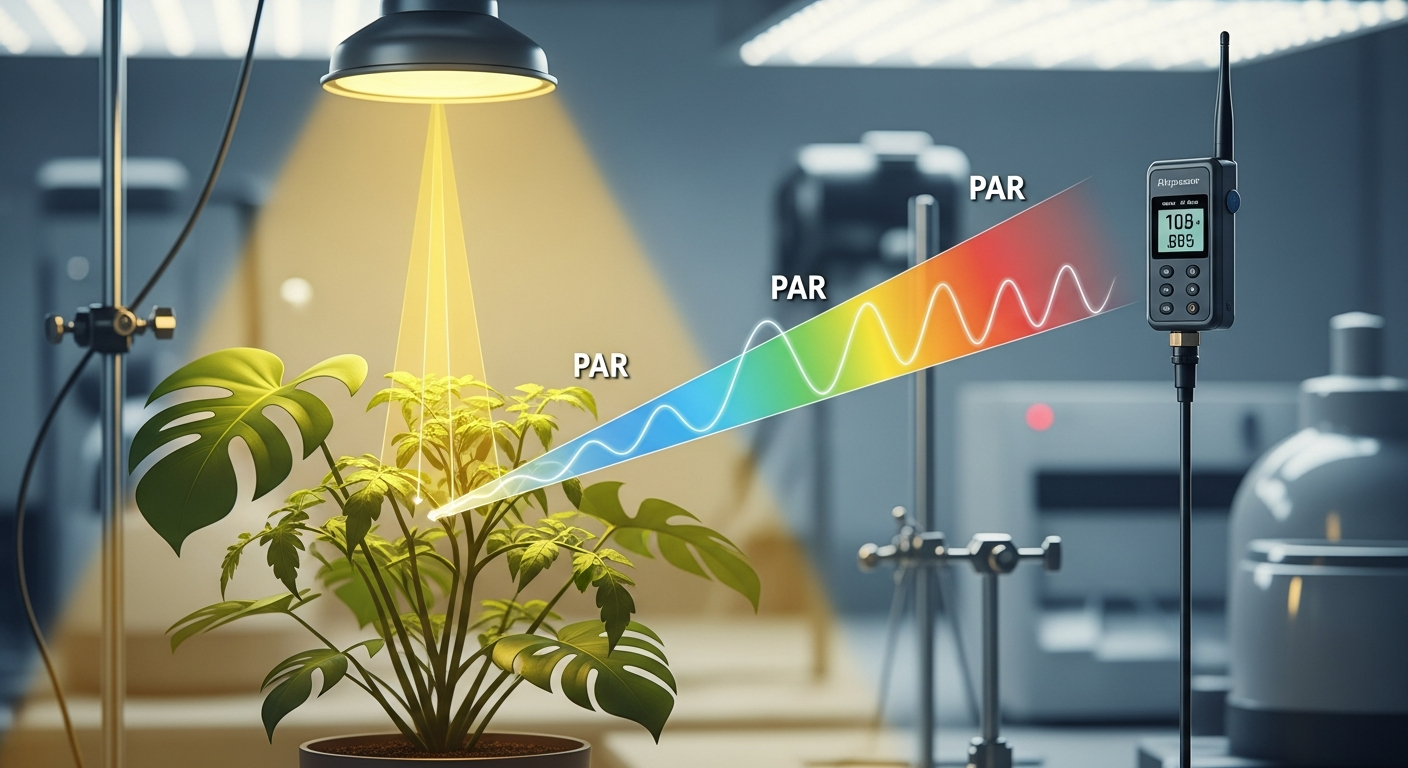
PAR is the specific portion of the electromagnetic spectrum that plants use for photosynthesis. It encompasses wavelengths roughly between 400 and 700 nanometers (nm). This range corresponds to the visible light spectrum, but for plants, it’s defined by its utility in driving biochemical reactions, not human perception. Within this range, different wavelengths contribute to photosynthesis, with blue light (around 400-500 nm) and red light (around 600-700 nm) being particularly effective due to their strong absorption by chlorophyll and other photosynthetic pigments.
- Blue Light (400-500 nm): Important for vegetative growth, chlorophyll production, stomatal opening, and phototropism.
- Green Light (500-600 nm): While often thought to be reflected, green light does penetrate deeper into the plant canopy and can contribute to photosynthesis in lower leaves.
- Red Light (600-700 nm): Crucial for stem growth, flowering, fruiting, and overall biomass production.
It’s vital to differentiate PAR from other light measurements like lux or lumens. Lux and lumens are photometric units that measure light intensity as perceived by the human eye. They are weighted to the human visual sensitivity curve, which peaks in the green-yellow region. Plants, however, do not “see” light in the same way. A light source rich in blue and red wavelengths, which are excellent for plant growth, might register lower lux readings compared to a green-yellow heavy light, yet be far more effective for plants. Therefore, relying on lux or lumen meters for horticultural applications can lead to inefficient lighting strategies and suboptimal plant health.
Why is PAR Crucial for Plants?
The entire process of photosynthesis, the bedrock of plant life, hinges on the absorption of PAR photons by chlorophyll and other accessory pigments. These pigments capture the light energy, converting it into chemical energy (ATP and NADPH) which then powers the conversion of carbon dioxide and water into glucose and oxygen. Without adequate and appropriate PAR, plants cannot photosynthesize efficiently, leading to:
- Slowed growth
- Reduced biomass
- Poor yield and quality of fruits or flowers
- Nutrient deficiencies (as energy is needed for nutrient uptake)
- Increased susceptibility to stress
Understanding PAR isn’t just about providing “enough” light; it’s about providing the right kind and right amount of light to maximize photosynthetic efficiency throughout the plant’s life cycle. This precision is where PAR sensors become indispensable tools.
Introducing PAR Sensors: The Eyes of Plant Growth
If PAR is the fuel for plant growth, then PAR sensors are the gauges that tell us how much fuel is truly available. These specialized instruments provide objective, quantitative measurements of the light energy that directly impacts photosynthesis.
What is a PAR Sensor? (Quantum Sensor)
A PAR sensor, often referred to as a quantum sensor or PPFD meter, is a device specifically designed to measure the intensity of Photosynthetically Active Radiation. Unlike standard light meters, quantum sensors are calibrated to respond uniformly to photons across the 400-700 nm PAR spectrum, rather than being weighted to human vision. This characteristic makes them the ideal tool for horticultural lighting applications.
The primary measurement unit provided by a PAR sensor is Photosynthetic Photon Flux Density (PPFD). PPFD quantifies the number of photosynthetic photons (or quanta) that hit a surface each second over a square meter. It is expressed in units of micromoles per square meter per second (µmol·m²·s¹).
- Micromoles (µmol): A unit used to count individual photons. One mole of photons contains approximately 6.022 x 10²³ photons (Avogadro’s number).
- Flux Density: Refers to the number of photons striking a specific area per unit of time.
High PPFD values indicate intense photosynthetic light, while lower values suggest less light is available for photosynthesis. The optimal PPFD varies significantly depending on the plant species, its growth stage, and other environmental factors.
How Do PAR Sensors Work?
Most modern PAR sensors utilize a silicon photodiode coupled with specialized optical filters. When photons strike the photodiode, they generate a small electrical current. The magnitude of this current is proportional to the number of photons hitting the sensor. The optical filters are crucial; they ensure that the sensor’s spectral response closely matches the photosynthetic action spectrum of plants (i.e., it is most sensitive to light in the 400-700 nm range and less sensitive outside this range).
Once the electrical signal is generated, it is processed and converted into a PPFD reading, which is then displayed on a digital screen or logged for later analysis. High-quality PAR sensors undergo rigorous calibration against reference standards to ensure accuracy and reliability across different light sources (e.g., sunlight, HPS, LED).
Beyond PPFD: Understanding Daily Light Integral (DLI)
While PPFD provides an instantaneous measurement of light intensity, plants don’t just photosynthesize in a single moment; they accumulate light over an entire day. This cumulative effect is measured by the Daily Light Integral (DLI). DLI represents the total number of photosynthetic photons delivered to a plant surface over a 24-hour period. It is expressed in units of moles per square meter per day (mol·m²·day¹).
DLI is arguably a more critical metric than instantaneous PPFD for overall plant growth and yield. It accounts for both the intensity of the light and the duration it is supplied. For example, a plant receiving a moderate PPFD for a long photoperiod might accumulate the same DLI as a plant receiving a very high PPFD for a shorter photoperiod.
To calculate DLI:
- Measure PPFD at regular intervals (e.g., every minute) throughout the day.
- Average the PPFD readings over an hour.
- Multiply the average hourly PPFD by the number of hours the lights are on.
- Sum these hourly values for the entire 24-hour period.
Many advanced PAR sensors and data loggers can automatically calculate and display DLI, simplifying this process for growers. Knowing the target DLI for specific crops allows growers to precisely manage their lighting schedules and intensities to achieve optimal growth and conserve energy.
Practical Applications and Benefits of PAR Sensors
The ability to accurately measure PAR, PPFD, and DLI unlocks a multitude of practical benefits across various horticultural and agricultural settings.
1. Optimizing Indoor Growing Environments
In controlled environments like vertical farms, grow tents, or indoor cultivation facilities, artificial lighting is the sole source of PAR. PAR sensors are invaluable here:
- Light Fixture Placement: Determine the optimal height and spacing of grow lights (LEDs, HPS, CMH) to ensure even light distribution and prevent hot spots or shaded areas.
- Light Intensity Adjustment: Fine-tune dimmable lights to provide the ideal PPFD for different growth stages (e.g., lower PPFD for seedlings, higher for flowering plants). This prevents light stress or etiolation.
- Energy Efficiency: By understanding precisely how much light plants are receiving, growers can avoid over-lighting, reducing electricity consumption and costs. Conversely, they can identify under-lit areas that are wasting space.
- Spectrum Evaluation: While most PAR sensors measure broad PAR, advanced models or spectroradiometers can help evaluate the spectral output of different grow lights, ensuring the right balance of red, blue, and green light.
Practical Tip: When setting up a new grow space, use your PAR sensor to create a “light map” of your canopy. Take readings at multiple points across the entire growing area, at plant canopy height. This will reveal inconsistencies and guide adjustments to light placement or intensity.
2. Greenhouse Management
Greenhouses utilize natural sunlight but often require supplemental lighting or shade management. PAR sensors assist in:
- Supplemental Lighting Strategies: Determine when and how much supplemental light is needed, especially during cloudy days or shorter winter days, to reach target DLI values.
- Shade Cloth Activation: Monitor natural light intensity to trigger the deployment of shade cloths during peak sunlight hours, preventing sunburn or heat stress in plants.
- Environmental Control Integration: Integrate PAR sensor data with environmental control systems to automate lighting and shading decisions based on real-time light conditions.
3. Field Research and Outdoor Cultivation
For researchers and outdoor growers, PAR sensors offer insights into natural light environments:
- Crop Variety Selection: Evaluate how different crop varieties perform under varying natural light conditions, aiding in the selection of species best suited for a particular climate.
- Site Selection: Assess potential growing sites for their natural light availability throughout the year.
- Environmental Monitoring: Study the impact of environmental factors (e.g., cloud cover, canopy density, seasonal changes) on light penetration and photosynthetic efficiency.
4. Hydroponics and Aeroponics
These soilless growing methods often take place in controlled environments, making precise light measurement critical. PAR sensors ensure that plants receive optimal light without the confounding variables of soil, leading to faster growth and higher yields.
5. Seedling Propagation
Young seedlings are particularly sensitive to light. Too much light can cause stress, while too little leads to stretching (etiolation). PAR sensors allow growers to provide gentle, yet adequate, light levels for healthy seedling development, improving success rates.
6. Disease and Pest Management
While not a direct tool for pest control, optimal light conditions strengthen plants, making them more resilient to diseases and pests. A PAR sensor ensures plants are receiving the energy needed to develop strong immune responses.
Choosing and Using Your PAR Sensor Effectively
To leverage the full potential of PAR sensors, it’s important to know what to look for when purchasing one and how to use it correctly.
Factors to Consider When Buying a PAR Sensor
- Accuracy and Spectral Response: Look for sensors with a high degree of accuracy (±5% is common) and a spectral response that closely matches the ideal PAR curve (400-700 nm). Reputable brands often provide spectral response curves.
- Durability and Environmental Protection: Especially for greenhouse or outdoor use, ensure the sensor is robust, waterproof, and designed to withstand varying temperatures and humidity.
- Measurement Range: Confirm the sensor can measure the full range of PPFD relevant to your application, from low seedling light to very high flowering light.
- Data Logging Capabilities: For DLI calculations and long-term monitoring, a sensor with internal data logging or connectivity to a data logger is crucial.
- Connectivity: Some sensors offer Bluetooth or USB connectivity for easy data transfer to computers or smartphones.
- Portability vs. Fixed Installation: Handheld meters are great for spot checks, while fixed sensors integrated into environmental control systems provide continuous data.
- Cost: Prices vary widely. Invest in a quality sensor if precise light management is critical for your operation.
Calibration and Maintenance
Like any precision instrument, PAR sensors require care:
- Recalibration: Over time, sensor readings can drift. Many manufacturers recommend professional recalibration every 1-2 years to maintain accuracy.
- Cleaning: Keep the sensor head clean. Dust, water spots, or debris can block light and lead to inaccurate readings. Use a soft, lint-free cloth and distilled water if necessary.
- Storage: Store the sensor in a protective case when not in use to prevent damage.
Proper Measurement Techniques
Accurate PAR readings depend as much on technique as on the sensor itself.
- Measure at Canopy Height: Always take readings at the height of the plant canopy, where the light is actually being absorbed. As plants grow, their canopy height changes, so adjust your measurement point accordingly.
- Grid Method: To understand light distribution, take multiple readings in a grid pattern across your growing area. This reveals inconsistencies and helps identify hot or cold spots.
- Average Readings: Don’t rely on a single reading. Average several measurements taken over a small area to get a more representative value.
- Account for Shadows: Be mindful of your own shadow or equipment shadows affecting readings.
- Ambient Conditions: In greenhouses, take readings at different times of day and under varying cloud cover to understand the dynamic light environment.
- Sensor Orientation: Hold the sensor head horizontally, parallel to the plant canopy, to capture light coming from all angles.
Actionable Advice: After mapping your light, compare your PPFD/DLI readings with research-backed recommendations for your specific crop and growth stage. Many universities and agricultural extension services publish these guidelines. Adjust your lights (height, intensity, duration) to hit these targets, then monitor plant response closely. Look for signs of light stress (bleaching, crisping of leaves) or light deficiency (stretching, pale leaves).
The Future of Light Measurement in Horticulture
The role of PAR sensors is continuously evolving alongside advancements in horticulture technology.
- IoT Integration: PAR sensors are increasingly being integrated into Internet of Things (IoT) platforms, allowing for real-time monitoring, remote control of lighting systems, and predictive analytics.
- Advanced Spectral Analysis: While standard PAR sensors measure the 400-700 nm band uniformly, sophisticated spectroradiometers can measure light intensity across narrow wavelength bands, providing deeper insights into how different colors of light impact specific plant responses beyond basic photosynthesis.
- AI-Driven Light Recipes: Combining PAR sensor data with other environmental parameters (temperature, humidity, CO2) and plant phenotypic data, AI algorithms can develop dynamic, optimized light “recipes” that adapt throughout the day and growth cycle for maximum efficiency and yield.
- Miniaturization and Wireless Technology: Smaller, more affordable wireless PAR sensors will allow for denser deployment across larger growing areas, providing even more granular data.
These innovations promise even greater precision in light management, contributing to more sustainable, productive, and profitable agricultural systems.
Conclusion
The journey from understanding the fundamental concept of Photosynthetically Active Radiation to deploying advanced PAR sensors in modern agriculture underscores a profound shift towards data-driven cultivation. PAR sensors are not just gadgets; they are indispensable scientific instruments that translate the invisible language of light into actionable insights for growers and researchers. By accurately measuring PPFD and DLI, these sensors empower us to optimize artificial lighting, manage natural light efficiently, conserve energy, and ultimately foster healthier, more productive plants.
In an era where resource efficiency and maximized yields are paramount, the role of PAR sensors in providing precision light intensity measurements will only continue to grow in importance. Investing in and skillfully utilizing a PAR sensor is an investment in the future of successful, sustainable plant cultivation, ensuring that every photon counts towards a bountiful harvest.