
In the controlled haven of a greenhouse, every drop of water is a precious resource, carefully managed to nurture vibrant plant life. Yet, even in these optimized environments, an invisible adversary quietly works against our efforts: soil moisture evaporation. This natural process, where water transforms into vapor and escapes from the soil surface into the air, can lead to significant water loss, increased irrigation demands, and even plant stress if not adequately addressed. Fortunately, greenhouse enthusiasts have a powerful, natural, and highly effective tool at their disposal: mulching. Far more than just a decorative addition, a strategic layer of mulch plays a critical role in preserving vital soil moisture, stabilizing soil conditions, and ultimately fostering a healthier, more sustainable greenhouse ecosystem.
Understanding the Dynamics of Soil Moisture Evaporation in Greenhouses
A greenhouse, by its very design, creates conditions that can accelerate soil moisture evaporation. Elevated temperatures, often combined with active air circulation systems to manage humidity and prevent fungal diseases, can draw moisture from exposed soil surfaces at a rapid rate. This constant loss of water isn’t just inefficient; it has several detrimental effects on both your plants and your resource management strategies:
- Increased Watering Frequency: More water evaporating means more frequent irrigation is required to keep plants hydrated, leading to higher water bills and more labor.
- Nutrient Leaching: Excessive watering to compensate for evaporation can cause essential nutrients to wash deeper into the soil, beyond the plant’s root zone, or even leach out of containers.
- Plant Stress: Fluctuating soil moisture levels, from overly wet to too dry, stress plants, making them more susceptible to pests and diseases and hindering their growth and productivity.
- Higher Humidity Levels: While air circulation aims to manage humidity, continuous evaporation from bare soil can contribute to an overall increase in ambient humidity, potentially promoting fungal issues in specific microclimates within the greenhouse.
- Soil Compaction: Frequent watering can also contribute to soil compaction over time, reducing aeration and making it harder for roots to access oxygen and water.
Mulching directly combats these issues by creating a protective barrier that significantly slows down the rate at which water escapes the soil. It’s an investment in water conservation and plant health that pays dividends in a more stable and efficient growing environment.
The Science Behind Mulch’s Moisture-Retaining Prowess
The effectiveness of mulch in controlling soil-based moisture evaporation isn’t magic; it’s a testament to simple ecological principles. Here’s how a layer of mulch works its magic:
1. Physical Barrier Against Evaporation
The most direct way mulch works is by creating a physical barrier between the soil surface and the surrounding air. This layer blocks direct sunlight from reaching the soil, reducing the temperature at the soil surface, which is a primary driver of evaporation. It also reduces air movement directly over the soil, thereby minimizing the rate at which water vapor is carried away.
2. Soil Temperature Moderation
Mulch acts as an insulator. In a greenhouse where temperatures can fluctuate, this is incredibly beneficial. In warmer conditions, mulch keeps the soil cooler by reflecting sunlight and preventing direct heat absorption. Cooler soil temperatures mean less water turns into vapor. Conversely, in cooler periods, mulch can help retain some of the soil’s warmth, protecting delicate roots from temperature extremes. This stable soil temperature reduces thermal stress on plants and supports consistent microbial activity.
3. Weed Suppression and Reduced Competition
Weeds are notorious water thieves. They compete with your cultivated plants for every available resource, including precious soil moisture. A thick layer of mulch effectively smothers weed seeds, preventing germination, and blocking sunlight from reaching any emerging seedlings. By eliminating this competition, more water is available exclusively for your greenhouse crops.
4. Improved Soil Health and Structure (Organic Mulches)
Organic mulches, such as compost or wood chips, slowly decompose over time. As they break down, they release organic matter and nutrients into the soil, improving its structure. Healthier soil with better structure has improved water infiltration rates and enhanced moisture retention capabilities. It becomes more porous, allowing water to penetrate deeper into the root zone while also holding onto it for longer periods between irrigations.
Choosing the Right Mulch for Your Greenhouse
The world of mulch offers a diverse palette of materials, each with its unique benefits and considerations for a greenhouse environment. Your choice will depend on your plants’ needs, aesthetic preferences, and practical goals.
Organic Mulches:
These materials break down over time, enriching the soil but requiring replenishment.
- Wood Chips or Bark: Excellent for long-term applications, offering good insulation and a pleasing aesthetic. They decompose slowly, making them a low-maintenance choice for permanent beds or large containers.
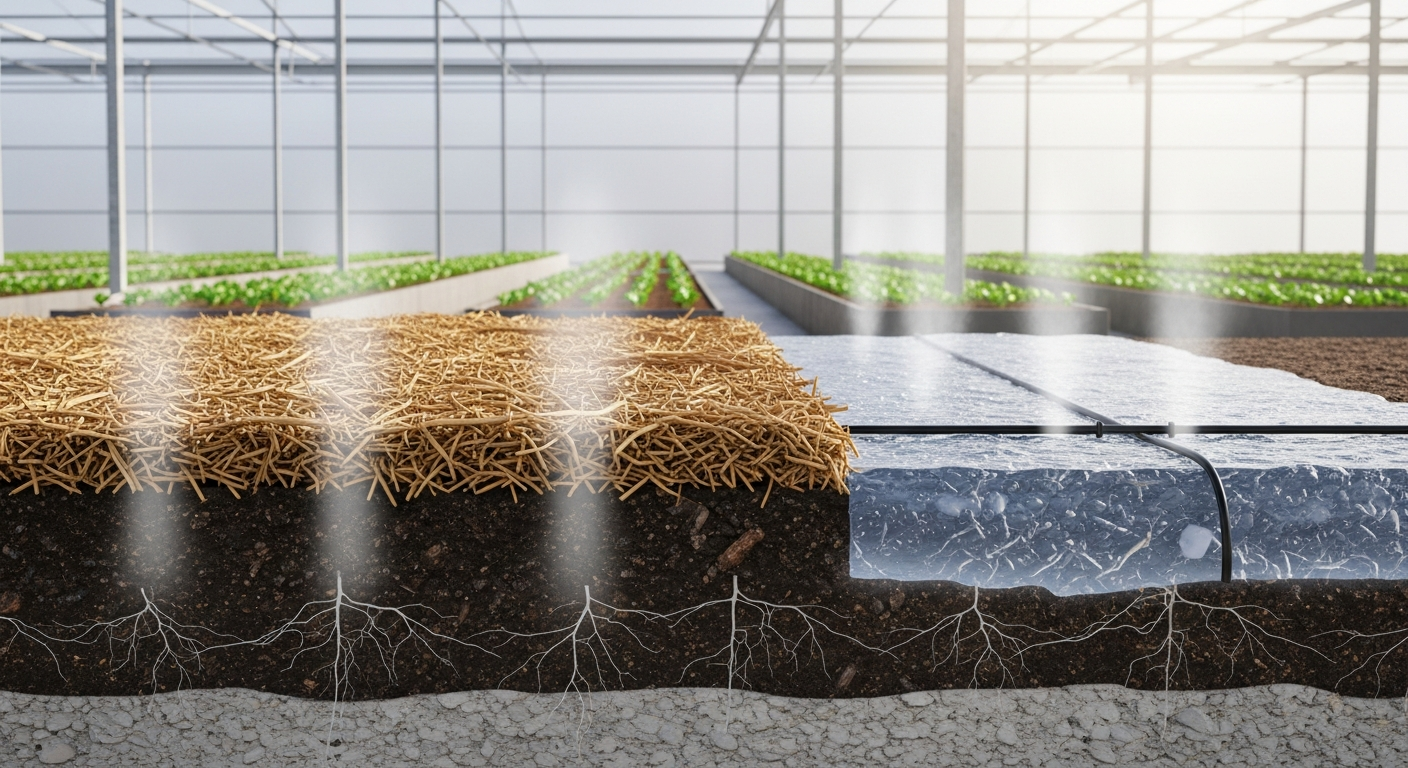
- Straw or Hay: Lightweight, inexpensive, and readily available. Ideal for vegetable beds and annuals, as they break down relatively quickly, adding organic matter. Be sure to use weed-seed-free straw.
- Compost: A nutrient-rich mulch that actively improves soil fertility and structure as it breaks down. Great for boosting plant growth while conserving moisture.
- Shredded Leaves: A free and abundant resource in many areas. They provide good insulation and break down to enrich the soil. Best used when fully decomposed to avoid attracting pests or compacting.
Considerations for Organic Mulches: They can tie up nitrogen as they decompose (especially fresh wood products), sometimes harbor pests, or promote fungal growth if applied too thickly or kept consistently wet against plant stems. Replenishment is key.
Inorganic Mulches:
These materials do not decompose, offering long-lasting coverage without enriching the soil.
- Pebbles or Gravel: Excellent for drainage, heat retention (useful in cooler climates or for heat-loving plants), and a clean, minimalist aesthetic. They don’t attract pests and are very long-lasting.
- Landscape Fabric or Weed Barrier: Highly effective at weed suppression and moisture retention. Water can penetrate, but evaporation from the soil surface is greatly reduced. Requires proper installation and can be less visually appealing if not covered.
- Plastic Sheeting: Primarily used for soil warming and extreme weed control (solarization). While it traps moisture effectively, it can also overheat soil, prevent air exchange, and doesn’t allow water to penetrate easily once installed, often requiring drip irrigation underneath.
Considerations for Inorganic Mulches: They don’t contribute to soil health, can sometimes hold too much heat, and are more difficult to remove or change once installed.
Practical Application and Best Practices for Greenhouse Mulching
To maximize the benefits of mulching in your greenhouse, proper application and ongoing maintenance are crucial:
1. Timing is Key
Apply mulch after planting and once the soil has been thoroughly watered. Mulching dry soil traps the dryness in, defeating the purpose of moisture retention. Ensure the soil is moist but not waterlogged.
2. Achieve the Right Thickness
For most organic mulches, a layer 2-4 inches thick is ideal. This depth is sufficient to suppress weeds and conserve moisture without suffocating the soil or encouraging anaerobic conditions. Inorganic mulches like gravel can be applied slightly thicker, around 2-3 inches.
3. Mind the Stem Gap
Always leave a small gap (1-2 inches) around the base of plant stems and trunks. Mulch piled against stems can retain too much moisture, leading to stem rot, pest issues, or fungal diseases. This “mulch collar” allows air circulation around the plant’s base.
4. Integrate with Irrigation Systems
Mulch works beautifully with drip irrigation or soaker hoses. These systems deliver water directly to the plant’s root zone, and the mulch layer then prevents this precious water from evaporating before the plant can absorb it. This combination is incredibly efficient for water conservation.
5. Regular Monitoring and Replenishment
Organic mulches will decompose and compact over time. Check the depth periodically and replenish as needed, typically annually or bi-annually. Keep an eye out for signs of pests or diseases under the mulch layer, especially in a humid greenhouse environment. Fluffing the mulch occasionally can improve air circulation.
6. Mulching Potted Plants
Don’t forget your potted plants! A thin layer (1-2 inches) of appropriate mulch on the surface of potting mix in containers can dramatically reduce the need for frequent watering, especially for larger pots or those containing thirsty plants. Consider decorative pebbles or smaller bark chips for container mulching.
Conclusion: A Cornerstone of Sustainable Greenhouse Gardening
Mulching is more than just a gardening chore; it’s a foundational practice for creating a resilient and resource-efficient greenhouse environment. By mastering the art and science of mulching, you gain significant control over soil moisture evaporation, leading to reduced water usage, less frequent irrigation, healthier plants, and a more stable growing medium. Whether you choose the rich benefits of organic materials or the enduring qualities of inorganic options, incorporating mulch into your greenhouse routine is a powerful step towards sustainable gardening and achieving optimal growth for all your cherished plants. Embrace mulching, and watch your greenhouse thrive with renewed vitality and efficiency.