
In the rapidly evolving world of horticulture, modern greenhouses are no longer simple structures but sophisticated ecosystems driven by advanced technology. The quest for optimal plant growth, maximum yield, and sustainable practices has pushed greenhouse automation to the forefront. While environmental controls like temperature, humidity, and CO2 are well-established components, one crucial element often overlooked or inadequately managed is lighting. This is where lighting controllers in modern greenhouse automation step in, transforming how growers harness and manage light to achieve unprecedented levels of precision and efficiency. These intelligent systems are the conductors of the photosynthetic orchestra, ensuring every plant receives the right light, at the right time, in the right intensity and spectrum, making them indispensable for high-tech growing operations.
The Evolution of Greenhouse Lighting and the Imperative for Control
For centuries, greenhouse growers relied solely on natural sunlight, augmenting it with primitive supplementary lighting when needed. The advent of High-Pressure Sodium (HPS) lamps marked a significant leap, offering reliable, high-intensity light to extend growing seasons and boost production. However, HPS lamps, while powerful, were energy-intensive and offered limited control beyond on/off switching. The real game-changer arrived with Light Emitting Diodes (LEDs).
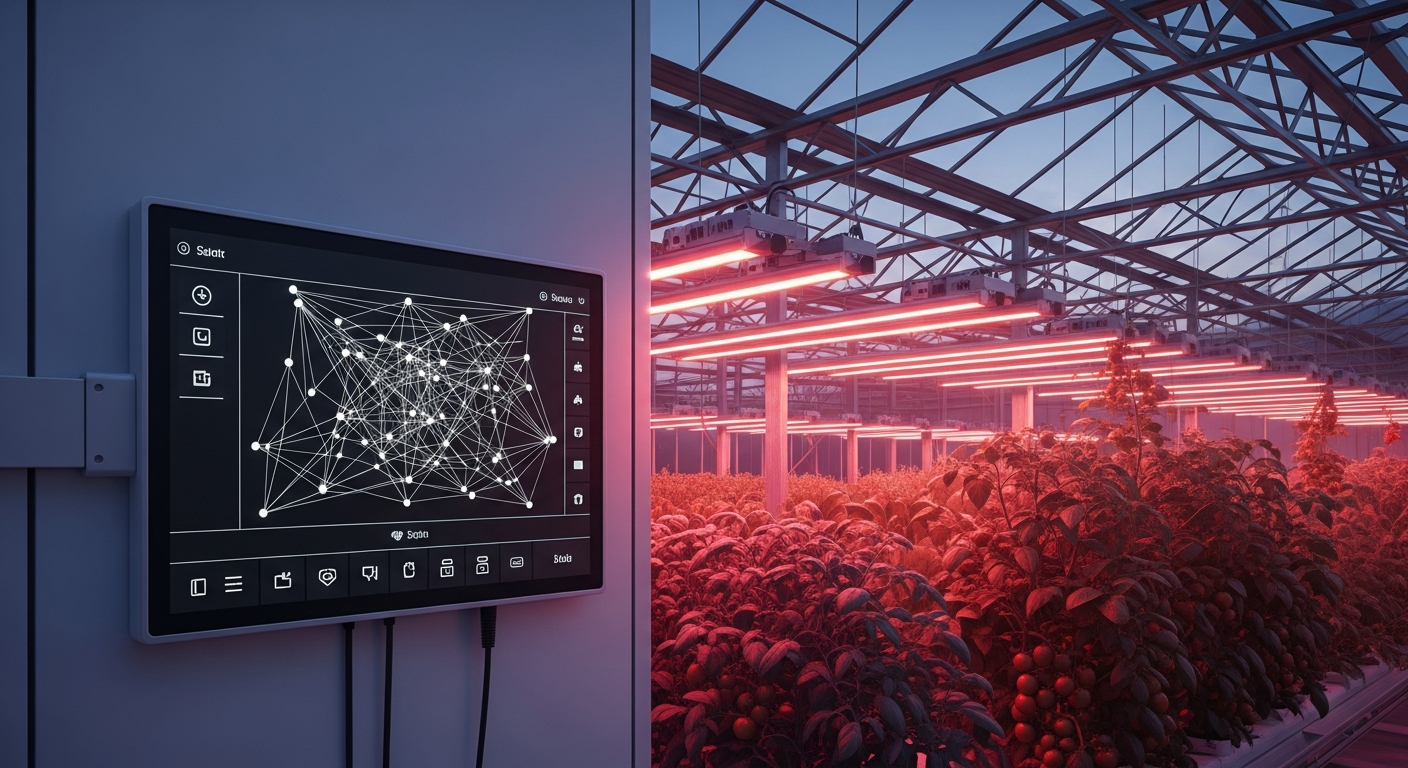
LED grow lights introduced a paradigm shift. Unlike HPS, LEDs can emit specific wavelengths of light, allowing for “spectral tuning” – tailoring the light spectrum to the exact needs of a particular plant species or growth stage. This precision unlocked immense potential for optimizing photosynthesis and morphology. But with this newfound power came complexity. Managing numerous LED fixtures, each capable of emitting various colors at different intensities, quickly became overwhelming for manual control.
Imagine a large commercial greenhouse with hundreds or thousands of grow lights. Manually adjusting each fixture’s intensity, schedule, or spectrum for different zones or crop cycles is not only impractical but impossible. This is precisely why sophisticated lighting controllers became not just a luxury, but an absolute necessity for modern, efficient, and profitable greenhouse operations. They bridge the gap between advanced lighting technology and the precise environmental conditions required for optimal plant growth.
What Are Lighting Controllers and How Do They Work?
At its core, a greenhouse lighting controller is a centralized or decentralized system designed to manage and optimize supplementary lighting within a controlled environment. These systems range from simple timers to highly advanced, networked solutions integrated with broader greenhouse management platforms. Their primary function is to automate the control of grow lights, ensuring plants receive ideal light conditions without constant human intervention.
Modern lighting controllers work by receiving input from various sources and then sending commands to the connected grow lights. Key inputs often include:
- Timers and Schedules: Defining specific on/off times and durations for different lights or zones, crucial for establishing precise photoperiods.
- Light Sensors (Photocells): Measuring ambient natural light levels. The controller can then dim or intensify artificial lights to maintain a consistent desired Photosynthetic Photon Flux Density (PPFD) or Daily Light Integral (DLI), supplementing natural light only when necessary.
- Environmental Sensors: Integration with sensors measuring temperature, humidity, and CO2 allows for dynamic adjustments. For instance, if CO2 levels are high, plants can utilize more light, so the controller might increase light intensity.
- Crop-Specific Recipes: Advanced systems allow growers to program “light recipes” tailored to specific crops or growth stages, defining precise light spectrums, intensities, and durations.
Once the inputs are processed, the controller sends signals to individual or groups of grow lights to perform actions such as:
- Dimming: Adjusting light intensity from 0-100% based on ambient light or desired PPFD.
- Spectrum Tuning: For LED systems, changing the ratio of red, blue, green, and far-red light to influence plant morphology, flowering, or rooting.
- Sunrise/Sunset Simulation: Gradually increasing and decreasing light intensity to mimic natural transitions, reducing stress on plants and power surges.
- Zoning: Controlling different sections of the greenhouse independently, accommodating multiple crop types or growth stages simultaneously.
Many advanced smart lighting systems are IP-enabled, allowing for remote monitoring and control via computers or mobile devices. This connectivity is a cornerstone of true integrated greenhouse automation, where lighting works in concert with HVAC, irrigation, and fertigation systems for holistic environmental management.
Key Benefits of Implementing Smart Lighting Controllers
The integration of advanced horticultural lighting control systems yields a multitude of advantages that directly impact a greenhouse’s bottom line and operational efficiency.
Enhanced Energy Efficiency and Cost Savings
One of the most significant benefits is the dramatic improvement in energy efficiency in greenhouses. By precisely controlling light intensity based on ambient conditions, controllers prevent over-lighting. Features like dynamic dimming, sunrise/sunset simulation, and only supplementing when natural light is insufficient can lead to substantial reductions in electricity consumption. Some systems can even integrate with utility pricing data, adjusting light usage during peak, expensive hours. This smart energy management directly translates to lower operational costs and a reduced carbon footprint.
Optimized Plant Growth, Health, and Yield
Precision control over photoperiod, intensity, and spectrum allows growers to fine-tune the light environment to specific plant requirements. This results in:
- Faster Growth Cycles: Ensuring plants always receive adequate DLI without wasteful overexposure.
- Increased Yields: Maximizing photosynthetic efficiency leads to higher biomass and fruit/flower production.
- Improved Crop Quality: Specific light spectrums can enhance flavor, color, nutritional content, and structural integrity of plants.
- Reduced Plant Stress: Gradual light transitions and consistent light delivery minimize sudden changes that can stress plants.
This level of precision is virtually impossible to achieve without an automated lighting controller, making them vital for maximizing every square foot of growing space.
Reduced Labor Costs and Operational Overhead
Automating lighting schedules and adjustments frees up valuable labor hours that would otherwise be spent manually switching lights or monitoring conditions. Remote management capabilities mean growers can monitor and adjust their lighting from anywhere, at any time, reducing the need for constant on-site presence. This automation contributes to significantly reduced operational costs and allows staff to focus on more critical tasks like plant health and harvesting.
Data-Driven Decision Making
Many advanced lighting controllers generate invaluable data on light usage, energy consumption, and environmental responses. When integrated with broader greenhouse management software, this data enables sophisticated analytics. Growers can track the correlation between light recipes, environmental conditions, and crop performance, leading to continuous improvement and more informed decisions. This transition to data analytics in greenhouses is key for optimizing future harvests and identifying areas for further efficiency gains.
Scalability and Flexibility
Modern lighting control systems are designed for scalability. As a greenhouse expands, new lighting zones or fixtures can be easily integrated into the existing control network. They also offer immense flexibility, allowing growers to adapt their lighting strategies quickly for new crop varieties, research trials, or changing market demands without extensive rewiring or hardware changes.
Choosing the Right Lighting Controller for Your Greenhouse
Selecting the ideal lighting control system for your greenhouse involves careful consideration of several factors to ensure it meets your current needs and future aspirations.
- Compatibility with Your Grow Lights: Ensure the controller is compatible with your existing or planned grow lights. For LED systems, check if it supports the specific dimming protocols (e.g., 0-10V, DALI, proprietary digital controls) and spectral tuning capabilities of your chosen fixtures. HPS lighting often requires different ballast control.
- Integration Capabilities: A truly modern system should integrate seamlessly with other greenhouse automation components, such as climate control, irrigation, and CO2 enrichment systems. Look for open protocols or established integrations with leading environmental control platforms to create a cohesive smart greenhouse environment.
- User Interface and Ease of Use: The most powerful controller is useless if it’s too complex to operate. Opt for a system with an intuitive, user-friendly interface, whether it’s a touchscreen panel or a web/app-based platform. Easy programming and clear data visualization are crucial.
- Scalability: Consider your future expansion plans. Will the controller be able to manage more lights or zones as your operation grows? A modular or networked system offers better scalability than a standalone unit.
- Reliability and Support: Invest in a reputable brand that offers robust hardware, reliable software, and excellent customer support. Downtime due to lighting issues can be costly. Check for warranties and service agreements.
- Budget: While investing in a high-quality controller can provide significant ROI, it’s important to balance features with your budget. Remember to consider not just the upfront cost but also potential energy savings and yield increases.
For growers using advanced LED setups, prioritizing controllers with precise spectrum control and DLI management capabilities will unlock the full potential of their lighting investment. For larger operations, centralized systems with remote access and extensive data logging are often preferred.
Conclusion
The role of lighting controllers in modern greenhouse automation cannot be overstated. They are no longer just simple timers but sophisticated environmental management tools that empower growers to harness the power of light with unprecedented precision. By automating light delivery, optimizing energy consumption, enhancing plant growth, and providing invaluable data, these systems are driving the efficiency, sustainability, and profitability of horticultural operations worldwide.
As greenhouse technology continues to advance, smart lighting controllers will become even more intelligent, integrating with AI and machine learning to predict plant needs and optimize lighting strategies autonomously. For any grower looking to build a high-performing, future-proof greenhouse, investing in a robust and intelligent lighting control system is not just an upgrade—it’s an essential step towards unlocking the full potential of modern agriculture.