
In the intricate dance of plant growth and development, light plays the role of a master conductor, guiding everything from photosynthesis to flowering. While the visible spectrum has long been the focus of horticultural lighting, a deeper understanding of specific light wavelengths reveals hidden orchestrators of plant morphology and yield. Among these, far-red light, often overlooked, emerges as a potent stimulant, holding the key to unlocking accelerated flowering and optimized extension growth in a wide array of crops. For greenhouse growers, vertical farm operators, and hobbyists alike, harnessing the power of far-red light is no longer a niche concept but a critical component of advanced cultivation strategies. This comprehensive guide delves into the profound influence of far-red light, exploring its mechanisms, benefits, and practical applications to help you cultivate healthier, more productive plants.
Decoding the Spectrum: What is Far-Red Light?
To truly appreciate the role of far-red light (FR) in plant development, we must first understand its place within the electromagnetic spectrum and how plants perceive it. Light is not just a source of energy for photosynthesis; it acts as a complex signaling mechanism, with different wavelengths triggering specific physiological responses. The visible light spectrum, typically ranging from 400 to 700 nanometers (nm), includes blues, greens, yellows, oranges, and reds. Far-red light, however, sits just beyond the visible red spectrum, typically encompassing wavelengths from approximately 700 nm to 800 nm.
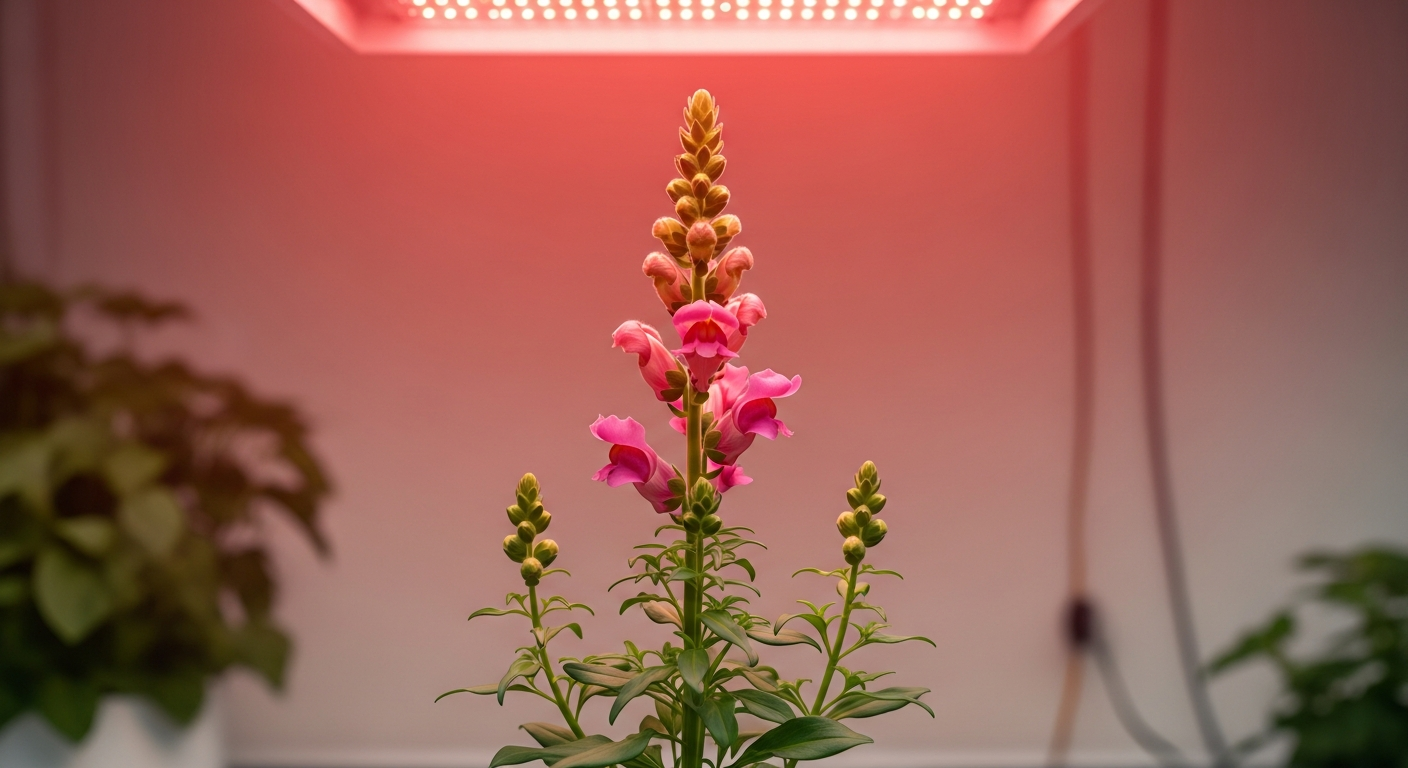
Crucially, plants possess sophisticated photoreceptors that act as biological light sensors, allowing them to detect and respond to subtle shifts in light quality, quantity, direction, and duration. The most prominent of these, especially concerning red (R) and far-red light, is the phytochrome system. Phytochrome exists in two interconvertible forms:
- Phytochrome red (Pr): This is the inactive form, which preferentially absorbs red light (around 660 nm).
- Phytochrome far-red (Pfr): This is the biologically active form, which is produced when Pr absorbs red light. Pfr then preferentially absorbs far-red light (around 730 nm), converting back into Pr.
The ratio of red light to far-red light (R:FR ratio) is what plants primarily interpret. A high R:FR ratio (more red light) indicates ample light availability, signaling conditions for compact growth and robust development. Conversely, a low R:FR ratio (more far-red light relative to red) mimics the light conditions found under a canopy of competing plants, where chlorophyll in overhead leaves absorbs red light for photosynthesis but reflects and transmits far-red light. This perception of a low R:FR ratio triggers a suite of adaptive responses known as the shade avoidance syndrome.
Unlike photosynthetically active radiation (PAR), which drives photosynthesis, far-red light is often described as having a low photosynthetic photon flux density (PPFD) efficiency. However, it is fundamentally important for photomorphogenesis – the regulation of plant growth and development by light signals. While the direct contribution of FR to photosynthesis is minimal, its indirect effects on plant architecture and flowering are profound, making it an indispensable tool for advanced horticulture.
The Interplay with Red Light
It’s important to understand that far-red light rarely acts in isolation. Its effectiveness is largely defined by its interaction with red light. The balance between these two wavelengths dictates the state of the phytochrome system and, consequently, the plant’s physiological responses. For instance, an increase in red light promotes the active Pfr form, signaling “full sun,” while an increase in far-red light converts Pfr back to Pr, signaling “shade” or “end of day.” This dynamic interplay allows plants to fine-tune their growth strategies based on perceived environmental cues, optimizing their chances of survival and reproduction.
Far-Red’s Influence on Flowering: Unlocking Bloom Potential
One of the most remarkable and widely studied effects of far-red light is its capacity to manipulate the flowering process. The timing of flowering is critical for plant reproduction and, in horticultural contexts, for yield and crop schedules. Far-red light, particularly when applied at specific times, can significantly accelerate or delay flowering, depending on the plant species and the photoperiodic response.
Photoperiodism and Phytochrome
Flowering in many plants is regulated by photoperiodism – the plant’s response to the relative lengths of day and night. The phytochrome system, through its sensing of red and far-red light, acts as the primary mediator of this response. The active Pfr form inhibits flowering in short-day plants (SDPs) and promotes flowering in long-day plants (LDPs). Conversely, the inactive Pr form promotes flowering in SDPs and inhibits it in LDPs.
- Short-Day Plants (SDPs): These plants flower when the night period is long enough (i.e., the day length is short). A brief flash of red light during the long night can interrupt the dark period, converting Pr to Pfr and inhibiting flowering. However, immediately following the red light flash with far-red light can reverse this effect, converting Pfr back to Pr and allowing flowering to proceed. This demonstrates the critical role of the R:FR ratio in determining the plant’s perception of “night length.”
- Long-Day Plants (LDPs): These plants flower when the night period is short enough (i.e., the day length is long). For LDPs, extending the day with either red or far-red light can promote flowering. Some LDPs show an enhanced flowering response when far-red light is included during the day extension period or at the end of the day.
The End-of-Day (EOD) Far-Red Treatment
Perhaps the most potent application of far-red light for flowering is the end-of-day (EOD) far-red treatment. A brief pulse of far-red light (typically 15-30 minutes) delivered at the very end of the photoperiod, just before the dark period begins, can significantly influence flowering time. This EOD-FR treatment effectively converts the active Pfr form back to the inactive Pr form before the night, signaling to the plant a longer effective dark period or mimicking natural dusk conditions more accurately. This signal can have several profound effects:
- Accelerated Flowering in Many Species: For numerous ornamental crops (e.g., chrysanthemums, petunias) and cannabis, EOD-FR has been shown to hasten flower initiation and development, leading to earlier harvests. This is particularly valuable for commercial growers looking to optimize crop cycles and meet market demands.
- Enhanced Budding and Flower Quality: Beyond just speeding up flowering, EOD-FR can sometimes lead to an increase in the number of flowers or improve their quality, though this effect can be species-dependent.
- Increased Photosynthetic Efficiency During the Day: By signaling an effective longer night, EOD-FR can prime plants for more efficient photosynthesis during the subsequent light period, contributing to overall plant vigor.
The exact response to EOD-FR can vary based on species, cultivar, light intensity, and duration of the FR treatment. Therefore, experimentation and careful observation are crucial for optimizing its use in specific cultivation systems.
The Power of Extension: Promoting Healthy Plant Structure
Beyond its dramatic impact on flowering, far-red light is a primary regulator of plant architecture, particularly influencing stem elongation, leaf expansion, and overall biomass distribution. This effect is largely mediated through the shade avoidance syndrome (SAS), a fascinating evolutionary adaptation that allows plants to compete for light resources.
Shade Avoidance Syndrome (SAS)
Imagine a plant growing in a dense canopy, surrounded by taller neighbors. The leaves of these neighboring plants absorb much of the photosynthetically active red light but reflect and transmit a significant portion of far-red light. As a result, the R:FR ratio beneath the canopy is significantly lower than in direct sunlight. Plants perceive this low R:FR ratio through their phytochrome system, interpreting it as a signal of imminent competition for light.
In response to this “shade” signal, plants initiate the shade avoidance syndrome, which involves a series of morphological changes designed to help them outcompete their neighbors and reach unfiltered light. Key characteristics of SAS include:
- Stem Elongation (Extension Growth): This is perhaps the most prominent feature. Plants will rapidly increase the length of their internodes (the sections of the stem between leaf nodes), causing them to “stretch” upwards. This vertical growth aims to elevate leaves above competing vegetation to capture more direct sunlight.
- Leaf Hyponasty: Leaves may grow at a steeper angle, positioning them more vertically to avoid shading from their own or neighboring leaves.
- Reduced Branching: Instead of investing energy in lateral branches, plants prioritize upward growth.
- Earlier Flowering: In some species, particularly annuals, shade avoidance can also trigger earlier flowering to ensure reproduction before being completely outcompeted.
While often seen as a detrimental response leading to “leggy” or “stretched” plants in horticulture, a controlled application of far-red light can harness this elongation effect for beneficial purposes.
Controlled Elongation and Biomass Partitioning
By carefully integrating far-red light into a lighting strategy, growers can precisely manage plant height and morphology. This can be advantageous in several scenarios:
- Increasing Internode Spacing for Improved Airflow: In dense crops, slightly increased internode spacing can improve air circulation within the canopy, reducing humidity and mitigating the risk of fungal diseases. It can also help open up the canopy for better light penetration to lower leaves.
- Optimizing Vertical Space in Indoor Farms: For crops grown in multi-tiered vertical farms, inducing a small amount of stretch can help plants reach the next tier of lights more efficiently, or optimize the use of vertical space by promoting a slightly taller, yet still manageable, plant structure.
- Enhancing Leaf Expansion: Far-red light can also contribute to increased leaf area, which can translate to greater photosynthetic capacity and, ultimately, higher biomass accumulation. The specific mechanisms for this often involve interactions with red light and blue light.
- Promoting Root Growth (Indirectly): While less direct, a healthier, more vigorous shoot system developed under optimal light conditions (including FR) often supports a more robust root system. Some studies also suggest a more direct effect of FR on root development by affecting carbon allocation.
However, it’s crucial to strike a balance. Excessive far-red light without sufficient red and blue light can lead to undesirable over-stretching, weaker stems, and reduced yield. The goal is to use FR strategically to achieve desired morphological changes without compromising overall plant health and productivity. The ideal R:FR ratio will vary by species and desired outcome, requiring a nuanced approach.
Practical Applications and Optimization in Controlled Environments
The integration of far-red light into modern horticultural practices is primarily driven by advancements in LED technology. Unlike traditional light sources that emit a broad spectrum, LEDs allow for precise control over specific wavelengths, making targeted far-red supplementation both feasible and efficient. Here’s how growers can practically apply far-red light to optimize their cultivation systems:
1. Selecting the Right LED Fixtures
When choosing LED grow lights, look for fixtures that either include dedicated far-red diodes or offer tunable spectrum capabilities. Many full-spectrum LED lights now incorporate a percentage of far-red to ensure a more natural R:FR ratio and leverage its photomorphogenic effects. For advanced control, fixtures with independently controllable red and far-red channels are ideal, allowing for dynamic adjustment throughout the plant’s life cycle.
2. End-of-Day (EOD) Far-Red Treatment for Flowering
As discussed, the EOD-FR treatment is a powerful tool for influencing flowering.
- Timing: Apply a pulse of far-red light for 15-30 minutes immediately following the main photoperiod, just before the dark cycle begins. This short burst helps convert Pfr to Pr.
- Intensity: The intensity of the FR pulse doesn’t need to be as high as the main grow lights. Even relatively low intensities (e.g., 5-20 µmol/m²/s) can be effective, though higher intensities might yield a stronger response in some species.
- Target Crops: Highly beneficial for many ornamental flowering plants (e.g., poinsettias, chrysanthemums) and especially effective for accelerating flowering in cannabis cultivation.
Always start with conservative applications and observe plant responses. Excessive FR or improper timing can sometimes lead to unwanted elongation or stress.
3. Managing Extension Growth and Plant Architecture
Utilizing far-red light to control plant height requires a careful balance of the R:FR ratio throughout the growth cycle.
- Inducing Moderate Stretch: If you need to encourage slightly taller plants, increase the proportion of far-red light relative to red light during the vegetative phase. This can be achieved by using LED fixtures with a higher FR component or by supplementing with dedicated FR bars. This can be beneficial for optimizing spacing in vertical farms or encouraging an open canopy.
- Limiting Excessive Stretch: Conversely, if you observe your plants becoming too leggy, it might indicate an imbalanced R:FR ratio (too much FR) or insufficient blue light. Reducing FR or increasing red/blue light can help mitigate unwanted elongation. Some growers also use a brief period of FR at the beginning of the photoperiod to promote elongation, or during the entire dark period for specific effects.
- Enhancing Biomass: Incorporating a moderate level of FR throughout the vegetative stage, alongside sufficient PAR, can contribute to larger leaves and overall greater biomass, without necessarily causing excessive stretch if balanced with other wavelengths. Some studies suggest FR also promotes cell expansion and increased water uptake efficiency.
4. Optimizing Photosynthesis and Yield
While FR light itself is not highly photosynthetically efficient, it can indirectly enhance photosynthesis and overall yield through its photomorphogenic effects:
- Emerson Enhancement Effect: Research suggests that far-red light, when combined with red light, can increase photosynthetic efficiency beyond what either wavelength can achieve alone. This is known as the Emerson enhancement effect, where FR boosts the efficiency of Photosystem I (PSI), synergizing with red light’s action on Photosystem II (PSII).
- Improved Light Penetration: By promoting a slightly more open canopy and increased internode spacing, FR can allow better light penetration to lower leaves, increasing the overall photosynthetic surface area exposed to optimal light and reducing self-shading.
- Enhanced Secondary Metabolite Production: While more research is ongoing, some studies indicate that specific light spectra, including the strategic use of far-red, might influence the production of beneficial secondary metabolites in plants, which is particularly relevant for medicinal crops or those valued for their flavor and aroma.
Considerations for Implementation
- Species-Specific Responses: The ideal R:FR ratio and timing of FR application can vary significantly between plant species and even cultivars. Always conduct small-scale trials before implementing large-scale changes.
- Interaction with Other Wavelengths: Far-red light does not act in isolation. Its effects are modulated by the presence and intensity of other wavelengths, particularly red and blue light. A balanced spectrum is always key.
- Monitoring Plant Response: Continuous monitoring of plant height, internode length, leaf size, and flowering progression is essential to fine-tune FR strategies.
- Cost-Benefit Analysis: While FR LEDs are increasingly affordable, evaluate the potential benefits (accelerated growth, improved yield, better quality) against the investment in new lighting technology.
Conclusion
The journey into understanding the role of far-red light reveals a sophisticated mechanism by which plants interact with their luminous environment, transforming light signals into precise developmental instructions. From orchestrating the delicate timing of flower initiation to dictating the very architecture of a plant’s stem and leaves, far-red light is a powerful, yet often underutilized, tool in the modern grower’s arsenal. By leveraging the phytochrome system and strategically manipulating the red to far-red ratio, cultivators can unlock unprecedented control over plant morphology, accelerate crop cycles, and ultimately enhance overall yield and quality.
Embracing the complexities of the light spectrum, particularly the nuanced influence of far-red light, empowers growers to move beyond generic lighting solutions towards a tailored, plant-centric approach. As LED technology continues to advance, providing even greater spectral tunability, the ability to precisely dial in far-red supplementation will become an increasingly critical skill for optimizing plant growth in controlled environments. The future of horticulture lies in understanding these intricate light-plant interactions, transforming them from scientific curiosities into actionable strategies for a more productive and sustainable agricultural landscape.