
In the evolving world of controlled environment agriculture (CEA), closed-loop greenhouse systems represent the pinnacle of precision growing. These sophisticated environments minimize interaction with the outside world, creating a highly controlled atmosphere where every variable is meticulously managed. While this isolation offers unparalleled control over temperature, light, and CO2, it simultaneously introduces a significant challenge: managing humidity. Within these sealed ecosystems, plant transpiration continuously releases moisture into the air, and without proper intervention, humidity levels can quickly skyrocket, leading to a cascade of problems. This is where dehumidification emerges not just as a useful tool, but as an absolutely critical component for achieving optimal plant health, maximizing yields, and ensuring the long-term success of any closed-loop greenhouse operation.
The Inescapable Challenge of Humidity in Closed-Loop Systems
Closed-loop greenhouses, by their very design, are highly efficient at retaining resources and creating stable internal climates. However, this efficiency comes with a trade-off when it comes to moisture. Unlike traditional greenhouses that rely on passive or active venting to shed excess heat and humidity, closed systems intentionally limit air exchange. This means that nearly all the water vapor released by plants through transpiration remains trapped within the growing space.
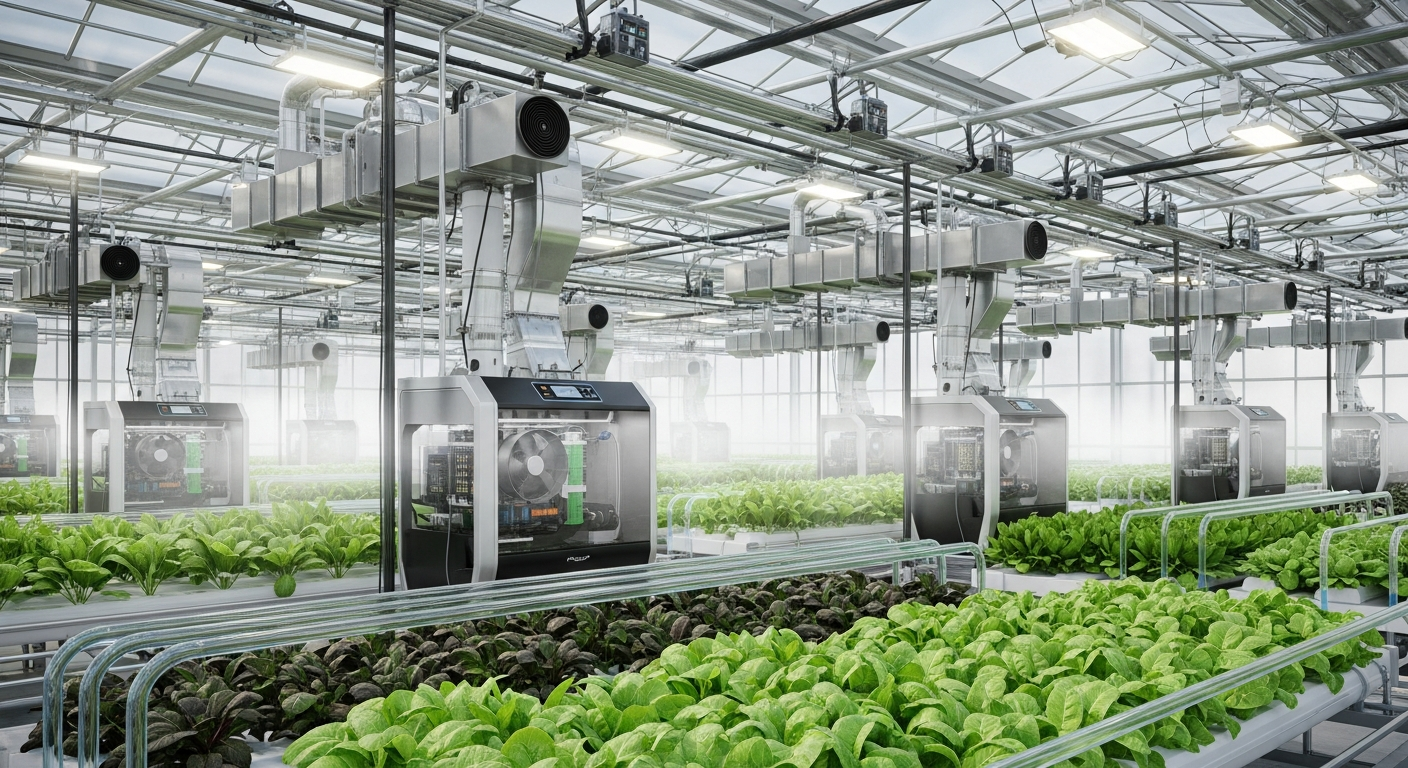
The accumulation of this moisture can quickly lead to critically high relative humidity (RH) levels. When RH is too high, several detrimental effects begin to manifest:
- Increased Disease Risk: High humidity creates ideal conditions for the proliferation of fungal pathogens like Botrytis (gray mold), powdery mildew, and downy mildew. These diseases can decimate crops, leading to significant financial losses.
- Reduced Transpiration and Nutrient Uptake: When the air is saturated with moisture, the plant’s ability to transpire effectively is hampered. Transpiration is vital for drawing water and dissolved nutrients up from the roots to the leaves. Reduced transpiration means reduced nutrient uptake, negatively impacting growth and overall plant health.
- Condensation: In cooler parts of the greenhouse, especially at night or on cooler surfaces, high humidity can lead to condensation. Water droplets on leaves create perfect breeding grounds for pathogens and can cause leaf damage or rot.
- Poor Quality and Yield: Stressed plants due to high humidity often exhibit stunted growth, weaker stems, and reduced fruit or flower production, directly impacting the quality and quantity of the harvest.
Understanding these challenges highlights why passive strategies are insufficient in closed-loop environments, making active dehumidification indispensable.
Beyond RH: Understanding Vapor Pressure Deficit (VPD) for Optimal Growth
While relative humidity (RH) is a commonly discussed metric, expert growers in closed-loop systems increasingly rely on Vapor Pressure Deficit (VPD) as a more accurate indicator of the plant’s comfort and transpiration rate. RH tells you how saturated the air is with water vapor relative to its maximum capacity at a given temperature. VPD, on the other hand, measures the difference between the amount of moisture the air can hold and the amount it is holding.
Here’s why VPD is so crucial:
- Direct Link to Transpiration: A higher VPD means the air is “drier” relative to the plant’s leaf surface, encouraging a higher rate of transpiration. A lower VPD means the air is more saturated, slowing transpiration.
- Temperature Sensitivity: Unlike RH, which changes significantly with temperature even if the absolute amount of moisture in the air remains constant, VPD provides a more consistent measure of the drying power of the air experienced by the plant.
- Nutrient Delivery: An optimal VPD ensures plants are efficiently transpiring, which is essential for transporting water and nutrients from the root zone to the canopy.
Dehumidification directly impacts VPD by removing moisture from the air, thus increasing the “deficit” and promoting healthy transpiration. Growers often aim for specific VPD ranges (e.g., 0.8-1.2 kPa for vegetative growth, 1.2-1.6 kPa for flowering) which are finely tuned using precise climate control systems that include dehumidifiers.
Dehumidification Technologies for Closed-Loop Greenhouses
Choosing the right dehumidification technology is paramount for efficiency and effectiveness in a closed-loop setup. The primary types include:
1. Refrigerant Dehumidifiers (Condensate Dehumidifiers)
These are the most common and often the most energy-efficient for greenhouse applications. They work by drawing moist air over a cold coil, cooling the air below its dew point. Water vapor condenses into liquid, which is collected, while the now-drier air is reheated (often using the heat removed during condensation) and returned to the grow space. This process has the added benefit of slightly increasing the ambient temperature, which can be advantageous in cooler periods.
- Pros: Highly efficient in warm, humid conditions; recover latent heat; collected condensate can be reused.
- Cons: Less efficient at lower temperatures; can add sensible heat, requiring cooling in some scenarios.
2. Desiccant Dehumidifiers
Desiccant systems utilize a material (often silica gel or lithium chloride) that naturally absorbs moisture from the air. A rotating desiccant wheel continuously absorbs moisture from the process air stream and then releases it into a separate “regeneration” air stream, which is heated to dry out the desiccant. The moist regeneration air is then typically exhausted to the outside.
- Pros: Effective at very low humidity levels and across a wide range of temperatures; ideal for maintaining extremely dry conditions.
- Cons: Generally higher operating costs due to the energy required for regeneration; exhausted moist air is a loss, not recovered.
3. Hybrid Systems and Advanced Controls
Many modern closed-loop greenhouses employ hybrid strategies, combining elements like refrigerant dehumidifiers with sophisticated environmental control systems. These systems integrate with heating, cooling, CO2 enrichment, and air circulation to maintain precise VPD targets. Some advanced units can even prioritize sensible heat removal or latent heat removal based on real-time needs, making them incredibly adaptable.
Benefits Beyond Disease Prevention: Energy and Water Savings
While preventing disease is a primary motivator for dehumidification, the advantages extend significantly into operational efficiency and sustainability in a closed-loop context.
- Energy Efficiency: In a closed-loop system, dehumidification often replaces the need for costly venting. Venting, while effective for humidity, also expels valuable heat and CO2, requiring more energy to replenish. Dehumidifiers, especially refrigerant types, recover a significant amount of the latent heat, recycling it back into the greenhouse. This can lead to substantial reductions in heating costs.
- Water Recovery and Conservation: A significant advantage of condensate-collecting dehumidifiers is the ability to reclaim the water vapor removed from the air. This collected condensate is essentially distilled water, free from salts and pathogens, making it excellent for reuse in irrigation systems. In water-scarce regions or for growers striving for ultimate sustainability, this water recovery can dramatically reduce reliance on external water sources.
- Optimized CO2 Enrichment: Closed-loop systems are ideal for CO2 enrichment, as the gas is contained and used efficiently by plants. Dehumidification prevents the need to vent air, thus preventing the loss of expensive supplemental CO2, further enhancing energy and resource efficiency.
- Consistent Yield and Quality: By maintaining precise humidity and VPD levels, plants experience less stress, leading to more consistent growth, higher yields, and superior product quality.
Practical Strategies for Effective Dehumidification
Implementing effective dehumidification requires careful planning and continuous monitoring:
- Accurate Monitoring: Invest in high-quality RH and temperature sensors strategically placed throughout the canopy. Use a reliable climate control system to calculate and display VPD in real-time.
- Proper Sizing and Placement: Dehumidifiers must be correctly sized to handle the peak moisture load from your plants. Consider factors like plant density, irrigation methods, and light intensity. Units should be placed to ensure good air circulation, preventing stagnant pockets of high humidity.
- Integrated Climate Control: Dehumidifiers should not operate in isolation. Integrate them with your heating, cooling, CO2 enrichment, and air circulation fans. A smart controller can orchestrate all these systems to maintain your target VPD and other environmental parameters efficiently.
- Nighttime Strategies: Humidity often peaks at night when plants aren’t photosynthesizing but continue to transpire. Plan your dehumidification cycles to actively manage humidity during these critical hours, potentially pre-heating the greenhouse slightly to avoid dew point issues.
- Regular Maintenance: Keep coils clean on refrigerant units and check desiccant wheels for wear. Regular maintenance ensures optimal performance and energy efficiency.
Conclusion
In the world of closed-loop greenhouse cultivation, managing humidity is not an afterthought—it’s a foundational element of success. Dehumidification systems are the unsung heroes, tirelessly working to maintain the delicate balance required for plants to thrive. By precisely controlling VPD, these technologies not only prevent devastating diseases and enhance plant health but also unlock significant benefits in terms of energy efficiency, water conservation, and overall crop yield and quality. For any grower embracing the power of closed-loop environments, investing in sophisticated and well-managed dehumidification is an investment in the future of their sustainable and prosperous greenhouse operation.