
Greenhouses are incredible environments for cultivating plants, offering protection and an extended growing season. However, they are also prone to significant temperature fluctuations, especially during hot weather. Unchecked heat can quickly stress plants, leading to wilting, reduced growth, and even crop failure. While whole-house cooling systems like evaporative coolers or shade cloths play crucial roles, sometimes a more targeted, efficient approach is needed. This is where bench misting systems come into play, offering a precise and effective method for both localized cooling and humidity management, transforming a challenging climate into an optimal growing zone.
The Evaporative Cooling Power of Bench Misting
At the heart of bench misting’s effectiveness lies the principle of evaporative cooling, a natural phenomenon that has been utilized for centuries. When water changes from a liquid to a gas (evaporates), it absorbs energy from its surroundings. In a greenhouse setting, this means that as fine water droplets from a misting system evaporate, they draw heat directly from the surrounding air and plant surfaces, leading to a noticeable drop in temperature.
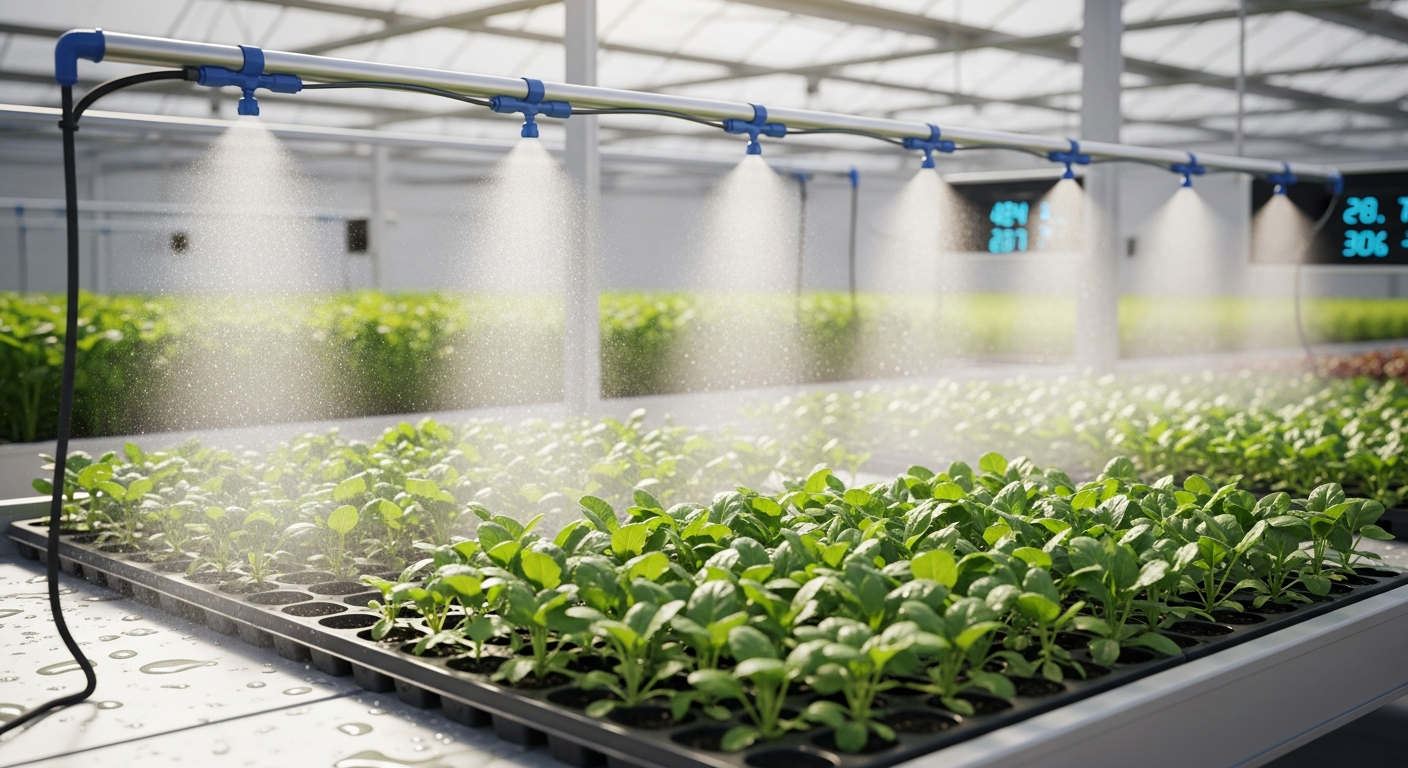
Unlike traditional overhead sprinklers that simply wet plants and potentially oversaturate soil, bench misting systems are designed to produce an extremely fine fog or mist. This micro-droplet size is critical because it maximizes the surface area of the water exposed to the air, promoting rapid evaporation and efficient heat absorption. The result is a localized cooling effect that can significantly lower the ambient air temperature around your plants, particularly on the growing benches themselves. This targeted approach is often more energy-efficient than trying to cool an entire large greenhouse space with conventional methods, making it an excellent component of a comprehensive greenhouse temperature control strategy.
Furthermore, bench misting directly impacts leaf temperature. Plants naturally cool themselves through transpiration, but in high heat, they can struggle to keep up, leading to stress. A fine mist on the leaves can help supplement this natural cooling process, reducing the thermal load on the plant and preventing cellular damage. By directly cooling the plant canopy and the immediate air around it, bench misting helps create a healthier, less stressful microclimate.
Beyond Cooling: Comprehensive Benefits for Plant Health
While cooling is a primary benefit, the advantages of integrating a bench misting system extend far beyond mere temperature reduction. These systems play a pivotal role in creating ideal growing conditions, particularly for sensitive plants and propagation stages.
Optimal Humidity Regulation
One of the most significant advantages of bench misting is its ability to precisely manage relative humidity. Many plants, especially tropical varieties, seedlings, and cuttings, thrive in higher humidity environments. Misting helps maintain elevated humidity levels around the plant canopy, which is crucial for:
- Propagation Success: Cuttings, lacking roots, cannot efficiently absorb water from the soil. High humidity reduces transpiration from their leaves, preventing desiccation and allowing them to focus energy on root development.
- Seed Germination: Consistent surface moisture and high humidity create the perfect environment for seeds to sprout successfully.
- Reducing Transplant Shock: Newly transplanted seedlings often experience stress. A humid environment lessens water loss from their leaves, aiding in faster establishment.
By preventing excessive water loss from leaves, misting systems help maintain a favorable Vapor Pressure Deficit (VPD), which is the difference between the amount of moisture in the air and how much moisture the air can hold when saturated. A lower VPD (higher humidity) reduces the evaporative demand on plants, allowing them to absorb nutrients and grow more efficiently without expending excessive energy on water retention.
Stress Reduction and Enhanced Growth
When plants are under heat stress, their metabolic processes slow down. They may close their stomata (pores on leaves) to conserve water, which unfortunately also limits carbon dioxide uptake, hindering photosynthesis and growth. By actively cooling the plant and increasing localized humidity, bench misting helps to:
- Prevent Wilting: Keeps leaves turgid and fully functional.
- Improve Photosynthesis: Allows stomata to remain open longer, facilitating CO2 absorption even during warmer periods.
- Encourage Robust Root Development: Less plant stress means more energy directed towards healthy root growth.
- Reduce Water Use: Paradoxically, by reducing transpiration rates through higher humidity, plants may require less frequent watering of the root zone, leading to more efficient water usage overall.
This holistic approach to environmental control ultimately leads to healthier, more vigorous plants and significantly improved crop yields.
Designing and Implementing an Effective Bench Misting System
To harness the full potential of bench misting for greenhouse temperature control and humidity management, careful planning and implementation are essential. A well-designed system can be a game-changer for your growing operation.
Key Components and Considerations
- Pump: A high-pressure pump (often 100-1000 PSI) is necessary to produce the extremely fine mist required for efficient evaporative cooling and even distribution.
- Tubing: High-pressure, UV-resistant tubing (e.g., nylon or stainless steel) is crucial to withstand pressure and greenhouse conditions.
- Nozzles: The choice of nozzle is paramount. Misting nozzles are designed to create very fine droplets (typically 5-50 microns) that evaporate quickly. Consider droplet size, flow rate, and spray pattern. Finer droplets lead to faster evaporation and better cooling but require higher pressure and filtration.
- Filtration System: Water quality is critical. Fine misting nozzles are highly susceptible to clogging from sediment and mineral deposits. A multi-stage filtration system (sediment filters, often reverse osmosis for very fine nozzles) is a non-negotiable investment.
- Controller: An automated controller is vital for precision. This could be a simple timer, or more advanced systems can integrate with temperature and humidity sensors, allowing for sophisticated environmental programming based on specific set points.
- Placement: Nozzles should be strategically placed to ensure even coverage over the plant canopy without creating excessively wet spots. Overhead placement is common, but some systems use nozzles positioned directly over individual benches.
Automation and Smart Control
Modern misting systems benefit greatly from automation. Connecting your system to environmental sensors allows for dynamic responses to changing conditions. For example:
- Temperature-controlled Misting: The system activates only when temperatures exceed a set threshold.
- Humidity-controlled Misting: Misting engages to maintain a desired relative humidity range.
- Timed Cycles: Short, frequent bursts of mist are generally more effective than long, infrequent ones, especially when combined with good ventilation, as they allow for evaporation without over-saturating plants.
These smart controls prevent unnecessary water usage, reduce the risk of disease associated with prolonged wetness, and optimize energy consumption.
Optimizing Your Bench Misting System for Peak Performance
Once your greenhouse bench misting system is installed, ongoing monitoring and maintenance are key to ensuring its continued effectiveness and maximizing its benefits.
Regular Monitoring and Adjustments
Your plants are your best indicators. Observe their response to the misting schedule. Are they showing signs of stress? Is there excessive leaf wetness? Use a handheld temperature and humidity sensor to verify that the desired microclimate is being achieved on and around your benches. Be prepared to adjust misting frequency and duration based on:
- External Weather Conditions: Hot, dry, windy days will require more frequent misting than cool, cloudy days.
- Plant Growth Stage: Propagation benches will likely need more consistent misting than mature plants.
- Greenhouse Ventilation: Misting works best when paired with good airflow. Ensure fans are running to help circulate the mist and facilitate evaporation.
Maintenance is Crucial
The fine nature of misting nozzles makes them prone to clogging. Regular maintenance is essential:
- Clean Nozzles: Periodically remove and clean nozzles according to manufacturer instructions. Soaking in a vinegar solution can help dissolve mineral buildup.
- Check Filters: Regularly inspect and replace water filters to prevent contaminants from reaching the nozzles.
- Inspect Tubing and Pump: Look for leaks, kinks, or signs of wear in the tubing and ensure your pump is operating efficiently.
- Algae Prevention: In humid environments, algae can form in standing water within the system. Regular flushing or using algaecides (if safe for your plants and system) can help.
Balancing Act: Misting Frequency vs. Disease Prevention
While beneficial, too much of a good thing can be detrimental. Excessive or prolonged leaf wetness can create conditions favorable for fungal diseases like botrytis or powdery mildew. The goal is to provide just enough mist for evaporative cooling and humidity without leaving plants dripping wet for extended periods. This is where short, frequent misting cycles coupled with good airflow are crucial. Always ensure that the plant canopy has time to dry between misting events.
Conclusion
Bench misting systems are an invaluable tool for any serious greenhouse grower looking to master greenhouse temperature control and optimize plant health. By leveraging the power of evaporative cooling, these systems provide precise, localized temperature reduction and critical humidity management, especially vital during propagation and for heat-sensitive crops. From preventing plant stress and enhancing propagation success to improving overall growth and yield, the benefits are clear. Investing in a well-designed and properly maintained bench misting system is not just about keeping your greenhouse cool; it’s about creating a superior, stable microclimate that allows your plants to thrive, reaching their full potential and ensuring a more successful growing season.