
In the rapidly evolving world of agriculture, automated greenhouses have emerged as pillars of efficiency, precision, and sustainability. These sophisticated environments, meticulously controlled by an array of sensors, computers, and mechanical systems, promise optimal growing conditions for various crops, regardless of external climate challenges. From regulating temperature, humidity, and CO2 levels to automating irrigation, nutrient delivery, and lighting schedules, every aspect of plant growth is fine-tuned for maximum yield and quality. However, the very intelligence and automation that make these setups so powerful also introduce a critical vulnerability: an absolute dependence on a stable, uninterrupted power supply. A sudden power outage, even a brief one, can quickly unravel the delicate balance, leading to significant crop damage, financial losses, and a host of operational nightmares. This is where robust backup power systems transition from a luxury to an indispensable necessity, acting as the silent guardians of your valuable agricultural investment.
The Critical Dependence of Automated Greenhouses on Uninterrupted Power
Modern automated greenhouses are marvels of agricultural technology, leveraging complex systems to create ideal microclimates. These systems include:
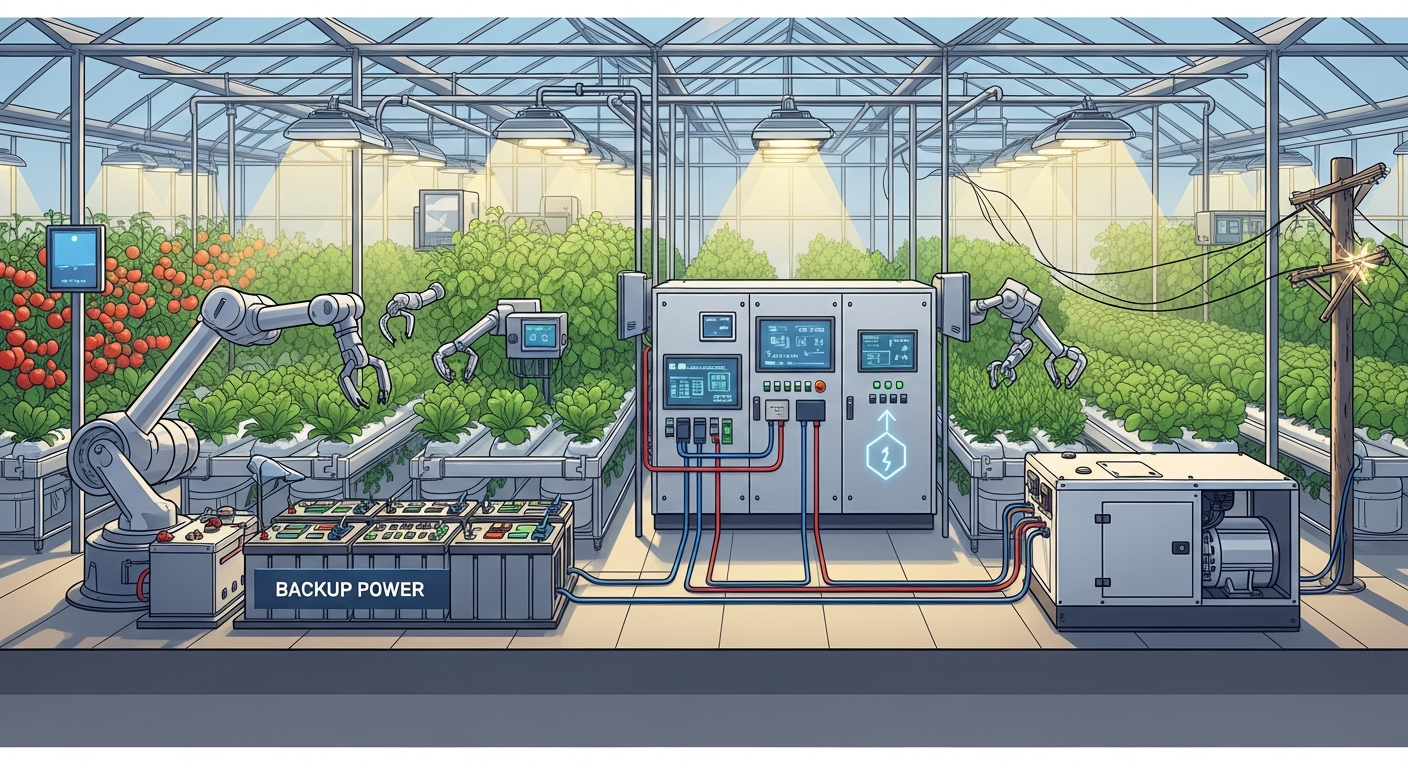
- Environmental Control Units: Heaters, coolers, fans, vents, and humidifiers/dehumidifiers that maintain precise temperature and humidity levels.
- Irrigation and Nutrient Delivery Systems: Pumps, valves, and drippers that provide water and nutrient solutions, especially critical for hydroponic and aeroponic setups.
- Lighting Systems: LED grow lights or HPS lamps, essential for supplementing natural light or providing sole-source lighting in vertical farms.
- CO2 Injection Systems: Regulators and diffusers that enrich the air with carbon dioxide for enhanced photosynthesis.
- Monitoring and Data Logging: Sensors that continuously track environmental parameters, crop health, and system performance, feeding data to central control units.
- Security Systems: Cameras, alarms, and access controls that protect valuable crops and equipment.
Each of these components relies on electricity to function. A power outage, even for a short duration, can trigger a cascade of detrimental effects:
- Rapid Environmental Deterioration: Without power, heaters fail in cold weather, leading to freezing, while fans and vents cease in hot weather, causing lethal overheating. Humidity levels can spike or plummet, creating conditions ripe for mold, mildew, or extreme desiccation.
- Water and Nutrient Deprivation: Pumps for irrigation and nutrient solution delivery stop, quickly leading to dehydration in plants, particularly severe for those in hydroponic or aeroponic systems that have no soil as a buffer.
- Photosynthesis Interruption: Grow lights turn off, halting photosynthesis and disrupting critical growth cycles, which can lead to stunted growth or reduced yields.
- Suffocation or Toxicity: Ventilation systems fail, causing CO2 levels to drop or harmful gases to accumulate.
- Data Loss and System Reset: Critical environmental data might not be logged, or control systems could reset, requiring manual recalibration and potentially losing valuable historical insights.
- Security Breaches: Alarms and surveillance systems can go offline, leaving your valuable assets vulnerable.
The consequences range from reduced crop quality and quantity to complete crop loss, significantly impacting profitability and the long-term viability of the operation. Protecting an automated greenhouse requires a proactive approach to power reliability, making backup power systems an essential component of any modern agricultural enterprise.
Types of Backup Power Systems for Greenhouses
Choosing the right backup power system involves understanding the available options and aligning them with your greenhouse’s specific needs, budget, and local conditions. Here are the primary types:
Traditional Generators (Diesel, Natural Gas, Propane)
Generators are the most common and robust solution for extended power outages. They convert fuel into electricity, providing a continuous power supply until grid power is restored or fuel runs out.
- Diesel Generators: Known for their reliability, durability, and fuel efficiency, especially under heavy loads. They are often preferred for larger commercial operations. However, diesel requires dedicated storage, can be noisy, and produces emissions.
- Natural Gas Generators: Offer the advantage of being tied into a utility’s natural gas line, eliminating the need for on-site fuel storage and frequent refueling. They generally run cleaner and quieter than diesel. Availability of natural gas lines is a prerequisite.
- Propane Generators: A versatile option, propane can be stored on-site in tanks. It burns cleaner than diesel but is typically less fuel-efficient and more expensive than natural gas. It’s a good choice for remote locations without natural gas access.
Many modern generators are equipped with an Automatic Transfer Switch (ATS). This crucial component detects a loss of utility power and automatically starts the generator, transferring the electrical load to it. When utility power returns, the ATS switches the load back and shuts down the generator, ensuring seamless operation without manual intervention.
Uninterruptible Power Supplies (UPS) and Battery Storage
While generators provide long-term power, they typically have a slight delay (seconds to minutes) as they start up. For extremely sensitive equipment where even a momentary power flicker can be disastrous, an Uninterruptible Power Supply (UPS) is invaluable. UPS systems, essentially large battery banks with integrated power electronics, provide instant backup power.
- Instantaneous Power: A UPS kicks in milliseconds after a power failure, ensuring that critical control systems, sensors, and data loggers never lose power.
- Short-Term Solution: UPS units are designed for short durations, typically minutes to a few hours, providing enough time for a generator to start up and take over the load, or for a brief outage to pass.
- Scalability: Battery banks can be scaled to provide longer backup durations or power larger loads. Modern battery technologies, particularly lithium-ion, offer high energy density and longer lifespans.
Integrating a UPS with a generator creates a highly resilient system, combining instantaneous power transfer with extended runtime capabilities.
Renewable Energy Solutions with Battery Backup (Solar, Wind)
For growers seeking sustainable and potentially off-grid solutions, renewable energy sources paired with battery storage offer a compelling alternative or complement to traditional generators.
- Solar Power: Photovoltaic (PV) panels convert sunlight into electricity, which can be used immediately or stored in batteries. Solar power reduces reliance on the grid and fossil fuels, lowering operating costs and environmental impact.
- Wind Power: Wind turbines can be an effective backup in windy locations, especially when combined with solar to compensate for periods of low wind or sunshine.
- Hybrid Systems: Combining solar and/or wind with a battery bank and a traditional generator creates a highly robust and flexible system. The renewables can handle daily power needs and short outages, while the generator acts as a backup for extended periods or when renewable generation is insufficient.
While the initial investment for renewable energy systems can be higher, long-term savings on fuel and reduced carbon footprint offer significant benefits. Careful sizing and professional installation are critical for these complex systems.
Designing and Implementing a Robust Backup Power Strategy
A well-thought-out backup power strategy is more than just buying a generator; it involves a comprehensive assessment, careful design, and diligent maintenance.
Assessing Your Greenhouse’s Specific Needs
Before investing in any system, conduct a thorough assessment:
- Identify Critical Loads: Which systems absolutely cannot go down? (e.g., environmental controllers, irrigation pumps, ventilation). Which can be offline for a while? (e.g., non-essential office lighting).
- Calculate Power Requirements (Load Calculation): Determine the total wattage (or kVA) needed for your critical systems. This dictates the size of your generator or battery bank. Don’t forget surge currents for motors when they start.
- Estimate Run-time Duration: How long do you anticipate needing backup power during an outage? A few hours? Several days? This influences fuel storage capacity or battery bank size. Consider historical outage data for your area.
- Budget Constraints: Establish a realistic budget that balances initial investment with long-term operating costs and the potential losses avoided.
- Space and Location: Where will the generator, fuel tanks, or battery storage be located? Consider noise, ventilation, safety, and accessibility.
Practical Tip: Engage with an electrical engineer or a specialized backup power provider who understands agricultural applications. They can help perform accurate load calculations and system sizing.
Key Components of a Comprehensive System
A holistic backup power solution typically includes:
- Primary Power Source: The main generator, UPS, or renewable energy system.
- Automatic Transfer Switch (ATS): Essential for seamless, automatic switching between grid power and backup power.
- Fuel Management (for Generators): Adequate fuel storage (tanks for diesel/propane, gas line for natural gas) and a reliable delivery plan.
- Battery Management (for UPS/Renewables): Proper sizing, charging controls, and ventilation for battery banks.
- Monitoring and Alert Systems: Devices that notify you immediately via SMS or email if a power outage occurs, if the backup system activates, or if fuel levels are low.
- Surge Protection: Protects sensitive electronics from voltage spikes that can occur during power restoration or from lightning.
Actionable Advice: Always over-size your generator slightly (e.g., by 20-30%) to account for future expansion or unexpected load increases. This buffer can prevent premature wear and ensure reliable performance.
Installation and Maintenance Best Practices
Even the best system is only as good as its installation and maintenance:
- Professional Installation: Always use certified electricians and technicians for installation to ensure compliance with electrical codes and optimal system performance.
- Regular Testing: Generators should be run under load periodically (e.g., monthly) to ensure they start reliably and perform as expected. Test the entire backup power system, including the ATS, to simulate a real outage.
- Preventative Maintenance: Schedule routine servicing for generators (oil changes, filter replacements) and check battery health for UPS and renewable systems. Keep fuel fresh and free of contaminants.
- Emergency Drills: Train staff on how to respond during a power outage, even with an automated system, to handle any unforeseen issues or manual overrides if necessary.
“Investing in a backup power system is not just buying equipment; it’s investing in peace of mind and the continuity of your agricultural enterprise.”
The Return on Investment (ROI) of Backup Power
While the upfront cost of a backup power system might seem substantial, viewing it as an insurance policy reveals its true value and compelling return on investment.
Protecting Your Investment in Crops and Technology
The most immediate and tangible ROI comes from avoiding losses. Consider the value of your mature crops, the cost of propagation, and the revenue loss from a delayed harvest. A single, prolonged power outage can wipe out weeks or months of cultivation efforts, rendering expensive seeds, nutrients, and labor futile. Moreover, environmental control equipment, pumps, and sophisticated sensors are costly investments. Power surges or unexpected shutdowns can damage these components, leading to expensive repairs or replacements and further operational delays.
- Revenue Protection: Safeguard your projected yields and sales, ensuring consistent product availability for your market.
- Asset Protection: Prevent damage to high-value greenhouse infrastructure, automation systems, and sensitive electronics.
- Brand Reputation: Maintain consistent supply to customers, protecting your reputation as a reliable producer.
Ensuring Operational Continuity and Data Integrity
Beyond immediate financial losses, backup power ensures the smooth, uninterrupted operation of your greenhouse. This continuity allows you to maintain optimal growth cycles, meet production targets, and keep your supply chain running without hitches. For highly automated setups, continuous data logging is crucial for optimizing future yields and identifying trends. A UPS prevents data loss, ensuring that your valuable operational insights remain intact.
- Consistent Growth Cycles: Avoid growth interruptions that can push back harvest dates and reduce overall productivity.
- Reliable Data Collection: Ensure continuous monitoring of environmental parameters, vital for informed decision-making and long-term optimization.
- Operational Peace of Mind: Reduce stress and anxiety for growers, knowing that critical systems are protected around the clock.
Mitigating Risks and Meeting Future Demands
In a world of increasing climate volatility and strain on aging power grids, power outages are becoming more frequent and unpredictable. Investing in backup power is a strategic move to future-proof your greenhouse operation against these risks. It also positions your business for growth, allowing you to scale up automated systems with confidence, knowing that their foundational power needs are secure. For larger commercial operations, robust backup power can also be a factor in securing insurance at better rates or complying with certain certifications.
The cost of a backup power system pales in comparison to the potential losses from a single catastrophic power failure. It’s an investment that pays for itself by safeguarding your crops, protecting your technology, and ensuring the uninterrupted flow of your agricultural business.
Conclusion
The journey into automated greenhouse farming represents a significant leap forward in agricultural productivity and sustainability. However, this progress is inherently tied to the reliability of the power infrastructure that fuels these intelligent systems. As more growers embrace the precision and efficiency offered by automation, the role of backup power systems transitions from a prudent consideration to an absolute necessity. From traditional generators to cutting-edge renewable energy solutions paired with robust battery storage, a range of options exist to safeguard your investment.
By carefully assessing your needs, designing a comprehensive system, and committing to diligent maintenance, you can protect your valuable crops, prevent costly equipment damage, and ensure the uninterrupted flow of your agricultural operations. In an industry where every degree, every drop of water, and every hour of light can impact the bottom line, investing in a reliable backup power solution is not merely a cost—it is a strategic decision that guarantees resilience, continuity, and ultimately, the long-term success of your automated greenhouse enterprise. Embrace proactive protection; secure your agricultural future.