
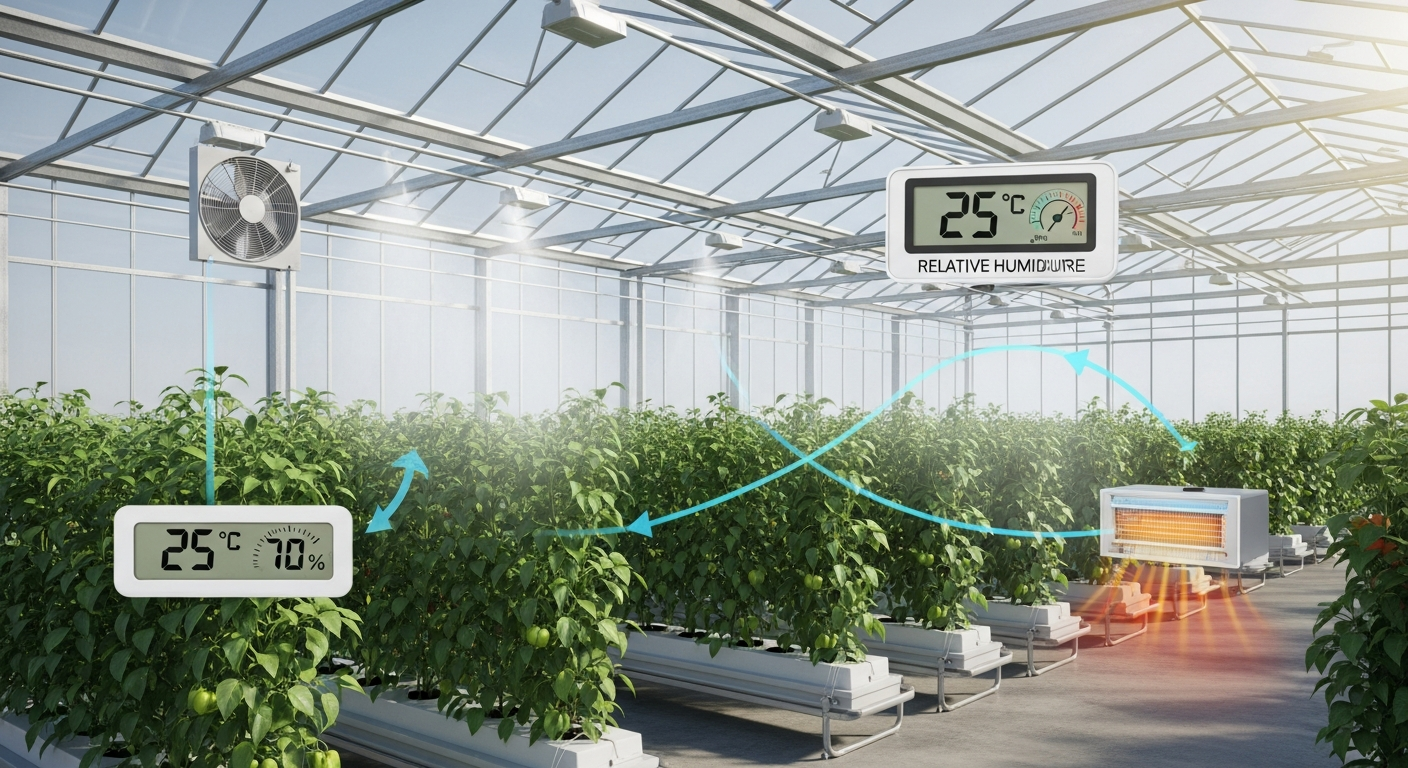
Welcome to a deeper dive into the unseen forces that govern life within your greenhouse. While factors like light, water, and nutrients are often at the forefront of a grower’s mind, two environmental elements – relative humidity and temperature – engage in a complex, often misunderstood dance that profoundly impacts plant health and overall greenhouse success. Their relationship is not merely coincidental; it’s a fundamental interplay that dictates everything from plant transpiration rates to the proliferation of diseases. Understanding this dynamic duo is not just helpful; it’s absolutely essential for cultivating a thriving, productive growing environment.
Understanding the Basics: Relative Humidity and Temperature Defined
Before we unravel their intricate relationship, let’s clearly define our key players:
What is Temperature?
In the context of a greenhouse, temperature refers to the degree of heat or cold in the air. It directly influences a plant’s metabolic rates, photosynthesis, respiration, and overall growth. Every plant species has an optimal temperature range for various growth stages, and deviations can lead to stress, stunted growth, or even death.
What is Relative Humidity (RH)?
Relative Humidity (RH) is a measure of the amount of water vapor present in the air compared to the maximum amount of water vapor the air can hold at a specific temperature. It’s expressed as a percentage. For instance, 100% RH means the air is completely saturated with moisture, while 50% RH means it holds half of its maximum capacity.
- Absolute Humidity: The actual mass of water vapor in a given volume of air, regardless of temperature.
- Dew Point: The temperature at which air becomes saturated with moisture (100% RH) and water vapor begins to condense into liquid water.
The critical distinction here is the “relative” aspect of RH. This is where temperature enters the picture. The capacity of air to hold moisture is not constant; it changes dramatically with temperature.
The Core Relationship: How Temperature Influences RH (and Vice Versa)
The relationship between temperature and relative humidity is inversely proportional when the absolute amount of moisture in the air remains constant:
Temperature’s Effect on Relative Humidity
- As Air Temperature Rises, RH Falls (if absolute moisture content is constant): Warmer air can hold significantly more moisture vapor than cooler air. If you heat air without adding or removing water, its capacity to hold moisture increases, and thus its relative humidity percentage decreases. Imagine a sponge that can expand when heated, allowing it to hold more water, making the existing water feel “less full” by comparison.
- As Air Temperature Falls, RH Rises (if absolute moisture content is constant): Conversely, as air cools, its capacity to hold moisture decreases. If the absolute amount of water vapor in the air remains the same, the relative humidity percentage will rise. This is why you often see condensation on cool surfaces or experience fog in the morning as temperatures drop overnight. If the temperature drops enough, the RH will reach 100% (the dew point), leading to condensation on plant leaves, greenhouse structures, or the formation of mist.
Relative Humidity’s Effect on Plant Processes (and Perceived Temperature)
While RH doesn’t directly change the air temperature, it significantly influences how plants experience their environment:
- Transpiration: This is the process where plants release water vapor through small pores (stomata) on their leaves. Transpiration is crucial for nutrient uptake and cooling the plant.
- High RH: When the air is already saturated with moisture, the plant struggles to transpire efficiently. The water potential gradient between the leaf and the air is reduced, making it harder for water to evaporate from the leaf surface. This can lead to reduced nutrient uptake, waterlogged roots (as water isn’t moving through the plant), and even heat stress because the plant cannot cool itself effectively.
- Low RH: When the air is very dry, plants transpire excessively. This can lead to rapid water loss, wilting, leaf scorch, and desiccation. The plant may close its stomata to conserve water, which then limits CO2 uptake and photosynthesis, slowing growth.
- Vapor Pressure Deficit (VPD): This is a more precise and valuable metric for growers than RH alone. VPD measures the difference between the amount of moisture the air can hold when saturated and the actual amount of moisture it is holding. It directly indicates the “drying power” of the air and how easily a plant can transpire.
- High VPD (Low RH): Air is very dry; plants transpire rapidly.
- Low VPD (High RH): Air is very moist; plants struggle to transpire.
Understanding VPD allows growers to fine-tune their climate control for optimal transpiration and plant health.
Impact on Plant Health and Greenhouse Challenges
Mismanaging the balance between relative humidity and temperature can lead to a cascade of problems for your plants:
Problems Associated with High Humidity (Especially at Lower Temperatures)
- Fungal and Bacterial Diseases: This is arguably the biggest threat. High humidity provides the perfect breeding ground for pathogens like powdery mildew, botrytis (gray mold), downy mildew, and various bacterial blights. Condensation on leaves creates a film of water, allowing spores to germinate and infect plant tissue.
- Reduced Transpiration and Nutrient Uptake: As discussed, plants struggle to move water and nutrients when the air is too saturated.
- Weak Stems and Etiolation (“Stretch”): Plants may become elongated and “stretchy” with weak stems as they reach for light in an attempt to escape stagnant, humid air, especially when combined with insufficient light.
- Pollen Viability Issues: High humidity can make pollen clumpy and less viable, affecting fruit and seed set.
Problems Associated with Low Humidity (Especially at Higher Temperatures)
- Desiccation and Wilting: Excessive transpiration quickly depletes water reserves, leading to irreversible cell damage and plant death if not addressed.
- Stunted Growth: Plants close stomata to conserve water, limiting CO2 intake and thus photosynthesis.
- Increased Pest Susceptibility: Pests like spider mites thrive in hot, dry conditions and can quickly colonize stressed plants.
- Tip Burn: Calcium uptake can be reduced in very low humidity, leading to tip burn on new leaves.
The optimal range for RH and temperature varies significantly by crop type, growth stage, and even time of day. Seedlings and young clones often prefer higher humidity (70-80%) to establish roots, while flowering plants typically thrive in lower humidity (40-60%) to prevent botrytis and promote stronger flower development.
Practical Climate Control Strategies for Greenhouses
Effective management of humidity and temperature is key to creating a successful greenhouse climate. Here are actionable tips:
1. Accurate Monitoring is Paramount
- Hygrometers and Thermometers: Invest in reliable digital hygrometers and thermometers. Place them strategically at plant height in different zones of your greenhouse, not just near vents or doors.
- Integrated Sensors: For larger operations, environmental sensors that track temperature, RH, and even CO2 are invaluable. Some even calculate VPD automatically.
- Data Logging: Keep a record of your environmental conditions. This helps you identify trends and troubleshoot problems.
2. Managing Temperature
- Heating: Use heaters (gas, electric, radiant floor) to maintain desired minimum temperatures, especially during cooler periods. Ensure even heat distribution.
- Cooling and Ventilation:
- Natural Ventilation: Open vents, side walls, and roof panels to allow hot air to escape and cooler air to enter.
- Forced Ventilation: Install exhaust fans to actively pull hot air out of the greenhouse, often paired with intake vents or louvers.
- Shade Cloths: Deploy exterior or interior shade cloths to reduce solar gain during peak heat hours.
- Evaporative Coolers (Swamp Coolers): These systems cool the air by evaporating water, which also increases humidity – a beneficial side effect in dry climates but a potential challenge in humid ones.
3. Managing Humidity
- Reducing Humidity:
- Ventilation: The most fundamental method. Exchanging humid air with drier outside air is crucial. Ensure good air movement within the plant canopy using Horizontal Air Flow (HAF) fans to prevent pockets of stagnant, humid air.
- Heating and Ventilating (“Ventilation-Heating Strategy”): This is a powerful technique. By briefly increasing the temperature while simultaneously ventilating, you increase the air’s capacity to hold moisture, allowing you to vent out more water vapor before condensation occurs. This is particularly useful during cool, damp periods.
- Dehumidifiers: Industrial-grade dehumidifiers can extract moisture from the air, especially useful in sealed greenhouses or during high-humidity periods when venting isn’t an option (e.g., trying to maintain CO2 levels).
- Proper Plant Spacing: Ensure adequate spacing between plants to allow for good airflow and reduce localized humidity around foliage.
- Watering Practices: Water in the morning so plants have all day to dry. Avoid overwatering.
- Increasing Humidity:
- Misters/Foggers: These systems release fine water droplets into the air that evaporate, increasing RH. Use fine mists to avoid wetting foliage directly.
- Wetting Floors/Benches: In extremely dry conditions, lightly wetting concrete floors or gravel benches can provide some evaporative moisture.
- Evaporative Cooling Pads: As mentioned, these naturally increase humidity as they cool.
4. Automated Climate Control Systems
Modern greenhouses often employ sophisticated climate controllers that integrate temperature, humidity, ventilation, and even CO2 management. These systems use sensors to constantly monitor conditions and automatically adjust heating, cooling, and ventilation systems to maintain precise set points, minimizing human error and maximizing efficiency.
Conclusion
The relationship between relative humidity and temperature is a cornerstone of effective greenhouse climate control. Far from independent variables, they are inextricably linked, each influencing the other and, in turn, profoundly impacting every aspect of plant life – from metabolic processes and nutrient uptake to susceptibility to pests and diseases. By understanding the core mechanics of how air holds moisture at different temperatures, and by implementing proactive monitoring and control strategies, greenhouse growers can move beyond merely reacting to problems. Instead, they can cultivate an optimized, stable environment that promotes vigorous growth, maximizes yield, and significantly reduces the risks associated with an unbalanced climate. Mastering this delicate dance is not just about keeping plants alive; it’s about helping them truly thrive.