
In the intricate world of greenhouse cultivation, every environmental factor plays a crucial role in maximizing plant health and yield. Among these, carbon dioxide (CO2) enrichment and temperature stand out as two of the most significant levers growers can pull to optimize their crops’ potential. While often considered independently, their relationship is deeply intertwined, influencing everything from photosynthetic efficiency to water usage. Understanding this dynamic interplay is not just about boosting growth; it’s about creating a harmonious climate where plants don’t just survive, but truly thrive. For serious greenhouse enthusiasts and commercial growers alike, mastering the synergy between CO2 levels and temperature setpoints is a cornerstone of advanced climate control.
The Foundational Role of CO2 Enrichment in Plant Growth
At its core, CO2 enrichment is about providing plants with a supercharged supply of a fundamental building block for life. Carbon dioxide is an essential ingredient for photosynthesis, the process by which plants convert light energy into chemical energy, driving growth and development. In a natural outdoor environment, atmospheric CO2 levels hover around 400-450 parts per million (ppm). However, within the enclosed environment of a greenhouse, plants can quickly deplete this supply, especially during periods of strong sunlight and rapid growth, effectively “starving” themselves of crucial CO2.
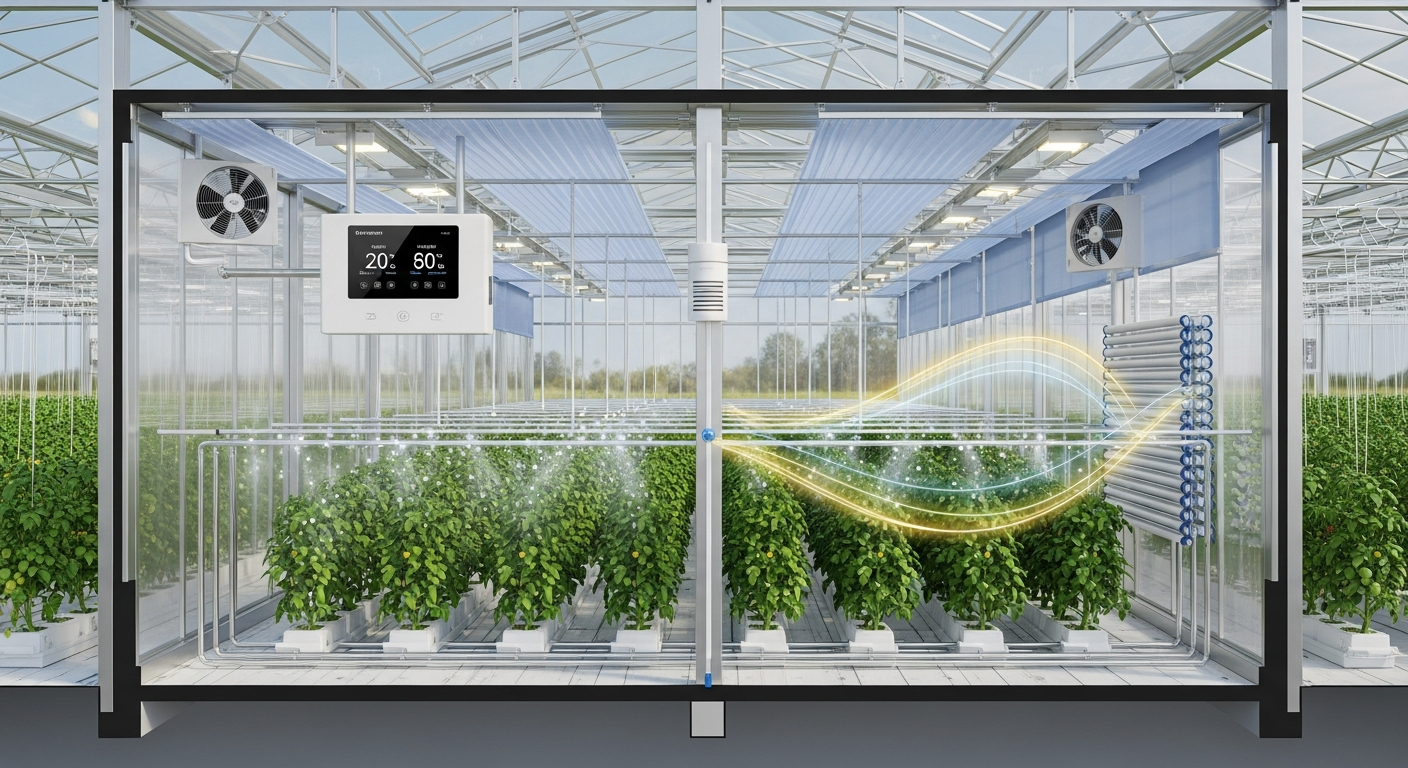
By artificially increasing CO2 levels, typically to 800-1500 ppm depending on the crop and other environmental factors, growers can significantly enhance photosynthetic rates. This leads to a multitude of benefits:
- Accelerated Growth: Plants grow faster, reaching maturity sooner.
- Increased Yields: Greater biomass production, leading to higher fruit, flower, or vegetable yields.
- Improved Plant Vigor: Stronger stems, larger leaves, and overall healthier plants.
- Enhanced Water Use Efficiency: With more CO2 available, plants may close their stomata slightly, reducing water loss through transpiration while still maintaining high photosynthetic rates. This means they can make better use of the water they absorb.
Common methods for introducing CO2 include CO2 burners (which produce CO2 through the combustion of natural gas or propane), CO2 generators, and compressed CO2 tanks. Each method has its own implications for the greenhouse environment, particularly concerning temperature.
How CO2 Directly and Indirectly Influences Greenhouse Temperature
The relationship between CO2 enrichment and greenhouse temperature is multifaceted, involving both direct and indirect effects that growers must consider for optimal climate management.
Direct Temperature Impact from CO2 Sources
One of the most immediate ways CO2 enrichment affects temperature comes from the method of CO2 generation itself. CO2 burners, for instance, are essentially combustion heaters. While their primary purpose is to produce CO2, they also generate a significant amount of heat as a byproduct. In cooler months, this can be a beneficial side effect, reducing the need for separate heating systems and effectively killing two birds with one stone. However, during warmer periods, the added heat from burners can quickly push greenhouse temperatures beyond optimal levels, requiring increased ventilation or cooling efforts, which can in turn negate the benefits of CO2 enrichment by venting it out.
On the other hand, compressed CO2 tanks and liquid CO2 injection systems do not produce heat as a byproduct. While they offer precise CO2 dosing without adding warmth, they may require separate heating strategies during colder periods.
Indirect Temperature Impact: Plant Physiology and Optimal Photosynthesis
Perhaps more subtle but equally critical is the indirect influence of CO2 on temperature through plant physiology. When CO2 levels are elevated, plants can actually tolerate and often require higher ambient temperatures to achieve their maximum photosynthetic potential. Think of it as providing a more abundant fuel source – with more CO2, the plant’s metabolic engine can run more efficiently at a slightly higher operating temperature.
Here’s why:
- Enzyme Activity: Photosynthesis is driven by enzymes, and like most biological enzymes, their activity increases with temperature up to a certain point. With ample CO2, these enzymes can work more effectively at slightly elevated temperatures, speeding up the conversion of CO2 and water into sugars.
- Stomatal Conductance: As mentioned, higher CO2 levels can lead to partial stomatal closure, reducing transpiration. Transpiration is a cooling process for plants, similar to sweating. If plants are transpiring less due to stomatal closure, they may experience a slight internal temperature increase. To compensate, or simply to operate optimally, the surrounding air temperature might need to be adjusted upwards to maintain the desired leaf temperature and photosynthetic rate.
- Increased Demand for Light and Nutrients: Faster growth due to CO2 enrichment means plants also have an increased demand for light energy and nutrients. A slightly warmer temperature can help facilitate the uptake and transport of these nutrients, supporting the accelerated metabolic processes.
Therefore, simply adding CO2 without adjusting temperature can lead to suboptimal results. The plant’s internal machinery might not be able to fully utilize the extra CO2 if the temperature isn’t also in its ideal range for heightened activity.
Optimizing the Synergy: Temperature Setpoints for CO2-Enriched Environments
The key to successful CO2 enrichment lies in finding the “sweet spot” where CO2 levels and temperature work together synergistically. This means actively managing your greenhouse climate control system to integrate both factors. Generally, when CO2 levels are elevated, optimal daytime temperatures can be increased by 2-5°C (3-9°F) above what would be considered ideal without CO2 enrichment. However, this is a general guideline, and specific crops will have their own ideal ranges.
Practical Tips for Temperature Management with CO2 Enrichment:
- Know Your Crop: Research the specific temperature requirements for the crop you are growing under CO2 enrichment. Tomatoes, cucumbers, and peppers, for example, often thrive at higher temperatures (e.g., 25-28°C / 77-82°F) when CO2 is elevated, compared to leafy greens which might prefer slightly cooler conditions.
- Monitor Leaf Temperature: While air temperature is important, leaf temperature is what truly matters to the plant. Infrared thermometers can help you gauge actual leaf temperatures and adjust your air temperature setpoints accordingly.
- Consider Vapor Pressure Deficit (VPD): VPD is a measure of the drying power of the air and is critical for plant health and transpiration. When you increase temperature, relative humidity often drops, increasing VPD. With CO2 enrichment, plants are more efficient with water, but maintaining an optimal VPD (which usually means slightly higher humidity at higher temperatures) is still crucial to prevent stress. Aim for a balanced VPD that supports both active transpiration and efficient CO2 uptake.
- Integrate Your Climate Control: Use an environmental control system that can manage CO2 levels, temperature, humidity, and ventilation in an integrated fashion. This allows for automated adjustments based on real-time data and predetermined setpoints.
- Ventilation Strategies: Be mindful of when and how you ventilate. If you vent too aggressively, you’ll lose valuable CO2. If you don’t vent enough, temperatures can soar. Intelligent control systems can balance the need to maintain CO2 with the need to cool or dehumidify, often by using minimum ventilation settings or modulating exhaust fans.
- Nighttime Temperatures: While CO2 enrichment is primarily a daytime strategy (plants don’t photosynthesize in the dark), proper nighttime temperatures are still critical for respiration and nutrient transport. Generally, nighttime temperatures should be 5-10°C lower than daytime temperatures, promoting efficient sugar utilization and preventing excessive stretching.
Advanced Strategies and Monitoring
Achieving the perfect balance requires continuous monitoring and a nuanced approach. Relying on simple on/off controls for heating, cooling, and CO2 injection will rarely yield optimal results. Modern greenhouse climate control leverages sophisticated sensors and algorithms to create a stable and productive environment.
- CO2 Sensors: Install accurate CO2 sensors at plant canopy level and calibrate them regularly. This ensures you’re providing the target CO2 concentration where it matters most.
- Temperature Sensors: Place multiple temperature sensors strategically throughout the greenhouse to identify any hot or cold spots. Aspirated sensors provide a more accurate reading by shielding the sensor from radiant heat.
- Data Logging: Utilize systems that log historical data for CO2, temperature, and humidity. Analyzing this data over time can reveal trends, identify inefficiencies, and help you fine-tune your setpoints for even greater crop performance.
- Zoning: If your greenhouse grows different crops with varying CO2 and temperature needs, consider creating separate climate zones within the structure, each with its own dedicated environmental control.
- External Factors: Always consider external factors like ambient outdoor temperature, solar radiation, and wind speed, as these will directly influence your heating, cooling, and ventilation requirements.
Conclusion
The relationship between CO2 enrichment and greenhouse temperature is a dynamic partnership, not a simple cause-and-effect. By understanding how CO2 benefits plant physiology and how various CO2 sources affect the thermal environment, growers can strategically adjust their temperature setpoints to maximize the benefits of CO2 enrichment. It’s about more than just adding CO2; it’s about creating an integrated climate that supports accelerated growth, higher yields, and robust plant health. With careful monitoring, thoughtful planning, and integrated climate control, you can unlock the full potential of your greenhouse, transforming it into a powerhouse of productivity and profitability. Mastering this synergy is a hallmark of truly advanced greenhouse cultivation, leading to healthier plants and more bountiful harvests.