
Imagine a world where plants operated on a purely internal clock, oblivious to the changing seasons, the lengthening days of spring, or the shortening nights of autumn. Their growth would be chaotic, their flowering mistimed, and their survival in harsh conditions precarious. Fortunately, plants are exquisitely tuned to their environment, and one of the most fundamental environmental cues they respond to is the relative duration of light and darkness – a phenomenon known as photoperiodism. This intricate biological mechanism allows plants to perceive the time of year and orchestrate critical life processes, from the burst of vibrant blooms to the strategic retreat into dormancy. Understanding photoperiodism is not just a fascinating dive into plant biology; it’s a crucial insight for anyone involved in agriculture, horticulture, or simply appreciating the natural world, as it underpins the very rhythm of plant life and survival.
Understanding Photoperiodism: The Plant’s Internal Clock
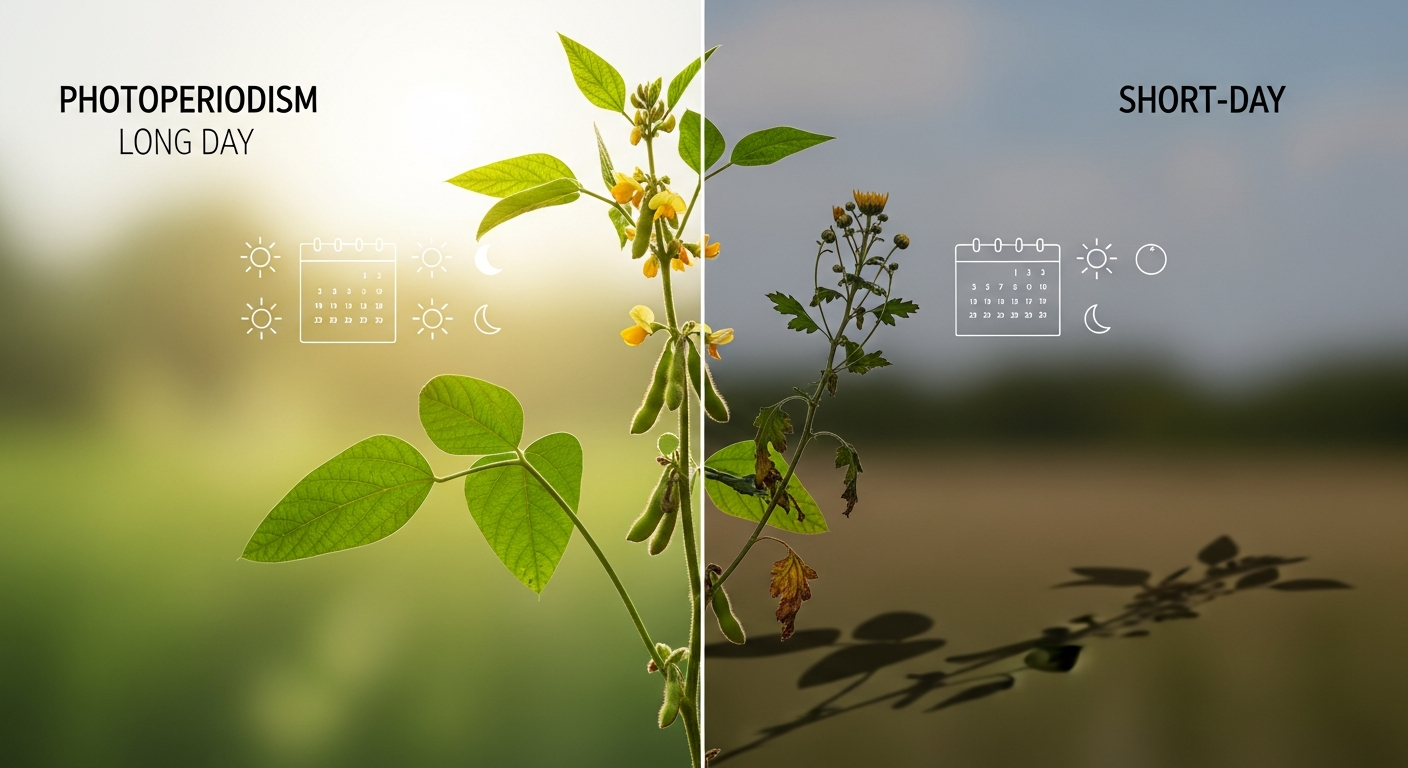
At its core, photoperiodism is a plant’s physiological response to the duration of light and dark periods within a 24-hour cycle. It’s not merely about the amount of light a plant receives, but specifically the relative lengths of day and night. For many plants, it is the length of the uninterrupted dark period that serves as the crucial trigger for various developmental stages. This sensitivity to light and dark cycles enables plants to synchronize their growth, flowering, and preparation for adverse conditions with the appropriate season, significantly impacting plant development and plant dormancy.
The Mechanism: How Plants “Sense” Time
Plants don’t have eyes, but they possess sophisticated photoreceptor systems that act as their internal clocks. The primary photoreceptor involved in photoperiodism is a pigment called phytochrome. Phytochrome exists in two interconvertible forms:
- Pr (phytochrome red): This form absorbs red light and is converted to Pfr.
- Pfr (phytochrome far-red): This form absorbs far-red light and is converted back to Pr. Pfr is also slowly converted back to Pr in the dark.
During the day, red light is abundant, converting most of the phytochrome to the Pfr form. At night, in the absence of light, Pfr slowly reverts to Pr. The ratio of Pfr to Pr at dawn signals to the plant how long the night was, effectively measuring the duration of darkness. Other photoreceptors, like cryptochromes and phototropins, also play roles in sensing blue light and influencing circadian rhythms, further fine-tuning a plant’s response to its light environment.
Classifying Plants by Photoperiodic Response
Based on their response to day and night length, most plants can be categorized into three main groups:
- Short-Day Plants (SDP): These plants flower only when the day length is shorter than a specific critical photoperiod, or more accurately, when the night length is longer than a critical duration. They typically flower in late summer, autumn, or winter. Examples include chrysanthemums, poinsettias, rice, coffee, and cannabis. If their critical night is interrupted by a flash of light, it can inhibit flowering.
- Long-Day Plants (LDP): These plants flower only when the day length is longer than a critical photoperiod, or when the night length is shorter than a critical duration. They usually flower in late spring or early summer. Examples include spinach, radish, lettuce, oats, barley, and clover. A brief flash of light during a long night can promote flowering in LDPs.
- Day-Neutral Plants (DNP): The flowering of these plants is not primarily influenced by photoperiod. Instead, they flower once they have reached a certain stage of maturity or are triggered by other environmental cues like temperature, water availability, or nutrient levels. Examples include tomatoes, corn, cucumbers, and sunflowers.
It’s important to remember that these classifications are generalizations, and the critical photoperiod varies significantly among species. The precise timing of day and night is a fundamental cue that orchestrates a plant’s entire life cycle, optimizing its chances of successful reproduction and survival.
Photoperiodism’s Influence on Plant Development
The rhythmic changes in day and night length, dictated by the Earth’s orbit around the sun, are far more than just a light switch for plants. They are a sophisticated signaling system that drives a myriad of developmental processes, ensuring plants grow, mature, and reproduce at the most opportune times.
Regulating Flowering Time
The most widely recognized and extensively studied impact of photoperiodism is its control over flowering, the reproductive stage of many plants. For a plant, flowering at the right time is paramount. Bloom too early, and pollinators might be scarce or conditions too harsh for seed set. Bloom too late, and there might not be enough time for seeds to mature before winter.
- For Short-Day Plants (SDP): Consider the chrysanthemum. Commercial growers use blackout curtains to create long nights (short days) to induce flowering for specific holidays, demonstrating precise control over bloom time. The shortening days of autumn naturally trigger these plants to flower.
- For Long-Day Plants (LDP): Spinach, for example, is an LDP. If planted too early in spring when days are still short, it will produce many leaves but won’t flower. As days lengthen, it will “bolt” (send up a flower stalk) and flower. Farmers leverage this knowledge to time plantings for optimal leafy vegetable production before bolting.
The transition from vegetative growth to reproductive growth is a monumental switch, and photoperiodism provides the precise environmental cue to initiate this complex cascade of genetic and hormonal changes.
Guiding Vegetative Growth
Beyond flowering, photoperiodism also profoundly influences various aspects of vegetative growth, which refers to the non-reproductive parts of the plant (roots, stems, leaves).
- Stem Elongation and Leaf Development: In some plants, such as those that form a basal rosette (e.g., lettuce, spinach), long days can trigger rapid stem elongation (bolting) and changes in leaf morphology. Short days might promote the development of more compact, leafy growth.
- Tuber and Bulb Formation: Many important food crops rely on photoperiod for the development of storage organs. Potatoes, for instance, are often considered short-day plants for tuberization; they need shorter days to initiate and develop tubers, which are modified stems. On the other hand, many onion varieties are long-day plants, requiring long days to form bulbs. Understanding these requirements is critical for successful cultivation and yield optimization.
- Root Development: While less directly studied than above-ground parts, photoperiod can indirectly influence root growth by affecting overall plant vigor, photosynthesis rates, and the allocation of resources within the plant.
These developmental responses highlight how plants use seasonal light cues to optimize their architecture and resource allocation, ensuring they build the necessary structures for survival and reproduction throughout their life cycle.
Photoperiodism and Dormancy: Preparing for Survival
For many perennial plants, especially those in temperate and boreal regions, winter presents a significant challenge. Freezing temperatures, low light levels, and scarce water make active growth impossible. To survive these harsh conditions, plants employ a crucial strategy: dormancy. Photoperiodism plays an indispensable role in triggering and regulating this vital survival mechanism, often long before the actual unfavorable conditions arrive.
Inducing Bud Dormancy
Perhaps the most critical role of photoperiodism in survival is its ability to induce bud dormancy in deciduous trees and shrubs. As the days shorten in late summer and autumn, these plants perceive the decreasing day length as an unmistakable signal that winter is approaching. This cue initiates a series of profound physiological changes:
- Cessation of Shoot Growth: New shoot elongation stops, preventing the development of tender new growth that would be vulnerable to frost damage.
- Formation of Dormant Buds: Specialized buds, often protected by tough scales, form at the tips of branches and in leaf axils. These buds contain embryonic shoots, leaves, and sometimes flowers, which will remain dormant until favorable conditions return in spring.
- Leaf Abscission: In deciduous species, shortening days trigger the breakdown of chlorophyll, leading to the brilliant autumn colors, and ultimately, the shedding of leaves. This reduces water loss during winter when the ground is frozen and prevents the accumulation of snow and ice on branches, minimizing breakage.
- Acquisition of Cold Hardiness: Concurrently with bud formation and leaf drop, the plant undergoes a complex process of physiological hardening. This involves changes in cell membrane composition, increased sugar content (acting as antifreeze), and altered gene expression, significantly increasing the plant’s tolerance to freezing temperatures. This process of cold hardiness acquisition is often gradual and depends on both shortening photoperiods and gradually decreasing temperatures.
This remarkable foresight, driven by the reliable cue of changing day length, allows trees to prepare weeks or even months in advance for the rigors of winter, ensuring their long-term survival.
Regulating Bulb and Tuber Dormancy
Many geophytes (plants with underground storage organs like bulbs, corms, or tubers) also rely on photoperiodism to regulate their dormant phases. For example:
- Tulips and Daffodils: These spring-flowering bulbs enter a dormant phase in summer after flowering. While temperature is a key factor in breaking their dormancy and initiating flowering, the lengthening days of spring signal their active growth, and the subsequent drying out of foliage and warmer temperatures might contribute to dormancy induction.
- Potatoes: As mentioned, short days promote tuberization. Once tubers are formed, they often enter a dormant phase, a critical evolutionary adaptation to survive unfavorable conditions underground until the next growing season.
The ability to enter dormancy at the correct time is a fundamental survival strategy, ensuring the plant’s energy reserves are conserved and its vulnerable tissues are protected from environmental extremes.
Breaking Dormancy
While photoperiodism is crucial for inducing dormancy, other cues, often in combination with light, are necessary to break it. For many temperate trees, a period of chilling (exposure to low, non-freezing temperatures for a certain duration) is required to overcome dormancy. Once the chilling requirement is met, the return of longer days and warming temperatures in spring acts as the signal for buds to swell, leaves to unfurl, and growth to resume. This intricate interplay prevents plants from breaking dormancy during a warm spell in mid-winter, which would expose them to subsequent lethal frosts.
The precise timing afforded by photoperiodism, coupled with temperature sensing, provides plants with a highly accurate seasonal calendar, maximizing their chances of survival and reproductive success.
Practical Applications and Management of Photoperiodism
The profound understanding of photoperiodism has moved beyond academic curiosity to become an indispensable tool in modern agriculture, horticulture, and even home gardening. By manipulating light and dark cycles, humans can exert significant control over plant growth, development, and productivity.
Horticulture and Agriculture: Mastering the Seasons
Commercial growers leverage photoperiodic principles to optimize crop production, control flowering, and improve yield:
- Manipulating Flowering Time: This is perhaps the most common and economically significant application.
- For Short-Day Plants (SDP): Greenhouse operations use blackout curtains (or ‘black cloth’) to extend the night period, even during naturally long days, to force SDPs like chrysanthemums or poinsettias to flower out of season, making them available for specific holidays or market demands. Conversely, a brief light interruption (a ‘night break’) can prevent flowering and maintain vegetative growth.
- For Long-Day Plants (LDP): Growers use supplementary lighting (e.g., incandescent or LED lights) to extend the day length, particularly during naturally short days of winter or early spring, to induce LDPs like spinach or lettuce to bolt for seed production or to accelerate flowering in ornamentals.
- Controlling Vegetative Growth: In some leafy greens like lettuce, bolting (premature flowering) caused by long days can reduce leaf quality and market value. Growers can select day-neutral varieties or use shading to maintain shorter days, delaying bolting and extending the harvest period for high-quality leaves.
- Optimizing Yields for Storage Crops: For crops like potatoes and onions, knowing their photoperiodic requirements for tuber or bulb formation is crucial. Planting times and supplemental lighting/shading can be adjusted to ensure optimal development of these valuable storage organs, directly impacting crop yield and economic viability.
- Cannabis Cultivation: Cannabis is a classic short-day plant. Cultivators meticulously control the light cycle (typically 18 hours light/6 hours dark for vegetative growth, and 12 hours light/12 hours dark for flowering) to maximize yield and cannabinoid production. This precise control is fundamental to the industry.
Home Gardening: Empowering the Green Thumb
Even at a smaller scale, understanding photoperiodism can empower home gardeners to achieve better results:
- Choosing the Right Plants: When selecting vegetable varieties, consider your local day length throughout the growing season. For instance, if you live in a northern latitude with very long summer days, an “intermediate-day” onion variety might bulb better than a “short-day” variety.
- Strategic Planting Times: If you want to grow spinach for its leaves, plant it in early spring or late summer to avoid the longest days that trigger bolting. For a continuous harvest, choose day-neutral varieties or practice succession planting.
- Using Artificial Light Wisely: When starting seeds indoors or overwintering tender plants, be mindful of the light duration. If you want to keep a plant actively growing, ensure it receives sufficient day length (often 14-16 hours for many common houseplants). If you want to induce dormancy in a tender perennial before bringing it indoors for winter, you might gradually reduce its light exposure to mimic shortening autumn days.
- Protecting Plants from Premature Dormancy Break: For outdoor perennials, avoid pruning too late in the season in regions with cold winters. New growth stimulated by pruning won’t have time to harden off before short days and cold temperatures arrive, making it susceptible to frost damage.
Implications in a Changing Climate
As global climates shift, the finely tuned dance between photoperiodism and other environmental cues faces new challenges. While day length remains constant regardless of climate change, the temperature and precipitation patterns are altering significantly. This can lead to:
- Phenological Mismatches: Plants may receive the correct photoperiodic signal for bud burst, but subsequent temperatures could be unusually cold, leading to frost damage. Conversely, a prolonged warm spell might cause dormancy to break too early.
- Impact on Plant Distribution: As temperatures rise, the ranges of some plants might shift, potentially moving them into regions where the photoperiodic cues are less optimal for their specific developmental requirements, affecting reproduction and survival.
- Agricultural Challenges: Farmers might need to adapt by selecting new varieties, adjusting planting schedules, or investing more in controlled environments to compensate for these mismatches, underscoring the vital importance of continued research into plant responses to environmental signals.
Ultimately, the practical applications of photoperiodism are about understanding and working with nature’s clock. Whether for commercial production or personal enjoyment, this knowledge allows us to better cultivate and manage plant life, ensuring both beauty and bounty.
Conclusion
The intricate mechanism of photoperiodism is a testament to the evolutionary adaptability of plants, allowing them to precisely synchronize their life cycles with the rhythmic changes of the seasons. From the delicate bloom of a spring flower to the majestic shedding of autumn leaves, the relative lengths of day and night serve as an indispensable environmental cue, orchestrating every major developmental transition. We have seen how this “internal clock” dictates the critical timing of flowering for different plant types, guides essential vegetative growth processes like tuber and bulb formation, and, most importantly, triggers the vital state of plant dormancy, ensuring survival through harsh winters.
This deep biological understanding is not merely academic; it has profound practical implications. In horticulture and agriculture, manipulating light cycles has become a cornerstone of modern cultivation, enabling growers to extend growing seasons, force specific flowering times, and optimize crop yields. For the home gardener, awareness of photoperiodism empowers better plant selection, strategic planting, and informed use of artificial light, fostering thriving gardens. As our climate changes, the interactions between photoperiodic signals and other environmental factors present new challenges, highlighting the ongoing importance of this fundamental plant process.
Ultimately, photoperiodism underscores the sophisticated intelligence of the plant kingdom. It is a constant reminder that life on Earth thrives by its ability to perceive, respond to, and anticipate the rhythms of its environment, a beautiful and critical ballet that allows plants to flourish and sustain nearly all other life forms.