
Building a greenhouse is an exciting venture, promising lush harvests and a sanctuary for your botanical passions. Yet, many enthusiasts overlook a crucial design element that can make or break their climate control efforts and energy bills: greenhouse orientation. Often considered an afterthought, the direction your greenhouse faces can dramatically impact how much sun it receives, how quickly it heats up, and consequently, how much effort and energy you expend on cooling. In the world of sustainable growing, understanding and optimizing your greenhouse’s orientation is a fundamental step toward achieving peak cooling efficiency and creating an ideal environment for your plants.
The Fundamental Role of Solar Gain and Heat Load
At its heart, a greenhouse is designed to capture solar energy, converting sunlight into heat to warm the interior, especially beneficial during colder months. However, this very mechanism becomes a double-edged sword when temperatures rise. Solar radiation, primarily in the form of short-wave radiation, passes through the glazing and is absorbed by plants, soil, and structures inside, which then re-radiate it as long-wave thermal radiation. This longer wavelength radiation cannot easily escape back through the glazing, leading to the familiar “greenhouse effect” – a steady build-up of heat.
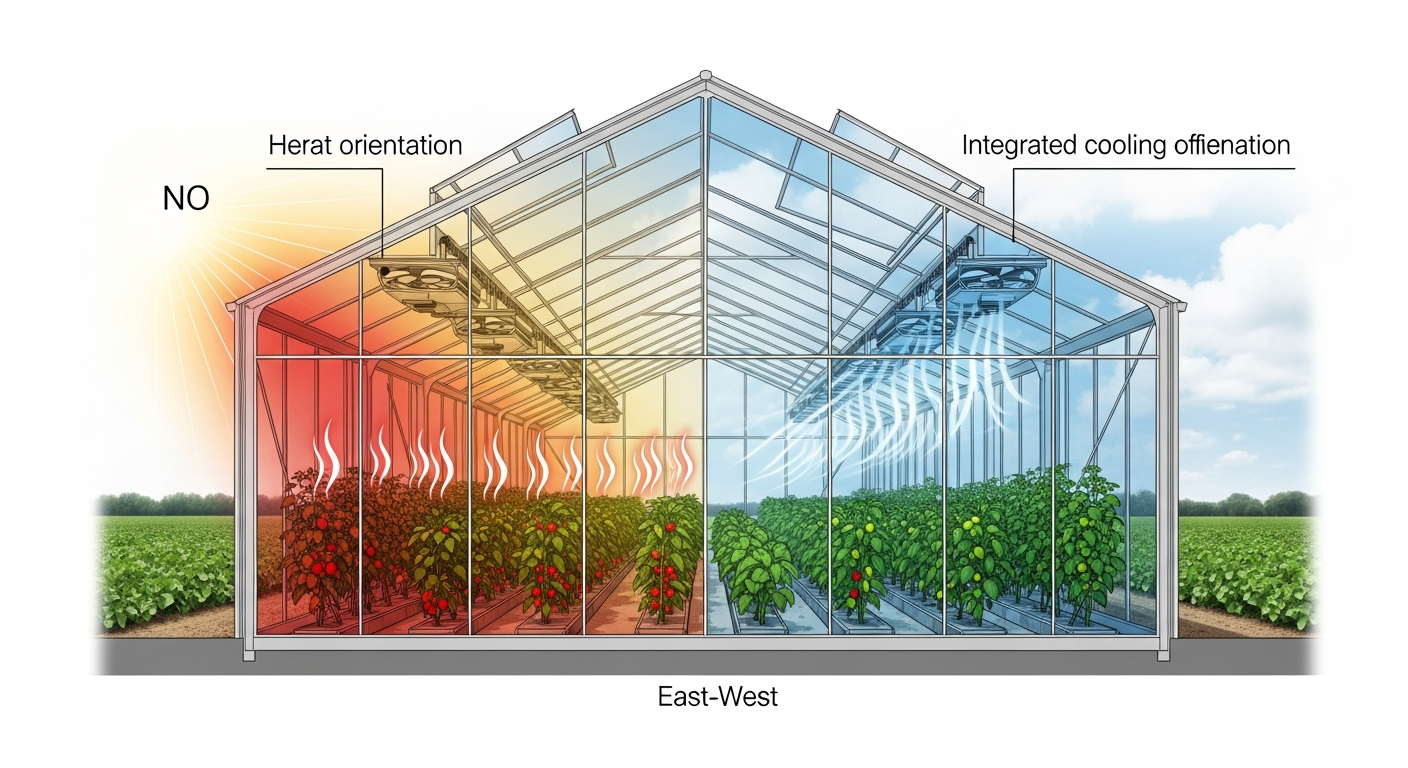
The amount of solar energy entering your greenhouse is directly influenced by its orientation relative to the sun’s path throughout the day and year. Different facades of the greenhouse will receive varying intensities and durations of direct sunlight. A wall or roof section that faces the sun directly during peak solar hours will absorb significantly more energy than one that is angled away. This difference in solar gain translates directly into the internal heat load your cooling systems must manage. Minimizing unwanted solar gain, especially on your longest walls during the hottest parts of the day, is paramount for efficient cooling. By strategically orienting your greenhouse, you can proactively reduce the amount of heat that needs to be removed, thereby saving energy and reducing wear on your cooling equipment.
East-West vs. North-South: Deciphering the Optimal Orientation
The two primary orientations for greenhouses are north-south and east-west, each presenting distinct advantages and disadvantages concerning solar gain and cooling efficiency. The best choice often depends on your specific climate, latitude, and growing goals.
North-South Orientation: The Traditional Choice
In a north-south orientation, the ridge of your greenhouse runs from north to south. This configuration ensures that the east and west walls receive direct sunlight during the morning and afternoon, respectively. The north wall receives minimal direct sun, and the south wall receives intense direct sun around midday, especially in winter.
- Pros for Cooling: This orientation generally offers a more even distribution of light throughout the day, which can be beneficial for consistent plant growth. More importantly for cooling, the long east and west walls receive intense, direct morning and afternoon sun. However, the south wall, while receiving strong direct sun, is often shorter, and its sun exposure can be managed with strategically placed vents or shading during the hottest part of the day. In many regions, this orientation allows for more diffuse light penetration overall during the high sun angles of summer, potentially reducing peak heat loads compared to an east-west setup with large south-facing walls.
- Cons for Cooling: The primary challenge comes from the intense direct sunlight striking the east and west walls for prolonged periods. Without adequate shading, these walls can contribute significantly to heat buildup. Furthermore, if your prevailing summer winds run east-west, aligning your vents effectively for natural cross-ventilation might be more challenging.
East-West Orientation: A Strategic Alternative
When oriented east-west, the greenhouse ridge runs from east to west. This means the long sides of the greenhouse face predominantly north and south.
- Pros for Cooling: For many growers, especially in warmer climates or at lower latitudes, an east-west orientation can be highly advantageous for cooling efficiency. The critical benefit is that the long south-facing wall receives the most direct sunlight during winter, maximizing passive solar heating when it’s desired. However, during the summer, when the sun is high in the sky, the direct solar radiation on this south wall is actually less intense compared to a north-south oriented greenhouse’s east/west walls. The low-angle morning and afternoon sun hits the shorter east and west end walls, which are easier to shade or vent. This can significantly reduce the overall heat load on the longest and most exposed surfaces during the hottest parts of the day, leading to lower cooling demands.
- Cons for Cooling: A potential drawback is the uneven light distribution. Plants on the east side will get strong morning sun, while those on the west side will experience intense afternoon sun. This might require specific plant placement or internal shading strategies to ensure uniform growth. If not properly managed, the south-facing wall can still accumulate substantial heat, especially if not adequately shaded or vented.
Beyond Cardinal Directions: Factors Influencing Your Choice
While the east-west versus north-south debate is central, several other critical factors must be considered when determining the optimal orientation for your greenhouse to maximize cooling efficiency.
Local Climate and Sun Path
Your geographical latitude and local climate play a pivotal role. In northern latitudes, maximizing winter sun often takes precedence, sometimes leading to an east-west orientation to capture more low-angle southern sun. In southern latitudes with intense summer heat, minimizing summer solar gain becomes paramount, which might also favor an east-west orientation to reduce direct sun on long walls during peak heat. Always consult local solar charts to understand the sun’s path throughout the year.
Prevailing Winds and Natural Ventilation
Natural ventilation is a cornerstone of passive cooling. Orienting your greenhouse to take advantage of prevailing summer winds can drastically improve airflow and heat dissipation. If your summer winds consistently blow from a certain direction (e.g., west to east), aligning your greenhouse so that its side vents can catch and funnel this breeze effectively can provide significant passive cooling, reducing the need for mechanical fans. Consider the layout of your property and any potential windbreaks.
Greenhouse Type and Glazing Materials
The design of your greenhouse itself matters. A lean-to greenhouse, for example, is almost always oriented to maximize light on its sloped face, usually south. The type of glazing also impacts solar gain; diffuse polycarbonate panels scatter light and can help reduce hot spots, while clear glass allows direct, intense sunlight. Low-e coatings can reflect specific wavelengths of radiation, reducing heat gain without sacrificing light.
Adjacent Structures and Shading
Look around your proposed greenhouse site. Are there existing buildings, fences, or mature trees that will cast shadows during certain times of the day or year? These can be either a blessing or a curse. Strategic shadows during peak summer heat can reduce solar gain, but unwanted winter shadows can hinder passive heating. Factor these permanent or semi-permanent shading elements into your orientation decision.
Planting Needs
Finally, consider what you intend to grow. High-light plants might thrive in an orientation that maximizes overall light, while shade-loving plants might require specific placement or additional internal shading, regardless of orientation. An orientation that provides more uniform light (like north-south) might be better for a diverse collection, while an east-west setup with more intense direct light on the south side might suit sun-loving crops.
Practical Strategies for Maximizing Cooling Efficiency Through Orientation
Once you’ve settled on the best orientation for your specific conditions, there are several practical strategies you can employ to further enhance cooling efficiency and maintain a stable internal climate.
- Thoughtful Siting Beyond Orientation: Beyond the cardinal directions, consider the microclimate of your chosen spot. Avoid placing your greenhouse in a heat trap, such as next to a large south-facing wall of a building that reflects intense heat. Instead, aim for a location with good air circulation and, if possible, natural wind channels that can aid ventilation.
- Strategic Shading Solutions: Regardless of orientation, some form of shading is almost always necessary in summer. For an east-west oriented greenhouse, external shade cloths or automated retractable shade systems on the south-facing wall are highly effective. For north-south orientations, paying attention to the east and west walls with roll-up shade covers or even deciduous trees that provide summer shade but allow winter sun can be beneficial. External shading is generally more effective than internal shading because it blocks the sun’s energy before it enters the greenhouse.
- Enhancing Natural Ventilation: Design your greenhouse with adequate vent openings, both at the ridge and along the side walls. For cooling efficiency, the total vent area should ideally be 15-20% of the greenhouse floor area. For greenhouses oriented to prevailing winds, ensure that side vents are positioned to capture incoming breezes and exhaust them effectively. Automatic vent openers, activated by temperature, are excellent for passive cooling, even when you’re not around.
- Glazing Choices for Heat Management: When selecting glazing, consider options that contribute to cooling. Diffuse glazing scatters light, reducing hot spots and sunburn on plants. Some modern glazings have low-emissivity (low-e) coatings or tinting that can reflect infrared radiation, significantly reducing heat gain without severely impacting visible light transmission.
- Complementary Cooling Systems: While orientation is a passive strategy, it works best in conjunction with active systems. Evaporative cooling (swamp coolers) is highly effective in dry climates. High-volume, low-speed (HVLS) fans can gently move air, reducing stratification and improving the efficiency of existing ventilation. Ensure your mechanical cooling systems are appropriately sized for the reduced heat load thanks to your smart orientation.
Conclusion
The impact of greenhouse orientation on cooling efficiency is profound, directly influencing your energy consumption, equipment lifespan, and the overall health and productivity of your plants. It’s a foundational decision that, when made thoughtfully, can unlock significant long-term benefits. By understanding the dynamics of solar gain, carefully weighing the advantages of north-south versus east-west orientations based on your local climate, and integrating a suite of practical cooling strategies, you can design a greenhouse that works smarter, not harder. A well-oriented greenhouse is a testament to sustainable cultivation, minimizing your environmental footprint while maximizing your growing success. Take the time to plan, observe, and optimize – your plants (and your wallet) will thank you.