
Step into any greenhouse, and the first thing you notice is the transparent skin that allows the magic of photosynthesis to happen. This skin, known as glazing, is far more than just a clear covering; it’s a critical component dictating the internal climate, particularly when it comes to managing heat. While we often focus on keeping greenhouses warm during colder months, the reverse — keeping them cool when the sun blazes – is equally, if not more, challenging and energy-intensive for many growers. The type of material chosen for your greenhouse’s exterior profoundly impacts how much heat enters and how much effort and energy you’ll need to expend to maintain optimal growing temperatures. Understanding this relationship is key to designing an energy-efficient and crop-friendly controlled environment.
Understanding Greenhouse Glazing: More Than Just a Window
At its core, greenhouse glazing refers to the transparent or translucent material used to cover the structure, allowing sunlight to penetrate while creating a controlled environment within. Its primary functions are multifaceted: maximizing light transmission for plant growth, retaining heat to extend growing seasons, and protecting crops from external weather conditions. However, the choice of glazing material has a direct and often dramatic influence on the greenhouse’s thermal performance, especially concerning heat gain and the subsequent need for cooling. Different materials possess unique properties regarding how they interact with solar radiation and ambient air temperatures, directly translating into varying cooling requirements. A material that insulates well might reduce heating costs in winter but also helps keep excess summer heat out, while a highly transmissive material might let in more light but also more heat.
Key Glazing Properties Affecting Cooling:
- Light Transmission: The percentage of available light that passes through the material. Higher transmission often means more solar energy entering, which translates to more heat.
- Thermal Insulation (U-value or R-value): Measures how well a material resists heat flow. A lower U-value (or higher R-value) indicates better insulation, meaning less heat transfer into (or out of) the greenhouse.
- Solar Heat Gain Coefficient (SHGC): The fraction of incident solar radiation that enters through the glazing. A lower SHGC means less solar heat gain, thus reducing cooling loads.
- Diffusion: The ability of a material to scatter light. Diffused light can penetrate deeper into the plant canopy, reduce hot spots, and potentially lower peak temperatures, though total heat gain is still a factor of SHGC.
Common Glazing Types and Their Cooling Implications
Let’s explore the most prevalent glazing materials and how their characteristics influence the cooling demands of your greenhouse.
Polyethylene Film (Poly Film)
Polyethylene film, often simply called “poly,” is the most common and cost-effective glazing option for many commercial and hobby greenhouses. It’s lightweight, easy to install, and provides good light transmission. However, its thermal performance is generally poor compared to rigid materials. Single-layer poly film offers minimal insulation, leading to high rates of heat gain during sunny periods. This means greenhouses covered with single-layer poly will typically require significant cooling efforts, often involving extensive ventilation, forced-air fans, and robust shading systems to prevent overheating.
- Cooling Impact: High heat gain, demanding aggressive active and passive cooling strategies.
- Practical Tip: Consider multi-layer poly films (e.g., double-layer inflated poly) which create an insulating air pocket, significantly reducing heat transfer and thus cooling requirements. Anti-condensate and IR-blocking additives can also help manage heat.
Polycarbonate
Polycarbonate panels are a popular choice for their durability, impact resistance, and good insulation properties, especially in multi-wall (twin-wall or triple-wall) configurations. Multi-wall polycarbonate features internal air channels that trap air, creating excellent thermal breaks. It also offers good light diffusion, scattering sunlight more evenly across the crop canopy, which can help prevent hot spots and reduce plant stress.
- Cooling Impact: Significantly lower heat gain than single-pane glass or single-layer poly due to superior insulation. Diffused light can also reduce peak temperatures. This translates to lower cooling requirements and reduced energy consumption for cooling systems.
- Practical Tip: Choose twin-wall or multi-wall polycarbonate (e.g., 6mm, 8mm, 10mm) for better insulation. The thicker the material and the more walls, the better the insulation, which directly reduces cooling loads. Look for UV protection to ensure longevity.
Glass (Horticultural, Tempered, Diffused, Double-Pane)
Glass has long been a traditional greenhouse glazing material, prized for its high clarity and longevity. However, its thermal performance varies widely depending on the type.
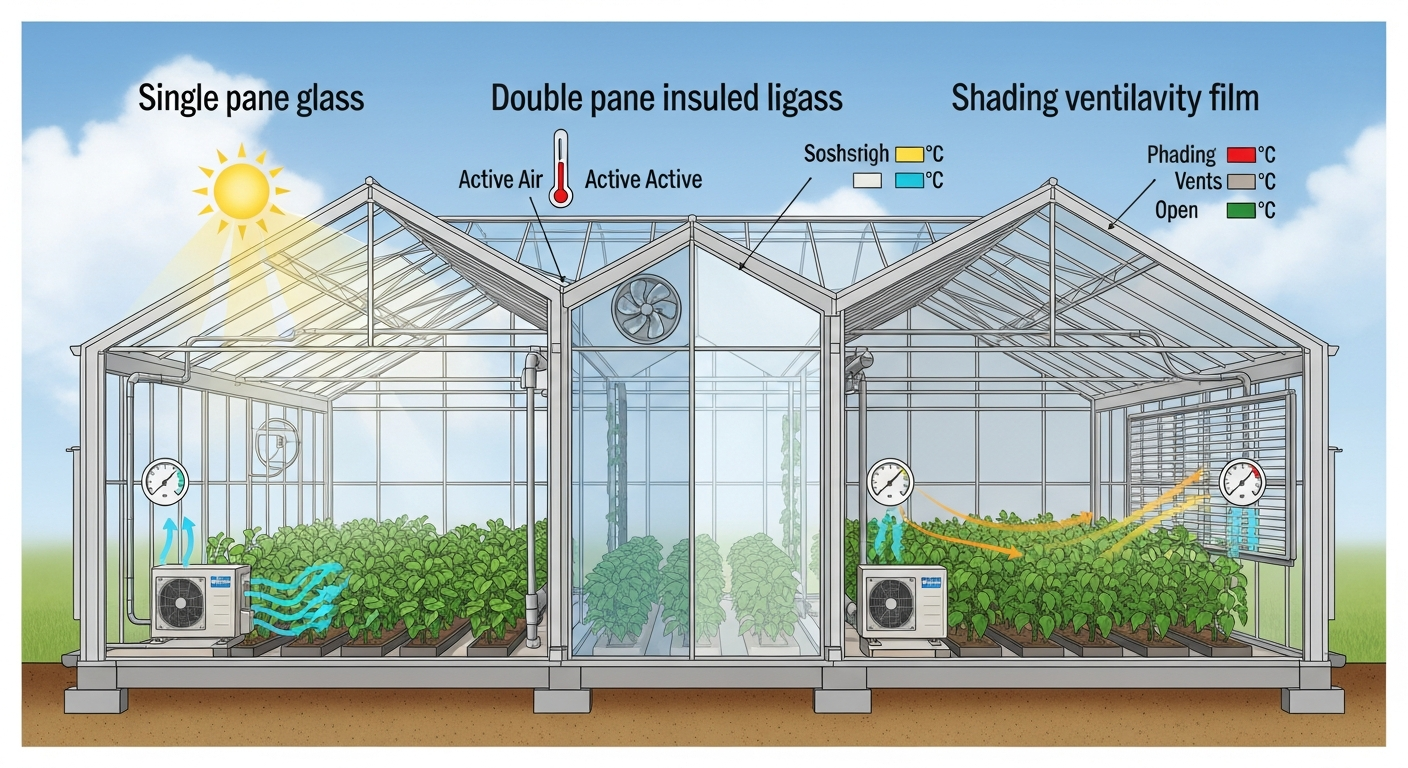
- Single-Pane Glass (Horticultural or Tempered): Offers excellent light transmission but very poor insulation. It’s a highly conductive material, meaning it readily transfers heat from outside to inside. This results in very high heat gain on sunny days, making single-pane glass greenhouses extremely challenging and costly to cool, often requiring heavy shading and powerful ventilation systems.
- Double-Pane Glass: Consists of two panes of glass separated by an air or inert gas space, creating an insulating barrier. This significantly reduces the U-value and improves thermal performance compared to single-pane glass.
- Diffused Glass: Whether single or double-pane, diffused glass features a textured surface that scatters incoming light. This helps distribute light more evenly, reduces direct sun intensity, and can slightly mitigate peak temperatures by preventing intense localized heating.
- Cooling Impact: Single-pane glass results in very high heat gain and significant cooling demands. Double-pane glass considerably lowers heat gain due to better insulation, reducing cooling requirements. Diffused glass can help spread heat, potentially reducing hot spots.
- Practical Tip: For glass greenhouses, investing in double-pane or low-emissivity glass is almost always more energy-efficient in the long run, drastically cutting both heating and cooling costs. External shading systems are often essential for glass greenhouses, especially in warmer climates.
How Glazing Properties Directly Influence Cooling Strategies
The interplay between glazing properties and cooling strategies is profound. A material with a high light transmission and poor insulation (like single-pane glass) will require a much more robust and energy-intensive cooling system than one with excellent insulation and diffused light (like multi-wall polycarbonate).
- High Light Transmission & SHGC: These necessitate increased shading, whether through shade cloths (internal or external), whitewash, or dynamic shading systems. They also demand higher capacity ventilation fans and potentially evaporative cooling systems (swamp coolers) to remove the accumulated heat efficiently.
- Poor Thermal Insulation: If the glazing doesn’t resist heat transfer effectively, external ambient heat will readily penetrate the greenhouse, especially when outside temperatures are high. This drives up the need for active cooling measures.
- Good Thermal Insulation (Low U-value/High R-value): Glazing with superior insulation helps prevent external heat from entering the structure, thereby reducing the workload on your cooling systems. This is particularly beneficial in climates with hot summers.
- Light Diffusion: While not directly reducing total heat gain, diffused light helps distribute the heat more evenly throughout the canopy, minimizing “hot spots” that can stress plants and sometimes allowing for slightly higher air temperatures before plants show signs of heat stress.
Therefore, when selecting glazing, it’s not just about the light for your plants; it’s about managing the energy balance. A smarter glazing choice can significantly reduce the size, operating cost, and complexity of your cooling infrastructure.
Practical Considerations for Optimal Glazing & Cooling
Choosing the right glazing is a strategic decision that balances upfront costs with long-term operational expenses and crop performance. Here are some key considerations:
- Your Climate Zone: In hot, sunny climates, prioritizing glazing with low SHGC and excellent thermal insulation (like multi-wall polycarbonate or double-pane low-E glass) is paramount to minimize cooling loads. In cooler climates, while heat retention is a focus, adequate cooling for peak summer days is still essential.
- Crop Specific Needs: High-light crops (e.g., tomatoes, peppers) may benefit from high light transmission, but you must then pair this with robust cooling and shading strategies. Shade-loving plants will thrive under diffused light or require heavy shading even with less transmissive glazing.
- Budget vs. Energy Savings: Higher quality, more insulating glazing often comes with a higher initial cost. However, the long-term savings in energy for heating and, crucially, cooling can make it a wise investment, leading to a quicker return on investment (ROI). Consider the operational costs over the lifespan of your greenhouse.
- Maintenance & Longevity: Glazing materials have different lifespans and maintenance requirements. Keeping glazing clean is vital, as dirt and grime reduce light transmission and can lead to uneven heating, impacting cooling efficiency.
- Integrating Cooling Systems: Your glazing choice should always be made in conjunction with your planned cooling systems. A well-insulated greenhouse might thrive with natural ventilation and minimal fan assistance, while a less insulated one might demand powerful exhaust fans, louvers, and evaporative coolers.
Conclusion: Making an Informed Choice for a Cooler Greenhouse
The type of glazing you choose for your greenhouse is arguably one of the most impactful decisions you’ll make regarding its climate control capabilities, especially concerning cooling requirements. From the high heat gain of single-layer poly film and single-pane glass to the superior insulation and diffused light benefits of multi-wall polycarbonate and double-pane glass, each material presents a unique set of challenges and advantages. By understanding the critical properties of light transmission, thermal insulation, and solar heat gain coefficient, you can make an informed choice that not only suits your budget and crop needs but also drastically reduces your energy consumption for cooling. A thoughtful glazing selection is the first and most critical step towards achieving an energy-efficient, optimally cooled, and thriving greenhouse environment for your plants.