
In the dynamic world of commercial greenhouse cultivation, maintaining precise environmental control is not merely a luxury; it’s the bedrock of profitability and crop success. From delicate ornamentals to high-value food crops, plants thrive within specific temperature and humidity ranges. However, the sun’s relentless energy, especially across large structures, can quickly turn a productive environment into a detrimental oven. This is where the simple yet incredibly effective pad and fan system emerges as a cornerstone solution, offering commercial growers a robust, energy-efficient, and highly scalable method for climate management. Let’s delve into the multifaceted benefits that make this system indispensable for modern greenhouse operations.
Understanding the Pad and Fan System: How Evaporative Cooling Works
At its heart, the pad and fan system harnesses the power of evaporative cooling, a natural phenomenon where the evaporation of water absorbs heat from the surrounding air. This principle is elegantly applied to create an optimal growing environment within large-scale greenhouses.
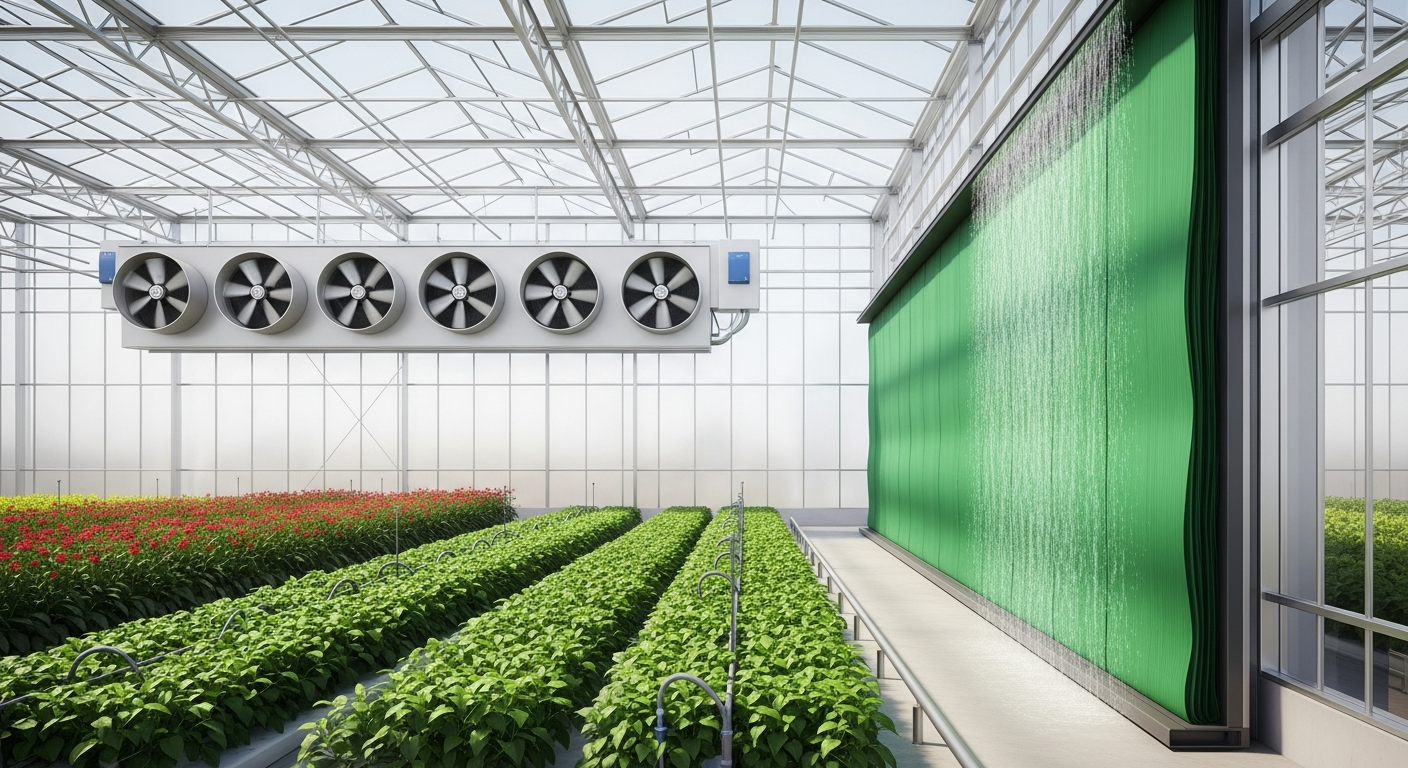
The system typically consists of two main components positioned at opposite ends of the greenhouse:
- Wet Pads: These are specialized cellulose or aspen fiber pads, often corrugated, designed to hold and distribute water evenly. They are installed along one wall of the greenhouse.
- Exhaust Fans: Powerful industrial-grade fans are installed on the opposite wall, designed to pull air through the greenhouse.
The operational process is straightforward yet highly effective:
- A water recirculation system continuously wets the pads at the intake end.
- As the exhaust fans draw hot, dry air from outside (or from inside the greenhouse) through these saturated pads, the water on the pad surface evaporates.
- During evaporation, latent heat is absorbed from the air, causing the air temperature to drop significantly.
- This now cooler, more humid air is drawn across the entire length of the greenhouse, replacing the warmer air.
- The fans then exhaust the warmer, spent air out, creating a continuous cycle of fresh, cool air movement.
This ingenious method allows for significant temperature reduction, often by 10-20°F (5-11°C) or more, depending on external humidity levels, making it particularly effective in arid and semi-arid climates.
Superior Temperature Regulation for Optimal Crop Growth
Maintaining a stable and appropriate temperature is paramount for plant physiological processes. The pad and fan system excels at delivering consistent greenhouse cooling and temperature regulation across vast commercial spaces, preventing the detrimental effects of heat stress.
- Preventing Heat Stress: High temperatures can severely inhibit photosynthesis, leading to reduced growth, wilting, blossom drop, and poor fruit set. Excessive heat can also increase a plant’s susceptibility to pests and diseases. Pad and fan systems effectively mitigate these risks by keeping temperatures within the plants’ optimal range.
- Promoting Photosynthesis and Respiration: Every crop has an ideal temperature window for crucial metabolic activities. By precisely controlling the internal climate, growers ensure that plants can efficiently convert light energy into chemical energy and respire effectively, leading to robust growth and higher yields.
- Uniform Cooling Distribution: Unlike spot cooling methods, a well-designed pad and fan system ensures a relatively uniform temperature gradient from one end of the greenhouse to the other. This consistency is vital for large commercial operations where crop uniformity and predictable harvesting schedules are essential.
- Adaptability to Crop Needs: The system can be integrated with thermostats and environmental controllers, allowing growers to set specific temperature targets. This adaptability supports a diverse range of crops, each with unique thermal requirements.
Practical Tip: For extremely large greenhouses, consider implementing multiple zones or incorporating horizontal airflow (HAF) fans in conjunction with your pad and fan system to further enhance air circulation and minimize temperature stratification, ensuring every plant receives optimal conditions.
Enhanced Energy Efficiency and Significant Cost Savings
One of the most compelling advantages of the pad and fan system for commercial greenhouse operations is its remarkable energy efficiency compared to conventional refrigeration-based air conditioning units.
- Lower Operating Costs: Evaporative cooling primarily uses electricity to run fans and a small water pump. In contrast, compressor-based air conditioning units consume vast amounts of electricity to power their compressors and refrigerants. This difference translates into significantly lower monthly energy bills for growers.
- Reduced Peak Demand Charges: Many utility companies impose higher charges during peak electricity demand periods. Since pad and fan systems operate with lower power requirements, they help mitigate these costly peak charges, contributing to overall cost-effective cooling.
- Simpler Maintenance: These systems have fewer complex mechanical parts than traditional AC units. Maintenance typically involves cleaning pads, checking water lines, and fan motor upkeep, which is generally less frequent and less expensive.
- Sustainable Operation: Beyond economic benefits, the lower energy consumption of pad and fan systems contributes to a smaller carbon footprint, aligning with sustainable agricultural practices. They also avoid the use of harmful refrigerants.
Practical Tip: Optimize your system’s efficiency by regularly cleaning the cooling pads to prevent mineral buildup, which can reduce airflow and evaporation efficiency. Consider installing a variable speed drive (VSD) on your fans to adjust airflow precisely based on temperature demands, further saving energy.
Optimizing Humidity Levels for Plant Health
Beyond cooling, the pad and fan system plays a crucial role in humidity control, which is another critical factor for achieving optimal growing conditions and robust plant health.
- Preventing Desiccation: In hot, dry climates, low humidity can lead to excessive transpiration, causing plants to lose water faster than their roots can absorb it. This stress can result in wilting, leaf scorching, and reduced growth. The added humidity from the evaporative cooling process helps maintain a healthy atmospheric moisture content around the plants.
- Enhancing Nutrient Uptake: Proper humidity levels support efficient transpiration, which is the driving force behind water and nutrient movement from the roots to the leaves. When humidity is too low, stomata may close, hindering nutrient absorption.
- Supporting Specific Crops: Many tropical and sub-tropical crops, such as orchids, ferns, and certain vegetables, thrive in elevated humidity. The pad and fan system naturally creates this environment, making it ideal for their cultivation.
- Balancing Act: While increasing humidity is beneficial in dry conditions, growers must also be mindful of avoiding excessively high humidity, which can promote fungal diseases like botrytis or powdery mildew. The constant airflow provided by the fans helps prevent stagnant, overly humid pockets of air, balancing this risk.
Practical Tip: Integrate hygrometers and smart environmental controls that can activate exhaust fans or modulate water flow to the pads based on real-time humidity readings. This allows for precise control, preventing both overly dry and overly damp conditions, which is crucial for disease prevention.
Versatility, Scalability, and Overall Greenhouse Climate Management
The widespread adoption of pad and fan systems in commercial horticulture speaks to their remarkable versatility and ability to integrate seamlessly into diverse greenhouse operations.
- Adaptability to Greenhouse Design: Whether you operate gutter-connect, arch, or free-standing greenhouses, pad and fan systems can be custom-designed and installed to suit the specific layout and dimensions. They are effective in both large multi-acre facilities and smaller commercial units.
- Scalability for Growth: As a commercial operation expands, adding more cooling capacity is straightforward. Growers can easily extend existing pad walls or add more fan units to accommodate new greenhouse sections without overhauling the entire climate control infrastructure.
- Enhanced Ventilation and Air Circulation: Beyond mere cooling, the continuous operation of the exhaust fans ensures excellent ventilation. This constant air exchange removes stale, CO2-depleted air and introduces fresh air, which is vital for photosynthesis and preventing the buildup of ethylene or other harmful gases. Good air movement also helps strengthen plant stems and reduce disease pressure.
- Integration with Other Systems: Pad and fan systems work synergistically with other climate control tools like shade cloths, automated vents, and supplemental heating systems, forming a comprehensive greenhouse climate management strategy. For example, shade cloths can reduce the cooling load on the pad and fan system, further enhancing energy efficiency.
- Ease of Installation and Operation: Compared to more complex HVAC systems, pad and fan installations are relatively simple. Their operation is also intuitive, often managed by basic thermostats or sophisticated environmental computers.
Practical Tip: For maximum benefit, regularly check and calibrate your greenhouse climate sensors (temperature, humidity, CO2) to ensure accurate data for your control system. Also, inspect fan belts and motors annually to prevent unexpected breakdowns during critical cooling periods.
Conclusion: A Cornerstone of Modern Commercial Greenhouse Climate Control
The pad and fan system stands as a proven, reliable, and highly beneficial solution for commercial greenhouse cooling and climate control. Its ability to provide superior temperature regulation, optimize humidity, and deliver significant energy savings makes it an indispensable tool for growers aiming for high crop yield and superior quality. By leveraging the natural process of evaporative cooling, these systems create a stable, productive, and cost-effective environment, ensuring that commercial greenhouse operations can thrive even under challenging climatic conditions. Investing in a well-designed and maintained pad and fan system is not just about keeping plants cool; it’s about investing in the long-term health, productivity, and profitability of your greenhouse business.