
The relentless summer sun, while essential for plant growth, can quickly turn your carefully cultivated greenhouse into an oven. Managing extreme temperatures and intense light is a perennial challenge for greenhouse growers, often leading to heat stress, scorched plants, and reduced yields. While traditional shade cloths offer a degree of relief by blocking sunlight, an innovative solution is gaining significant traction for its nuanced approach to light management and superior cooling benefits: light-diffusing films. These advanced materials don’t just block light; they transform it, offering a smarter, more effective way to maintain optimal growing conditions and significantly enhance your greenhouse cooling strategy.
Beyond Shade: How Light-Diffusing Films Work Their Magic
To truly appreciate the benefits of light-diffusing films, it’s crucial to understand how they differ from conventional shading methods. Traditional shade cloths reduce the amount of light entering the greenhouse by absorbing or reflecting a percentage of solar radiation. While effective at lowering overall light intensity, they often cast sharp shadows and create uneven light distribution, which can still lead to localized hotspots and uneven plant growth.
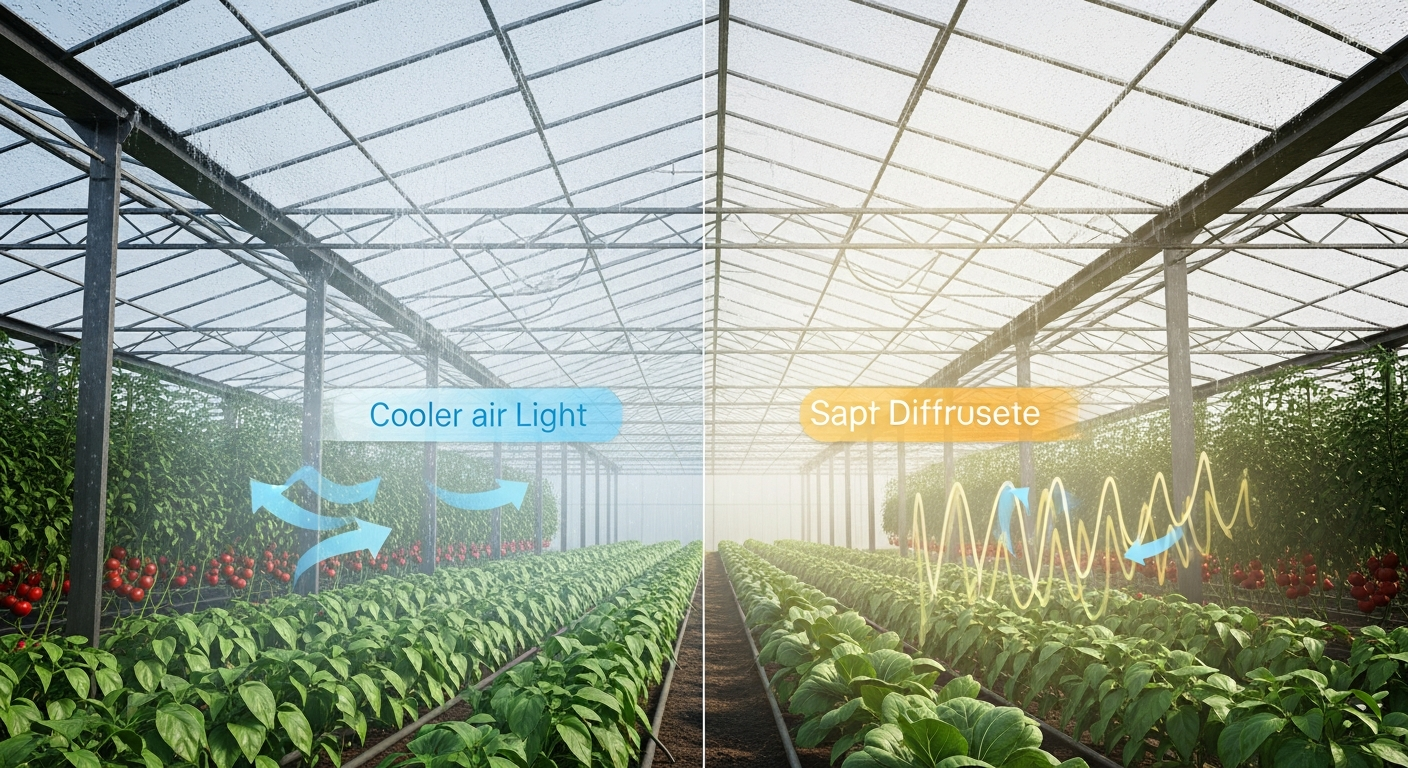
Light-diffusing films operate on a different principle. Instead of merely blocking direct sunlight, they scatter it. Imagine a direct beam of sunlight hitting a prism; it breaks the single beam into multiple, weaker rays that disperse in various directions. Light-diffusing films achieve a similar effect using microscopic particles, additives, or surface textures embedded within the film material. When direct solar radiation strikes the film, it is refracted and reflected numerous times, transforming harsh, direct light into soft, pervasive, and highly uniform diffused light.
This scattering effect ensures that light reaches plants from multiple angles, penetrating deeper into the plant canopy. Every part of the plant, even the lower leaves typically shrouded in shadow, receives usable light. This uniform light distribution is the cornerstone of their cooling benefits and overall plant health advantages.
The Direct Cooling Impact: Reducing Heat Load and Plant Stress
One of the most immediate and impactful benefits of light-diffusing films is their contribution to greenhouse cooling. Intense, direct sunlight delivers a substantial amount of radiant heat directly to plant leaves and greenhouse surfaces. When this energy is absorbed, it significantly increases leaf temperature and, consequently, the ambient air temperature within the greenhouse. This leads to several issues:
- Reduced Leaf Temperature: By scattering direct sunlight, diffused films prevent concentrated energy from hitting specific leaf surfaces. This drastically lowers leaf temperatures, reducing the need for plants to cool themselves through excessive transpiration (evaporating water). Less transpiration means less water stress for the plant.
- Fewer Hotspots: Direct sunlight creates “hotspots” where light intensity and temperature are significantly higher. Diffused light eliminates these hotspots, ensuring a more even temperature profile throughout the growing area. This uniformity is vital for sensitive crops and consistent growth.
- Lower Overall Greenhouse Temperature: With less direct radiant heat being absorbed by plants and structural elements, the overall heat load within the greenhouse is reduced. This directly translates to a lower ambient temperature, making it easier for your existing cooling systems (fans, vents, evaporative coolers) to maintain optimal conditions.
- Improved Ventilation Efficiency: When the heat load is lower, your ventilation systems don’t have to work as hard or as often. This can lead to increased efficiency and less strain on equipment.
In essence, light-diffusing films act as a proactive measure against heat buildup. By managing the quality of light entering your greenhouse, you are directly mitigating one of the primary sources of internal heat, leading to more stable and comfortable growing environments.
Optimizing Plant Health, Growth, and Yield
While the cooling benefits are significant, the impact of light-diffusing films on plant health and productivity is equally compelling. The transformation of direct light into diffused light unlocks a range of physiological advantages for your crops:
- Reduced Plant Stress: Plants under direct, intense sunlight often exhibit signs of stress, such as wilting, leaf scorching, or photoinhibition (where too much light damages the photosynthetic apparatus). Diffused light significantly reduces these stressors, allowing plants to photosynthesize more efficiently without protective mechanisms that hinder growth.
- Enhanced Photosynthesis: With light penetrating deeper into the canopy, a greater number of leaves are actively engaged in photosynthesis. This means the entire plant contributes more effectively to energy production, leading to faster growth rates and increased biomass accumulation. Research consistently shows that plants under diffused light exhibit higher photosynthetic rates compared to those under direct light, even at the same overall light intensity.
- More Uniform Growth: The even light distribution ensures that all plants, regardless of their position within the greenhouse or their height within the canopy, receive adequate, usable light. This leads to more consistent plant development, uniform fruit ripening, and a higher percentage of marketable produce.
- Improved Crop Quality and Yield: Healthier, less stressed plants often translate to higher yields and superior crop quality. This can manifest as larger fruits, better color, improved texture, and enhanced nutritional content. For many growers, this directly impacts profitability.
- Adaptability to High Light Crops: For crops that typically thrive in high light but are susceptible to scorching (like some varieties of tomatoes, peppers, or flowers), diffused films allow you to provide the necessary light intensity without the detrimental effects of direct radiation.
The combination of reduced heat stress and optimized light utilization creates an environment where plants can truly flourish, leading to a more robust and productive greenhouse operation.
Practical Advantages and Energy Savings
Beyond the direct benefits to cooling and plant health, light-diffusing films offer several practical advantages that contribute to the overall efficiency and sustainability of your greenhouse:
- Energy Efficiency: By lowering the overall heat load, light-diffusing films reduce the demand on active cooling systems like fans and evaporative coolers. This means less electricity consumption and significant energy savings, especially during peak summer months. Over time, these savings can offset the initial investment in the films.
- Durability and Longevity: Modern light-diffusing films are engineered for durability. They are typically UV-stabilized to resist degradation from sunlight and designed to withstand environmental factors, offering several years of effective performance.
- Ease of Integration: These films can be incorporated into various greenhouse structures, whether as a primary glazing material, an internal screen, or an overlay for existing coverings. This flexibility allows growers to choose the best application for their specific needs and budget.
- Reduced Water Use: With less plant stress from heat, plants require less water to cool themselves through transpiration. This can lead to a reduction in irrigation needs, conserving a precious resource and further contributing to operational savings.
Choosing the Right Light-Diffusing Film
When considering light-diffusing films for your greenhouse, several factors should guide your selection:
- Diffusion Percentage: Films vary in their diffusion percentage, typically ranging from 20% to 80%. A higher percentage means more light scattering. The ideal percentage depends on your crop type, climate, and existing light levels.
- Light Transmission: While diffusing light, films also have a specific total light transmission percentage. You want a film that diffuses effectively without sacrificing too much overall light, especially if growing light-hungry crops.
- UV Stability: Ensure the film is highly UV-stabilized to guarantee longevity and consistent performance.
- Infrared (IR) Blocking Properties: Some films also incorporate IR-blocking additives, which further reduce heat gain, providing an additional layer of thermal management.
- Application Method: Decide whether you need a film for the roof, side walls, or as an internal thermal screen. Different products are designed for different applications.
Consulting with reputable suppliers and reviewing product specifications will help you select the optimal light-diffusing film for your specific greenhouse environment and crops.
Conclusion
Managing the delicate balance of light and temperature is paramount for a successful greenhouse operation. While traditional methods have their place, light-diffusing films represent a significant leap forward in greenhouse climate control. By transforming harsh direct sunlight into beneficial diffused light, these films offer a powerful combination of enhanced greenhouse cooling, reduced plant stress, improved photosynthetic efficiency, and ultimately, higher quality and yields. They are more than just a cooling solution; they are an investment in the overall health, productivity, and energy efficiency of your greenhouse, paving the way for a more sustainable and profitable future.