
As the vibrant growing season wanes and the chill of winter approaches, greenhouse enthusiasts in cold climates face a critical task: protecting their invaluable automated watering systems. These sophisticated setups are a significant investment, designed to provide consistent, precise hydration for your plants, but they are also highly vulnerable to the destructive power of freezing temperatures. Ignoring proper winterization can lead to costly repairs, system downtime, and potential damage to your greenhouse infrastructure. This comprehensive guide from Greenhouse Climates will walk you through the essential techniques to prepare your automated watering system for the harshest winter, ensuring its longevity and readiness for the next growing cycle.
Why Winterizing Your Automated System is Crucial
The primary threat to any watering system in cold climates is the expansion of water as it freezes. When water turns to ice, its volume increases by about 9%, creating immense pressure within confined spaces. This pressure can cause catastrophic damage, even to robust plumbing materials. For an automated greenhouse watering system, the risks are manifold:
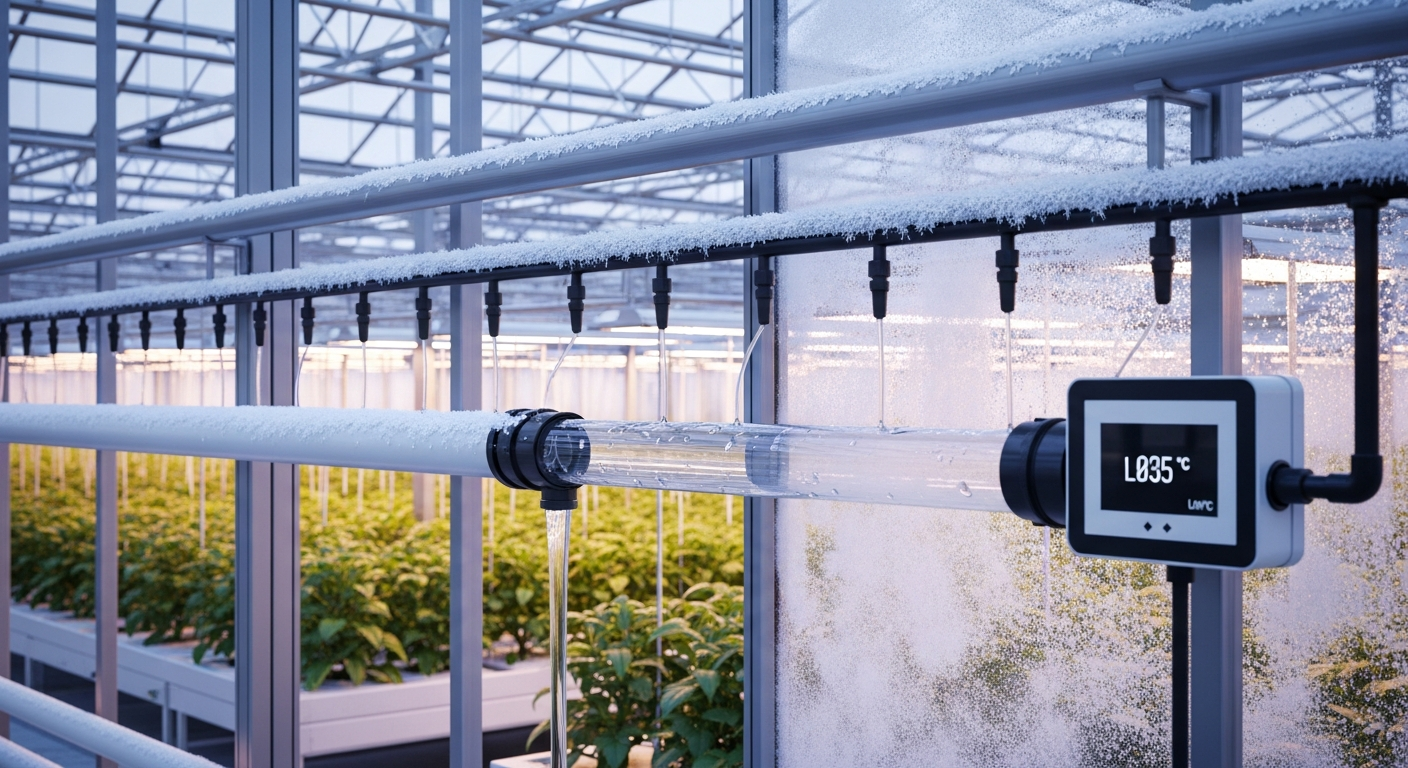
- Burst Pipes and Hoses: The most common and visually obvious damage. Frozen water can rupture PVC, PEX, poly pipes, and even reinforced hoses, leading to leaks, flooding, and significant water waste when the system is reactivated.
- Cracked Valves and Fittings: Delicate components like solenoid valves, check valves, backflow preventers, and various fittings are particularly susceptible. Internal mechanisms can be warped or shattered, rendering them inoperable.
- Damaged Pumps: If water freezes inside the pump housing, impellers, seals, and the pump casing itself can be severely damaged, often requiring expensive replacement.
- Compromised Controllers and Sensors: While not directly affected by freezing water, extreme cold can impact electronic components, and water freezing in connected lines can exert pressure on transducers or sensor probes, leading to malfunctions.
- Costly Repairs and Downtime: The expense of replacing damaged components, combined with the labor involved, can quickly add up. Furthermore, a non-functional system means your plants could go without proper hydration, especially during unexpected warm spells, or delay your spring planting schedule.
Proactive winterization is not merely a recommendation; it’s an essential preventative maintenance step that safeguards your investment and provides peace of mind throughout the colder months.
Essential Pre-Winter Checks and Preparation
Before you begin the process of draining and securing your automated watering system, a thorough inspection and some preliminary tasks will make the entire winterization process smoother and more effective. Think of this as your system’s annual health check-up.
- Inspect for Leaks: While the system is still pressurized, carefully walk through all your watering zones. Look for any drips, puddles, or signs of moisture around connections, emitters, and pipes. Addressing minor leaks now is easier than discovering them during spring startup.
- Clean Filters and Emitters: Over time, sediment and mineral deposits can accumulate in filters and emitter nozzles. Clean or replace clogged filters. For drip emitters and sprayers, consider flushing your lines using a manual flush cycle or by opening end caps to clear any debris. This ensures optimal flow when you restart the system and prevents particulates from freezing within tight spaces.
- Document Your System: If you don’t already have one, consider drawing a simple diagram of your system, noting the location of main shut-off valves, zone valves, drain points, and significant components like backflow preventers and pressure regulators. This will be invaluable for both winterization and spring reassembly.
- Gather Your Tools: Have everything you need on hand: wrenches, screwdrivers, a compressor (if using the blow-out method), safety glasses, an air nozzle, and possibly some insulation materials.
Step-by-Step Drainage and Drying Techniques
The core of winterizing your automated watering system lies in removing every last drop of water. This can be achieved through a combination of gravity drainage and the use of compressed air.
1. Shut Off the Main Water Supply
This is the absolute first step. Locate the main shut-off valve for your greenhouse watering system and turn it completely off. If your system draws water directly from a well, ensure the well pump is de-energized. This prevents any new water from entering the system during the drainage process.
2. Depressurize the System
After shutting off the water, open a faucet or a valve at the highest point in your system. This will release any residual pressure. You can also run a manual watering cycle on your controller for a minute or two (with the main water off) to help release pressure and begin pushing some water out.
3. Drain All Water from Pipes and Components
This is where the real work begins. Your goal is to get all water out, particularly from horizontal pipes and low points where water naturally collects.
- Gravity Drainage:
- Locate all drain valves at the lowest points of each watering zone and open them fully.
- For systems designed with a slight slope, gravity will do much of the work. Allow ample time for the water to trickle out.
- Open any test cocks on backflow preventers to ensure they also drain completely.
- Manually open end caps on drip lines or sprinkler heads to facilitate drainage.
- The Compressed Air Blow-Out Method:
This is the most effective and often necessary method for automated systems, especially those with complex layouts or minimal natural slopes. It ensures that water is forced out of every nook and cranny.
- Connect Your Compressor: Attach an air compressor to an appropriate access point in your system, typically a dedicated blow-out port, or after the backflow preventer. Ensure your compressor has a regulator to control air pressure.
- Safety First: Always wear safety glasses when using compressed air. Ensure no one is in the immediate vicinity of open valves or emitters, as water and debris can spray out forcefully.
- Regulate Pressure: Set your compressor’s pressure regulator to a safe level for your piping. For most PVC or poly irrigation systems, do not exceed 30-50 PSI. Higher pressures can damage pipes, fittings, and internal valve components.
- Blow Out Zone by Zone:
- Start with the zone furthest from your compressor connection point.
- Open only one zone valve on your controller or manually.
- Gradually introduce compressed air into the system. You will see water and mist coming out of the emitters and sprayers in that zone.
- Continue blowing air until only mist, then dry air, is visible. This indicates the water has been expelled.
- Close that zone’s valve and repeat the process for the next zone, working your way back towards the compressor.
- Address Main Lines and Critical Components: Even after blowing out zones, ensure that main supply lines, backflow preventers, solenoid valves, and pressure regulators are thoroughly blown dry. Open solenoid valves manually or cycle them with the controller while blowing air to ensure water trapped within their mechanisms is expelled.
Protecting Components and Storage
Once your lines are clear of water, attention shifts to protecting the various components of your automated system.
- Controllers and Timers:
- For indoor controllers, disconnect them from power. Remove any batteries to prevent corrosion.
- For outdoor or greenhouse-located controllers, consider removing them entirely and storing them in a dry, temperature-stable environment indoors. This protects sensitive electronics from extreme cold and condensation.
- Sensors:
- Moisture sensors, temperature sensors, and rain sensors should be carefully cleaned, disconnected, and stored indoors. Ensure probes are dry before storage.
- Pumps:
- If your pump is portable, drain all water from its casing and disconnect it. Store it in a heated, dry location.
- For fixed pumps, ensure all drain plugs are removed and the pump casing is completely empty. Some greenhouse operators may use a non-toxic, RV-grade anti-freeze solution specifically designed for potable water systems in the pump casing (after draining as much as possible) to prevent any residual water from freezing, but ensure it’s suitable for your pump type and won’t come into contact with your plants or growing medium.
- Solenoid Valves: These are often integral to your manifold. Ensure they are completely drained or blown out as part of the main system drainage. If any are easily detachable, consider removing and storing them indoors, especially if they are particularly exposed.
- Backflow Preventers: These critical safety devices must be drained thoroughly. Open any test cocks, and if feasible and recommended by the manufacturer, remove and store them indoors. If left in place, ensure they are fully drained and consider wrapping them with insulation.
- Exposed Piping and Manifolds: While drainage is the primary defense, any exposed pipes or manifold sections that might still retain trace amounts of water, or which are particularly vulnerable to extreme cold, can be wrapped with foam pipe insulation sleeves. This offers an extra layer of protection.
Post-Winterization Maintenance and Spring Startup Tips
Even after winterization is complete, there are a few final steps and considerations:
- Labeling: If you removed any components, label them clearly for easy reinstallation in the spring.
- Documentation: Make a note of the date you winterized, any issues you encountered, and any parts that might need replacement in the spring.
- Spring Preparation: When spring arrives, reverse the process carefully. Reinstall all components, close all drain valves, and gradually repressurize the system. Inspect thoroughly for any new leaks, clean filters again, and recalibrate your controllers and sensors. Run a test cycle to ensure everything is functioning correctly before the growing season begins in earnest.
Conclusion
Winterizing your automated watering system in a cold climate might seem like a daunting task, but it is an indispensable part of greenhouse management. By following these comprehensive techniques – meticulously draining water, employing the blow-out method, and protecting sensitive components – you are not just preventing immediate damage; you are extending the lifespan of your entire system. This diligent preparation ensures that when spring returns, your automated watering system will be ready to perform flawlessly, providing the precise hydration your greenhouse plants need for another season of thriving growth. Protect your investment, embrace the chill, and look forward to a vibrant growing season ahead with peace of mind.