
In the intricate world of greenhouse cultivation, every element is interconnected, forming a delicate ecosystem that influences plant health and yield. While much attention is often given to ambient air temperature, relative humidity, and light, the crucial role of what lies beneath – your plant’s substrate and its moisture levels – is frequently underestimated. The way you manage water in your growing media doesn’t just affect root health; it profoundly impacts the entire atmosphere of your greenhouse. Understanding this dynamic relationship is key to unlocking superior climate control, preventing disease, and optimizing plant growth. Let’s delve into how substrate moisture management directly shapes the air your plants breathe.
The Evaporation-Transpiration Connection: How Substrate Moisture Shapes Your Air
The air inside your greenhouse is a direct reflection of the processes happening at the plant level, particularly those involving water. Two primary mechanisms contribute to the humidity in your growing environment: evaporation and transpiration.
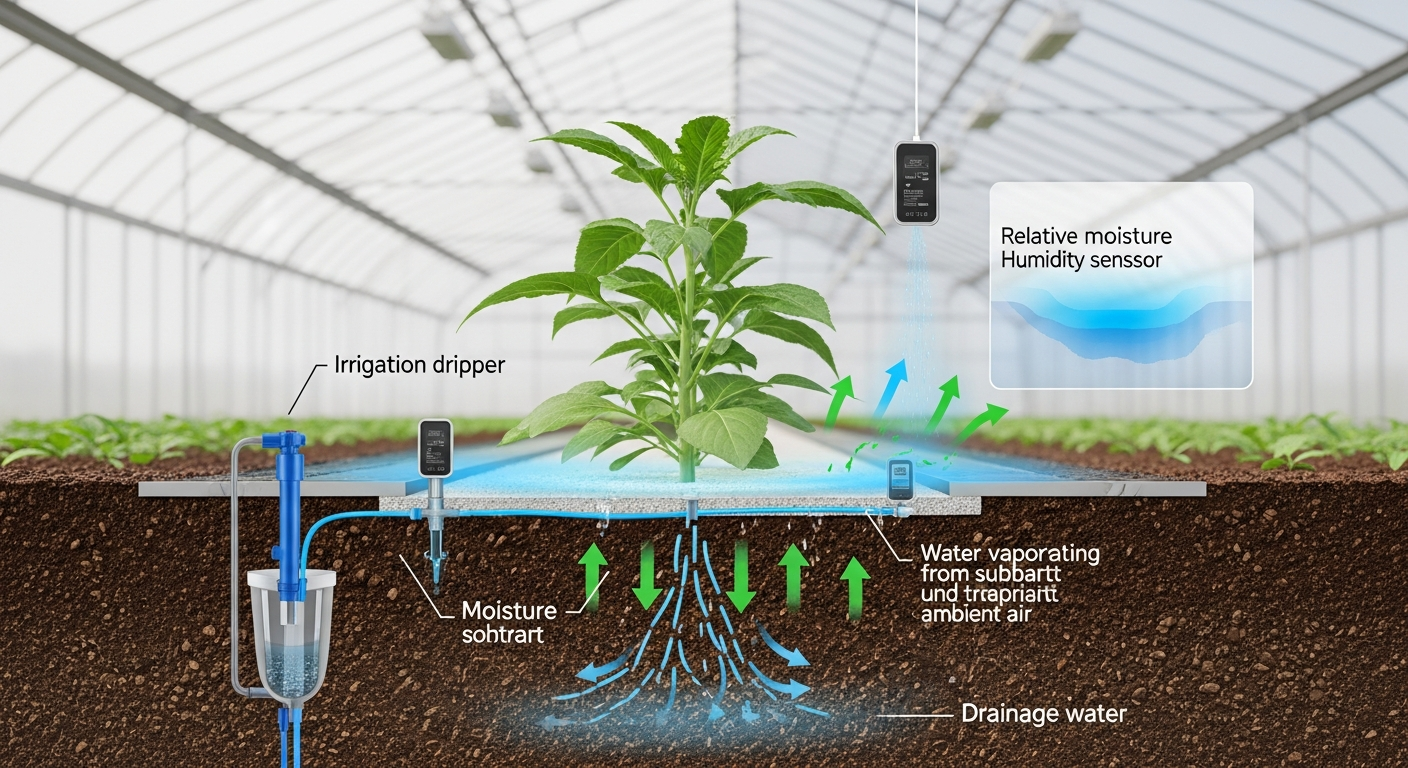
Evaporation from the Substrate Surface
Water held within your substrate doesn’t just sit there; a significant portion of it slowly evaporates from the surface of the growing media. This process is accelerated by warmer temperatures, good airflow over the substrate, and the exposed surface area of the pots or beds. The more frequently and generously you water, and the longer the substrate stays saturated, the more water vapor is released into the ambient air, directly increasing the relative humidity (RH) within your greenhouse.
Transpiration from the Plants
Beyond the substrate, plants themselves are major contributors to air humidity through transpiration. This is the process where plants absorb water through their roots, transport it up to their leaves, and then release water vapor through tiny pores called stomata. The rate of transpiration is influenced by several factors:
- Substrate Moisture Content: If the substrate is too dry, plants experience water stress and reduce transpiration to conserve water. If it’s optimally moist, they transpire efficiently. Overwatering, paradoxically, can also hinder transpiration by suffocating roots and impeding water uptake.
- Air Temperature: Higher air temperatures increase the plant’s metabolic rate and demand for water, leading to increased transpiration.
- Relative Humidity: When the air is very humid, the concentration gradient for water vapor between the leaf and the air is reduced, slowing down transpiration. Conversely, dry air promotes higher transpiration rates.
- Airflow: Good airflow helps move humid air away from the leaf surface, maintaining the concentration gradient and promoting further transpiration.
- Light Intensity: Plants generally open their stomata wider in the presence of light to take in CO2 for photosynthesis, leading to higher transpiration.
Together, evaporation from the substrate and transpiration from the plants are the primary drivers of ambient humidity. A wet substrate and actively transpiring plants combine to elevate overall humidity levels, directly impacting your greenhouse climate and crucial metrics like Vapor Pressure Deficit (VPD).
Beyond Humidity: Temperature, Disease, and Energy Implications
The influence of substrate moisture extends far beyond just adding water vapor to the air. It has cascading effects on temperature, disease susceptibility, and even your greenhouse’s energy consumption.
The Evaporative Cooling Effect
Just as sweating cools the human body, the evaporation of water from your substrate and the transpiration from your plants consume energy (latent heat) from the surrounding environment. This process has a direct cooling effect on the greenhouse air. While this can be beneficial in hot climates to help manage temperatures, excessive moisture leading to over-cooling can be detrimental in cooler periods, potentially increasing heating costs or slowing down plant growth if temperatures drop too low.
Increased Risk of Diseases and Pests
High relative humidity, often a direct consequence of inadequate substrate moisture management, creates an ideal breeding ground for many common greenhouse pathogens. Fungal diseases like Botrytis (gray mold), powdery mildew, downy mildew, and various bacterial blights thrive in persistently humid conditions. Spores germinate more readily, and water films on leaves allow pathogens to spread easily. Furthermore, some pests, like fungus gnats, lay eggs in consistently wet substrate, leading to infestations.
Practical Tip: Allowing the top layer of your substrate to dry out between waterings helps break the lifecycle of fungus gnats and creates a less hospitable environment for fungal spore germination.
Energy Consumption for Climate Control
Managing high humidity requires energy. Dehumidification systems, whether active (mechanical dehumidifiers) or passive (ventilation coupled with heating), consume electricity or fuel. If your substrate management strategy consistently leads to excessively high humidity, you’ll be spending more on energy to remove that moisture from the air. This not only impacts your operational budget but also contributes to a larger carbon footprint. Efficient substrate moisture management can significantly reduce the load on your environmental control systems.
Mastering Substrate Moisture for Optimal Air Quality
Achieving a balanced greenhouse climate hinges on precise control over your substrate moisture. Here’s how to master it:
Strategic Irrigation Techniques
- Timing is Everything: Water in the morning or early afternoon. This allows plants sufficient time to absorb water and the substrate to dry out somewhat before nightfall, when temperatures drop and humidity naturally rises. Avoiding watering late in the day helps prevent wet foliage overnight, a major contributor to disease.
- Proper Volume: Water thoroughly but not excessively. Aim for a sufficient amount that wets the entire root zone, often with 10-20% leachate (runoff) to prevent salt buildup, but avoid prolonged saturation.
- Choose Your Method Wisely:
- Drip Irrigation: Delivers water directly to the root zone, minimizing surface evaporation and keeping foliage dry.
- Bottom Watering/Ebb and Flow: Water is absorbed from below, which is excellent for maintaining dry foliage and reducing surface evaporation, but requires careful monitoring to prevent over-saturation.
- Manual Watering: Offers precise control for smaller operations but can be labor-intensive and prone to inconsistencies.
- Drying Cycles: Incorporate deliberate dry-down periods between irrigations. Allowing the substrate to partially dry out encourages root development (as roots search for water) and helps lower ambient humidity.
Selecting the Right Substrate
Your choice of growing media significantly impacts moisture retention and drainage. Consider:
- Water Retention: Substrates like coco coir or peat moss hold a lot of water. If used incorrectly, they can lead to prolonged saturation.
- Drainage and Aeration: Perlite, vermiculite, and rockwool offer excellent drainage and aeration, reducing the risk of waterlogging and promoting faster drying.
- Blending: Often, a blend of different media provides the best balance of water retention, drainage, and aeration suitable for your specific crop and irrigation strategy.
Monitoring Tools and Techniques
You can’t manage what you don’t measure:
- Moisture Sensors: Install soil moisture sensors to get real-time data on substrate water content. These can often be integrated with automated irrigation systems for precision watering.
- Weighing Pots: For smaller plants or containers, lifting and weighing pots is a simple, effective way to gauge moisture levels. A significantly lighter pot indicates a need for water.
- Visual Inspection: Observe the color and texture of the substrate surface. A lighter color usually indicates dryness.
- VPD Calculations: Monitor your greenhouse’s VPD (Vapor Pressure Deficit) to understand the plant’s transpiration potential. This informs when to irrigate and how to adjust ambient conditions.
Integrating Substrate and Air Management for a Balanced Ecosystem
Effective greenhouse climate control is about synergy. Substrate moisture management isn’t a standalone practice; it must be integrated with your overall environmental control strategies.
Ventilation and Airflow
Good ventilation is crucial for removing excess humidity generated by evaporation and transpiration. Exhaust fans pull out moist air, and intake vents bring in drier, fresh air. Horizontal airflow fans (HAFs) circulate air within the canopy, breaking up humid microclimates around leaves and promoting even drying of both foliage and substrate surfaces.
Dehumidification Systems
When ventilation alone isn’t enough, especially during periods of high external humidity or at night, active dehumidification becomes essential. These systems remove water vapor from the air, helping to maintain optimal RH levels and reducing the risk of disease. By managing substrate moisture effectively, you reduce the workload on your dehumidifiers, saving energy.
Strategic Heating
Heating the greenhouse air can help lower relative humidity. Warmer air has a higher capacity to hold moisture before reaching saturation. When coupled with ventilation, a slight temperature bump can significantly aid in drying out the greenhouse environment, especially after irrigation or during humid periods.
Ultimately, a holistic approach views the substrate, plants, and air as interconnected components. Understanding how your irrigation choices affect ambient humidity, temperature, and disease pressure empowers you to make informed decisions. By meticulously managing substrate moisture, you gain greater control over your greenhouse environment, fostering healthier plants, preventing disease outbreaks, and optimizing energy use for sustainable and successful cultivation.