
In the rapidly evolving world of lighting technology, efficient and reliable connectivity is paramount. From sophisticated architectural installations to intricate entertainment setups, the humble connection port often serves as the unsung hero, ensuring seamless communication and power delivery. Yet, amidst a landscape of diverse proprietary and open standards, the question of standardization, particularly concerning common modular connectors like RJ11 and RJ12, frequently arises. While these connectors are widely recognized for their roles in telephony, their presence in various low-voltage lighting hardware applications introduces both convenience and complexity. Understanding their distinct characteristics, appropriate uses, and the broader implications for interoperability is crucial for anyone involved in designing, installing, or maintaining modern lighting systems.
The Evolution of Modular Connectors: Understanding RJ11 and RJ12
Modular connectors, often broadly referred to as RJ (Registered Jack) connectors, have become ubiquitous due to their ease of use, low cost, and compact design. While many people immediately think of the larger RJ45 connector used for Ethernet, the smaller RJ11 and RJ12 variants play specific, though sometimes overlooked, roles. To fully grasp their relevance in lighting hardware, it’s essential to first differentiate between them and appreciate their historical context.
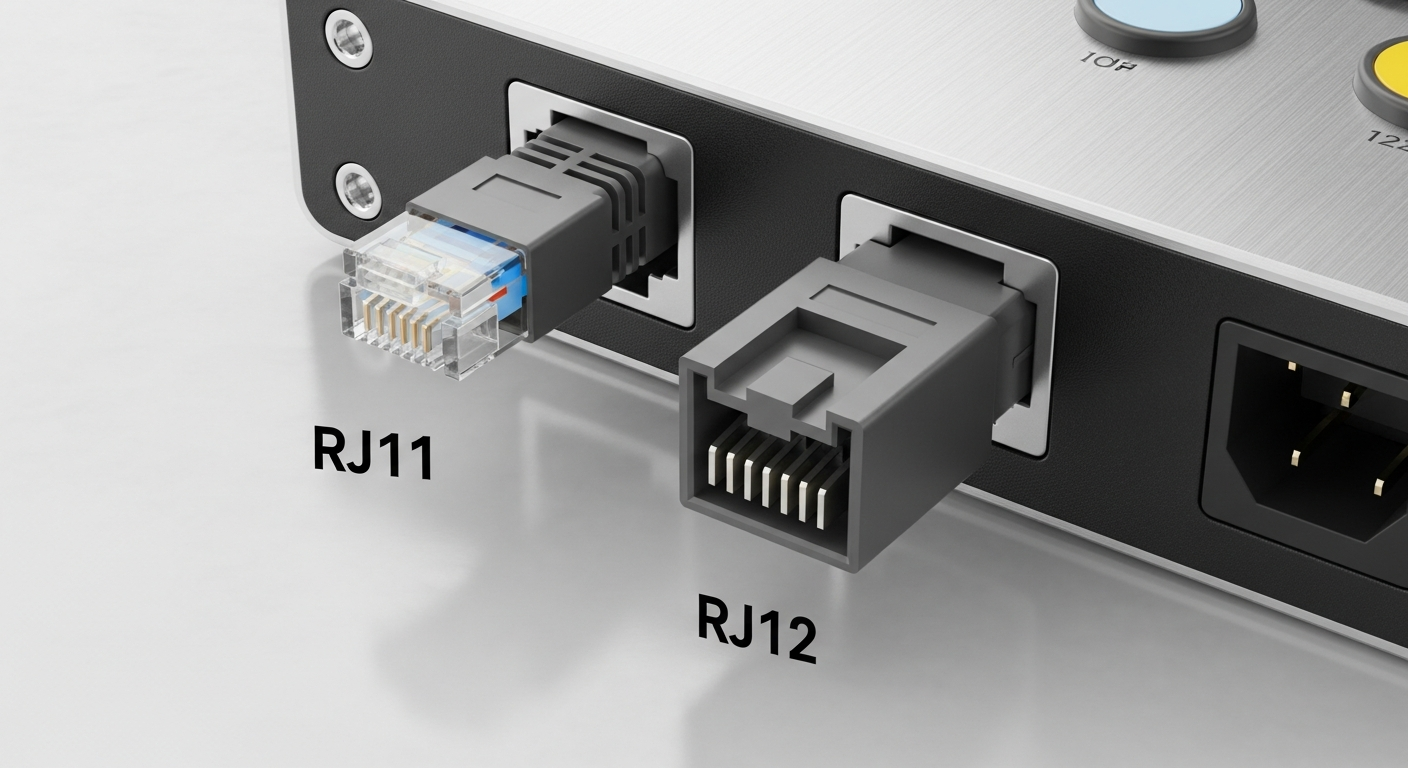
RJ11: The Telephony Standard
The RJ11 connector is arguably the most recognized of the smaller modular jacks, primarily due to its long-standing association with landline telephones. Physically, an RJ11 connector is typically a 6-position, 2-conductor (6P2C) or 6-position, 4-conductor (6P4C) configuration. This means the connector body can accommodate up to six possible contact points, but usually only two or four metal contacts (conductors) are actually installed and wired.
- 6P2C (6 Position, 2 Conductor): This is the most common form, used for a single telephone line. The two active conductors are usually in the middle positions.
- 6P4C (6 Position, 4 Conductor): Used for two telephone lines or systems requiring an additional pair of wires. The four active conductors are typically the central four positions.
Originally designed to carry low-voltage analog voice signals, the RJ11 is well-suited for applications that require a limited number of conductors and are not sensitive to significant electrical noise or high power demands. Its simplicity and widespread availability have made it an attractive, albeit often repurposed, connector for various low-voltage control signals outside its intended telephony realm.
RJ12: A Step Up in Conductor Count
The RJ12 connector, while visually similar to the RJ11, offers a critical difference: it is a 6-position, 6-conductor (6P6C) connector. This means that all six available contact points within the connector body are populated with metal contacts and can be wired. This additional capacity provides two more conductors compared to the common RJ11 (6P4C), offering greater flexibility for carrying multiple discrete signals or power lines.
- 6P6C (6 Position, 6 Conductor): All six positions are utilized, allowing for more complex signaling or the transmission of multiple independent control channels.
While still a relatively small connector, the RJ12’s full complement of six conductors makes it suitable for applications where a single RJ11 might be too limiting. It bridges the gap between the simplicity of RJ11 and the higher data capacity of RJ45. Its use in lighting hardware often stems from the need for these extra wires, perhaps for distinct control signals, feedback loops, or low-voltage power distribution to auxiliary components.
Key Differences and Their Implications
The primary distinction between RJ11 and RJ12, therefore, lies not in their physical size or shape (as both use the same 6-position modular jack), but in the number of active conductors they house. An RJ11 plug (6P2C or 6P4C) will physically fit into an RJ12 jack (6P6C), but an RJ12 plug will not fully utilize all conductors if plugged into an RJ11 jack that only has 2 or 4 conductors present. For lighting professionals, this distinction is critical, as it dictates the number of independent control lines or power paths that can be established through a single connector.
Choosing between RJ11 and RJ12 for lighting applications hinges on the specific requirements of the control system. If a system needs only two or four conductors for basic on/off or 0-10V dimming, RJ11 might suffice. However, for more granular control, multiple dimming zones, or supplementary power, RJ12 offers the necessary capacity.
RJ11 and RJ12 in the Lighting Ecosystem: Applications and Challenges
Given their origins in telecommunications, one might wonder why RJ11 and RJ12 connectors find their way into lighting hardware at all. The answer lies in a combination of practicality, cost-effectiveness, and the specific needs of low-voltage control systems. However, their adoption also comes with a unique set of challenges that highlight the importance of careful design and a robust approach to standardization.
Common Applications in Lighting Hardware
In lighting, RJ11 and RJ12 connectors are primarily used for low-voltage control signals rather than high-power AC mains. Their compact size and ease of termination make them attractive for various purposes:
- 0-10V Dimming Control: Many LED drivers and lighting fixtures utilize 0-10V dimming, which requires a simple two-wire connection. RJ11 (6P2C) can easily accommodate this, providing a convenient way to daisy-chain multiple fixtures for synchronized dimming.
- Proprietary Control Protocols: Some lighting manufacturers develop their own low-voltage digital or analog control protocols for specific product lines. These often leverage RJ11 or RJ12 connectors due to their availability and the ability to carry a few data lines.
- Sensor Integration: Connectors can be used to link occupancy sensors, daylight sensors, or other environmental sensors to lighting control modules, transmitting low-current status or measurement data.
- Fixture-to-Fixture Communication: In modular lighting systems, RJ connectors can facilitate communication or synchronization between adjacent fixtures, especially for dynamic or color-changing arrays.
- Low-Voltage Power Distribution: While not ideal for high current, RJ12 (with its six conductors) can sometimes be used to distribute very low-voltage, low-current power to small auxiliary components within a lighting system, provided the current draw is minimal and wire gauge adequate.
The Appeal of These Connectors
The reasons for their adoption are clear:
- Cost-Effectiveness: RJ11 and RJ12 components are mass-produced and therefore very inexpensive.
- Availability: Cables, plugs, and jacks are readily available off-the-shelf from countless suppliers.
- Ease of Installation: Terminating RJ connectors with crimping tools is a simple and quick process, familiar to many installers.
- Compact Size: Their small footprint is advantageous in space-constrained lighting fixtures and control panels.
Navigating the Challenges: Where Standardization Becomes Critical
Despite their advantages, using RJ11 and RJ12 in lighting hardware presents significant challenges, primarily revolving around a lack of universal standardization within the lighting industry for these specific connectors:
- Lack of Standardized Pinouts: This is the most critical issue. Unlike Ethernet’s TIA/EIA-568A/B standards for RJ45, there is no universally accepted pinout for RJ11 or RJ12 when used for lighting control. Manufacturer A might use pins 1 and 2 for 0-10V, while Manufacturer B uses pins 3 and 4 for the same function, and Manufacturer C uses pins 5 and 6 for a different proprietary signal. This leads to severe interoperability problems.
- Signal Integrity and Noise: These connectors were not designed for high-speed data transmission or robust noise immunity in electrically noisy environments typical of lighting (e.g., proximity to dimming circuits, LED drivers). Without proper shielding and grounding, signals can be degraded.
- Power Limitations: The thin conductors in standard RJ cables are not suitable for carrying significant power. Using them for anything beyond very low-current applications risks overheating, voltage drop, and potential fire hazards.
- Misidentification and Misconnection: Their physical similarity to RJ45 can lead to confusion. Furthermore, without clear labeling, an RJ11/12 cable carrying a proprietary lighting signal could easily be mistaken for a phone line, leading to incorrect connections and potential damage.
- Durability and Industrial Environments: Standard RJ connectors are not typically rated for the harsh conditions (dust, moisture, vibration, extreme temperatures) often found in industrial or outdoor lighting installations, though specialized ruggedized versions exist.
Addressing these challenges through clear internal standards or industry-wide recommendations is crucial for ensuring reliability and future-proofing lighting installations that employ these connectors.
The Imperative for Standardization in Lighting Connectivity
The absence of universal standards for RJ11 and RJ12 pinouts in lighting hardware creates a fragmented ecosystem. While individual manufacturers can implement their own internal standards, true interoperability and ease of installation across different brands remain elusive. This fragmentation has tangible costs and operational inefficiencies.
Benefits of Standardization
Adopting common standards for these connectors, or indeed for any lighting control interface, offers numerous advantages:
- Enhanced Interoperability: Standardized pinouts would allow fixtures, sensors, and control devices from different manufacturers to seamlessly connect and communicate. This fosters innovation and gives designers more flexibility.
- Reduced Complexity and Installation Time: Installers wouldn’t need to consult unique wiring diagrams for every product. A consistent standard means faster, more confident installations, and fewer errors.
- Improved Reliability and Maintainability: Clear standards lead to more predictable system behavior and easier troubleshooting. If a component needs replacement, a standard pinout ensures the new part will integrate correctly.
- Lower Training Costs: Technicians and electricians can be trained once on a standard, rather than needing to learn numerous proprietary schemes.
- Scalability and Future-Proofing: Systems built on open, recognized standards are easier to expand and integrate with future technologies.
- Reduced Waste and Environmental Impact: Interoperable components extend the lifespan of systems, reducing the need for complete overhauls and contributing to sustainability.
The Current Landscape and Industry Efforts
Currently, the lighting industry relies heavily on a mix of established standards like DMX512 (often using XLR connectors), DALI (a two-wire bus system), and Ethernet-based protocols (Art-Net, sACN using RJ45). For simpler, low-voltage control, however, manufacturers often resort to general-purpose connectors like RJ11 and RJ12, creating a grey area of de facto, but often inconsistent, usage.
Organizations like ANSI, IEC, and various lighting alliances (e.g., DALI Alliance, ESTA) continuously work on developing and promoting lighting control standards. While these efforts often focus on the communication protocols themselves, there’s a growing need for greater attention to the physical layer when general-purpose connectors are repurposed. A simple recommendation or guideline for RJ11/RJ12 pinouts in specific lighting control contexts could dramatically improve the current situation.
When to Advocate for Standardization
For lighting specifiers, designers, and manufacturers, the decision to use RJ11 or RJ12 should always be weighed against the benefits of established lighting-specific connectors. If these connectors are chosen:
- Internally Standardize: Manufacturers should establish and rigorously adhere to their own clear pinout standards for RJ11/RJ12 across their product lines.
- Clearly Document: Comprehensive documentation, including wiring diagrams and pinout specifications, must accompany every product.
- Label Clearly: Any equipment using these connectors for non-standard purposes should be clearly labeled to prevent misconnection.
- Consider Alternatives: For mission-critical systems, high data rates, or harsh environments, purpose-built industrial connectors or established lighting control connectors (like DMX-specific XLR or robust RJ45 systems) are often a more reliable choice.
Ultimately, the goal is to move towards a more coherent and predictable environment for lighting control, where the choice of connector facilitates, rather than hinders, innovation and reliable performance.
Practical Considerations and Best Practices for Implementation
When working with RJ11 and RJ12 connectors in lighting hardware, whether as an installer, designer, or system integrator, adopting best practices is essential to ensure reliability, safety, and system longevity. Without official industry-wide standardization for their use in lighting, a disciplined approach becomes even more critical.
Choosing the Right Connector for the Job
Before even considering pinouts, evaluate if RJ11 or RJ12 is truly the most appropriate connector:
- Signal Type and Quantity: For basic 0-10V dimming (two wires), RJ11 (6P2C) is physically sufficient. For more complex controls requiring up to six separate signals, RJ12 (6P6C) is necessary.
- Power Requirements: Never use standard RJ connectors for high-voltage AC mains or high-current DC power. Even for low-voltage DC, ensure the wire gauge within the RJ cable is adequate for the current draw to prevent voltage drop and overheating. Use dedicated power connectors where significant power is required.
- Environmental Factors: If the installation is outdoors, in a dusty environment, or subject to vibration, standard RJ connectors may not provide adequate protection or durability. Consider ruggedized or IP-rated connectors instead.
- Data Rate and Noise: For high-speed data or applications highly susceptible to electromagnetic interference (EMI), RJ45 with proper shielding (STP/FTP cabling) is usually a much better choice, especially for Ethernet-based protocols.
The Paramount Importance of Pinouts
Once you’ve decided that RJ11 or RJ12 is suitable, meticulous attention to pinouts is non-negotiable:
- Documentation is Key: Always refer to the manufacturer’s specific documentation for the pinout of their RJ11/RJ12 ports. Assume nothing. Pin 1 on one device may carry a different signal than Pin 1 on another, even if both are RJ11.
- Create Your Own Standards (if developing): If designing a proprietary system, establish a clear, consistent pinout scheme and adhere to it across all your products. Document it thoroughly and make it easily accessible to users.
- Test, Test, Test: Before deploying, always test cable continuity and correct pin assignments using a cable tester. This is particularly crucial when dealing with different manufacturers or custom cables.
- Labeling: Clearly label all custom cables and ports with their intended function, especially when they deviate from common telephony use.
Practical Tip: When connecting devices from different manufacturers that both use RJ11/RJ12, be prepared to create custom adapter cables or re-terminate cables to match differing pinouts. A universal adapter is rarely an option due to the lack of standardization.
Wiring and Installation Best Practices
- Cable Quality: Use high-quality modular cables that match the conductor count of your connectors (e.g., 6P6C cable for RJ12). Ensure the cable’s jacket is appropriate for the installation environment.
- Crimping Tools: Invest in a good quality crimping tool. Proper termination is vital for signal integrity and long-term reliability. A poorly crimped connector is a common point of failure.
- Strain Relief: Ensure cables are properly secured and that there is adequate strain relief near the connectors to prevent damage from pulling or bending.
- Cable Management: Route RJ cables away from power cables or other sources of EMI to minimize interference, especially for analog control signals like 0-10V.
- Daisy-Chaining Considerations: If using RJ connectors for daisy-chaining, be mindful of signal degradation over long distances or through too many connections. Consult manufacturer specifications for maximum cable lengths and number of devices.
Future-Proofing Your Installations
While RJ11 and RJ12 serve a purpose, consider the future scalability and integration needs of your lighting system. For complex installations, network-based solutions like Art-Net or sACN over RJ45 Ethernet, or dedicated industrial bus systems, often provide greater flexibility, higher data rates, and more robust communication protocols. These are often easier to standardize and manage in the long run.
By carefully considering the strengths and weaknesses of RJ11 and RJ12, adhering to rigorous internal standards and documentation, and employing best installation practices, lighting professionals can leverage these common connectors effectively while mitigating their inherent challenges.
Conclusion: Navigating Connectivity in Modern Lighting
The journey through the intricacies of RJ11 and RJ12 connectors in lighting hardware reveals a compelling narrative of adaptation, convenience, and the enduring quest for standardization. While these modular connectors, born from the telecommunications era, offer attractive benefits in terms of cost, availability, and ease of installation, their repurposing in lighting control presents a unique set of challenges. The fundamental distinction between the 6P4C capacity of typical RJ11 and the full 6P6C capability of RJ12 dictates their respective roles, yet it’s the absence of a universally adopted pinout standard within the lighting industry that remains the most significant hurdle.
True standardization in lighting connectivity, particularly for ubiquitous components like RJ11 and RJ12, is not merely a matter of technical neatness; it’s an economic and operational imperative. It promises enhanced interoperability, streamlines installation processes, reduces training overheads, and ultimately fosters a more reliable and scalable ecosystem for lighting control. While significant progress has been made with dedicated lighting protocols and connectors (like DMX, DALI, and Ethernet-based systems), the informal adoption of RJ11 and RJ12 in simpler or proprietary low-voltage applications highlights a gap that careful industry guidelines or manufacturer-led consistent practices could fill.
For lighting professionals, understanding the precise differences between RJ11 and RJ12, recognizing their limitations, and meticulously adhering to manufacturer specifications for pinouts are not just best practices—they are critical requirements for success. By championing clear documentation, rigorous testing, and thoughtful application, we can navigate the complexities of modern lighting hardware connectivity, ensuring that every connection, no matter how small, contributes to a robust and harmonious lighting experience.