
While most greenhouse growers associate shading with the scorching heat of summer, an often-overlooked challenge is the potential for overheating during the winter months. Despite crisp outdoor temperatures, the combination of low sun angles, clear skies, and the inherent “greenhouse effect” can cause internal temperatures to soar rapidly, often reaching critical levels by midday. This unexpected winter heat can stress plants, hinder growth, and negate efforts to maintain an ideal growing environment. Understanding and implementing effective shading strategies is paramount for year-round greenhouse success, even when the ground outside is frozen.
Why Winter Shading is Essential for Greenhouse Health
The paradox of winter greenhouse overheating stems from several factors. Glass or polycarbonate glazing efficiently traps solar radiation, converting light energy into heat. In winter, with fewer leaves on outdoor trees and generally clearer skies, direct sunlight can be surprisingly intense. When combined with typically closed vents to conserve warmth, this creates a rapid temperature spike that can quickly exceed optimal ranges for many plants.
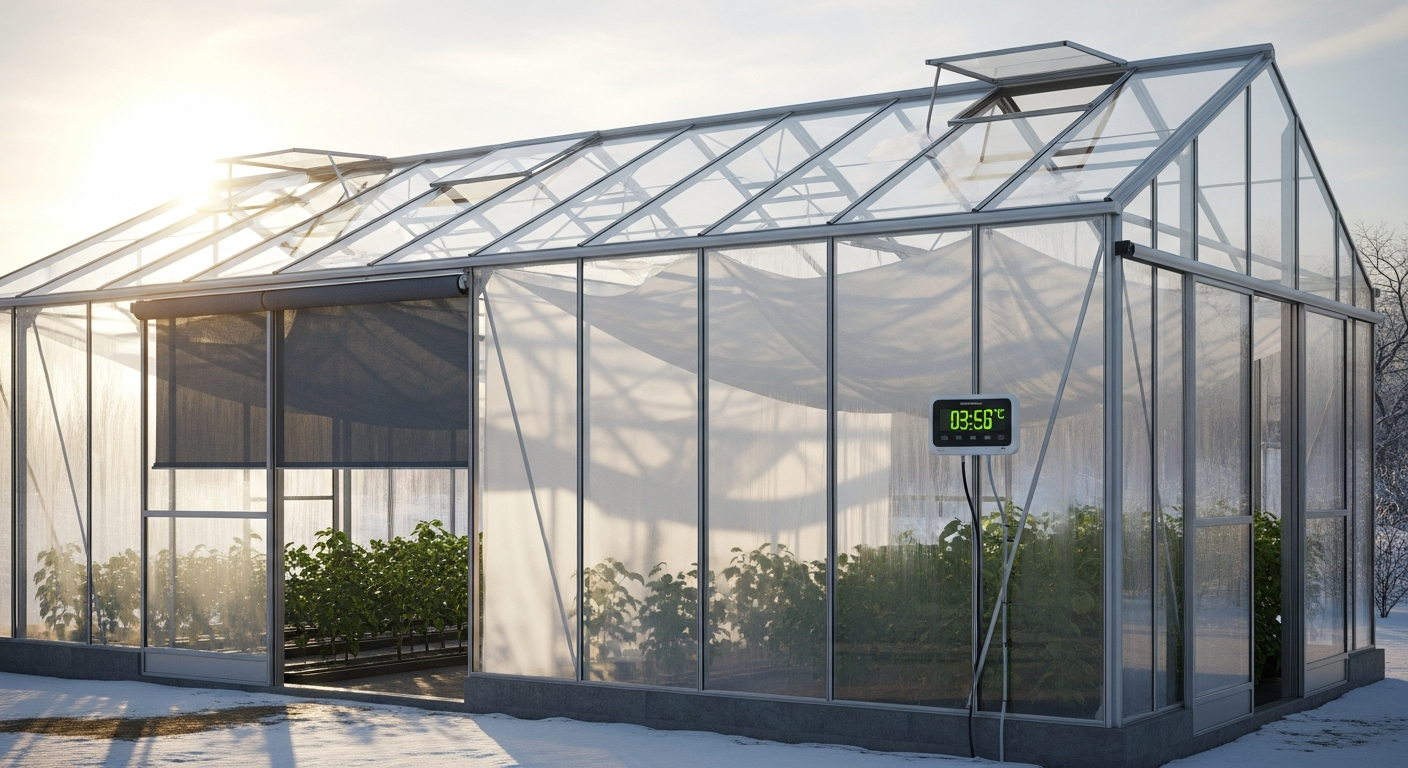
The consequences of such overheating are detrimental to plant health and productivity:
- Plant Stress and Scorch: High temperatures can cause leaves to wilt, scorch, or even die. Plants may exhibit signs of heat stress like stunted growth, bolting (premature flowering), or reduced fruit set.
- Increased Water Demand: Overheated plants transpire excessively, leading to increased water requirements and potential nutrient imbalances if not managed carefully.
- Root Zone Issues: High air temperatures can translate to elevated soil temperatures, which can harm delicate root systems and hinder nutrient uptake.
- Energy Inefficiency: Continuously needing to open vents or run cooling fans to combat overheating wastes energy that was initially spent on heating the greenhouse.
- Pest and Disease Proliferation: While not directly caused by heat, stressed plants are more susceptible to pests and diseases. Furthermore, some pests thrive in warm, humid conditions.
Therefore, managing light intensity and internal temperatures through strategic winter shading is not just about comfort; it’s about creating a stable, optimal environment crucial for vigorous plant growth and yield.
Selecting the Right Shading System for Your Winter Greenhouse
Various shading solutions are available, each with its advantages and considerations for winter use. Choosing the right system depends on your greenhouse type, budget, crop needs, and the degree of automation desired.
External Shade Cloths
- Description: These are typically woven or knitted fabrics made from polyethylene, designed to be placed over the exterior of the greenhouse. They come in various densities, indicated by a “shade percentage” (e.g., 30%, 50%, 70%).
- Winter Application: For winter, a lighter shade percentage (e.g., 30-50%) is usually sufficient to mitigate peak sun intensity without excessively reducing crucial light levels. The exact percentage depends on your region’s sun intensity and the light requirements of your specific crops.
- Pros: Highly effective at blocking heat before it enters the greenhouse structure. Relatively inexpensive for manual systems. Can be installed seasonally.
- Cons: Manual application and removal can be labor-intensive. Susceptible to wind damage if not securely fastened. May block beneficial winter light on cloudy days.
- Tip: Consider using a shade cloth with grommets and bungee cords or clips for easier installation and removal.
Internal Shade Screens/Curtains
- Description: These systems are installed inside the greenhouse, often on wires or tracks, allowing them to be deployed or retracted as needed.
- Winter Application: Internal screens are excellent for flexible light management. They can be deployed during peak sun hours and retracted when light is lower or on cloudy days. Some “thermal” screens can also double as heat retention barriers at night.
- Pros: Protected from external weather elements. Easier to deploy and retract, especially with automated systems. Can offer a dual benefit of shading and nocturnal insulation.
- Cons: Heat has already entered the greenhouse structure before being reflected or absorbed by the screen, making them slightly less efficient at initial heat rejection than external shades.
- Tip: Look for screens designed for energy saving as well as shading; these often have reflective properties.
Liquid Shading (Shading Paint/Coatings)
- Description: These are specialized paints or coatings applied directly to the exterior glazing of the greenhouse. They dry to a semi-transparent white film that reduces light transmission.
- Winter Application: Best for situations where consistent, moderate shading is required throughout a significant portion of the winter. They are often designed to gradually wear off with rain or can be removed with specific cleaning agents.
- Pros: Cost-effective for large areas. Once applied, requires no further manual effort.
- Cons: Less flexible than retractable systems – the shading level is fixed once applied. Can be challenging to remove completely if conditions change. May significantly reduce light on cloudy winter days when light is already scarce.
- Tip: Ensure you choose a product specifically designed for greenhouses, as regular paint will permanently block too much light and could damage glazing materials.
Implementing Effective Winter Shading Strategies
Effective shading is more than just throwing a cover over your greenhouse; it requires a thoughtful, integrated approach.
Understand Your Crops’ Specific Needs
Different plants have varying light and temperature requirements. A high-light crop like tomatoes will tolerate more intense winter sun than a shade-loving lettuce or herb. Research the optimal PAR light levels and temperature ranges for everything you’re growing and adjust your shading accordingly. This might even mean zoning your greenhouse if you have diverse crops.
Monitor and Automate
The human eye is not a reliable judge of light intensity or temperature. Invest in reliable thermometers and hygrometers, ideally with high/low records. For more advanced control, consider integrating your shading system with environmental sensors:
- Thermostatic Control: Link your shade system to a thermostat that deploys the shade when temperatures exceed a set threshold and retracts it when they drop.
- Photometric Sensors: Light sensors can activate shading when light intensity reaches levels that could cause damage or overheating.
- Integration with Ventilation: Often, shading should work in tandem with ventilation. If temperatures rise, deploy shade, and if that’s not enough, activate vents or fans.
Even without full automation, regularly monitoring conditions will guide your manual adjustments. For example, deploying shade from 11 AM to 3 PM on clear winter days might be sufficient for many regions.
Combine Strategies for Optimal Control
Sometimes, a single shading method isn’t enough or ideal. You might use a semi-permanent liquid shade during the sunniest part of winter, supplemented by an internal retractable screen for fine-tuning on exceptionally bright days. Don’t forget passive cooling methods like good ventilation (ridge vents, side vents, circulation fans) which work hand-in-hand with shading to prevent heat buildup.
Consider Your Greenhouse Orientation and Local Climate
A south-facing greenhouse will receive the most intense winter sun. Adjust your shading strategy based on the orientation of your structure. Local climate also plays a huge role; a greenhouse in a perpetually cloudy northern region will require less winter shading than one in a sunny, arid climate.
Optimizing Your Greenhouse Climate with Smart Shading
Beyond simply blocking light, smart shading contributes significantly to overall greenhouse climate control and energy efficiency. By preventing unnecessary temperature spikes, you reduce the need for constant ventilation or active cooling, thereby saving energy that would otherwise be used to reheat the space. Furthermore, modern shading materials are sometimes engineered to block harmful UV radiation and infrared heat while allowing beneficial photosynthetically active radiation (PAR) to pass through, ensuring plants get the light they need without the detrimental heat.
Regular maintenance of your chosen shading system is also important. Ensure external shade cloths are free from debris and damage. Check internal screens for smooth operation. If using liquid shades, ensure even application and plan for their removal when spring arrives and more light is desired.
Conclusion
Winter overheating is a real and often underestimated threat to greenhouse health and productivity. By understanding its causes and implementing strategic shading solutions, growers can effectively mitigate temperature spikes, reduce plant stress, and maintain a stable, optimal growing environment. Whether through external shade cloths, internal screens, or liquid coatings, proactive winter shade management is a crucial component of year-round greenhouse success. Monitor your conditions, understand your plants, and choose the system that best fits your needs to ensure your “Greenhouse Climates” remain ideal, even when winter tries to throw a curveball of unexpected heat.