
The gentle hum of growth, the vibrant greens, and the promise of a bountiful harvest – all depend fundamentally on one critical element: light. For any greenhouse grower, understanding and harnessing the power of sunlight is paramount. The glazing material, whether glass, polycarbonate, or film, acts as the skin of your controlled environment, dictating how much precious light reaches your plants. Yet, this vital component is often overlooked in routine maintenance schedules. Neglecting your greenhouse glazing can lead to significant reductions in light transmission, directly impacting photosynthesis, plant health, and ultimately, your yields. This comprehensive guide will delve into the essential principles of greenhouse glazing maintenance, ensuring maximum light efficiency and a thriving horticultural space.
The Critical Role of Glazing in Light Transmission
At the heart of every plant’s existence is photosynthesis, the miraculous process of converting light energy into chemical energy for growth. Without adequate light, even the most perfectly nurtured plants will struggle to flourish. Your greenhouse glazing is the primary filter for this essential light, and its condition directly dictates the quality and quantity of light reaching your crops. While different glazing materials offer varying initial light transmission percentages, their ability to maintain that efficiency over time hinges entirely on proper care.
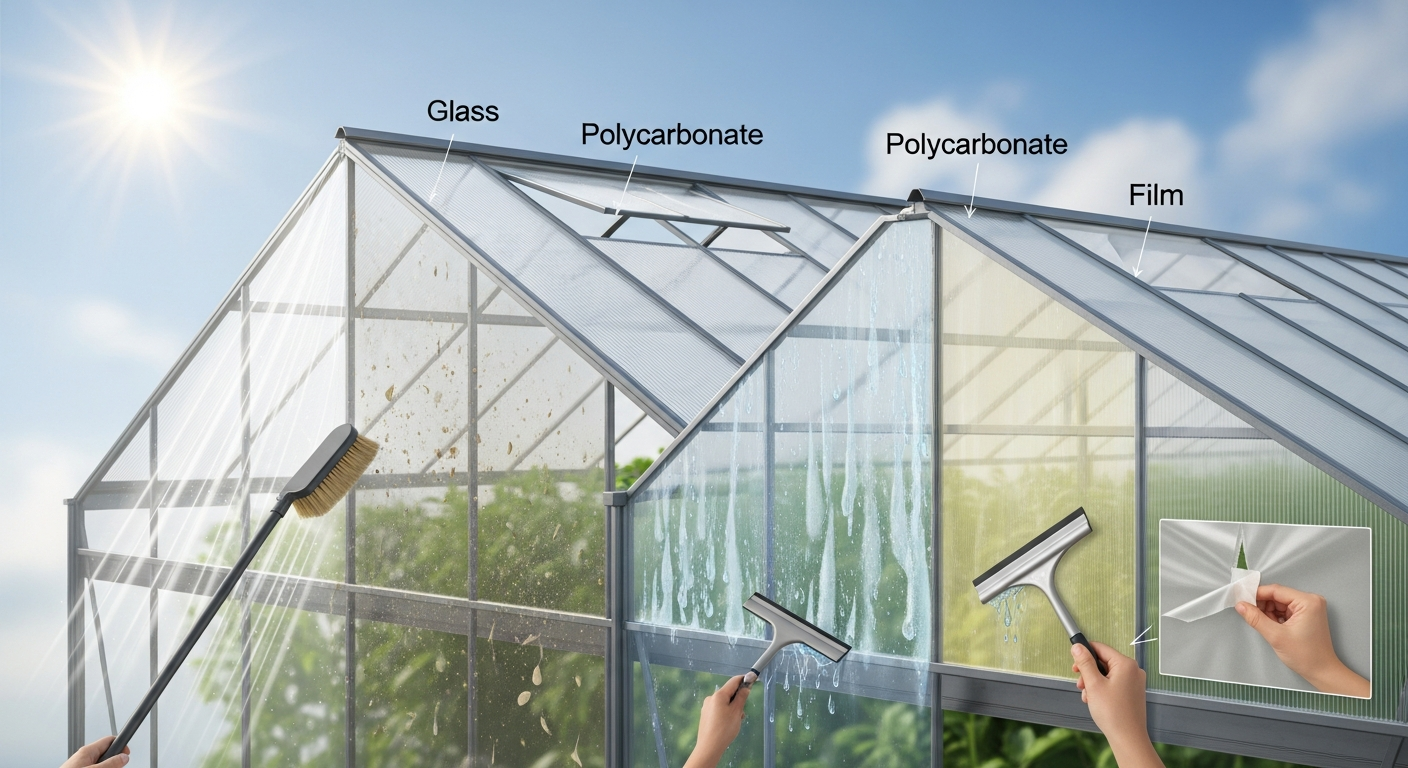
Over months and years, dirt, dust, pollen, algae, mineral deposits from rain or irrigation, and even airborne pollutants accumulate on the exterior and sometimes interior surfaces of your glazing. Each layer, no matter how thin, acts as a barrier, scattering or absorbing light before it can reach your plants. This cumulative effect can lead to a surprising and substantial reduction in available light, often unnoticed until plant vigor begins to decline. Understanding this fundamental relationship between glazing clarity and plant productivity is the first step toward implementing effective maintenance strategies.
Routine Cleaning Protocols for Optimal Clarity
Consistent and correct cleaning is the cornerstone of maximizing greenhouse light efficiency. A clean greenhouse isn’t just aesthetically pleasing; it’s a productivity powerhouse.
Why Cleaning Matters: Quantifying Light Loss
It’s easy to underestimate the impact of seemingly minor accumulations on your glazing. Studies show that even a thin film of dirt, dust, or algae can reduce light transmission by 10-20%. In severe cases, this reduction can climb to 30% or more. Imagine losing a third of your effective growing season simply due to neglected glazing! This light loss directly translates to:
- Slower Plant Growth: Reduced photosynthesis means plants grow more slowly.
- Lower Yields: Fewer flowers, fruits, and vegetables produced.
- Increased Disease Susceptibility: Weaker plants are more vulnerable to pests and diseases.
- Reduced Crop Quality: Smaller, less vibrant, or less flavorful produce.
- Higher Energy Costs: Plants might stretch, requiring more supplemental lighting or extended growing periods.
Regular cleaning is an investment that pays dividends in plant health and profitability.
Best Practices for Cleaning Your Glazing
The approach to cleaning depends on the glazing material, but some universal principles apply:
- Frequency: Aim for at least twice a year – typically in late fall/early winter to maximize winter light, and again in spring to clear away winter grime. More frequent cleaning may be necessary in dusty, industrial, or high-pollen environments.
- Timing: Choose overcast days or early mornings/late afternoons to prevent rapid drying of cleaning solutions, which can leave streaks.
- Water Quality: If you have hard water, consider using a water softener or reverse osmosis system to prevent mineral deposit buildup, which can be difficult to remove later.
- Safety First: Always use sturdy ladders or scaffolding. Wear non-slip footwear and ensure you have a spotter if working at height. Be mindful of wet, slippery surfaces.
Tools and Materials: The Right Approach for Each Glazing Type
Using the correct tools and solutions is crucial to avoid damaging your glazing:
- Mild Detergents: Opt for pH-neutral, non-abrasive detergents specifically designed for greenhouses or gentle household soaps (e.g., dish soap). Avoid strong chemicals, abrasive cleaners, or solvent-based products, as these can degrade certain glazing materials, especially plastics.
- Soft Brushes and Sponges: Use a soft-bristled brush with an extendable pole or a large, soft sponge to scrub away grime. Avoid abrasive pads or stiff brushes that can scratch the surface.
- Power Washers (with caution): A low-pressure power washer can be effective for rinsing, but use it with extreme care, especially on older or less robust glazing. Maintain a safe distance and use a wide spray pattern to avoid damaging seals or dislodging panels.
- Specialized Cleaners: For stubborn algae or mildew, consider using commercially available greenhouse cleaners formulated to tackle these issues safely. Always test a small, inconspicuous area first.
Cleaning Techniques:
- Rinse Thoroughly: Start by thoroughly rinsing the entire exterior surface with plain water to remove loose dirt and debris.
- Apply Cleaning Solution: Mix your mild detergent with water according to manufacturer instructions. Apply it evenly, allowing it to soak for a few minutes (but not dry) to loosen grime.
- Gentle Scrubbing: Use your soft brush or sponge to gently scrub the surfaces, paying extra attention to areas with heavy buildup like algae or mineral deposits.
- Final Rinse: Rinse thoroughly from top to bottom with clean water, ensuring no soap residue remains. Residue can attract more dirt and leave streaks.
- Interior Cleaning: Don’t forget the inside! While less exposed to external grime, condensation, dust, and pest residues can accumulate. Clean the interior glazing with the same gentle methods, ensuring good ventilation afterward to prevent humidity buildup.
Proactive Inspection and Timely Repair Strategies
Cleaning is only one part of the maintenance equation. Regular inspections and prompt repairs are equally vital to maintain structural integrity, prevent energy loss, and sustain optimal light transmission.
The Importance of Regular Inspections
Think of your greenhouse as a living organism; regular check-ups are essential. Small issues, if left unaddressed, can quickly escalate into costly problems. A crack might seem insignificant, but it can expand, allow water ingress, compromise insulation, or even lead to panel failure during strong winds. Inspections should be a routine part of your greenhouse management, ideally conducted at least quarterly or after any severe weather event.
What to Look For During Inspections
Conduct a thorough visual inspection, both inside and outside the greenhouse. Pay close attention to:
- Cracks, Chips, and Holes: Even hairline cracks can compromise structural integrity and allow heat to escape.
- Loose or Displaced Panels: Glazing panels can shift over time due to expansion/contraction or wind.
- Failed Seals and Gaskets: Look for gaps around panels, yellowing, cracking, or hardening of rubber or silicone seals. These are major sources of heat loss and pest entry.
- Signs of UV Degradation: Particularly common with polycarbonate and polyethylene film. Look for yellowing, hazing, cloudiness, or brittleness. This indicates the material is losing its ability to transmit light efficiently and may become fragile.
- Algae or Moss Growth: Not just on the glazing, but also on the frame, staging, or surrounding structures that might cast shadows.
- Condensation Issues: Persistent internal condensation can indicate poor ventilation, high humidity, or leaks, and can lead to algae growth.
- Structural Integrity: Check framing for rust, rot, bends, or damage. Ensure all fasteners are secure.
- Obstructions: Overhanging tree branches or nearby structures that have grown to cast new shadows.
Effective Repair Techniques
Timely repairs are crucial for preventing further damage and maintaining efficiency.
- Minor Cracks and Holes: For small cracks in glass or polycarbonate, specialized glazing tape or clear silicone sealant can provide a temporary or semi-permanent fix. Ensure the surface is clean and dry before application.
- Panel Replacement: For larger cracks, shattered glass, or severely degraded plastic panels, replacement is the best solution.
- Matching Material: Always strive to replace with the exact same glazing material and thickness to ensure consistent light transmission, thermal properties, and fit.
- Safety: When handling glass, wear heavy-duty gloves and eye protection. Clear away all shards.
- Seal and Gasket Renewal: Carefully remove old, degraded seals. Clean the channel thoroughly and install new rubber gaskets or apply fresh, UV-resistant silicone sealant. This is critical for preventing drafts and maintaining thermal efficiency.
- Frame Repair: Address rust spots on metal frames by cleaning, priming, and repainting. Replace rotted wooden components. Tighten loose bolts and screws.
- Addressing UV Degradation: Once polycarbonate or film begins to yellow and haze significantly, its light transmission properties are permanently compromised. The only effective solution is replacement. Plan for this as part of your long-term maintenance budget.
Advanced Considerations for Sustained Light Efficiency
Beyond cleaning and repair, several other factors contribute to maintaining optimal light conditions within your greenhouse.
Internal Maintenance for Unobstructed Light
The exterior glazing isn’t the only surface that impacts light. The interior environment also plays a role:
- Clean Interior Surfaces: Dust, soil, and plant debris on benches, shelves, and floors can absorb light. Regularly sweep, vacuum, and wipe down interior surfaces.
- Reflective Surfaces: White-painted walls, reflective ground covers, or specialized reflective foils can help bounce light back onto plants, especially during low-light periods. Keep these surfaces clean.
- Pest and Disease Control: Severe pest infestations (e.g., whiteflies, aphids) can leave sticky residues (honeydew) on plants and interior surfaces, which can block light and foster sooty mold growth. Effective integrated pest management is indirectly linked to light efficiency.
- Minimize Clutter: Keep the interior organized. Unnecessary tools, pots, or storage items can cast shadows.
Shading Systems and Ventilation
While shading reduces light, its proper management is crucial for optimal light *utilization*:
- Clean Shading: If you use retractable shade cloths, ensure they are clean. Dusty or mildewed shade cloths can block more light than intended or become stained.
- Automated Systems: Calibrate and maintain automated shading systems to ensure they deploy and retract correctly, providing shade only when necessary to prevent overheating, and retracting to maximize light during cooler periods.
- Proper Ventilation: Good ventilation prevents excessive humidity, which reduces condensation, and in turn, minimizes the ideal conditions for algae and fungal growth on glazing.
Energy Efficiency and Glazing Selection Revisited
Maintaining your glazing for light efficiency inherently contributes to greenhouse energy efficiency. Intact, clean glazing with sound seals prevents heat loss, reducing heating costs in winter and cooling costs in summer. When considering future upgrades or new constructions, factor in the long-term light transmission stability and maintenance requirements of different materials. Some advanced glazing options feature anti-drip or self-cleaning coatings, which can reduce maintenance frequency and improve long-term clarity, albeit at a higher initial cost.
Implementing a comprehensive maintenance plan ensures that your glazing continues to perform optimally, delivering the light your plants need to thrive. It’s an ongoing commitment, but one that yields substantial rewards in plant health, productivity, and overall greenhouse longevity.