
In the world of modern horticulture, precision and efficiency are paramount. As growers strive for healthier plants, higher yields, and reduced resource consumption, traditional methods of nutrient application are increasingly being replaced by more sophisticated systems. Enter fertigation – a revolutionary technique that integrates fertilization with irrigation, delivering essential nutrients directly to plant roots through the water lines. This seamless automation not only saves labor and time but also provides an unprecedented level of control over plant nutrition, paving the way for optimal growth and resource management in any greenhouse environment. Join us as we explore the fundamental principles of fertigation, uncovering how this smart technology can transform your growing operations.
What is Fertigation and Why is it Essential for Modern Greenhouses?
Fertigation is the process of delivering water-soluble fertilizers directly to plants through the irrigation system. It’s a method that combines the words “fertilization” and “irrigation,” signifying its integrated approach to plant nutrient delivery. Instead of separate applications of water and nutrients, fertigation provides both simultaneously, ensuring that plants receive precisely what they need, exactly when they need it.
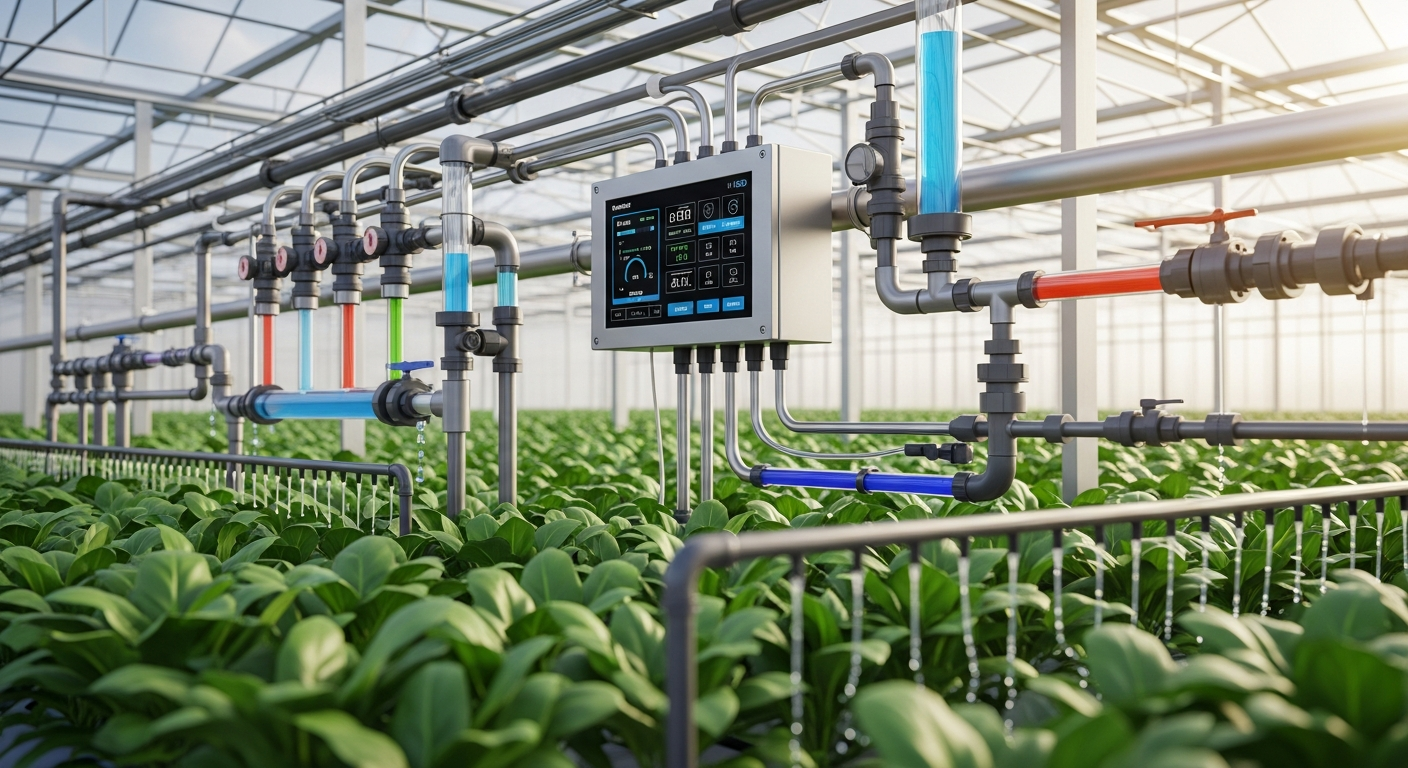
The rise of fertigation is no accident; it addresses several critical needs in modern greenhouse management:
- Unmatched Precision: Fertigation allows for the exact dosing of nutrients, ensuring plants receive the optimal concentration of essential elements tailored to their specific growth stage. This minimizes nutrient deficiencies or toxicities.
- Enhanced Efficiency: By delivering nutrients directly to the root zone, waste is significantly reduced compared to broadcast fertilization. This means less fertilizer is needed, leading to cost savings and reduced environmental impact.
- Water Conservation: Integrated with efficient irrigation methods like drip or micro-sprayers, fertigation promotes water conservation by delivering water and nutrients only where they are needed, reducing runoff and evaporation.
- Labor Savings: Automating the nutrient delivery process eliminates the labor-intensive task of manual fertilization, freeing up valuable time for other greenhouse operations.
- Improved Plant Health & Yields: Consistent and precise nutrient availability leads to stronger, healthier plants, faster growth rates, and ultimately, higher quality yields.
- Flexibility: Fertigation systems can be easily adjusted to respond to changing plant needs, environmental conditions, or crop cycles, offering dynamic nutrient management.
For operations ranging from small hobby greenhouses to large commercial facilities, implementing an automated nutrient delivery system is a significant step towards sustainable and productive horticulture.
Key Components of a Fertigation System
A functional fertigation system, regardless of its scale or complexity, comprises several core components working in harmony to deliver nutrients effectively:
1. Water Source and Filtration
- Water Source: This could be municipal water, well water, rainwater, or collected runoff. Analyzing your water quality for pH, alkalinity, and mineral content is crucial, as it impacts nutrient availability and system performance.
- Filtration System: Essential for preventing clogs in irrigation lines and emitters. Common filters include screen filters for larger particles and disc filters for finer sediment. Multi-stage filtration might be necessary depending on water quality.
2. Nutrient Concentrates and Storage
- Water-Soluble Fertilizers: Designed to dissolve completely in water, these are typically stored as concentrated stock solutions in separate tanks (e.g., A & B tanks to prevent nutrient precipitation).
- Stock Tanks: Durable, inert containers (often plastic) used to hold the concentrated nutrient solutions.
3. Nutrient Injectors/Dosers
This is the heart of the fertigation system, responsible for accurately introducing nutrient concentrates into the main irrigation line.
- Venturi Injectors: Passive devices that use water pressure differences to draw nutrient solution into the main flow. Simple, reliable, and cost-effective, but flow-dependent and less precise for varying flow rates.
- Dosing Pumps (Proportional Injectors):
- Diaphragm Pumps: Electrically or hydraulically powered, offering precise control over injection rates regardless of water pressure fluctuations. Ideal for smaller to medium-sized operations.
- Piston Pumps: Similar to diaphragm pumps but often more robust and capable of higher pressures, suitable for larger commercial systems.
- Water-Powered Injectors: Utilize the kinetic energy of the irrigation water to power the pump, making them ideal for areas without electricity or as a backup.
4. Mixing and Distribution
- Mixing Tank (Optional): In some systems, especially hydroponic setups, a mixing tank is used after injection to ensure uniform blending of nutrients before distribution. This tank often houses sensors for EC and pH monitoring.
- Manifold and Irrigation Lines: The network of pipes and tubing (main lines, sub-mains, laterals) that carries the nutrient solution to individual plants.
- Emitters/Drippers: Devices that deliver the nutrient solution directly to the root zone of each plant, ensuring even distribution and minimal waste. Examples include drip emitters, micro-sprayers, or flood tables.
5. Monitoring and Control
- EC (Electrical Conductivity) Meter: Measures the total concentration of dissolved salts (nutrients) in the solution. Crucial for ensuring plants receive the correct nutrient strength.
- pH Meter: Measures the acidity or alkalinity of the nutrient solution. pH significantly impacts nutrient availability to plants.
- Controllers/Automation Systems: Advanced systems can automatically monitor EC and pH, adjust nutrient injection rates, manage irrigation schedules, and even incorporate data from climate control sensors for a fully integrated approach.
Choosing the Right Fertigation Method for Your Setup
The best fertigation method depends on your scale, budget, crop type, and desired level of automation and precision. Here are common approaches:
1. Batch or Bypass Systems
How it works: A portion of the irrigation water is diverted through a tank containing dry or concentrated liquid fertilizer. The enriched water then re-enters the main irrigation line. These are often manually controlled or use simple venturi injectors.
Pros: Relatively inexpensive to set up, simple to operate.
Cons: Less precise control over nutrient concentration, especially with varying flow rates. Can lead to fluctuations in nutrient delivery.
Ideal for: Smaller hobby greenhouses, growers with limited budgets, or those with less demanding crops where exact precision isn’t critical.
2. Proportional Injection Systems
How it works: These systems use proportional injectors (like dosing pumps or more advanced venturi systems) to inject a precise, consistent ratio of concentrated nutrient solution into the main water line, regardless of fluctuations in water pressure or flow rate.
Pros: High precision and consistency in nutrient delivery. Easily scalable. Allows for multiple nutrient tanks (A, B, pH adjusters) to be injected independently.
Cons: Higher initial investment than batch systems. Requires more complex calibration and maintenance.
Ideal for: Medium to large commercial greenhouses, hydroponic systems, and any grower prioritizing precise nutrient management and automation.
Practical Tip: When choosing a proportional injector, consider its maximum flow rate capacity and the desired injection ratio. Ensure it can handle the volume of water your irrigation system uses while still maintaining accurate dosing.
3. Hydroponic Recirculating Systems (Integrated Fertigation)
How it works: In methods like Deep Water Culture (DWC), Nutrient Film Technique (NFT), or Ebb and Flow, plants grow directly in a nutrient solution that is circulated through the root zone. The entire reservoir is the “fertigation system,” with sensors continuously monitoring and automatically adjusting EC and pH by injecting concentrated nutrients and pH adjusters.
Pros: Extremely precise, highly efficient water and nutrient use, rapid plant growth, completely automated nutrient management possible.
Cons: High initial setup cost, requires constant monitoring and calibration, susceptible to root diseases if conditions aren’t maintained.
Ideal for: Dedicated hydroponic growers, research facilities, and high-value crop production where maximum control and yields are sought.
Mastering Nutrient Management: EC, pH, and Scheduling
Implementing a fertigation system is just the first step; mastering nutrient management is where the real benefits unfold.
Understanding EC (Electrical Conductivity)
EC measures the total concentration of dissolved salts, including all essential nutrients, in your irrigation water or nutrient solution. It’s a critical indicator of nutrient strength.
- Monitoring: Regular EC checks are vital. Too low, and plants suffer from deficiencies; too high, and root burn or nutrient lockout can occur.
- Adjustment: Use your EC meter to guide additions of nutrient concentrates. If EC is too low, add more nutrients; if too high (common in recirculating systems due to water evaporation), add plain water or dilute the solution.
- Practical Tip: Calibrate your EC meter regularly using a known standard solution to ensure accuracy. Different crops have different optimal EC ranges; research your specific plants.
Controlling pH (Potential of Hydrogen)
pH measures the acidity or alkalinity of your nutrient solution. It’s arguably the single most important factor affecting nutrient availability to plants.
- Monitoring: Consistently monitor pH. Most greenhouse crops thrive in a slightly acidic range (typically 5.5 to 6.5) where most nutrients are readily available.
- Adjustment: Use pH UP (potassium hydroxide) or pH DOWN (phosphoric acid or nitric acid) solutions to adjust. Add small amounts, mix thoroughly, and re-test until the desired range is reached.
- Practical Tip: Always adjust pH after adding nutrients, as nutrients themselves can affect the pH. Also, consider the buffering capacity of your water; high alkalinity requires more acid to adjust pH.
Optimizing Nutrient Scheduling
Beyond concentration, when and how often plants receive nutrients is key.
- Frequency & Duration: This depends on the crop, substrate, growth stage, and environmental conditions. Young seedlings might need less frequent, lighter feedings, while fruiting plants require more frequent, concentrated doses. Automated controllers allow for precise scheduling throughout the day.
- Growth Stages: Tailor your nutrient formulation (e.g., higher nitrogen for vegetative growth, higher phosphorus/potassium for flowering/fruiting) and EC levels to match the plant’s current developmental stage.
- Environmental Factors: Higher light and temperature generally increase plant metabolism and water/nutrient uptake, necessitating more frequent or higher concentration feedings.
Practical Tips for Implementing and Maintaining Your Fertigation System
- Start Small & Understand Your Needs: Don’t overcomplicate your first system. Begin with a simpler setup and gradually upgrade as you gain experience and understand your specific crop requirements.
- Water Quality Analysis: Before anything else, get a comprehensive test of your source water. This will dictate your nutrient formulation and any necessary pre-treatment.
- Regular Calibration is Key: Your EC and pH meters are your eyes and ears for nutrient management. Calibrate them according to manufacturer instructions, usually weekly or bi-weekly, to ensure accurate readings.
- System Maintenance:
- Flush Irrigation Lines: Periodically flush your irrigation lines with plain water to prevent salt buildup and clogs.
- Clean Filters: Regularly check and clean all filters in your system (main filter, pump filters, dripper filters).
- Inspect Components: Look for leaks, damaged tubing, or malfunctioning injectors. Proactive maintenance prevents costly breakdowns.
- Clean Stock Tanks: Periodically clean your nutrient stock tanks to prevent algae growth and mineral precipitation.
- Keep Records: Document your nutrient formulations, EC/pH readings, plant responses, and any adjustments made. This data is invaluable for optimizing future crops.
- Safety First: Always handle concentrated fertilizers and pH adjusting chemicals with appropriate personal protective equipment (gloves, eye protection). Store them safely and according to instructions.
- Observe Your Plants: No matter how sophisticated your system, your plants are the ultimate indicators of success. Learn to recognize signs of nutrient deficiencies or toxicities and adjust accordingly.
Fertigation represents a significant leap forward in greenhouse cultivation, offering a powerful combination of efficiency, precision, and automation. By understanding its principles, components, and best practices, growers can unlock new levels of plant health, productivity, and resource sustainability. Embracing this technology is not just about growing plants; it’s about cultivating a smarter, more responsive, and ultimately more rewarding greenhouse environment.