
The greenhouse environment is a delicate ecosystem, a sanctuary where plants can thrive under controlled conditions. Yet, even in this optimized setting, invisible threats can lurk, ready to sabotage your botanical efforts. Among the most common and devastating adversaries are root rot and powdery mildew – two fungal diseases that can decimate your crop. The good news? A significant factor in their prevention lies squarely within your control: managing humidity. Understanding and mastering humidity control is not just good practice; it’s a cornerstone of preventative plant health in any greenhouse climate.
The Menace of High Humidity: Root Rot and Powdery Mildew Explained
Before we dive into solutions, it’s crucial to understand the enemies we’re fighting. Both root rot and powdery mildew are notorious for their ability to spread rapidly and cause significant damage, especially in environments where humidity isn’t properly managed. They thrive on specific conditions, making effective humidity control a vital defense.
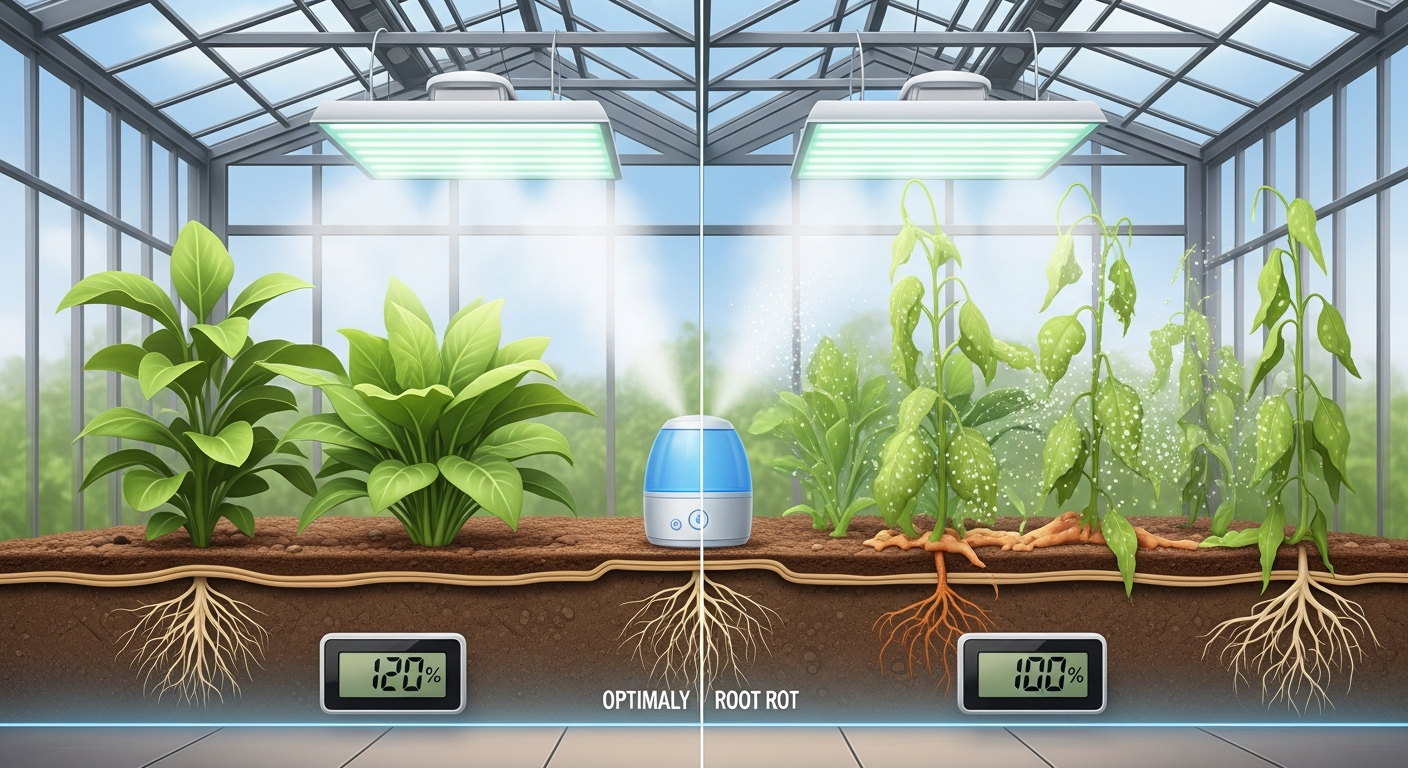
Understanding Root Rot
Root rot is a devastating fungal disease that attacks a plant’s most vital organ: its roots. It’s often a silent killer, with symptoms only appearing above ground when the damage is extensive. Caused by various soil-borne pathogens like Pythium, Phytophthora, and Rhizoctonia, root rot thrives in anaerobic (oxygen-deprived) conditions. These conditions are commonly created by overwatering, poor drainage, and persistently high soil moisture levels – often exacerbated by high ambient humidity that slows down soil evaporation.
- Causes: Overwatering, compacted soil, poor pot drainage, lack of oxygen around roots, and high humidity slowing substrate drying.
- Symptoms: Wilting, yellowing leaves (even with adequate watering), stunted growth, leaves dropping prematurely, and eventually, plant death. Inspection of the roots will reveal dark, mushy, soft roots instead of healthy, firm white ones.
- Impact: Compromises the plant’s ability to absorb water and nutrients, leading to rapid decline and death.
Deciphering Powdery Mildew
Powdery mildew, in contrast, is an airborne fungal disease that targets the foliage, stems, and sometimes even the flowers of plants. It’s easily identifiable by the characteristic white, powdery spots that appear on leaf surfaces. Unlike many other fungi, powdery mildew doesn’t necessarily require standing water but thrives in high humidity combined with poor air circulation, often preferring cooler temperatures at night and moderate temperatures during the day.
- Causes: High relative humidity (typically above 60-70%), poor air movement, overcrowding of plants, and specific temperature ranges (often 68-77°F / 20-25°C).
- Symptoms: White, flour-like patches appearing on leaves, stems, and buds. These patches can spread, eventually covering entire leaves, causing them to yellow, distort, and drop off.
- Impact: Reduces photosynthesis, weakens the plant, distorts growth, and can significantly decrease yield and crop quality.
The Science of Humidity: Why It Matters for Plant Health
Humidity isn’t just about how “wet” the air feels; it plays a critical role in a plant’s physiological processes, particularly transpiration – the evaporation of water from plant leaves. Understanding the science behind it empowers you to create an optimal greenhouse climate.
Relative Humidity (RH) and VPD
Relative Humidity (RH) is the most commonly discussed metric, representing the amount of water vapor in the air as a percentage of the maximum amount the air can hold at a given temperature. While a useful baseline, Vapor Pressure Deficit (VPD) offers a more precise understanding of the drying power of the air. VPD measures the difference between the amount of moisture in the air and how much moisture the air can hold when saturated. A low VPD (high humidity) means less evaporation and transpiration, while a high VPD (low humidity) means more. Finding the correct balance of RH and VPD is crucial for efficient nutrient uptake and preventing plant stress.
The Ideal Humidity Zone
The “ideal” humidity zone varies depending on the plant species and its growth stage. Generally:
- Propagation/Seedling Stage: Young plants often prefer higher humidity (70-80% RH) to establish roots and reduce transpiration stress, as they have limited root systems.
- Vegetative Growth: As plants mature, slightly lower humidity (50-70% RH) encourages robust growth, stronger stems, and efficient nutrient transport.
- Flowering/Fruiting Stage: Lower humidity (40-60% RH) is typically preferred during this stage. High humidity can lead to poor pollen viability, encourage botrytis (bud rot), and slow down the drying of flowers, making them susceptible to other fungal issues.
Consistently high relative humidity (above 70%) creates a breeding ground for both root rot (by slowing soil drying) and powdery mildew (by providing an ideal environment for spore germination). Conversely, excessively low humidity (below 30%) can stress plants, leading to wilting, nutrient deficiencies, and increasing susceptibility to pests like spider mites.
Mastering Humidity Control: Practical Strategies for Your Greenhouse
Taking control of your greenhouse humidity requires a multi-faceted approach, combining technology with good horticultural practices. Here’s how you can actively prevent root rot and powdery mildew:
Ventilation: The First Line of Defense
Proper ventilation is paramount. It involves exchanging stale, humid air inside the greenhouse with fresh, drier air from outside. This is a fundamental step in reducing greenhouse humidity levels.
- Natural Ventilation: Utilize roof vents, side vents, and roll-up sides to allow warmer, moist air to escape and cooler, drier air to enter. Position vents strategically for cross-flow.
- Exhaust Fans: Install exhaust fans to actively pull humid air out of the greenhouse, especially when natural ventilation isn’t sufficient due to weather conditions or greenhouse design. Pair them with intake louvers or vents.
- Automated Systems: Integrate environmental controllers that open/close vents or activate fans based on preset temperature and humidity thresholds.
Dehumidifiers and Humidifiers: Precision Control
For fine-tuning your greenhouse climate, especially in sealed or high-tech setups, these tools are invaluable.
- Dehumidifiers: Essential for removing excess moisture from the air when external air is also humid, or when plants are transpiring heavily. Choose a unit appropriate for the size of your greenhouse.
- Humidifiers: While often the goal is to reduce humidity, in very arid climates or for specific plants, humidifiers may be necessary to raise humidity to ideal levels, especially during propagation.
Smart Watering Practices
How and when you water significantly impacts the moisture levels in your growing medium, directly influencing the risk of root rot.
- Water Early: Water plants in the morning. This allows the foliage to dry before nightfall and gives the growing medium ample time to drain and begin drying before temperatures drop and humidity naturally rises at night.
- Avoid Overwatering: Only water when the top inch or two of the growing medium feels dry. Overwatering is a leading cause of root rot.
- Proper Drainage: Ensure all pots and grow beds have adequate drainage holes to prevent waterlogging.
- Drip Irrigation: Consider drip irrigation systems which deliver water directly to the root zone, minimizing wetting of foliage and reducing overall humidity compared to overhead sprinklers.
Air Circulation: Beyond Ventilation
While ventilation exchanges air, air circulation ensures that the air within the greenhouse is constantly moving, preventing pockets of stagnant, humid air.
- Oscillating Fans: Strategically placed oscillating fans create a gentle, continuous breeze that mimics natural wind. This helps to:
- Even out temperature and humidity throughout the greenhouse.
- Reduce the boundary layer of moist air around plant leaves, promoting healthy transpiration.
- Discourage fungal spores from settling on plant surfaces.
- Strengthen plant stems.
Monitoring Tools: Your Eyes and Ears
You can’t manage what you don’t measure. Reliable monitoring equipment is crucial for effective humidity control.
- Hygrometers: These devices measure relative humidity. Place them at plant canopy level in various locations.
- Thermometers: Temperature directly impacts RH and VPD. Monitor both.
- Data Loggers/Environmental Controllers: For more advanced control, these systems continuously record temperature and humidity data, allowing you to track trends, identify problem areas, and automate environmental controls.
Integrated Pest Management (IPM) & Humidity: A Holistic Approach
Humidity control is a critical component of a broader Integrated Pest Management (IPM) strategy. By proactively managing your greenhouse environment, you significantly reduce the need for reactive treatments for diseases like root rot and powdery mildew.
Canopy Management and Spacing
Even with excellent air circulation, dense plant canopies can create microclimates of high humidity, perfect for fungal growth. Regular pruning and proper spacing are vital:
- Pruning: Remove lower leaves and excess foliage that isn’t receiving adequate light or airflow. This improves air circulation within the plant canopy and reduces potential resting places for spores.
- Spacing: Ensure plants are not overcrowded. Adequate spacing allows for better air movement around individual plants and reduces leaf-to-leaf contact, which can transfer disease.
Environmental Cleanliness
A clean greenhouse is a healthy greenhouse. Good hygiene practices complement humidity control by removing potential sources of disease.
- Remove Debris: Promptly remove fallen leaves, dead plant material, and weeds. These can harbor fungal spores and provide moisture.
- Sanitize Tools: Regularly clean and sanitize pruning shears, trellising tools, and other equipment to prevent the spread of pathogens.
- Clean Surfaces: Keep floors, benches, and other surfaces clean and free of standing water or organic matter.
Preventing root rot and powdery mildew through effective humidity control is a cornerstone of successful greenhouse cultivation. By understanding the science behind humidity and implementing practical strategies – from robust ventilation and smart watering to precise monitoring and thoughtful plant spacing – you empower your plants to thrive. A proactive, holistic approach to environmental management not only saves your crop from devastating fungal diseases but also fosters a consistently healthy and productive greenhouse climate. Take control of your humidity, and watch your greenhouse flourish.