
For any dedicated grower, maintaining a stable and optimal climate within their greenhouse is paramount to success. While natural light is a fundamental requirement, controlling temperature fluctuations and minimizing heating costs, especially in colder months, presents a significant challenge. This is where the choice of glazing material becomes critical, and multi-wall polycarbonate has emerged as a frontrunner due to its exceptional insulating properties. But what precisely makes it so effective, and how does its thickness play a pivotal role in achieving superior thermal retention? Understanding this relationship is key to designing an energy-efficient greenhouse that supports thriving plants year-round.
Unpacking Multi-Wall Polycarbonate for Greenhouse Climates
Multi-wall polycarbonate sheets are a popular glazing material renowned for their durability, light weight, and excellent insulation capabilities. Unlike single-pane glass or film, these panels feature multiple layers of polycarbonate separated by air chambers. These chambers are the secret to their insulating power. Air, when trapped, acts as a natural insulator, significantly reducing the transfer of heat through the material. This design effectively creates a thermal barrier, slowing down heat loss from the greenhouse in winter and heat gain in summer.
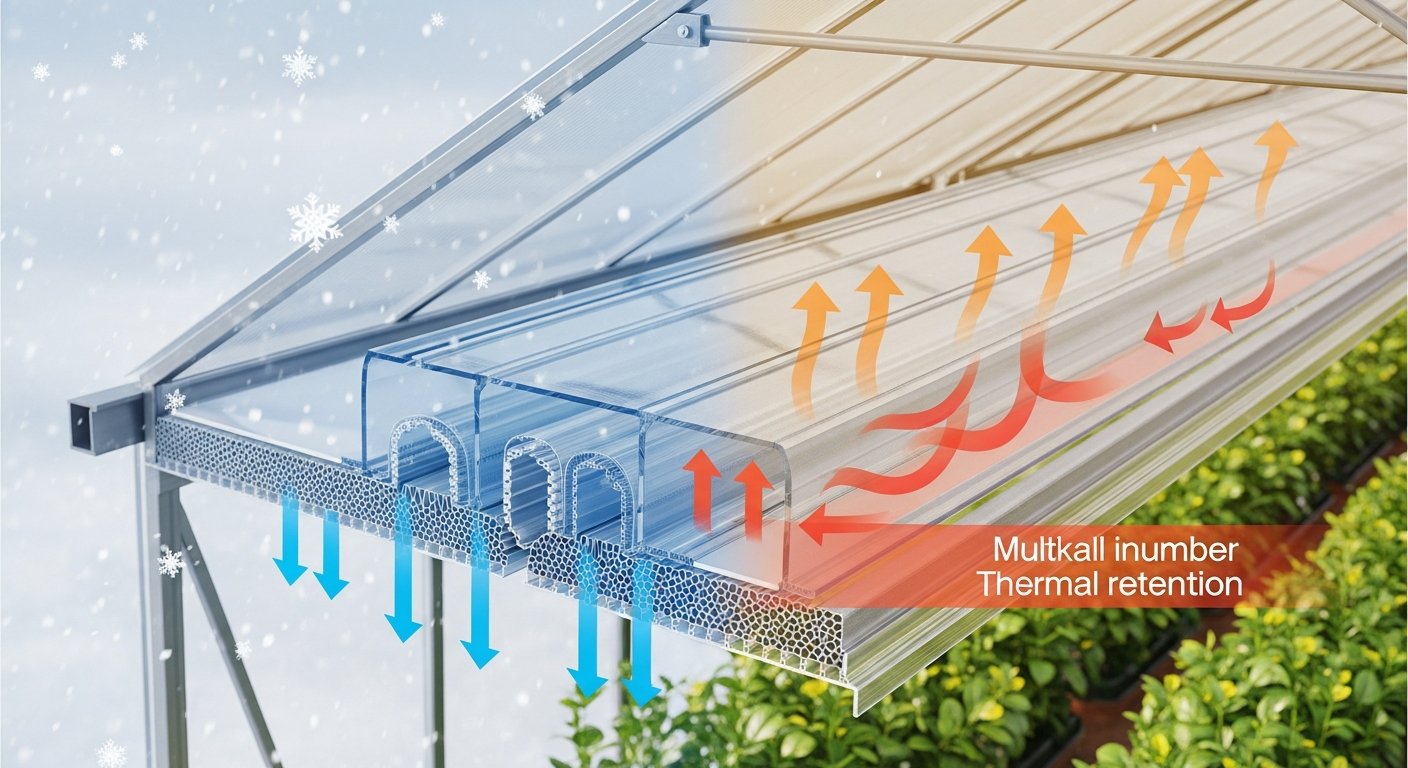
Beyond insulation, multi-wall polycarbonate offers several other advantages for greenhouse applications. It’s incredibly strong and impact-resistant, capable of withstanding harsh weather conditions like hail and heavy snow without shattering. This resilience translates to lower maintenance and replacement costs over time. Furthermore, it diffuses light beautifully, reducing hot spots and ensuring more even light distribution throughout the growing space, which benefits plant growth. Most types also include a UV-resistant coating, protecting both the material itself and the plants inside from harmful ultraviolet rays, while still allowing beneficial light spectra to pass through.
The Direct Correlation: Thickness and Thermal Retention
The most straightforward relationship in multi-wall polycarbonate is that between its thickness and its ability to retain heat. Simply put, the thicker the multi-wall polycarbonate panel, the better its thermal retention capabilities. This isn’t just a matter of having more material; it’s about the increased number and size of the air chambers within the panel.
Consider the basic principles of insulation: the more layers of trapped air, the harder it is for heat to pass through. Thinner panels, such as 4mm or 6mm multi-wall polycarbonate, typically feature just two walls and one air chamber. While significantly better than single-pane glass, their insulating value is modest. As you move to thicker options like 8mm, 10mm, 16mm, or even 25mm and 32mm, you introduce more walls (e.g., triple-wall, five-wall, or even honeycomb structures) and thus more distinct air chambers.
To quantify thermal retention, we often refer to two key metrics: U-value and R-value.
- U-value (or U-factor): This measures the rate of heat transfer through a material. A lower U-value indicates better insulating properties, meaning less heat is escaping (or entering).
- R-value: This measures a material’s resistance to heat flow. A higher R-value indicates better insulating properties, meaning the material is more effective at preventing heat transfer.
As the thickness of multi-wall polycarbonate increases, its R-value typically goes up, and its U-value goes down. For example, a 4mm twin-wall polycarbonate might have a U-value around 0.82 BTU/hr-ft²-°F (R-value ~1.2), whereas a 16mm five-wall panel could achieve a U-value closer to 0.40 BTU/hr-ft²-°F (R-value ~2.5), and specialized 25mm or 32mm panels can push insulation even further. This significant difference directly translates to how much heat you’ll lose from your greenhouse and, consequently, how much energy you’ll need to expend to maintain desired temperatures.
Practical Implications for Your Greenhouse Environment
Choosing the right multi-wall polycarbonate thickness has profound practical implications for your greenhouse operation, impacting everything from your energy bill to the health of your plants.
Energy Efficiency and Heating Costs
This is perhaps the most obvious and impactful benefit. In climates with cold winters, heating a greenhouse can be the single largest operational expense. By opting for thicker multi-wall polycarbonate with superior thermal retention, you drastically reduce heat loss. This means your heating system works less frequently and less intensely, leading to substantial savings on propane, natural gas, or electricity bills. Over the lifespan of your greenhouse, the initial higher cost of thicker panels can easily be offset by these long-term energy savings, offering an excellent return on investment.
Temperature Stability and Plant Health
Beyond just reducing overall heat loss, thicker multi-wall polycarbonate helps maintain a more stable internal temperature. Drastic temperature swings can stress plants, hinder growth, and even damage sensitive crops. Better insulation minimizes these fluctuations, creating a more consistent and forgiving growing environment. This stability is crucial for delicate seedlings, exotic plants, or crops requiring very specific temperature ranges for optimal development and yield.
Condensation Control
Condensation occurs when warm, moist air inside the greenhouse comes into contact with cold surfaces, like the glazing. While some condensation is inevitable, excessive amounts can reduce light transmission, drip onto plants (potentially spreading diseases), and encourage fungal growth. Thicker, better-insulated multi-wall polycarbonate keeps the interior surface temperature of the glazing higher, closer to the ambient air temperature. This reduces the temperature differential, thereby minimizing the formation of condensation and promoting a healthier, drier environment for your plants.
Light Transmission and Structural Integrity
It’s important to note a slight trade-off: as panels get thicker and feature more internal walls, there can be a marginal reduction in overall light transmission. Each additional wall and air chamber slightly scatters or absorbs light. However, for most growing applications, this reduction is often negligible compared to the significant gains in thermal performance and temperature stability, especially in colder regions. Modern multi-wall polycarbonate is engineered to maximize light diffusion even with multiple layers. Furthermore, thicker panels inherently offer greater structural rigidity and impact resistance, providing enhanced protection against strong winds, heavy snow loads, and accidental impacts, which can be a significant advantage in challenging environments.
Choosing the Right Thickness for Your Greenhouse
Selecting the ideal multi-wall polycarbonate thickness is a decision that balances upfront costs with long-term performance and energy savings. Here’s how to approach it:
- Your Climate Zone: This is arguably the most critical factor. If you live in a region with mild winters and minimal heating requirements, a thinner panel (e.g., 6mm or 8mm twin-wall) might suffice. However, for colder climates with extended freezing temperatures, investing in 10mm, 16mm, or even 25mm multi-wall panels will pay dividends in energy savings and plant protection.
- The Crops You Grow: Are you growing hardy vegetables or delicate orchids? Plants with specific and narrow temperature requirements will benefit immensely from the superior temperature stability offered by thicker glazing. If you’re only growing cold-tolerant plants or using your greenhouse seasonally, your insulation needs might be less stringent.
- Your Heating Budget and Goals: Are you aiming for a year-round growing season with minimal heating costs, or is supplemental heating only for occasional cold snaps? A higher initial investment in thicker polycarbonate directly translates to lower ongoing heating expenses. Project your potential energy savings over 5-10 years to understand the true cost-benefit.
- Greenhouse Structure and Design: Ensure your greenhouse frame is designed to accommodate the weight and dimensions of thicker panels. While polycarbonate is lightweight compared to glass, larger panels of greater thickness can still require robust framing.
Practical Tip: Don’t automatically default to the thickest option. Perform a cost-benefit analysis considering your specific climate, desired growing conditions, and budget. Sometimes, the incremental benefit of moving from 16mm to 25mm might not justify the additional cost for your particular application, while moving from 6mm to 10mm could be a game-changer.
Conclusion: Mastering Your Greenhouse Climate
The relationship between multi-wall polycarbonate thickness and thermal retention is a cornerstone of efficient greenhouse climate control. By understanding how additional air chambers enhance insulation, reduce U-values, and increase R-values, growers can make informed decisions that directly impact their energy consumption, plant health, and overall success. Investing in the appropriate thickness of multi-wall polycarbonate is not just about buying a glazing material; it’s about investing in a more stable, energy-efficient, and productive growing environment. For the dedicated enthusiast at greenhouseclimates.com, this knowledge empowers you to build or upgrade a greenhouse that truly thrives, regardless of the external conditions.