
In the intricate world of hydroponics, where plants thrive without soil, every element of the nutrient solution plays a critical role in their growth and vitality. Among these elements, one often remains an unseen hero, yet its presence, or lack thereof, can dramatically impact the health of your plants: dissolved oxygen (DO). Just as terrestrial plants rely on atmospheric oxygen for their roots, hydroponic roots depend entirely on the oxygen dissolved in their watery environment. Failing to adequately monitor and maintain optimal oxygen levels in your hydroponic solution is akin to asking a marathon runner to perform without breathing properly. This comprehensive guide will delve into why dissolved oxygen is paramount for robust root health, explore the factors that influence its concentration, provide practical methods for monitoring, and offer actionable strategies to ensure your hydroponic garden flourishes with healthy, oxygen-rich roots.
The Indispensable Role of Dissolved Oxygen in Hydroponic Root Health
For many hydroponic growers, the focus often lies on nutrient ratios, pH balance, and lighting schedules. While these are undeniably crucial, overlooking the significance of dissolved oxygen is a common pitfall that can lead to a cascade of problems. Understanding oxygen’s fundamental functions at the root level is the first step towards cultivating a truly thriving hydroponic system.
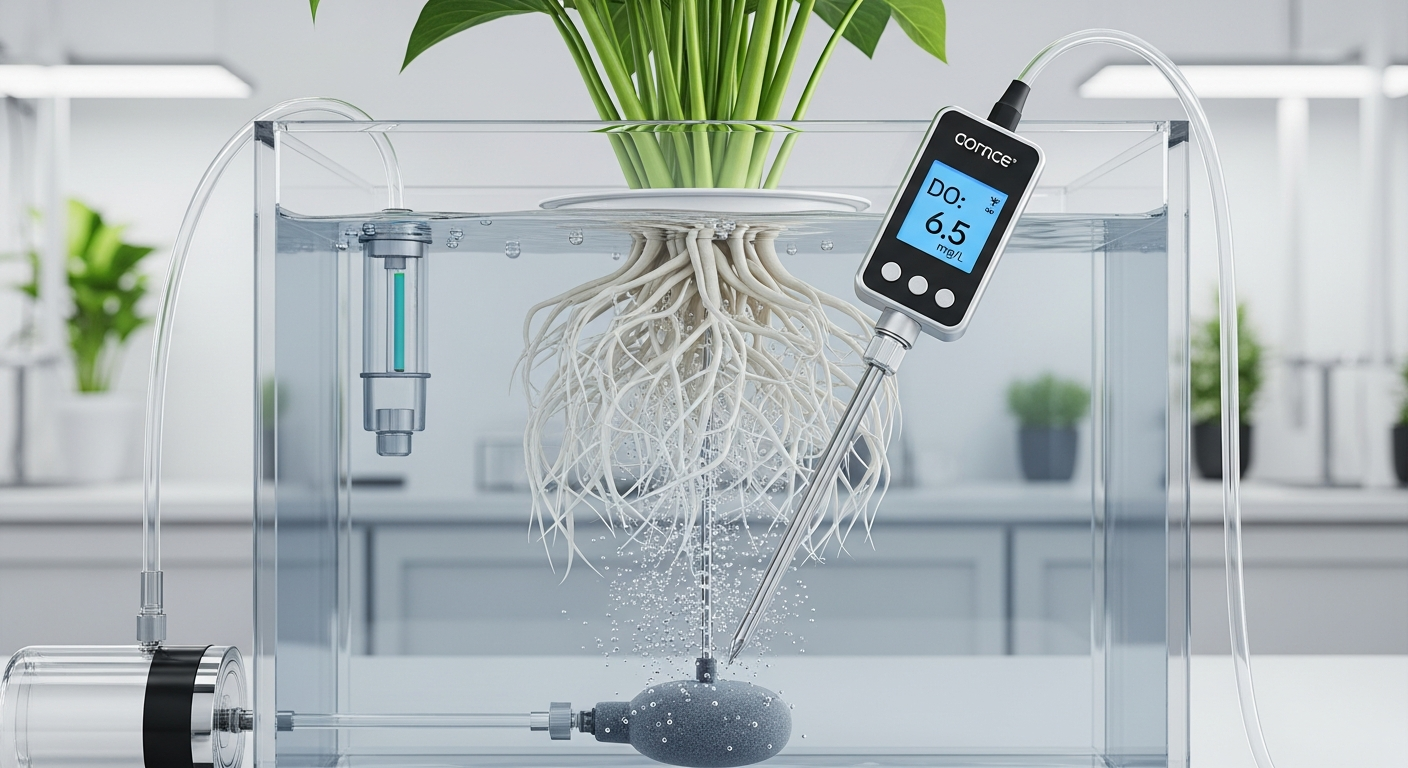
Why Oxygen is Crucial for Hydroponic Roots
- Root Respiration and Energy Production: Like all living cells, plant root cells require energy to perform their functions. This energy, in the form of Adenosine Triphosphate (ATP), is primarily generated through a process called aerobic respiration, which requires oxygen. Without sufficient oxygen, roots cannot efficiently produce the energy needed for growth, development, and nutrient transport.
- Nutrient Uptake Mechanisms: Active transport, the primary mechanism by which plants absorb essential mineral nutrients from the solution, is an energy-intensive process. A significant portion of the ATP generated by root respiration is dedicated to powering the pumps and channels responsible for drawing nutrients like nitrogen, phosphorus, and potassium into the roots. Low oxygen levels directly impede this uptake, leading to nutrient deficiencies even when ample nutrients are present in the solution.
- Water Absorption: While water uptake is largely a passive process driven by transpiration, the overall health and functionality of root cells, which depend on adequate oxygen, indirectly influence the plant’s ability to absorb water efficiently. Unhealthy roots struggle to maintain turgor and transport water throughout the plant.
- Preventing Anaerobic Conditions and Pathogen Growth: One of the most critical roles of dissolved oxygen is to prevent the development of anaerobic (oxygen-free) conditions in the nutrient solution. Anaerobic environments are breeding grounds for harmful anaerobic bacteria and fungi, including those responsible for devastating root rot diseases. These pathogens thrive in the absence of oxygen, attacking weakened roots and quickly leading to plant death.
- Enhancing Beneficial Microbial Activity: Conversely, many beneficial microorganisms that can protect roots from pathogens and aid in nutrient availability are aerobic, meaning they require oxygen to survive and thrive. Maintaining high DO levels supports these helpful allies, contributing to a robust root ecosystem.
Symptoms of Oxygen Deficiency (Hypoxia/Anoxia)
When dissolved oxygen levels drop below optimal ranges, roots begin to suffer, and the symptoms quickly manifest throughout the plant. Recognizing these signs early can be vital for intervention:
- Stunted Growth and Reduced Vigor: One of the earliest and most common indicators. Plants will grow slowly, appear weak, and lack the vibrant health of well-oxygenated specimens.
- Wilting and Yellowing Leaves: Poor nutrient and water uptake due to struggling roots can cause leaves to lose turgor and turn yellow, mimicking symptoms of nutrient deficiencies or underwatering.
- Brown, Slimy, or Mushy Roots: The hallmark sign of root rot, which is often a direct consequence of low dissolved oxygen. Healthy roots are typically white or cream-colored, firm, and fuzzy with root hairs. Oxygen-deprived roots become discolored, soft, and develop an unpleasant odor.
- Poor Nutrient Absorption: Even if your nutrient solution is perfectly balanced, roots will be unable to absorb them effectively, leading to specific nutrient deficiency symptoms like chlorosis or stunted development.
- Increased Susceptibility to Disease: Weakened roots are far more vulnerable to opportunistic pathogens, making the entire plant susceptible to various diseases.
Optimal Dissolved Oxygen Levels for Hydroponics
While the exact optimal DO levels can vary slightly depending on plant species, growth stage, and water temperature, a general guideline for most hydroponic systems is to maintain dissolved oxygen concentrations between 5 to 8 mg/L (parts per million or ppm). Some fast-growing plants, especially in their vegetative stage, can benefit from even higher levels, up to 10-12 mg/L. Levels below 5 mg/L are considered suboptimal, and anything below 3 mg/L is critically low and will likely lead to severe root damage and plant stress. It’s crucial to remember that colder water naturally holds more oxygen, so maintaining these levels becomes more challenging as water temperature rises.
Factors Influencing Dissolved Oxygen Levels in Hydroponic Solutions
Managing dissolved oxygen is an ongoing process because numerous environmental and system-specific factors constantly influence its concentration. Understanding these variables empowers growers to proactively maintain ideal conditions rather than react to problems.
Water Temperature
This is perhaps the most significant factor affecting dissolved oxygen. There is an inverse relationship between water temperature and its ability to hold dissolved gases, including oxygen. Colder water holds more dissolved oxygen than warmer water. For example, water at 20°C (68°F) can hold significantly more oxygen than water at 30°C (86°F). As temperatures rise, oxygen solubility decreases, making it harder to maintain optimal DO levels. This is why temperature management, often overlooked, is as critical as aeration for root health.
Aeration Method and Efficiency
The equipment used to introduce oxygen into the nutrient solution plays a primary role. Different aeration methods have varying efficiencies:
- Air Pumps and Air Stones: The most common method. The size and power of the air pump, the porosity and number of air stones, and their placement within the reservoir all impact aeration efficiency. Finer bubbles from a quality air stone provide more surface area for gas exchange.
- Venturi Injectors: These devices draw air into the water stream as it passes through a constricted section, creating a powerful mixing and aeration effect. They are highly efficient but typically require a strong water pump.
- Waterfalls and Recirculation: Any method that causes the nutrient solution to fall, cascade, or agitate significantly exposes more water surface to the air, facilitating oxygen absorption. This is particularly effective in systems like Nutrient Film Technique (NFT) or Drip systems where the returning solution is often allowed to splash back into the reservoir.
- Oxygen Generators: Less common for hobbyists due to cost and complexity, these systems can generate pure oxygen and inject it directly into the solution, offering highly precise control over DO levels.
Nutrient Solution Composition and Hygiene
- High Organic Loads: Decaying plant matter, algae, and excess organic compounds in the nutrient solution can consume dissolved oxygen as they decompose through bacterial action. This organic decomposition competes directly with plant roots for available oxygen.
- Algae and Biofilm Growth: Algae, while photosynthesizing and producing oxygen during the day, consume oxygen at night. More importantly, extensive algae and bacterial biofilm growth on reservoir walls and tubing can create oxygen-depleting zones and harbor anaerobic pathogens.
Plant Respiration and System Load
As plants grow larger and develop more extensive root systems, their demand for oxygen increases significantly. A system with a high density of mature plants will naturally consume more dissolved oxygen than a system with small seedlings. This “system load” means that aeration requirements increase as your plants mature.
Container Size and Solution Volume
Larger reservoirs or solution volumes tend to be more stable in terms of DO levels and temperature fluctuations. Smaller, more confined volumes of nutrient solution can experience rapid drops in oxygen concentration, especially if aeration is inadequate or temperatures are high.
Practical Methods for Monitoring Dissolved Oxygen (DO)
Effective management of dissolved oxygen begins with accurate monitoring. Guessing or relying solely on visual cues can lead to irreparable damage. Investing in the right tools and understanding how to use them is essential for any serious hydroponic grower.
Why Monitor Dissolved Oxygen?
Monitoring DO levels allows for a proactive approach to root health. Instead of waiting for visible signs of root rot or nutrient lockout, which often indicate a severe and long-standing problem, regular monitoring helps you identify declining oxygen levels early. This enables you to take corrective action before your plants experience significant stress or damage, preventing crop loss and optimizing yields.
Dissolved Oxygen Meters (DO Meters)
DO meters are the most reliable and accurate tools for measuring dissolved oxygen. They come in various types and price ranges:
- Electrochemical DO Meters (Galvanic and Polarographic): These meters use an electrode covered by an oxygen-permeable membrane. Oxygen diffuses across the membrane and reacts at the electrode, generating an electrical current proportional to the oxygen concentration.
- Galvanic probes are “self-polarizing” and don’t require warm-up time or external voltage.
- Polarographic probes require a brief warm-up period and external polarization voltage.
- Pros: Generally affordable, widely available.
- Cons: Require regular calibration, membrane replacement, and electrolyte refills; can be sensitive to flow rates.
- Optical DO Meters: These advanced meters use fluorescence-based technology. A light source excites a fluorescent dye on a sensor cap, and the luminescence is “quenched” by the presence of oxygen. The degree of quenching is inversely proportional to the oxygen concentration.
- Pros: Highly accurate, less maintenance (no membranes or electrolyte), more stable calibration, less affected by flow rates, faster response times.
- Cons: Generally more expensive than electrochemical meters.
Tips for Using DO Meters:
- Calibration is Key: Always calibrate your DO meter according to the manufacturer’s instructions. Electrochemical meters often require calibration in air-saturated water (which contains 100% saturation of oxygen at a given temperature and atmospheric pressure) or zero-oxygen solutions. Regular calibration ensures accuracy.
- Maintenance: Keep the probe clean. For electrochemical probes, replace the membrane and electrolyte solution as recommended. Store probes properly to prevent drying out or damage.
- Temperature Compensation: Many DO meters have automatic temperature compensation, which is crucial given the strong influence of temperature on oxygen solubility. Ensure this feature is active or manually compensate for temperature readings.
- Testing Protocol: Take samples from various points in your reservoir, especially where roots are concentrated. Take readings at different times of the day, particularly during peak plant activity and at night, to understand daily fluctuations.
Visual Inspection of Roots
While not a precise measurement, regular visual inspection of your plant roots provides valuable qualitative data. Healthy hydroponic roots should be bright white or off-white, robust, and free of sliminess or unpleasant odors. Any sign of browning, bogginess, or a foul smell is a strong indicator of low dissolved oxygen and potential root rot. This should be a complementary practice to DO meter readings, not a replacement.
Automated Monitoring Systems
For larger or more advanced hydroponic operations, automated monitoring systems can continuously track dissolved oxygen levels, often alongside other parameters like pH, EC, and temperature. These systems can be integrated with environmental controllers to trigger alarms or even adjust aeration equipment automatically, providing a high level of control and peace of mind.
Frequency of Monitoring
For new growers or those troubleshooting issues, daily monitoring is advisable. Once a system is stable, monitoring 2-3 times a week, or whenever you perform nutrient solution changes, can be sufficient. Always monitor if you notice any signs of plant stress or when reservoir temperature fluctuates significantly.
Strategies for Optimizing and Maintaining Optimal DO Levels
Once you understand the importance of dissolved oxygen and how to measure it, the next step is to implement effective strategies to ensure your plants consistently receive the oxygen they need. This often involves a multi-pronged approach combining equipment optimization, environmental control, and good hygiene practices.
Enhancing Aeration Efficiency
Your aeration system is the primary means of introducing oxygen into the nutrient solution. Optimizing it is paramount:
- Proper Sizing of Air Pumps and Air Stones: Ensure your air pump is adequately sized for the volume of your reservoir and the number of air stones. Undersized pumps will struggle to provide sufficient oxygen. Use multiple air stones, especially in larger reservoirs, to distribute oxygen evenly.
- Quality Air Stones: Invest in high-quality, porous air stones that produce fine bubbles. Finer bubbles create more surface area for oxygen transfer to the water. Ceramic or carborundum air stones are generally more effective than cheap plastic ones.
- Strategic Placement: Place air stones at the bottom of the reservoir, allowing bubbles to travel through the maximum column of water. Ensure they are not obstructed by roots or other equipment.
- Deep Water Culture (DWC) Specifics: DWC systems, where roots are constantly submerged, are highly dependent on robust aeration. Ensure air stones are providing vigorous bubbling across the entire root zone.
- NFT and Drip Systems: While roots in these systems often have some exposure to air, ensuring sufficient solution movement and agitation in the return line and reservoir is still crucial. A waterfall effect as the solution returns to the reservoir can significantly boost DO.
Temperature Management
Since colder water holds more oxygen, controlling the temperature of your nutrient solution is an indirect but powerful method to optimize DO:
- Chillers: For larger setups or in warm climates, a water chiller is the most effective way to maintain ideal solution temperatures, typically between 18-22°C (65-72°F).
- Insulation: Insulate your reservoir with reflective materials, styrofoam, or insulated blankets to prevent heat transfer from the environment.
- Reservoir Placement: Locate your reservoir in the coolest part of your grow space, away from direct light, heat sources, or hot equipment. Burying it partially in the ground can also help keep it cool in some environments.
Maintaining Solution Hygiene
A clean system is an oxygen-efficient system:
- Regular Reservoir Cleaning: Drain and clean your reservoir regularly, ideally with every nutrient change. Remove any accumulated sludge, algae, or biofilm. Use a mild bleach solution (diluted) or hydrogen peroxide for sterilization, followed by a thorough rinse.
- Prevent Algae and Biofilm: Block light from entering the reservoir and plumbing to prevent algae growth. Use opaque containers and tubing.
- Sterilize Components: Periodically clean and sterilize pumps, tubing, and air stones to remove any organic buildup that can deplete oxygen or harbor pathogens.
Beneficial Microbes and Supplements
Certain beneficial microorganisms can enhance root health and indirectly support oxygen levels:
- Beneficial Bacteria/Fungi: Products containing beneficial microbes like Bacillus subtilis or various mycorrhizal fungi can help roots resist pathogens, improve nutrient uptake, and consume decaying organic matter, thus reducing oxygen depletion. Ensure your DO levels are high enough for these aerobic organisms to thrive.
- Hydrogen Peroxide (H₂O₂): While H₂O₂ can temporarily release oxygen into the solution and act as a sterilizer, it should be used with caution and only as a short-term solution or for sanitization. High concentrations can damage roots and break down chelated nutrients. It is not a substitute for proper aeration.
Understanding System Specifics
Each hydroponic system type has unique characteristics that influence DO dynamics:
- Deep Water Culture (DWC): Heavily reliant on direct aeration of the submerged roots. Needs robust air pumps and air stones.
- Nutrient Film Technique (NFT): Roots often have partial air exposure, but good flow rate and a “waterfall” effect in the return channel and reservoir are crucial for oxygen replenishment.
- Aeroponics: Roots are misted with nutrient solution, providing excellent oxygenation due to direct air contact. However, if misters fail or clog, oxygen supply is immediately cut off, leading to rapid root desiccation.
- Drip Systems: Similar to NFT, ensure the recirculating solution is well-oxygenated before it reaches the drippers.
Conclusion
In the highly controlled environment of hydroponics, every detail matters, and dissolved oxygen is undeniably one of the most fundamental yet frequently underestimated parameters. It is the lifeblood of your root zone, directly influencing nutrient uptake, water absorption, and the plant’s overall resilience against disease. By understanding the critical role of DO, recognizing the factors that influence its levels, diligently monitoring your solution with appropriate tools, and implementing strategic aeration and temperature management techniques, you can foster a root environment that is vibrant, healthy, and highly productive.
Proactive management of dissolved oxygen is not just a best practice; it is a cornerstone of successful hydroponic cultivation. Invest in a reliable DO meter, commit to regular monitoring, and optimize your system for maximum oxygenation. The reward will be a garden brimming with robust plants, explosive growth, and bountiful harvests, all rooted in a perfectly oxygenated solution.