
The velvety canvas of the night sky, once a universal spectacle, is steadily fading from our view. This ethereal loss isn’t due to astronomical shifts but rather an earthly phenomenon: light pollution. As urban centers expand and technology advances, our artificial illumination has spilled beyond its intended boundaries, creating an unwelcome glow that obscures the stars, disrupts ecosystems, and even impacts human health. While the problem feels pervasive, the good news is that managing light pollution is entirely within our grasp. Through thoughtful design and strategic application of techniques for shielding and reflecting stray light, we can reclaim the night and foster a healthier environment for all. This article will delve into the nuances of light pollution, exploring practical, actionable strategies to contain, direct, and minimize light spill, ensuring our illumination serves its purpose without compromising the integrity of the night.
Understanding the Problem: The Many Faces and Far-Reaching Impacts of Light Pollution
Before we can effectively manage light pollution, it’s crucial to understand its various forms and the profound consequences it engenders. Light pollution isn’t just about bright lights; it’s about misdirected, excessive, or unshielded artificial light at night (ALAN) that alters natural light levels in the outdoor environment.
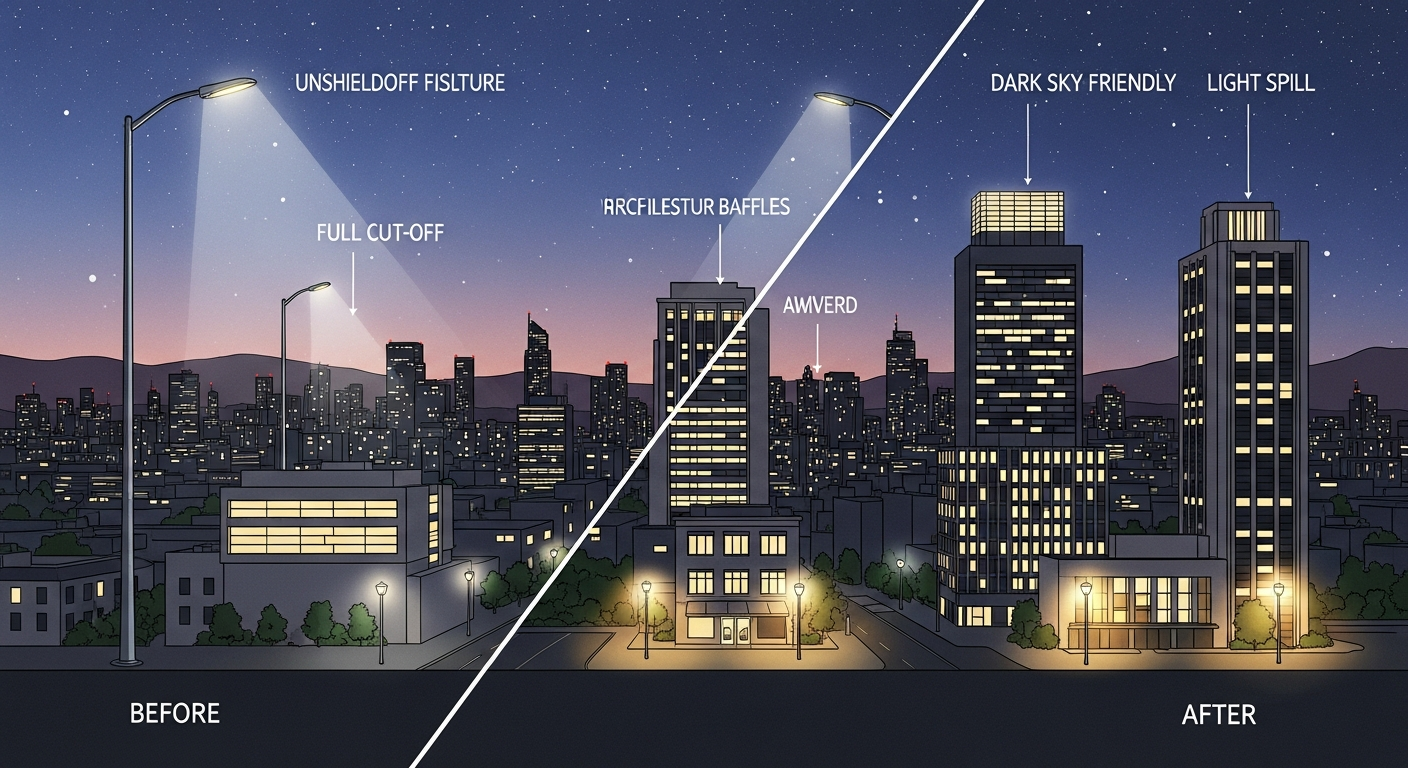
Types of Light Pollution
- Skyglow: Perhaps the most recognizable form, skyglow is the diffuse, upward-scattered light that brightens the night sky over populated areas, effectively washing out stars and hindering astronomical observation. It’s an accumulation of light from countless sources reflecting off atmospheric particles.
- Light Trespass: This occurs when unwanted light from one property spills onto another. Imagine a neighbor’s security light shining directly into your bedroom window, or a street light illuminating a private garden unnecessarily. It’s an infringement on the right to darkness.
- Glare: Excessive brightness that causes visual discomfort, reduces visibility, and can even be dangerous. Direct glare comes straight from the light source, while reflected glare bounces off surfaces. Both can impair vision and create safety hazards.
- Light Clutter: An excessive grouping of bright, confusing, and often unnecessary lights. Think of an overly lit commercial strip with multiple unshielded signs and floodlights, creating a disorienting and often visually unpleasant environment.
The Far-Reaching Impacts of Unmanaged Light
The consequences of light pollution extend far beyond dimming our view of the cosmos. They ripple through ecosystems, impact human well-being, and represent significant energy waste.
- Environmental Disruption:
- Wildlife: Many species, from nocturnal insects to migratory birds and sea turtles, rely on natural light-dark cycles for navigation, foraging, mating, and predator avoidance. ALAN disrupts these crucial behaviors, leading to disorientation, increased predation, reduced reproductive success, and population declines. For instance, sea turtle hatchlings, instinctively drawn to the brightest horizon (which should be the moonlit ocean), are often lured inland by coastal lights, leading to exhaustion and death.
- Ecosystems: The disruption of insect populations, a vital food source for many animals, cascades through food webs, potentially altering entire ecosystems. Plant growth cycles can also be affected by prolonged artificial illumination.
- Human Health Concerns:
- Circadian Rhythm Disruption: Human biology is tuned to a natural light-dark cycle. Exposure to ALAN, particularly blue-rich light, suppresses melatonin production, a hormone critical for sleep regulation and overall health. Chronic disruption of our circadian rhythms has been linked to increased risks of sleep disorders, obesity, depression, and certain cancers.
- Visual Impairment and Safety: Glare from unshielded lights can temporarily blind drivers and pedestrians, increasing the risk of accidents. It also reduces contrast, making it harder to see details, ironically compromising safety rather than enhancing it.
- Astronomical Research and Heritage: The ability to study celestial objects and understand our place in the universe is severely compromised by skyglow. Observatories are forced to locate in increasingly remote areas, and the general public loses access to a fundamental human experience – the wonder of a star-filled night.
- Energy Waste and Carbon Footprint: Light that goes where it’s not needed – up into the sky, across property lines, or simply in excessive amounts – is wasted energy. This translates directly into higher utility bills and increased carbon emissions, exacerbating climate change.
Understanding these multifaceted impacts underscores the urgency and importance of adopting effective light management strategies. The goal is not to eliminate outdoor lighting, but to make it smarter, more targeted, and responsible.
The Principles of Effective Light Management: Shielding and Containment
The cornerstone of combating light pollution lies in the principle of directing light precisely where it is needed and nowhere else. This involves strategic shielding and containment, ensuring that every lumen serves a purpose without becoming “stray light.”
Embracing Full Cut-Off Fixtures
One of the most effective strategies is the widespread adoption of full cut-off (FCO) fixtures. These luminaires are designed to emit no light above the horizontal plane, meaning all light is directed downwards or horizontally below the level of the fixture. This prevents light from escaping upwards into the sky or spilling indiscriminately sideways.
- How They Work: FCO fixtures achieve their aim through carefully engineered housings, reflectors, and refractors that contain and redirect light. They often feature an opaque top and sides, ensuring light only exits through a downward-facing aperture.
- Benefits: By eliminating upward light, FCO fixtures drastically reduce skyglow. They also minimize light trespass onto adjacent properties and significantly cut down on glare by concealing the light source. This makes them ideal for streetlights, parking lot lighting, and general area illumination.
Strategic Shielding Attachments and Luminaire Design
Beyond full cut-off designs, various shielding mechanisms can be integrated into or added to existing fixtures to control light direction and intensity.
- Internal Reflectors and Optics: High-quality luminaires utilize sophisticated internal reflectors and lenses to shape the light beam. These components are designed to distribute light efficiently and uniformly over the target area while minimizing spill. A well-designed reflector can significantly enhance the effectiveness of a light source, guiding its output precisely.
- Baffles and Louvers: These are internal or external structures that block direct line of sight to the light source from certain angles. Baffles are typically opaque plates or grids that prevent glare and direct light more narrowly, while louvers use a series of parallel blades to achieve a similar effect, often seen in indoor office lighting but also applicable to some outdoor fixtures for glare control.
- Hoods and Visors: External shields, often shaped like hoods or visors, can be added to fixtures to physically block light from traveling in unwanted directions. These are particularly useful for wall-mounted lights, directing light downwards and preventing it from shining outwards or upwards into adjacent areas.
- Adjustable Fixtures: Some luminaires offer adjustable heads or optics, allowing installers to precisely aim the light beam. This flexibility is crucial for task-specific lighting, ensuring light is concentrated only on the required area.
Understanding Upward Light Ratio (ULR)
The Upward Light Ratio (ULR) is a metric that quantifies the proportion of a luminaire’s total light output that is emitted upwards. For dark-sky friendly lighting, the goal is to achieve a ULR of 0% – meaning absolutely no light goes directly into the sky. When evaluating lighting solutions, checking the ULR specification is a key indicator of its contribution to light pollution. While a ULR of 0% is ideal, sometimes minimal upward spill from reflection off the ground is unavoidable; however, direct upward emission from the fixture itself should always be eliminated.
By prioritizing full cut-off designs, incorporating strategic shielding, and paying close attention to luminaire optics and ULR, we can effectively contain light, making it a servant rather than a pollutant. This foundational approach significantly reduces skyglow, light trespass, and glare, paving the way for further refinements in light management.
Strategic Minimization and Smart Lighting Techniques
Beyond shielding, effective light pollution management involves a holistic approach that embraces minimization and intelligent control. It’s not just about where the light goes, but also how much light is used, what kind of light it is, and when it is active. This section explores techniques that reduce overall light output, control its temporal presence, and manage surface reflectivity.
The Right Light, The Right Amount, The Right Time
This mantra encapsulates the essence of responsible lighting, ensuring efficiency and minimizing environmental impact.
- Optimizing Lumen Output: Use Only What’s Necessary
- Avoid Over-lighting: A common mistake is to install lights that are far brighter than required for the task. Evaluate the actual illuminance needed for safety and visibility in a given area. For instance, a pathway needs significantly less light than a sports arena.
- Lumen Efficacy: Choose fixtures with high lumen efficacy (lumens per watt), meaning they produce more light for less energy. Modern LED technology excels in this area, offering significant energy savings and precise control.
- Task-Specific Lighting: Instead of broad floodlighting, opt for focused lighting that illuminates only the specific task area. For example, a downward-facing fixture directly over a doorway is more effective and less polluting than a wide-angle floodlight.
- Choosing Appropriate Color Temperature (CCT)
- Warm vs. Cool Light: Light color is measured in Kelvin (K). Cooler lights (e.g., 4000K-6000K, often appearing blue-white) scatter more readily in the atmosphere, contributing significantly more to skyglow and having a greater impact on wildlife and human melatonin suppression.
- Embrace Warm Light: Opt for warmer color temperatures, typically 3000K or lower (yellowish to orange light). These lights have a reduced blue light component, making them less disruptive to natural cycles and less likely to contribute to skyglow. Many dark-sky initiatives recommend 2700K or even 2200K for outdoor use where practical.
- Adaptive Lighting Controls: Light When and Where It’s Needed
- Motion Sensors: Integrate motion sensors into security and pathway lighting. Lights activate only when movement is detected, illuminating the area for a set period, then dimming or turning off. This drastically reduces “on” time and energy consumption.
- Timers: Program lights to turn off or dim significantly during hours when they are not critically needed. For example, commercial parking lot lights could be dimmed to 25% after midnight, or residential porch lights could be set to turn off after bedtime.
- Dimmers: Install dimmers on outdoor lights to adjust brightness according to ambient light levels or specific needs. This offers flexibility and further reduces unnecessary light output.
- Adaptive Street Lighting: Advanced systems can adjust street light brightness based on traffic volume, weather conditions, or time of night, often leveraging networked controls for dynamic optimization.
Managing Unwanted Reflection and Surface Choices
While fixture shielding deals with direct light emission, light can also become “stray” through reflection off surfaces. Managing this aspect is crucial.
- Minimizing Upward Reflection from Ground Surfaces:
- Surface Material: Light-colored surfaces (like white concrete or light asphalt) reflect more light than darker surfaces (dark asphalt, natural earth). While sometimes unavoidable, being mindful of ground surface reflectivity directly beneath and around outdoor lighting can reduce upward light bounce.
- Targeted Illumination: By ensuring light is precisely targeted, less light will hit highly reflective surfaces beyond the immediate area needing illumination.
- Strategic Use of Reflectors (Internal to Fixtures):
- It’s important to distinguish between unwanted reflection *off surfaces* and the controlled use of reflectors *within* a luminaire. High-quality fixtures incorporate internal reflectors designed to maximize the efficiency of light delivery to the target area while minimizing spill. These reflectors are critical components of an effective shielding strategy, ensuring light is directed downwards and outwards with precision, rather than allowing it to scatter indiscriminately.
- Indoor Light Spill: Don’t forget that indoor lighting can contribute to light pollution if it escapes through windows. Encourage the use of blinds, curtains, or window coverings at night, especially in brightly lit buildings.
By thoughtfully applying these minimization and smart lighting techniques, we can significantly reduce the overall light footprint, conserving energy, supporting healthier ecosystems, and restoring the natural darkness of the night sky.
Best Practices and Implementation Strategies for Different Settings
Managing light pollution is a shared responsibility, and the most effective strategies often vary depending on the specific application and environment. From individual homeowners to urban planners, everyone has a role to play.
Residential Settings: Homeowner’s Guide to Responsible Lighting
Homeowners can make a substantial impact by adopting a few simple principles:
- Porch and Entryway Lighting:
- Shielded Downlights: Replace unshielded “globe” or bare bulb fixtures with fully shielded, downward-pointing luminaires. Look for fixtures certified as “Dark Sky Friendly” by organizations like the International Dark-Sky Association (IDA).
- Motion Sensors and Timers: Install motion-activated lights for security and convenience, ensuring lights are only on when needed. Alternatively, use timers to turn off lights during sleeping hours.
- Appropriate Brightness: Use the lowest lumen output bulb that provides adequate safety and visibility. Often, a 40-60 watt equivalent LED is more than sufficient.
- Landscape and Garden Lighting:
- Low-Level and Directional: Use low-wattage, low-height fixtures that direct light downwards onto pathways or specific features. Avoid uplighting trees or facades unless absolutely necessary and with precision shielding.
- Warm Color Temperature: Stick to 2700K or even warmer for a pleasant aesthetic that minimizes skyglow.
- Strategic Placement: Place lights strategically to illuminate hazards or highlight features without spilling light into the sky or neighboring properties.
- Window Coverings: Draw curtains or blinds at night to prevent indoor light from spilling outdoors, especially in brightly lit rooms.
- Educate Neighbors: Share information about responsible lighting practices in a friendly and constructive way.
Commercial and Industrial Settings: Balancing Safety, Security, and Sustainability
Businesses and industrial facilities have a greater footprint and can achieve significant results through optimized lighting:
- Parking Lots and Outdoor Areas:
- Full Cut-Off Fixtures: Mandate the use of full cut-off fixtures with appropriate light distribution patterns to direct light only onto the parking surface, not upwards or onto adjacent properties.
- Column Height: Use appropriate pole heights; taller poles may allow for fewer fixtures but require more precise optics to prevent glare and spread. Shorter poles with more frequent, well-shielded fixtures can sometimes be more effective.
- Dimming and Scheduling: Implement advanced control systems that dim lights or turn off sections of parking lots during off-peak hours (e.g., after business closing).
- Building Facade and Signage Lighting:
- “Wall-Grazing” vs. Floodlighting: If highlighting architectural features, opt for downward-pointing wall-grazing fixtures that wash light down the building face, rather than upward-pointing floodlights that blast light into the sky.
- Internally Illuminated Signs: Choose internally illuminated signs with opaque backgrounds and minimal light spill. Avoid external floodlighting of signs.
- Timers for Signage: Turn off or dim non-essential signage after closing hours.
- Loading Docks and Security:
- Task-Specific Illumination: Use focused, shielded lights directly at the loading dock or gate entrance.
- Motion Sensors and Integration: Integrate security lighting with motion sensors and CCTV systems to provide light only when triggered, maximizing both security and dark-sky compliance.
Public Spaces and Street Lighting: Municipal Leadership and Community Engagement
Municipalities play a critical role in large-scale light pollution management:
- Street Lighting Standards: Adopt and enforce comprehensive outdoor lighting ordinances that require full cut-off fixtures, appropriate color temperatures (3000K or lower), and optimized lumen levels for all new and replacement streetlights.
- Retrofit Programs: Invest in retrofitting existing streetlights with modern, shielded LED luminaires. Many older streetlights are notorious for upward light waste.
- Adaptive Lighting Systems: Implement smart street lighting systems that use sensors and central controls to adjust brightness based on traffic flow, pedestrian activity, time of night, and even weather conditions.
- Public Education Campaigns: Engage residents and businesses in educational campaigns about the benefits of dark-sky compliant lighting and how they can contribute.
- Dark Sky Parks and Sanctuaries: Support the creation and preservation of Dark Sky Parks and Communities, which commit to protecting natural nightscapes through stringent lighting policies.
- Prioritize Pedestrian Safety: Design street lighting that enhances pedestrian visibility and safety without over-lighting vehicle lanes. Often, lower, more frequent, and well-shielded lights are more effective than tall, bright, unshielded fixtures.
By implementing these tailored strategies across various settings, we can collectively work towards a future where human illumination enhances our lives without diminishing the natural wonder and ecological health of the night.
Conclusion: Reclaiming the Night with Responsible Illumination
Light pollution is a modern challenge with far-reaching implications, eroding our connection to the cosmos, disturbing delicate ecosystems, and compromising human health. However, the solutions are accessible and impactful. As expert content writers and SEO specialists, we understand that awareness is the first step, and actionable strategies are the path forward.
Throughout this comprehensive guide, we’ve explored how understanding the diverse forms of light pollution—from pervasive skyglow to intrusive light trespass and dangerous glare—is critical to combating it. We’ve highlighted the profound impacts on wildlife, human health, astronomical research, and energy consumption, underscoring the urgency of responsible lighting practices.
The core of light pollution management lies in thoughtful design and intelligent application. By embracing shielding techniques like full cut-off fixtures, strategically designed internal reflectors, baffles, and hoods, we ensure that light is precisely contained and directed only where needed. We’ve also delved into minimization strategies, emphasizing the importance of using the right amount of light, at the right time, and with the appropriate color temperature (favoring warmer hues below 3000K). The integration of smart controls such as motion sensors, timers, and dimmers offers dynamic ways to reduce unnecessary illumination, while considering surface reflectivity helps prevent unwanted upward light bounce.
Whether you are a homeowner making choices for your backyard, a business owner optimizing your commercial property, or a city planner shaping urban landscapes, your decisions about lighting have a collective power. Adopting dark-sky friendly practices is not about eliminating light; it’s about harnessing it responsibly, creating safer, more efficient, and more sustainable environments. By implementing these techniques for shielding and reflecting stray light, we don’t just reduce pollution; we reclaim the awe-inspiring beauty of a star-filled night, foster healthier ecosystems, and contribute to a more sustainable future for generations to come. Let us work together to light our world wisely, allowing the natural darkness to once again inspire and thrive.