
The shimmering beauty of a thriving greenhouse, abundant with verdant foliage and vibrant blooms, can sometimes hide a silent, insidious threat: condensation. Those seemingly harmless water droplets forming on your greenhouse structure, glazing, or worse, directly on your precious plants, are more than just a minor annoyance. If left unchecked, excessive moisture can quickly create a breeding ground for diseases, lead to crop damage, and ultimately undermine the health and productivity of your entire operation. Understanding the science behind these droplets and implementing effective prevention strategies is crucial for maintaining a healthy, flourishing greenhouse climate.
Understanding Condensation: The Science Behind the Drops
To effectively manage condensation, we first need to understand what it is and why it forms in a greenhouse environment.
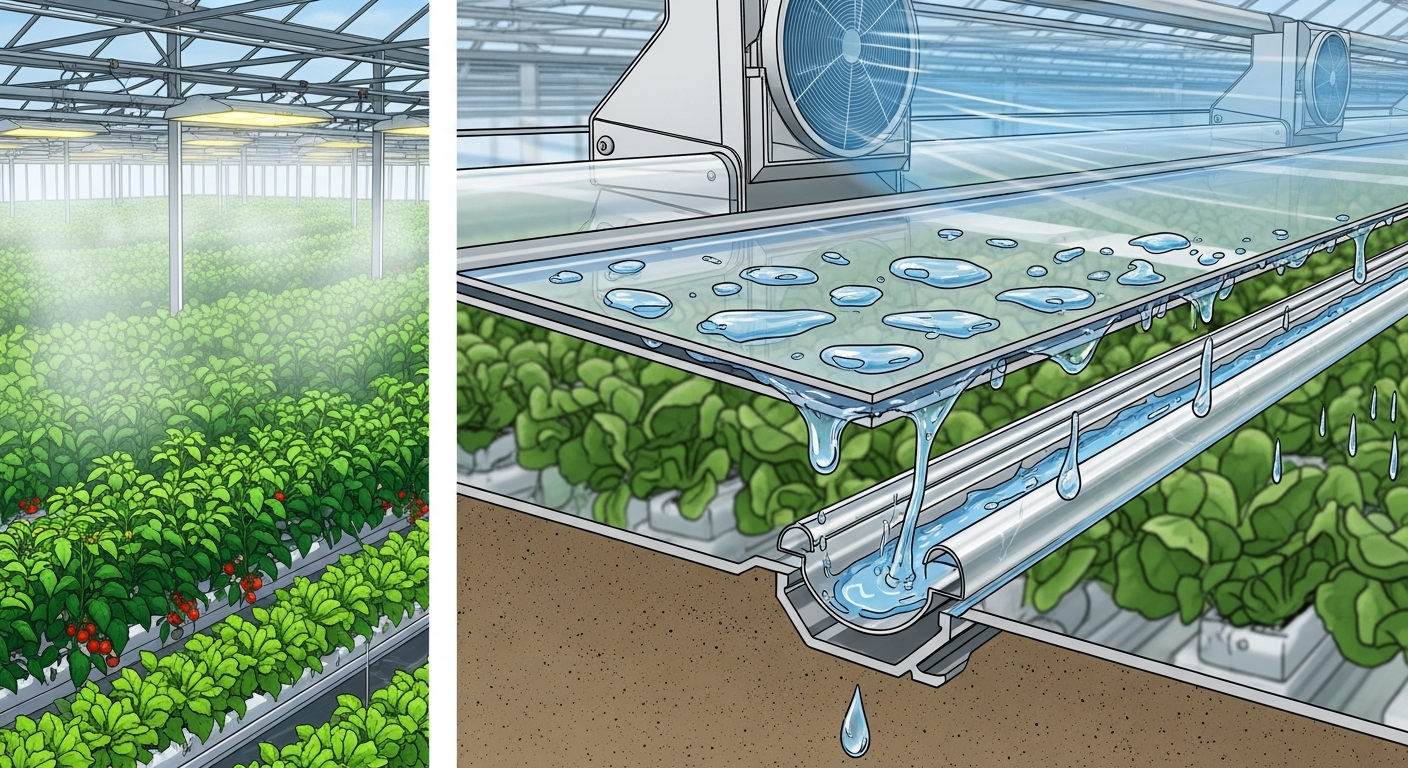
What is Condensation?
In simple terms, condensation occurs when warm, moist air comes into contact with a cooler surface. The air cools down rapidly, losing its capacity to hold water vapor. This excess water vapor then changes from a gas back into a liquid state, forming visible water droplets. This process is driven by the relationship between air temperature, relative humidity, and the dew point.
- Relative Humidity (RH): This is the amount of moisture currently in the air compared to the maximum amount of moisture the air can hold at that specific temperature. Warmer air can hold more moisture than cooler air.
- Dew Point: This is the temperature at which air becomes saturated with water vapor (i.e., reaches 100% relative humidity) and condensation begins to form. When the temperature of any surface within your greenhouse drops below the dew point of the surrounding air, you’ll see those tell-tale water droplets.
In a greenhouse, this often happens at night or during cloudy periods when the outside temperature drops, cooling the glazing, structural components, or even plant leaves below the dew point of the warmer, more humid air inside.
Why is Condensation a Problem for Your Crops?
While a certain level of humidity is beneficial for plant growth, excessive condensation brings a host of problems:
- Disease Proliferation: This is perhaps the most significant issue. Persistent leaf wetness creates an ideal environment for the germination and spread of various fungal and bacterial pathogens. Diseases like Botrytis cinerea (gray mold), downy mildew, and powdery mildew thrive in high humidity and prolonged periods of leaf wetness. These can quickly decimate crops, leading to significant economic losses.
- Direct Crop Damage: Large water droplets can act like tiny magnifying glasses, focusing sunlight onto delicate leaf tissue and causing sunburn or scorching. This is particularly problematic on tender seedlings or sensitive plant varieties. Water spots can also permanently mar the appearance of ornamental plants or fruits.
- Reduced Light Transmission: A film of condensation on your glazing can significantly reduce the amount of natural sunlight penetrating into the greenhouse. Less light means reduced photosynthesis, slower growth, and lower yields.
- Increased Heating Costs: When condensation forms, it releases latent heat. However, when these droplets re-evaporate, they absorb a significant amount of heat from the greenhouse air, leading to a net cooling effect and forcing your heating system to work harder, increasing energy consumption and costs.
Strategies for Effective Condensation Management
Preventing condensation requires a multi-faceted approach, integrating various climate control elements and good horticultural practices.
Optimizing Ventilation and Air Circulation
Good airflow is the cornerstone of condensation prevention, as it helps remove moist air and equalize temperatures.
- Passive Ventilation: Utilize roof vents and side vents to allow natural convection to draw warm, moist air out and pull in cooler, drier air. The timing of opening and closing these vents is critical. On cooler days, opening vents for short periods can help exchange air without drastically dropping temperatures.
- Active Ventilation: Install exhaust fans and strategically placed intake vents. These systems are often controlled by thermostats or humidistats, automatically activating to remove excess humidity when set thresholds are exceeded. Active ventilation is particularly important during periods of high plant transpiration or low external wind.
- Horizontal Airflow (HAF) Fans: These are indispensable for breaking up stagnant air pockets within the greenhouse. HAF fans move air in a continuous, gentle pattern, ensuring uniform temperature and humidity distribution throughout the crop canopy. This prevents localized condensation on plant surfaces and helps dry foliage, significantly reducing disease pressure.
Temperature and Humidity Control
Careful management of your greenhouse’s temperature and humidity levels is key to staying above the dew point.
- Maintaining a Temperature Differential: Aim to keep plant surfaces slightly warmer than the air, or at least prevent them from dropping below the air temperature. Heating pipes placed strategically under benches or within the plant canopy can help achieve this.
- Heating and Venting (Heat Pushing): This common and effective strategy involves slightly raising the greenhouse air temperature while simultaneously ventilating. The warmer air can hold more moisture. By venting, you exhaust this moisture-laden air and replace it with drier air, effectively lowering the overall relative humidity within the structure, even if it means a temporary increase in heating demand.
- Controlling Relative Humidity: Utilize a humidistat to monitor and control your greenhouse’s RH. Most crops thrive within an RH range of 60-80% depending on their growth stage. Keeping RH within optimal bounds, especially as night approaches, is vital.
Smart Watering Practices
How and when you water your plants significantly impacts the amount of moisture released into the greenhouse atmosphere.
- Water in the Morning: Always water your plants early in the day. This allows sufficient time for the foliage and growing media to dry out before evening temperatures drop and ventilation becomes less effective. Avoid overhead watering late in the afternoon or evening.
- Drip Irrigation or Sub-irrigation: These methods deliver water directly to the plant roots, minimizing the evaporation of water from the soil surface and reducing overall ambient humidity compared to traditional overhead watering or sprinklers.
- Avoid Overwatering: Overwatered plants lead to excess moisture in the growing medium, which contributes to higher humidity through evaporation. Ensure proper drainage and water only when necessary.
Greenhouse Structure and Materials
The very design and materials of your greenhouse play a role in condensation management.
- Insulated Glazing Materials: Double-layer polycarbonate or polyethylene film, especially when inflated, creates an insulating air barrier that reduces heat loss through the glazing. This keeps the interior surface of the glazing warmer, making it less likely for condensation to form.
- Anti-drip Coatings: Many modern greenhouse films and rigid panels come with specialized anti-drip (hydrophilic) coatings. Instead of forming droplets, condensation on these surfaces spreads into a thin, uniform sheet of water that then runs down the side of the glazing, preventing dripping onto plants and maintaining light transmission.
Advanced Techniques and Monitoring
For more precise control, integrating technology and careful plant management can further enhance your condensation prevention efforts.
- Environmental Monitoring Systems: Invest in sensors that accurately measure temperature, relative humidity, and even leaf wetness. Automated climate control systems can integrate this data to precisely control vents, fans, and heaters, optimizing the greenhouse environment for maximum efficiency and minimal condensation risk. Monitoring the dew point precisely allows for proactive adjustments before condensation even begins.
- Substrate and Plant Density Management: Ensure your growing media have good drainage to prevent waterlogging. Additionally, proper plant spacing allows for adequate airflow around individual plants, helping to dry foliage and reduce localized humidity within the plant canopy. Overcrowding is a common contributor to condensation issues.
Conclusion: A Drier Greenhouse for Healthier Crops
Managing condensation is a critical aspect of successful greenhouse cultivation, directly impacting crop health, yield, and energy efficiency. By proactively understanding the factors that lead to moisture build-up and implementing a combination of effective ventilation, precise temperature and humidity control, smart watering practices, and appropriate structural considerations, you can create a drier, healthier environment. A proactive, integrated approach to climate control will not only prevent those damaging water droplets but will also significantly reduce the risk of disease, leading to more robust, productive, and ultimately more profitable crops in your greenhouse.