
The biting chill of winter brings with it unique challenges for greenhouse growers, especially those who rely on heavily insulated structures to keep their precious plants thriving. While insulation is invaluable for retaining heat and reducing energy costs, it can inadvertently create an environment where a silent enemy thrives: condensation. This often-overlooked moisture phenomenon can lead to a host of problems, from fostering plant diseases to dripping water that damages foliage and even infrastructure. Far from being a mere nuisance, managing condensation cycles in your heavily insulated winter greenhouse is critical for maintaining plant health, structural integrity, and overall operational efficiency. In this comprehensive guide, we’ll delve into the science behind winter condensation and provide actionable strategies to keep your greenhouse dry, healthy, and productive all season long.
Understanding the Enemy: The Science of Winter Condensation
Condensation occurs when warm, moist air comes into contact with a cooler surface, causing the water vapor in the air to change back into liquid form. In a heavily insulated winter greenhouse, the dynamics are particularly pronounced. Your heating system works hard to maintain a warm internal temperature, and plants, through transpiration, release significant amounts of moisture into the air. This creates a highly humid environment. When this warm, moisture-laden air rises and meets cooler surfaces—such as glazing (even multi-wall polycarbonate or insulated glass can be significantly cooler than the air), structural elements, or even the soil surface at night—condensation forms.
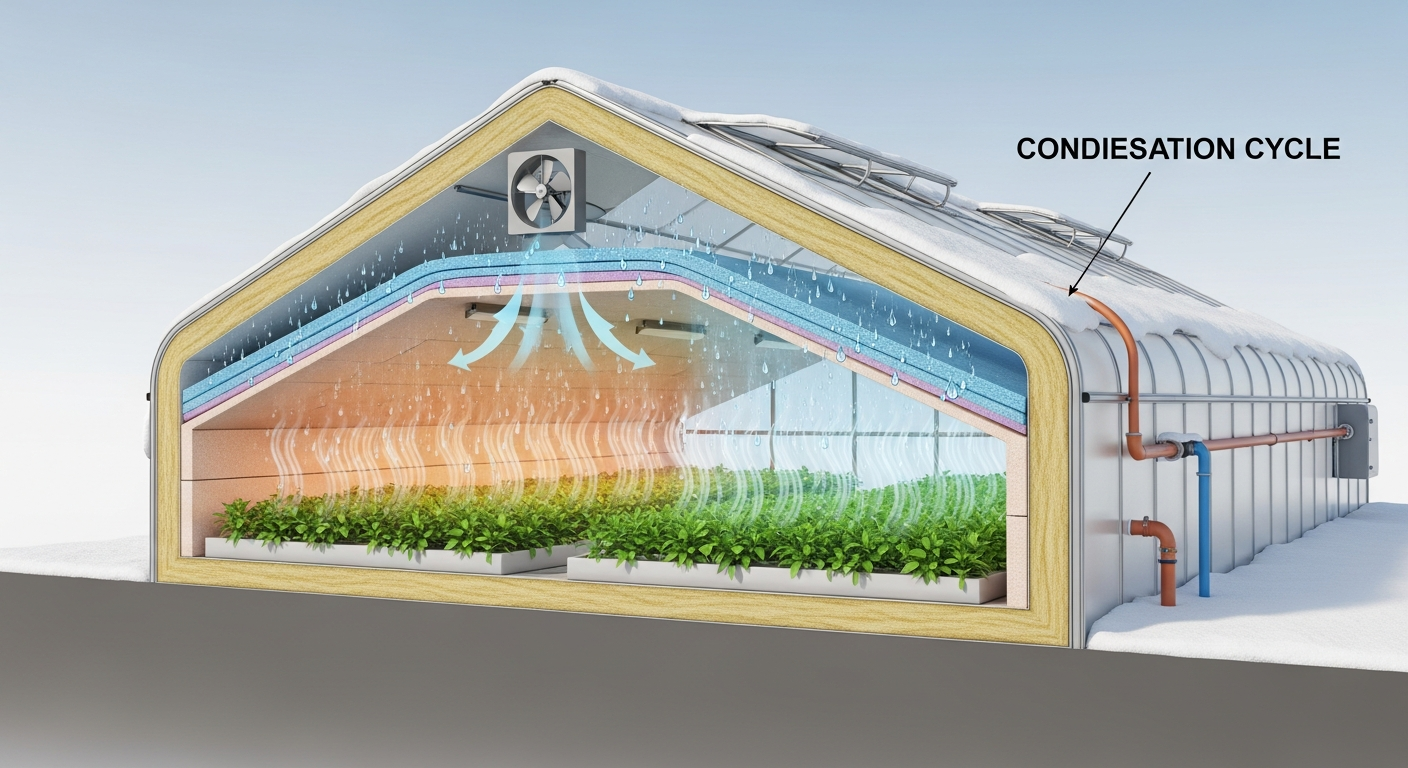
The paradox of heavy insulation is that while it drastically reduces heat loss through the walls and roof, it can also trap humidity more effectively, leading to higher internal relative humidity (RH). If the RH remains high and the air temperature drops below the dew point, condensation becomes inevitable. This isn’t just an aesthetic issue; it has serious consequences:
- Disease Proliferation: Persistent moisture on plant surfaces creates ideal conditions for fungal and bacterial diseases like Botrytis (gray mold), downy mildew, and powdery mildew.
- Plant Damage: Water dripping onto foliage can bruise delicate leaves, wash away protective coatings, and create concentrated areas of moisture that encourage localized rot.
- Reduced Light Transmission: A film of condensed water on glazing can significantly reduce the amount of precious winter sunlight reaching your plants, impacting photosynthesis.
- Structural Degradation: Long-term moisture exposure can accelerate corrosion of metal components and deterioration of wood structures, compromising the greenhouse’s longevity.
- Increased Heating Costs: It takes more energy to heat moist air than dry air. Continuously heating a high-humidity environment can lead to inefficient energy use.
Proactive Humidity Management: The First Line of Defense
Combating winter condensation requires a multi-faceted, proactive approach focused on controlling relative humidity and ensuring good air movement. Simply heating the greenhouse isn’t enough; you must manage the moisture within it.
Strategic Ventilation
Ventilation is your primary tool for expelling humid air and introducing drier, cooler (but not freezing) outside air. In winter, this needs to be carefully managed to avoid excessive heat loss:
- Minimum Ventilation: Even on the coldest days, a small amount of timed ventilation can be crucial. This involves running exhaust fans for short, predetermined intervals (e.g., 5-10 minutes every hour or two) to exchange a portion of the internal air without drastically dropping the temperature.
- Thermostat-Controlled Vents: Integrate your exhaust fans and intake vents with a humidistat as well as a thermostat. Set the humidistat to trigger ventilation when the relative humidity reaches a critical threshold (e.g., 70-80% RH, depending on your crops).
- “Heating and Venting” Strategy: This is a powerful technique. Briefly raise the greenhouse temperature by a few degrees *while simultaneously venting*. The slightly warmer air can hold more moisture, which is then expelled. This effectively “dries” the air without overcooling your plants.
- Location of Vents: Ensure proper air pathways. Place intake vents low and exhaust fans high to promote a complete air exchange from bottom to top.
Enhanced Air Circulation
Even with good ventilation, pockets of stagnant, humid air can form, especially in heavily planted or cluttered areas. This is where horizontal air flow (HAF) fans become indispensable.
- HAF Fans: Install HAF fans strategically to create a gentle, continuous movement of air throughout the entire greenhouse. This mixes the air, preventing layers of warm, moist air from settling near the glazing and cold surfaces.
- Benefits of HAF: By homogenizing the air temperature and humidity, HAF fans help prevent cold spots and reduce the formation of localized condensation. They also strengthen plant stems and improve gas exchange.
Intelligent Heating and Monitoring
Your heating system isn’t just for warmth; it’s a vital component of humidity control.
- Dew Point Awareness: Understand that condensation forms when the surface temperature drops below the dew point of the air. By slightly raising the air temperature, you can raise the dew point, making it harder for surfaces to reach that critical temperature.
- Accurate Monitoring: Invest in reliable thermometers and hygrometers (humidity sensors). Digital models with data logging capabilities can provide valuable insights into your greenhouse climate cycles, allowing you to fine-tune your strategies.
- Morning Heat Boost: Consider a slight temperature increase a couple of hours before dawn. This helps warm the air and surfaces before the plants begin active transpiration with the rising sun, reducing morning condensation.
Strategic Climate Control & Advanced Techniques
For larger operations or those with high-value crops, more sophisticated climate control can offer unparalleled precision in managing condensation.
Automated Climate Control Systems
Modern greenhouse controllers can integrate heating, cooling, ventilation, and humidity control into a single, intelligent system. These systems use sensors to continuously monitor temperature and RH, automatically adjusting fans, vents, and heaters to maintain optimal conditions. This minimizes human error and optimizes energy usage, preventing unnecessary heat loss during ventilation.
Targeted Dehumidification
While often energy-intensive, dedicated dehumidifiers can be a powerful tool in specific situations, especially for small, highly insulated structures or propagation areas where maintaining precise humidity levels is paramount. These units actively remove moisture from the air, but their energy consumption needs to be weighed against their benefits.
Minimizing Internal Moisture Sources
Beyond air management, actively reducing the amount of moisture introduced into the greenhouse can significantly aid in condensation control:
- Watering Practices: Water plants in the morning on sunny days, allowing excess moisture to evaporate and be vented out before nightfall. Avoid overhead watering late in the day during winter.
- Proper Drainage: Ensure all pots and growing beds drain effectively. Standing water contributes to high humidity.
- Bench Spacing: Space plants adequately to allow for good air circulation around and through the canopy, which helps individual plants dry out faster.
- Cleanliness: Remove fallen leaves and plant debris promptly. Decaying organic matter releases moisture and can harbor diseases.
Practical Tips for a Drip-Free Winter
Maintaining a healthy, condensation-free environment also relies on diligent day-to-day practices and careful attention to your greenhouse’s physical structure.
- Regular Inspections: Routinely check glazing, structural members, and plant leaves for signs of condensation, drips, or disease. Early detection is key to preventing larger problems.
- Insulation Integrity: Inspect your heavy insulation for any gaps, cracks, or areas where cold air might be penetrating. Even small breaches can create cold spots that act as condensation magnets. Seal any leaks promptly.
- Glazing Choice: While not a daily tip, remember that multi-wall polycarbonate or double-paned glass significantly reduces the cold surface area compared to single-pane glazing, inherently lessening the propensity for condensation on the primary light-transmitting surfaces.
- Drip Channels: For areas where condensation is particularly stubborn or difficult to eliminate (e.g., specific roof angles or near vents), consider installing simple drip channels or gutters to collect and divert water away from plants.
- Keep Pathways Dry: Spilled water on floors or pathways evaporates and adds to the humidity load. Keep these areas as dry as possible.
- Avoid Overcrowding: While tempting to maximize space, overcrowding limits air circulation between plants, trapping moisture and creating microclimates ripe for condensation and disease.
Managing condensation cycles in a heavily insulated winter greenhouse is an ongoing balancing act between heat retention, humidity control, and air movement. By understanding the science behind condensation and implementing a combination of strategic ventilation, robust air circulation, intelligent heating, and diligent monitoring, you can create a healthy, productive, and drip-free environment for your plants. It requires vigilance and a holistic approach, but the rewards—healthier plants, fewer diseases, and a more efficient operation—are well worth the effort. Embrace these techniques, and your greenhouse will thrive, even through the harshest winter months.